


Why Does Your Castle Rock Garage Door Reverse Before It Closes?

A Castle Rock garage door that reverses before it closes is almost always reacting to its safety sensors or to resistance near the floor. The door is doing what it was designed to do, so the fix is finding what it thinks is in the way.
Key Takeaways
- Reversing is a safety response, not a fault in itself, so the real question is what triggered it.
- Blocked, dirty or misaligned photo eye sensors cause the majority of these calls.
- Ice, packed snow or debris under the door make it stop short and reverse in winter.
- A close limit or force setting that has drifted makes the door reverse at exactly the same point every time.
- Select Garage Doors holds a BBB A+ rating and completes 90% of calls the same day.
There is a useful clue in how the reversal behaves. A door that reverses at random points is usually reacting to something it sees. A door that reverses at the same height every time is usually reacting to a setting or an obstruction that is always there. Select Garage Doors uses that distinction to narrow the cause quickly, and homeowners can use it too.
What Makes a Garage Door Reverse on Its Own?
Two systems can send a door back up: the photo eye sensors that watch the opening, and the force setting that detects resistance as the door travels.
The sensors sit low on either side of the opening and project a beam across it. Anything interrupting that beam stops the door closing. The force setting is different: it monitors how hard the opener is working, and reverses if the door meets more resistance than expected.
Knowing which one is responding tells you where to look. Sensors respond instantly and usually with a blinking light on the unit. Force settings respond when the door actually touches something.
Why Are the Sensors So Often the Cause?
They sit a few inches off the floor, which is exactly where snow, leaves, grit, boxes and bicycle wheels end up, and their lenses smudge easily.
A sensor does not need a solid object in front of it. A film of dust, a spider web, or condensation on the lens can scatter the beam enough to register an obstruction.
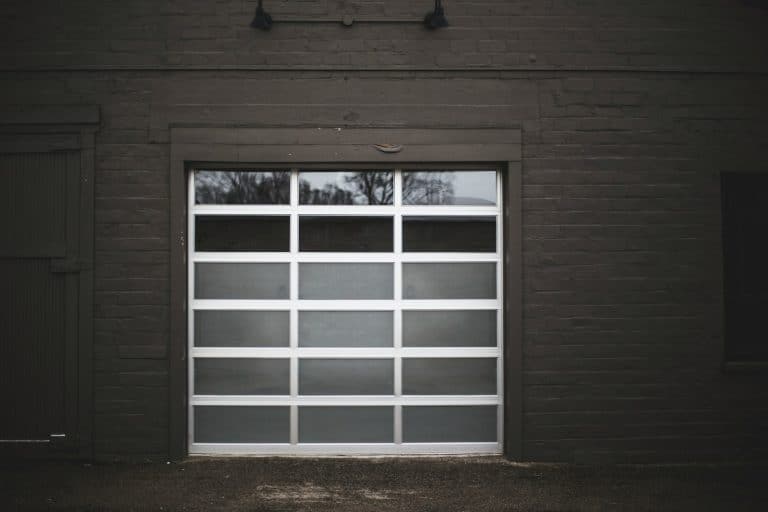
Alignment is the other common issue. The two units must point directly at each other, and a knock from a car door or a snow shovel is enough to move one slightly. The piece on knowing whether garage door sensors are working properly covers how to check them.
Could Winter Weather Be the Real Culprit?
Very often, yes. Packed snow or a ridge of ice under the door stops it reaching the floor, so the opener reads the resistance and reverses.
This is the seasonal version of the problem and it is easy to miss, because the obstruction is low, flat and the same colour as everything else on a snowy driveway.
Melt water makes it worse. It runs under the door during the day, refreezes overnight, and builds a ridge that grows a little with each cycle. Homeowners in Castle Rock see this most in the weeks either side of a thaw.
| When It Reverses | Most Likely Cause | What To Try First |
|---|---|---|
| Immediately, barely moves | Sensor blocked or misaligned | Clear and wipe both lenses |
| Just before touching the floor | Ice, snow or debris underneath | Clear the floor to bare concrete |
| Same height every time | Close limit or force setting drifted | Professional adjustment |
| Only in bright sunshine | Sunlight washing out the sensor | Professional, sensors may need shading |
| At random, with noise | Door binding in the track | Stop using it, book a visit |
What Should a Homeowner Check Before Calling?
Clear the floor, wipe both sensor lenses, check the indicator lights on each sensor, and look along the track for anything obvious. That resolves a good share of cases.
Most sensors have a small light showing whether they are aligned and seeing each other. One steady light and one blinking usually means alignment has shifted. Both out usually means power or wiring.
Keep the checks to what is reachable from the floor. Adjusting limit or force settings involves the opener’s internals and affects how hard the door closes, which is a safety matter rather than a convenience one.
It also helps to note the pattern before calling. Does it happen every time or occasionally? At the same height or at random? In the morning only, or all day? Those three answers usually point a technician straight at the cause and save a round of elimination on site.
One more thing worth checking is whether anything has changed recently. A new shelf, a bike moved against the wall, or a storage box nudged toward the opening can all clip the sensor beam without being anywhere near the door itself.
When Does This Need a Technician?
Call when the door reverses at a consistent point, when the sensors are clean and aligned but the problem persists, or when the reversal comes with grinding or binding.
A consistent reversal point points at settings or at something mechanical happening at that spot in the travel, such as a track issue or a worn roller catching.
A technician will test the auto-reverse, check the sensor alignment properly, inspect the track and rollers, and confirm the door balance. Those four together explain almost every case. Homeowners can contact us to arrange it, or find the Castle Rock location on Google Maps. The call line is staffed 24/7, with service scheduled during regular business hours.
Frequently Asked Questions
Should the safety sensors ever be bypassed?
No. They exist to stop the door closing on a person, a pet or a vehicle. If a door will not close, the answer is to find the cause rather than disable the protection.
Why does the door close fine with the wall button held down?
Many openers allow a held button to override the sensors. That is a diagnostic clue that the sensors are the cause, not a way to use the door day to day.
Can sunlight really confuse a sensor?
It can. Low sun shining directly into the receiving lens can overwhelm the beam. A problem that only happens at one time of day is a strong hint that this is what is going on.
What do the little lights on the sensors mean?
Generally, steady lights on both units mean they are aligned and seeing each other. A blinking or dark light points at misalignment, a blocked lens, or a wiring problem.
Why does it only happen in winter?
Snow and ice build up exactly where the door needs to reach the floor, and condensation forms on sensor lenses. Both disappear in warmer months, which is why the fault seems seasonal.
Is a reversing door unsafe to use?
The reversing itself is the safety system working. What is unsafe is overriding it or leaving the underlying cause unresolved, particularly if the door is binding mechanically.
Can a homeowner realign the sensors?
Gentle realignment of a bracket is within reach for most people, but if the sensors will not hold alignment or the lights stay wrong afterwards, have a technician check the mounting and wiring.
Does this mean the opener is failing?
Usually not. Most reversing problems trace to sensors or to something under the door rather than to the opener itself, and are resolved without replacing anything major.

Looking for a deal?
Call us or to learn about our current promotions and seasonal offers.



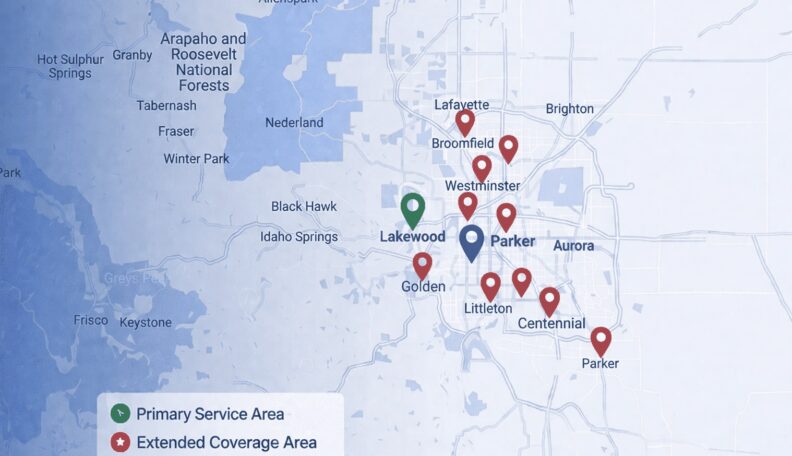
Service Area: 50+ Cities Across Metro Denver
Select Your Nearest Location
Hours: Mon-Fri 8am-5pm
Sunday Emergency Only
Avg Response Time: 18 minutes
Hours: Mon-Fri 8am-5pm
Sunday Emergency Only
Avg Response Time: 18 minutes
Hours: Mon-Fri 8am-5pm
Sunday Emergency Only
Avg Response Time: 18 minutes
Hours: Mon-Fri 8am-5pm
Sunday Emergency Only
Avg Response Time: 18 minutes
Hours: Mon-Fri 8am-5pm
Sunday Emergency Only
Avg Response Time: 18 minutes
Hours: Mon-Fri 8am-5pm
Sunday Emergency Only
Avg Response Time: 18 minutes
Hours: Mon-Fri 8am-5pm
Sunday Emergency Only
Avg Response Time: 18 minutes
Hours: Mon-Fri 8am-5pm
Sunday Emergency Only
Avg Response Time: 18 minutes
Hours: Mon-Fri 8am-5pm
Sunday Emergency Only
Avg Response Time: 18 minutes
Hours: Mon-Fri 8am-5pm
Sunday Emergency Only
Avg Response Time: 18 minutes
Hours: Mon-Fri 8am-5pm
Sunday Emergency Only
Avg Response Time: 18 minutes
Hours: Mon-Fri 8am-5pm
Sunday Emergency Only
Avg Response Time: 18 minutes
Hours: Mon-Fri 8am-5pm
Sunday Emergency Only
Avg Response Time: 18 minutes
Hours: Mon-Fri 8am-5pm
Sunday Emergency Only
Avg Response Time: 18 minutes
Hours: Mon-Fri 8am-5pm
Sunday Emergency Only
Avg Response Time: 18 minutes
We Service: Parker, Castle Rock, Greenwood Village, Lakewood, Littleton, Centennial, Highlands Ranch 40+ More Cities