

Parker Commercial Garage Door Maintenance Tips
Routine maintenance keeps a commercial garage door opening and closing on demand, day after day, without the surprise breakdown that shuts down deliveries or locks up your warehouse. At Select Garage Doors, our team has serviced commercial garage doors across Parker and the wider Denver Metro, and the most cost-effective service we offer is the one that prevents the next repair: a thorough inspection.
This guide walks through what a professional inspection actually covers, from spring tension to UL 325 safety checks, so you know what to expect before a tech ever pulls into your lot. If you would rather book one now, call our team at (720) 339-2442.
What a Commercial Garage Door Inspection Covers
A full inspection touches every system that contributes to safe, smooth door operation. A technician does not just glance at the door and call it done; they work through a sequence of checks that mirror how doors fail in service. The major focus areas fall into six buckets:
- Door mechanism and hardware (tracks, rollers, hinges, cables)
- Spring tension and door balance
- Opener performance and force settings
- Safety features (photo-eye sensors, auto-reverse, manual release)
- Panel condition and weather seals
- Lubrication, cycle test, and final report
Each section below walks through one bucket, what the tech looks for, and the failure it catches early.
Door Mechanism and Hardware Checks
The mechanism is the visible system that moves the door: the tracks the rollers travel through, the hinges between panels, and the cables that transfer spring tension into door movement. Each part wears differently, and most failures show up as wear long before they show up as a breakdown.
During the hardware pass, the tech will:
- Inspect tracks for dents, misalignment, or bolts loosened by vibration
- Check rollers for flat spots, broken bearings, or worn nylon sleeves
- Test hinges for cracking near the rivets and proper alignment between panels
- Examine cables for fraying, rust, or kinks (a frayed cable is a same-week replacement)
Anything that does not pass gets logged on your report with a recommended fix, so you can decide whether to handle it now or schedule it for a follow-up visit.
Safety Features You Cannot Skip
Commercial doors carry more risk than residential ones because they cycle more often, the openings are larger, and forklifts or staff routinely pass underneath. The UL 325 standard, which governs door operator safety in the United States and Canada, requires every powered commercial door to include entrapment protection. A tech verifies each safeguard is working before logging the inspection as complete.
| Safety Feature | What It Does | How It Gets Tested |
|---|---|---|
| Photo-eye sensors | An infrared beam across the opening reverses the door if anything breaks it during closing | Tech breaks the beam mid-cycle and confirms the door reverses |
| Auto-reverse on contact | Pressure-sensing reverses the door if it meets resistance while closing | A test block placed under the door confirms reversal within seconds |
| Manual release | Disconnects the opener so the door can be operated by hand during a power loss | Tech engages the release and confirms the door moves freely |
| Opener force settings | Limits closing force, reducing injury risk if a person or object is in the path | Tech verifies the force stays within the UL 325 ceiling |
If any safeguard fails its test, it is flagged for repair or recalibration before the tech leaves the site.
Panels, Seals, and Weather Protection
Panels carry the visual condition of the door and the structural integrity that keeps it square in the opening. Dents from forklift contact, rust along the bottom rail, or warping from heat exposure all show up during a panel walk. Damaged panels do not always need replacement, but they often need to be reinforced or repainted to slow further wear.
Seals are the rubber or vinyl gaskets along the bottom and edges of the door. They keep weather, pests, and conditioned air where each one belongs, and they degrade faster in Colorado’s freeze-thaw cycle than most owners expect. The tech checks for:
- Cracks, gaps, or compression set in the bottom astragal seal
- Worn perimeter side and top seals
- Light visible from inside the closed door (a sign air and moisture are getting through)
- Mold or staining behind the seals that signals ongoing water intrusion
Replacing a worn seal is a small line item that can quietly cut heating and cooling costs for a conditioned space.
Balance, Springs, and Opener Performance
These three systems are mechanically linked, and a problem with any one of them shortens the life of the other two. The tech tests them together.
Door Balance
The tech disconnects the opener and lifts the door manually to about waist height. A properly balanced door holds its position with little drift. If it slams down or shoots up, the springs are out of tune, and the opener is compensating, which burns out the motor early.
Spring Tension
Torsion springs counterbalance the full weight of the door. They are tuned to the door’s exact weight at installation, and they fatigue with every cycle. The tech inspects each coil for gaps, rust, or visible cracking and adjusts tension if the door has fallen out of balance. Spring work is also one of the most dangerous DIY repairs in the trade, which is why a tech handles it on-site.
Opener Functionality
With the springs verified, the opener gets cycle-tested. The tech listens for grinding, watches the chain or belt for slippage, and confirms travel limits and force settings sit within spec. Openers more than 10 years old often still pass the test but get flagged as upgrade candidates because replacement parts get harder to source past that age.
Lubrication and Cycle Testing
After the hardware checks, the tech lubricates every moving metal-on-metal contact point: hinges, rollers, spring coils, bearings, and the opener chain or screw drive. The right lubricant is a silicone-based or lithium-based spray made for garage door applications, not a household oil that attracts dust and gums up the tracks.
With lubrication done, the door is cycled 4 to 5 times under power. This is the final functional check: a balanced, well-tuned door runs quietly, stops cleanly at the open and closed limits, and reverses on demand. Anything that sounds wrong gets investigated before the inspection is logged as complete.
What You Get in Your Inspection Report
The deliverable from an inspection is the written report. It lists every component checked, its condition, and a recommendation: pass, monitor, or repair. A repair recommendation includes a brief reason and a rough urgency rating so you can budget the fix or schedule it for the next visit.
Keep the reports in a folder. They become your service history, and they make warranty claims, insurance documentation, and any future facility audit much smoother. Our team brings inspection reports to commercial clients across our Parker service area for exactly that reason: a paper trail is worth as much as the wrench work.
How Often Should a Commercial Door Be Inspected?
Industry consensus from door manufacturers and the International Door Association points to a professional inspection at least once a year for a standard commercial door and every 3 to 6 months for a high-cycle door (50+ cycles per day). Doors that move under heavy use, like loading docks or service bays, fall in the shorter category.
If the door has shown any symptom in the last month (jerky motion, louder than usual, slow to respond, visible rust spreading) move the next inspection forward instead of waiting for the annual one.
Book Your Commercial Garage Door Inspection in Parker
Routine inspections are the cheapest line item in a commercial garage door budget, and the one that prevents the largest surprise repairs. At Select Garage Doors, our veteran-owned team brings the right tools, the UL 325 checklist, and a written report to every commercial site we visit across the Denver Metro.
Reach our team at (720) 339-2442 to schedule an inspection for your facility. For more on our commercial service plans, contact us today.
Frequently Asked Questions
How long does a commercial garage door inspection take?
Most full inspections take 45 to 90 minutes per door. Larger facilities with multiple bays take longer, since each door is tested independently against the full safety and balance checklist.
Can our maintenance team handle inspections in-house instead?
Visual checks and lubrication can be handled internally, but spring tension adjustment, opener calibration, and UL 325 safety verification need a trained tech with the right tools. Spring work in particular causes most serious DIY garage door injuries.
How much downtime should we plan for during an inspection?
The door is unusable for the duration of the inspection plus any same-visit repairs. For a single overhead door, plan for 1 to 2 hours of downtime. For a high-cycle bay, schedule it outside peak loading windows.
What is the difference between a tune-up and an inspection?
An inspection diagnoses, and a tune-up adjusts. Most professional visits combine both: the tech identifies issues and resolves the small ones (lubrication, balance tweaks, sensor realignment) in the same trip. Larger repairs are quoted and scheduled.
Do you service all commercial door types?
We work on sectional overhead doors, rolling steel doors, high-speed roll-up doors, and dock-leveler-integrated doors. We also service the openers attached to each, including the major commercial-grade brands found on most installations.
What signs mean we should call before the next scheduled inspection?
Grinding or popping noises, the door reversing unexpectedly, slow or jerky travel, visible cable fraying, or a door that no longer stays open at waist height all warrant an unscheduled visit. These are early warnings of a spring or cable failure.
Is a maintenance plan worth it for one or two doors?
Even one or two heavily used doors benefit from a scheduled plan because emergencies cost more than prevention. A scheduled visit locks in pricing, makes service history easy to track, and prioritizes you on the schedule when something does break.
Do you serve commercial properties outside Parker?
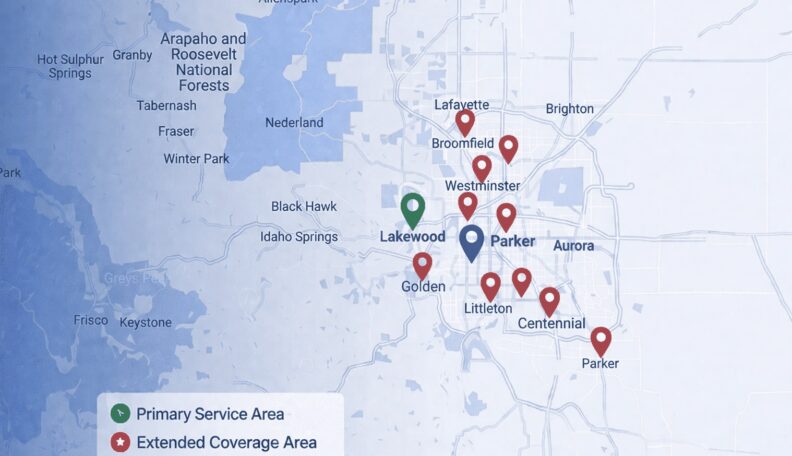
Yes. Our service area covers Parker, Greenwood Village, Lakewood, Boulder, Denver, Highlands Ranch, Littleton, Aurora, Westminster, Broomfield, Longmont, Brighton, Loveland, Centennial, Thornton, Wheat Ridge, Morrison, Golden, Elizabeth, and Castle Rock.


Looking for a deal?
Call us or to learn about our current promotions and seasonal offers.


Service Area: 50+ Cities Across Metro Denver
Select Your Nearest Location
Hours: Mon-Fri 8am-5pm
Sunday Emergency Only
Avg Response Time: 18 minutes
Hours: Mon-Fri 8am-5pm
Sunday Emergency Only
Avg Response Time: 18 minutes
Hours: Mon-Fri 8am-5pm
Sunday Emergency Only
Avg Response Time: 18 minutes
Hours: Mon-Fri 8am-5pm
Sunday Emergency Only
Avg Response Time: 18 minutes
Hours: Mon-Fri 8am-5pm
Sunday Emergency Only
Avg Response Time: 18 minutes
Hours: Mon-Fri 8am-5pm
Sunday Emergency Only
Avg Response Time: 18 minutes
Hours: Mon-Fri 8am-5pm
Sunday Emergency Only
Avg Response Time: 18 minutes
Hours: Mon-Fri 8am-5pm
Sunday Emergency Only
Avg Response Time: 18 minutes
Hours: Mon-Fri 8am-5pm
Sunday Emergency Only
Avg Response Time: 18 minutes
Hours: Mon-Fri 8am-5pm
Sunday Emergency Only
Avg Response Time: 18 minutes
Hours: Mon-Fri 8am-5pm
Sunday Emergency Only
Avg Response Time: 18 minutes
Hours: Mon-Fri 8am-5pm
Sunday Emergency Only
Avg Response Time: 18 minutes
Hours: Mon-Fri 8am-5pm
Sunday Emergency Only
Avg Response Time: 18 minutes
Hours: Mon-Fri 8am-5pm
Sunday Emergency Only
Avg Response Time: 18 minutes
Hours: Mon-Fri 8am-5pm
Sunday Emergency Only
Avg Response Time: 18 minutes
We Service: Parker, Castle Rock, Greenwood Village, Lakewood, Littleton, Centennial, Highlands Ranch 40+ More Cities