


Maintenance Tips to Prevent Garage Door Spring Issues in Parker
Key Takeaways
- Garage door springs in Parker, Colorado, require lubrication every three months rather than the once-per-year interval typical in humid climates, because the Front Range’s semi-arid conditions and daily temperature swings of 40 to 60 degrees Fahrenheit dry out metal coatings faster than average.
- Torsion springs rated at 10,000 cycles by DASMA typically last seven to ten years, but Parker’s elevation of 5,869 feet and repeated thermal stress can bring failures earlier, making annual professional inspection the most reliable way to catch spring wear before it becomes an emergency.
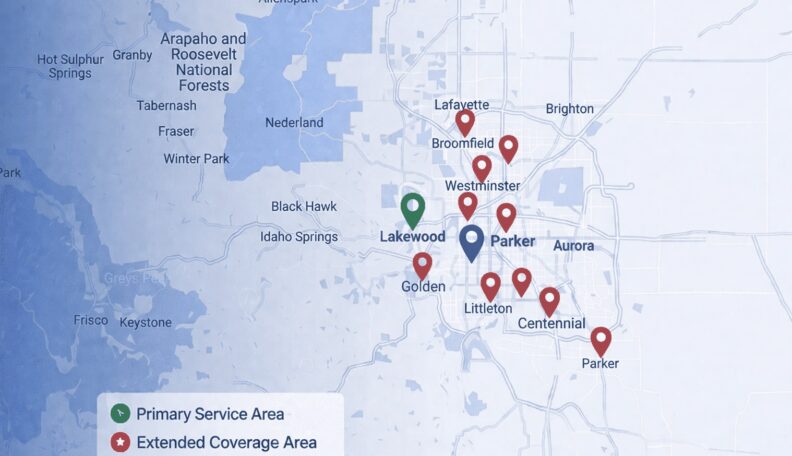
- Select Garage Doors serves Parker, Colorado, and surrounding Douglas County communities with spring maintenance appointments available through all four Denver metro locations, including the primary Parker office on South Pine Drive.
Garage door springs take on enormous stress with every open and close cycle, and neglecting them leads to costly failures. Select Garage Doors put together this maintenance guide to help Parker, CO, homeowners stay ahead of spring wear. For a broader look at upkeep habits, keeping up with garage door maintenance covers the full scope of care.
1. Regular Inspection and Lubrication
Regularly inspect your garage door’s springs, cables, and pulleys for signs of wear or damage. Apply a high-quality garage door lubricant to reduce friction and prevent unnecessary spring strain. This simple step can significantly extend the lifespan of your garage door springs.
2. Balance and Tension Adjustment
Maintain your garage door’s proper balance and tension by hiring a professional technician to perform periodic adjustments. A well-balanced door exerts less stress on the springs, reducing the likelihood of a sudden failure.
3. Weatherproofing and Seal Maintenance
Seal gaps or cracks around your garage door to keep moisture and extreme temperatures at bay. Water and temperature fluctuations can weaken the springs over time. Weatherproofing your garage will help preserve the integrity of your springs and the entire door system.
4. Cleanliness and Debris Removal
Regularly clean the tracks and remove any debris that may obstruct the smooth operation of your garage door. Track obstacles can cause the springs to work harder, increasing the risk of damage.
5. Professional Maintenance Services
Schedule annual or bi-annual professional maintenance with a reputable garage door service. They can identify potential issues early, tighten loose components, and ensure that your springs are in optimal condition. Professional maintenance can save you money on major repairs in the long run.
Proactive maintenance is the key to avoiding costly spring failures. By following the tips outlined in this guide, you can extend the lifespan of your garage door springs and keep the door running smoothly. When spring issues do surface despite good habits, knowing common mistakes in garage door spring repair helps you avoid compounding the problem.
Well-maintained springs rarely fail without warning. Garage door spring repair in Parker stays manageable when problems are caught early. Call Select Garage Doors at (720) 339-2442 or book your spring repair in Parker, Colorado, today before a small issue becomes a full spring replacement. Select Garage Doors covers Parker and nearby communities, including Castle Rock, Greenwood Village, Lakewood, and the surrounding Denver metro area.
Why Parker, Colorado, Needs More Frequent Lubrication Than the Label Says
Most garage door spring lubricant bottles suggest applying the product once per year. That interval is calibrated for average conditions across North America, not for Parker, Colorado. Parker sits at 5,869 feet above sea level in a semi-arid climate where relative humidity is lower than the national average for most of the year. Lower humidity means spring coil coatings and applied lubricants evaporate and degrade faster, leaving bare metal exposed to oxidation sooner.
The Colorado Climate Center confirms the Front Range experiences 40 to 60 degree Fahrenheit temperature swings within a single 24-hour period during spring and fall. Those swings cause the torsion spring’s metal coils to expand slightly in the afternoon heat and contract at night, and each cycle of that mechanical movement pushes existing lubricant out of the contact points between coils.
For Parker homeowners, a realistic lubrication schedule is every three months, or four times per year, rather than once. The lubricant type also matters: silicone-based sprays maintain viscosity across a wide temperature range and do not attract debris the way petroleum-based grease does. WD-40, which many homeowners reach for first, is a solvent and cleaner rather than a lubricant.
Applying it to torsion springs removes existing lubrication and leaves the coils temporarily more vulnerable. Select Garage Doors technicians at the Parker location recommend a dedicated garage door silicone spray applied along the full coil length, then cycled twice to distribute the product evenly.
How to Inspect Your Parker Garage Door Springs for Early Wear Signals
- Look for visible gaps in the coil winding. A torsion spring under proper tension has a tightly uniform coil spacing along its entire length. A section where coils are spread further apart than the rest of the spring, or a visible gap in the middle of the spring, indicates a stress fracture developing. This spring has partially failed and should be replaced before it breaks completely.
- Check for rust or surface corrosion. Orange or red surface staining on the spring coils is early oxidation. Parker’s semi-arid conditions slow rust compared to coastal climates, but temperature cycling accelerates it faster than low-humidity air would suggest. Light surface rust can be treated with a lubricant. Deep pitting or flaking means the spring’s wire cross-section is compromised, and replacement is warranted.
- Run the door balance test. Disconnect the opener by pulling the red emergency release cord. Lift the door manually to the halfway point, approximately four feet off the ground, and release it. A properly balanced door stays in place. A door that rises or falls on its own has unequal spring tension, which means the spring system is not correctly calibrated for the door’s current weight. This test should be done twice per year in Parker, once before winter and once after snowmelt season.
- Listen during operation. A healthy torsion spring is nearly silent during opening and closing. Pinging, creaking, or a sharp metallic snap that is not the normal trolley engagement sound are signs of stress fractures or insufficient lubrication. Any sudden loud crack during operation, followed by a door that will not open, typically means a spring has broken. Stop using the opener immediately.
- Inspect the cable drums and end cones. The cable drums at each end of the torsion shaft wind and unwind the lift cables as the door moves. If the drums show uneven cable winding, or if the end cones where the spring attaches to the shaft show any cracking or separation, contact a technician. End cone failure under spring tension is a hazard that requires professional tools to address safely.
What Parker Homeowners Should Expect From a Professional Spring Maintenance Visit
A professional spring maintenance visit from Select Garage Doors at the Parker, Colorado, location on South Pine Drive typically covers the following: a visual inspection of both torsion spring coils for corrosion, gap formation, and end cone integrity; a cable inspection for fraying, kinking, or uneven drum winding; a balance test to verify the door holds position at the midpoint; hardware tightening for bolts, rollers, and hinges that loosen from vibration over time; and a full lubrication pass on springs, rollers, hinges, and the opener rail.
The visit also provides an opportunity to measure the remaining life expectancy of the current springs. A technician who knows DASMA’s 10,000-cycle standard rating and knows how many cycles the door runs per day can estimate how many years the current springs have remaining. For a Parker household opening the garage door three times daily, 10,000 cycles represents approximately nine years from installation.
At year six or seven, a proactive replacement discussion makes sense even if the springs appear intact. The Select Garage Doors Parker office schedules maintenance visits for Douglas County zip codes 80134, 80138, and 80108, as well as surrounding Castle Rock and Highlands Ranch communities.
Scheduling a maintenance visit before a spring fails avoids the emergency call fee and allows you to choose a replacement spring with a higher cycle rating if the door usage pattern warrants it.
| Colorado Season | Key Maintenance Task | Why It Matters for Parker and the Front Range |
|---|---|---|
| Late winter (February to March) | Lubricate torsion springs with silicone spray; run balance test | Metal contracts through January freezes, pushing lubricant out of coil contact points; spring failure risk peaks in late winter |
| Spring (April to May) | Inspect bottom seal and weatherstripping; clear track of debris from snowmelt gravel | Snowmelt runoff and road sand migrate into the garage; gravel in the track increases spring load per cycle |
| Hail season (April to September) | Inspect door panels and safety sensors after major hail events | The Colorado Climate Center reports 9 to 10 hail days per year on the Front Range; dented panels change door weight and alter spring load balance |
| Late summer (August to September) | Re-lubricate springs and rollers; re-check cable tension | Peak afternoon heat in Parker can reach 95 to 100 degrees Fahrenheit, expanding metal components and stretching cable tension beyond calibrated specs |
| Fall (October to November) | Schedule professional inspection and hardware tightening before first hard freeze | Select Garage Doors technicians see a spike in Parker spring failures every November, when the first hard freeze compresses springs that ran warm all summer |
| Winter (December to January) | Monitor door balance monthly; avoid using opener if spring shows any visible gap | Cold temperatures stiffen lubricant and increase coil brittleness; a door that was borderline balanced in fall may become unbalanced by January |
Frequently Asked Questions
How often should I lubricate garage door springs in Parker, Colorado?
Parker, Colorado, homeowners should lubricate garage door torsion springs every three months rather than the once-per-year interval that lubricant manufacturers typically suggest. The Front Range’s semi-arid climate and 40 to 60 degrees Fahrenheit daily temperature swings cause lubricant to evaporate and be displaced from coil contact points faster than in more moderate climates. Select Garage Doors recommends silicone-based lubricant applied along the full coil length, followed by two complete open-and-close cycles to distribute the product.
What type of lubricant is best for garage door springs in Colorado?
Silicone-based garage door lubricant spray is the correct choice for torsion and extension springs in Parker, Colorado. Silicone lubricants maintain viscosity across a wide temperature range, which is important given Parker’s 5,869-foot elevation and large daily temperature swings. Petroleum-based grease attracts debris and gums up at low temperatures. WD-40 is a solvent rather than a lubricant and should not be applied to springs, as it removes existing lubrication and leaves metal surfaces temporarily exposed.
How do I know if my garage door springs need replacing in Parker?
The clearest indicator is a visible gap or uneven spacing in the torsion spring coils, which signals a stress fracture. Other signs include surface rust or pitting that has progressed beyond light discoloration, a door that will not stay at the midpoint during a balance test, or squeaking and pinging during operation despite recent lubrication. Select Garage Doors technicians at the Parker, Colorado, location can assess remaining spring life using cycle count estimates based on DASMA’s 10,000-cycle standard and your door’s usage frequency.
Is it safe to do garage door spring maintenance myself?
Homeowners can safely perform visual inspections, track cleaning, and lubrication of garage door springs. The balance test, done by disconnecting the opener and checking whether the door holds position at the midpoint, is also a reasonable DIY check. Adjusting spring tension, replacing springs, or working on end cones and cable drums involves high stored mechanical energy and should be handled by a licensed technician. Select Garage Doors strongly advises against DIY torsion spring winding, as a spring under tension can cause serious injury if mishandled.
Why do garage door springs break more often in winter in Parker?
Garage door spring failures in Parker, Colorado, cluster in late fall and winter because cold temperatures increase metal brittleness and stiffen lubricant, raising the friction load on each cycle. Springs that have accumulated years of thermal stress from Front Range temperature swings, and that are already near their cycle limit often fail during the first hard freeze of November or December when the shift in temperature is most abrupt. Select Garage Doors technicians who serve Parker and Douglas County see this pattern consistently each fall, which is why pre-winter professional inspection is the most reliable way to avoid an emergency in cold weather.
How does Parker’s altitude affect garage door spring performance?
Parker’s elevation of 5,869 feet above sea level contributes to a semi-arid climate where lower humidity dries out spring coatings and lubricants faster than at lower altitudes. Altitude also means larger daily temperature swings, since thinner air holds less heat overnight. The combined effect is that torsion and extension springs in Parker homes experience more thermal expansion and contraction cycles per year than springs in Denver-area neighborhoods at lower elevations. Annual DASMA cycle ratings do not account for climate-driven fatigue, so Parker homeowners should treat the national lifespan estimate as a ceiling rather than a guarantee.



Looking for a deal?
Call us or to learn about our current promotions and seasonal offers.



Service Area: 50+ Cities Across Metro Denver
Select Your Nearest Location
Hours: Mon-Fri 8am-5pm
Sunday Emergency Only
Avg Response Time: 18 minutes
Hours: Mon-Fri 8am-5pm
Sunday Emergency Only
Avg Response Time: 18 minutes
Hours: Mon-Fri 8am-5pm
Sunday Emergency Only
Avg Response Time: 18 minutes
Hours: Mon-Fri 8am-5pm
Sunday Emergency Only
Avg Response Time: 18 minutes
Hours: Mon-Fri 8am-5pm
Sunday Emergency Only
Avg Response Time: 18 minutes
Hours: Mon-Fri 8am-5pm
Sunday Emergency Only
Avg Response Time: 18 minutes
Hours: Mon-Fri 8am-5pm
Sunday Emergency Only
Avg Response Time: 18 minutes
Hours: Mon-Fri 8am-5pm
Sunday Emergency Only
Avg Response Time: 18 minutes
Hours: Mon-Fri 8am-5pm
Sunday Emergency Only
Avg Response Time: 18 minutes
Hours: Mon-Fri 8am-5pm
Sunday Emergency Only
Avg Response Time: 18 minutes
Hours: Mon-Fri 8am-5pm
Sunday Emergency Only
Avg Response Time: 18 minutes
Hours: Mon-Fri 8am-5pm
Sunday Emergency Only
Avg Response Time: 18 minutes
Hours: Mon-Fri 8am-5pm
Sunday Emergency Only
Avg Response Time: 18 minutes
Hours: Mon-Fri 8am-5pm
Sunday Emergency Only
Avg Response Time: 18 minutes
Hours: Mon-Fri 8am-5pm
Sunday Emergency Only
Avg Response Time: 18 minutes
We Service: Parker, Castle Rock, Greenwood Village, Lakewood, Littleton, Centennial, Highlands Ranch 40+ More Cities