


How Do You Test Your Garage Door Auto-Reverse Sensor in Parker, CO?
Key Takeaways
- The 2×4 force test checks whether the door reverses when it contacts an object on the ground, taking less than five minutes to complete.
- Photo-eye sensors use an infrared beam mounted within 6 inches of the floor to detect obstructions while the door is closing.
- UL 325 requires every garage door opener to have at least two entrapment protection systems: mechanical force-reverse and photo-eye sensors.
- Parker’s dust and direct sunlight can dirty or misalign sensors faster than in other climates, requiring monthly testing and cleaning.
- Monthly testing takes five minutes and can catch safety issues before they cause injuries.
- Select Garage Doors provides sensor testing and alignment as part of professional maintenance visits for Parker homeowners.
Testing your Parker garage door auto-reverse sensor requires understanding how photo-eye sensors and force-reverse systems work, performing a simple monthly 2×4 test, and knowing when to call a professional. This guide covers the complete testing process and what to do if your sensor fails.
A garage door is one of the largest moving parts of a Parker home, and its auto-reverse sensor is what keeps that door from becoming dangerous. Select Garage Doors walks Parker homeowners through testing this system correctly and knowing when it is time to call in a professional.
What Is a Garage Door Auto-Reverse Sensor and Why Does It Matter?
An auto-reverse sensor is a safety system that stops and reverses a closing garage door when it detects an obstruction. Every garage door opener sold in the United States since 1993 must include this feature under UL 325 safety standards.
Parker homeowners rely on this system to protect their families and pets. When a door closes on a child’s hand, a pet, or a bicycle, the auto-reverse system should stop and reverse the door within seconds. Without this system, a closing garage door can exert over 500 pounds of force, causing crushing injuries or death. Understanding how the system works and testing it regularly are essential responsibilities for any Parker homeowner with a garage door.
How Photo-Eye Sensors Work
Photo-eye sensors are mounted on each side of the garage door opening, no more than 6 inches above the floor. One sensor sends an infrared beam to the other. When anything breaks that beam while the door is closing, the opener reverses direction immediately.
These sensors work alongside the mechanical force test to provide two layers of protection. The sending sensor transmits an invisible infrared beam that travels across the door opening to the receiving sensor. If a person, pet, bicycle, or any object breaks this beam, an electrical signal tells the opener motor to reverse immediately. In Parker, where dust and dry conditions are common, sensor lenses can become coated with fine particles that block or weaken the infrared beam. This is why monthly cleaning is essential for maintaining reliable photo-eye protection.
UL 325 Requirements: UL 325 is the safety standard that governs residential garage door openers. It requires at least two forms of entrapment protection. The first is the photo-eye sensor system. The second is the mechanical auto-reverse, which triggers when the door contacts an object with more force than the sensitivity setting allows. Both must be present and functional for the opener to comply with safety regulations.
How Do You Perform the 2×4 Auto-Reverse Force Test?
Place a standard 2×4 board flat on the ground directly under the center of the garage door. Press the wall button to close the door. When the bottom edge contacts the 2×4, the door should reverse within two seconds. If it does not, the force setting needs adjustment or the opener needs service.
Step-by-Step Force Test:
- Clear the doorway of all people, pets, and loose objects before testing.
- Place the 2×4 flat on the ground, not on its side.
- Stand where you can reach the wall button and observe the door at the same time.
- Press the close button and watch carefully.
- The door should make contact with the board and reverse upward within two seconds.
- Run the test twice to confirm consistent results.
If the door hesitates, pushes through the board, or does not fully reverse, stop using the door immediately. A door that does not reverse can crush anything in its path. This is not a minor adjustment issue—it is a serious safety failure that requires professional inspection. Some openers allow homeowners to adjust the force sensitivity using dials on the motor unit, but if adjustments do not fix the problem, a technician needs to inspect the opener, springs, and sensors together.
How Do You Check Photo-Eye Sensor Alignment?
Look at the LED indicator lights on each sensor. A steady green light on both sensors means they are aligned and communicating. A flickering or amber light means one or both sensors are misaligned, dirty, or blocked.
Visual Indicators: Most garage door opener brands use a two-light system. The sending sensor shows a steady LED when powered. The receiving sensor shows green when it detects the infrared beam and amber or red when it does not. If the receiving sensor light flickers, the beam is partially blocked or the sensor has shifted. Flickering lights are often the first sign that cleaning or adjustment is needed before the door fails to reverse.
Cleaning and Adjusting Sensors: Wipe each sensor lens with a soft, dry cloth to remove dust, cobwebs, and grime. In Parker, low humidity and dry conditions allow fine dust to coat sensor lenses faster than in more humid climates. If cleaning does not restore a steady green light, loosen the wing nut on the mounting bracket and gently adjust the sensor angle until the green light holds steady. Homeowners who cannot get sensors to align after cleaning and adjusting should schedule a professional sensor inspection to rule out wiring or opener issues.
How Often Should Parker Homeowners Test Auto-Reverse Sensors?
Test the auto-reverse system at least once per month. Parker’s dusty conditions, intense UV exposure, and wide temperature swings can degrade sensor performance faster than in milder, more humid climates.
Monthly Testing: A monthly test takes less than five minutes. Run the 2×4 force test first, then check photo-eye alignment and lens cleanliness. Keep a simple log of test dates and results. If the door passes every month but suddenly fails, that change points to a specific component problem rather than gradual wear. This log becomes valuable documentation if you ever need to file an insurance claim or show proof of maintenance to potential home buyers.
Seasonal Considerations in Parker: Summer sun can cause photo-eye sensors to misread when direct sunlight hits the receiving lens. Winter cold can stiffen lubricant and increase the force needed to move the door, which may trip the auto-reverse at lower sensitivity settings. Parker homeowners should pay extra attention to sensor performance during seasonal transitions and consider professional calibration after any period of unusual door behavior. Spring and fall are ideal times to schedule a professional maintenance visit before seasonal extremes arrive.
Sensor problems are sometimes connected to the opener itself, so if testing turns up a deeper issue, the Select Garage Doors guide to choosing the right opener installation service is a useful next read.
Ready to Test Your Parker Garage Door Auto-Reverse System?
Understanding your garage door’s auto-reverse system and testing it monthly is one of the simplest ways to protect your family. You now know what the sensors do, how to perform the force test, and what to look for when checking alignment. The last step is actually doing the test—this month, not next month. Schedule a professional safety inspection if your sensors fail or if you’d like a technician to verify everything is working correctly.
Select Garage Doors is based in Parker and serves homeowners throughout the greater Denver metro area. Find the Parker location to see how the team approaches sensor testing and safety inspections in person.
Frequently Asked Questions
How do I know if my garage door auto-reverse is working?
Place a 2×4 flat on the ground in the door’s path and close the door. If it contacts the board and reverses within two seconds, the auto-reverse is working. If it does not reverse, the system needs service. Do not continue using the door until it passes this test. If you are unsure about performing the test yourself, contact a professional for a safety inspection.
What are photo-eye sensors on a garage door?
Photo-eye sensors are small devices mounted on each side of the garage door opening within 6 inches of the floor. They send an infrared beam across the opening. If anything breaks the beam while the door is closing, the door reverses. They are a critical safety system that protects people, pets, and objects from being crushed by the closing door.
Why does my garage door reverse without anything in the way?
Dirty sensor lenses, misaligned sensors, or direct sunlight hitting the receiving eye can all cause false reversals. Clean the lenses and check alignment first. If the problem continues, the wiring or opener logic board may need professional inspection. False reversals can be annoying, but they indicate a problem that needs attention before the door fails to reverse when it should.
How high should photo-eye sensors be mounted?
Photo-eye sensors must be mounted no more than 6 inches above the floor per UL 325 requirements. This height allows the sensors to detect small children, pets, and low objects in the door path. If sensors are mounted higher, they may miss obstructions at floor level and fail to protect small children.
Can I adjust the auto-reverse sensitivity myself?
Many openers have force adjustment dials on the motor unit. Small adjustments are safe for homeowners to make. If the door still does not reverse properly after adjustment, a professional should inspect the full system including springs, cables, and opener. Do not attempt to disable the auto-reverse feature or adjust sensitivity beyond the opener manufacturer’s recommended range.
Does Parker weather affect garage door sensors?
Yes. Dust coats sensor lenses, direct summer sunlight interferes with the infrared beam, and temperature swings shift sensor alignment over time. Monthly cleaning and testing helps catch these issues early. Parker’s climate is particularly challenging for garage door systems because of the combination of dust, intense UV, and extreme temperature variations throughout the year.
What happens if both safety systems fail?
If both the photo-eye and the mechanical auto-reverse fail, the door will close with full force regardless of obstructions. This is a serious safety hazard. Stop using the door and call a technician immediately. Do not attempt to override or disable safety features, and do not allow children or pets near the door until it is repaired by a professional.

Looking for a deal?
Call us or to learn about our current promotions and seasonal offers.



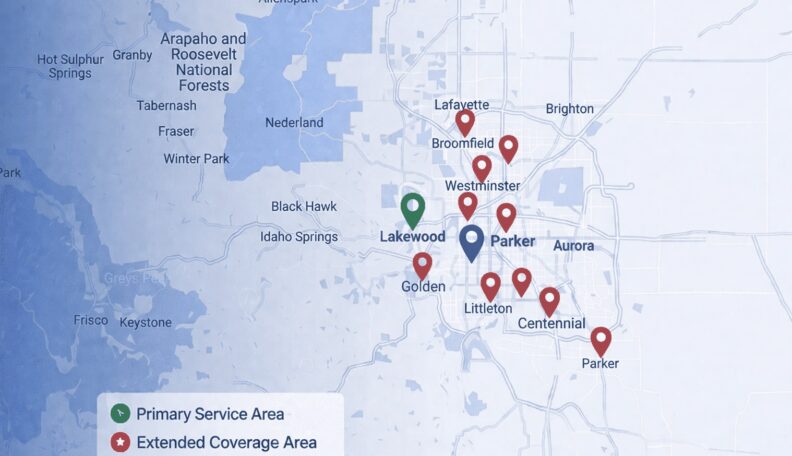
Service Area: 50+ Cities Across Metro Denver
Select Your Nearest Location
Hours: Mon-Fri 8am-5pm
Sunday Emergency Only
Avg Response Time: 18 minutes
Hours: Mon-Fri 8am-5pm
Sunday Emergency Only
Avg Response Time: 18 minutes
Hours: Mon-Fri 8am-5pm
Sunday Emergency Only
Avg Response Time: 18 minutes
Hours: Mon-Fri 8am-5pm
Sunday Emergency Only
Avg Response Time: 18 minutes
Hours: Mon-Fri 8am-5pm
Sunday Emergency Only
Avg Response Time: 18 minutes
Hours: Mon-Fri 8am-5pm
Sunday Emergency Only
Avg Response Time: 18 minutes
Hours: Mon-Fri 8am-5pm
Sunday Emergency Only
Avg Response Time: 18 minutes
Hours: Mon-Fri 8am-5pm
Sunday Emergency Only
Avg Response Time: 18 minutes
Hours: Mon-Fri 8am-5pm
Sunday Emergency Only
Avg Response Time: 18 minutes
Hours: Mon-Fri 8am-5pm
Sunday Emergency Only
Avg Response Time: 18 minutes
Hours: Mon-Fri 8am-5pm
Sunday Emergency Only
Avg Response Time: 18 minutes
Hours: Mon-Fri 8am-5pm
Sunday Emergency Only
Avg Response Time: 18 minutes
Hours: Mon-Fri 8am-5pm
Sunday Emergency Only
Avg Response Time: 18 minutes
Hours: Mon-Fri 8am-5pm
Sunday Emergency Only
Avg Response Time: 18 minutes
Hours: Mon-Fri 8am-5pm
Sunday Emergency Only
Avg Response Time: 18 minutes
We Service: Parker, Castle Rock, Greenwood Village, Lakewood, Littleton, Centennial, Highlands Ranch 40+ More Cities