

How Does Parker’s Peak Summer Season Stress Your Garage Door?
Key Takeaways
- Daily temperature swings of 30 to 50 degrees cause metal components to expand and contract every 24 hours
- Low humidity below 30 percent dries out lubricants and seals faster than in humid climates
- UV intensity at Parker’s elevation is roughly 40 percent higher than at sea level
- June through August is the peak stress period for garage door systems in Parker
- A pre-summer inspection and mid-summer lubrication extend component lifespan by 20 to 30 percent
Parker’s peak summer season puts continuous stress on garage door springs, rollers, seals, and openers through daily temperature swings of 30 to 50 degrees, low humidity, and intense UV exposure at 5,869 feet elevation. These combined forces accelerate wear across every component faster than in lower-altitude or milder regions.
June through August puts more stress on a Parker garage door system than any other three-month stretch of the year. The combination of heat, altitude, UV radiation, and dramatic daily temperature swings creates conditions that no single factor alone would cause. Each component responds differently to this seasonal pressure, and the cumulative effect often shows up as failures in September and October once the damage has been done. Select Garage Doors provides Parker homeowners with the seasonal maintenance that prevents summer stress from turning into fall breakdowns.
What Components Take the Most Stress in Summer?
Springs, rollers, weatherstripping, and opener motors bear the heaviest load during summer. Springs fatigue from thermal cycling, rollers dry out and grind, seals harden and crack, and openers work harder against increased friction.
Torsion springs take the most measurable hit. Each daily temperature swing causes the steel to expand during afternoon heat and contract during overnight cooling. This micro-cycling adds stress beyond the normal open-close wear. A spring rated for 10,000 cycles may effectively lose 1,500 to 2,500 cycles of lifespan over a Parker summer compared to a spring in a climate with stable temperatures.
Rollers dry out fastest during summer because Parker’s low humidity (often below 30 percent from June through August) pulls moisture and lubrication from bearing surfaces. Metal rollers develop flat spots from grinding against dry tracks. Nylon rollers hold up better but still need lubrication every three months in summer conditions.
Garage door openers strain harder during summer for two reasons. First, increased friction from dry components forces the motor to draw more current. Second, garages without insulation can reach 130 to 140 degrees during peak afternoon heat, and opener motors running in that ambient temperature lose cooling efficiency. Select Garage Doors serves Parker, CO homeowners with seasonal inspections that evaluate each component before stress-related failures occur.
How Do Daily Temperature Swings in Parker Affect Garage Doors?
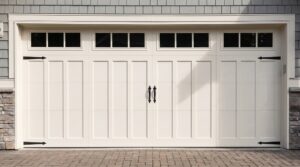
Daily swings of 30 to 50 degrees between morning lows and afternoon highs cycle metal components through expansion and contraction every 24 hours. Over a 90-day summer, that adds up to 90 additional stress cycles on top of normal use.
A typical July day in Parker starts around 55 degrees at dawn and climbs past 90 degrees by mid-afternoon. That 35-degree swing causes measurable dimensional changes in steel springs, tracks, and hardware. While each individual cycle is small, the cumulative effect over three months is real.
Track brackets can loosen as lag screws shift in response to the daily expansion and contraction of the steel track against the wood framing. The result is a gradual increase in vibration, noise, and misalignment that homeowners may not notice until the door starts binding or making grinding sounds.
Hinges and bearing plates experience the same thermal cycling. The repeated stress concentrates at bolt holes and weld points, which are the weakest areas in any metal assembly. A mid-summer hardware check with a socket wrench takes fifteen minutes and prevents these minor loosening issues from cascading into larger problems. For a full guide on managing summer wear, read about summer garage door maintenance in Parker.
Does Low Humidity at Altitude Cause Additional Wear?
Yes. Parker’s summer humidity frequently drops below 30 percent, which accelerates lubricant evaporation, dries out rubber and vinyl seals, and increases static friction on all moving parts.
At sea level with 60 percent humidity, a silicone-based lubricant applied to garage door hinges may last four to six months. In Parker’s dry summer air, that same lubricant may lose effectiveness in six to eight weeks. The dry air also accelerates the aging of rubber components. Weatherstripping that would last five to seven years in a humid climate may need replacement every two to four years in Parker.
Low humidity also affects wood garage doors specifically. Dry air pulls moisture from the wood grain, causing panels to shrink, warp, and develop cracks that let in drafts and pests. Homeowners with wood doors should apply a fresh coat of exterior sealant or stain before each summer to lock in moisture and protect against UV damage.
For homeowners noticing signs of stress-related wear, schedule a service today with Select Garage Doors in Parker.
| Month | Avg High/Low | Primary Stressor | Recommended Action |
|---|---|---|---|
| May | 72 / 42 | Early UV increase, pollen | Pre-summer inspection and tune-up |
| June | 82 / 51 | Rising temps, first heat stress | Monitor for noise changes |
| July | 90 / 57 | Peak heat, maximum UV, driest air | Mid-summer lubrication |
| August | 87 / 55 | Cumulative fatigue, monsoon storms | Check for storm damage, recheck seals |
| September | 79 / 47 | Cool-down contraction after summer | Post-summer assessment |
What Summer Maintenance Prevents Stress-Related Failures?
A pre-summer inspection in May and a mid-summer lubrication in July address the two biggest failure windows. These two touchpoints catch thermal fatigue, dry components, and seal degradation before they cause breakdowns.
Pre-summer checklist (May):
- Test auto-reverse and photo-eye sensors
- Inspect springs for visible rust, gaps between coils, or uneven winding
- Check roller condition and replace any that wobble or resist spinning
- Examine weatherstripping for cracks, hardening, or gaps
- Tighten all track brackets, hinge bolts, and lag screws
- Test door balance by disconnecting the opener
Mid-summer touchpoint (July):
- Reapply silicone-based lubricant to springs, hinges, rollers, and tracks
- Re-inspect weatherstripping (heat damage often shows by mid-July)
- Listen for new noises during operation and note any changes since May
- Check opener motor for overheating signs (hot housing, sluggish operation)
This two-visit approach covers the peak stress window and catches problems before they escalate into September. Parker homeowners who follow this schedule typically see 20 to 30 percent longer component lifespans than those who skip summer maintenance entirely.
Frequently Asked Questions
How Many Stress Cycles Does a Parker Summer Add to Garage Door Springs?
A typical Parker summer adds roughly 90 thermal stress cycles (one per day of temperature swing) on top of the normal open-close wear. Over the life of a spring, this can reduce total lifespan by 15 to 25 percent.
Does Insulation Reduce Summer Stress on a Garage Door?
Yes. An insulated door acts as a thermal buffer, reducing the temperature differential between the interior and exterior surfaces. This slows the rate of expansion and contraction and protects weatherstripping from direct heat exposure.
Can Summer Heat Cause a Garage Door Opener to Fail?
Sustained heat above 100 degrees inside the garage can cause opener motors to overheat and shut down. Ensuring adequate garage ventilation and using an opener rated for high-temperature operation reduces this risk.
Why Do Garage Door Failures Spike in September and October?
Summer stress weakens components gradually. The first cold snap in fall triggers rapid contraction in already-fatigued metal parts, often causing the final failure. Springs and cables that barely survived summer frequently break in early fall.
How Much Does Summer Maintenance Cost for a Parker Garage Door?
Call for a free estimate.
Does Parker’s Altitude Affect Garage Door Opener Performance?
Altitude does not directly affect electric motors, but the thinner air at 5,869 feet provides less cooling. Opener motors may run hotter in Parker than at lower elevations, especially during summer.
Are Steel or Wood Garage Doors More Affected by Summer Stress in Parker?
Both are affected but differently. Steel doors face paint degradation and surface warping from heat absorption. Wood doors face moisture loss, cracking, and warping from low humidity and UV exposure. Insulated steel is the most resilient option for Parker’s climate.
Should I Leave My Garage Door Open During Summer to Reduce Heat Buildup?
Leaving the door open reduces interior temperature but invites dust, pests, and security risks. A better approach is to install garage ventilation (passive vents or a small fan) to circulate air while keeping the door closed.
Looking for a deal?
Call us or to learn about our current promotions and seasonal offers.



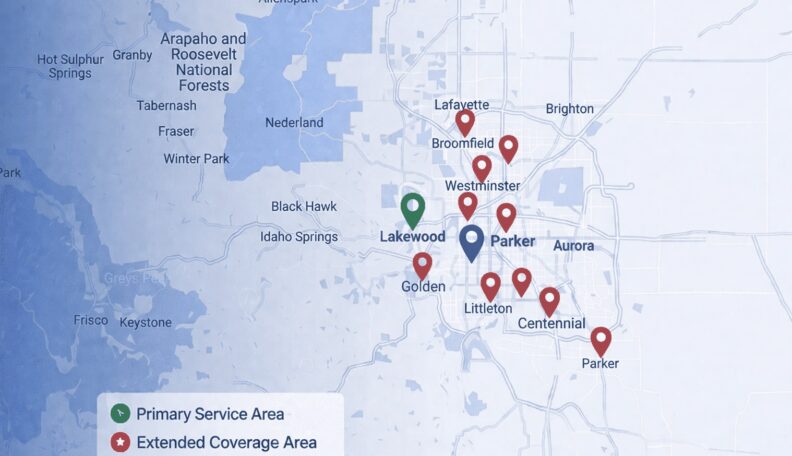
Service Area: 50+ Cities Across Metro Denver
Select Your Nearest Location
Hours: Mon-Fri 8am-5pm
Sunday Emergency Only
Avg Response Time: 18 minutes
Hours: Mon-Fri 8am-5pm
Sunday Emergency Only
Avg Response Time: 18 minutes
Hours: Mon-Fri 8am-5pm
Sunday Emergency Only
Avg Response Time: 18 minutes
Hours: Mon-Fri 8am-5pm
Sunday Emergency Only
Avg Response Time: 18 minutes
Hours: Mon-Fri 8am-5pm
Sunday Emergency Only
Avg Response Time: 18 minutes
Hours: Mon-Fri 8am-5pm
Sunday Emergency Only
Avg Response Time: 18 minutes
Hours: Mon-Fri 8am-5pm
Sunday Emergency Only
Avg Response Time: 18 minutes
Hours: Mon-Fri 8am-5pm
Sunday Emergency Only
Avg Response Time: 18 minutes
Hours: Mon-Fri 8am-5pm
Sunday Emergency Only
Avg Response Time: 18 minutes
Hours: Mon-Fri 8am-5pm
Sunday Emergency Only
Avg Response Time: 18 minutes
Hours: Mon-Fri 8am-5pm
Sunday Emergency Only
Avg Response Time: 18 minutes
Hours: Mon-Fri 8am-5pm
Sunday Emergency Only
Avg Response Time: 18 minutes
Hours: Mon-Fri 8am-5pm
Sunday Emergency Only
Avg Response Time: 18 minutes
Hours: Mon-Fri 8am-5pm
Sunday Emergency Only
Avg Response Time: 18 minutes
Hours: Mon-Fri 8am-5pm
Sunday Emergency Only
Avg Response Time: 18 minutes
We Service: Parker, Castle Rock, Greenwood Village, Lakewood, Littleton, Centennial, Highlands Ranch 40+ More Cities