


What Are the Hidden Pinch Point Dangers on Your Parker Garage Door?
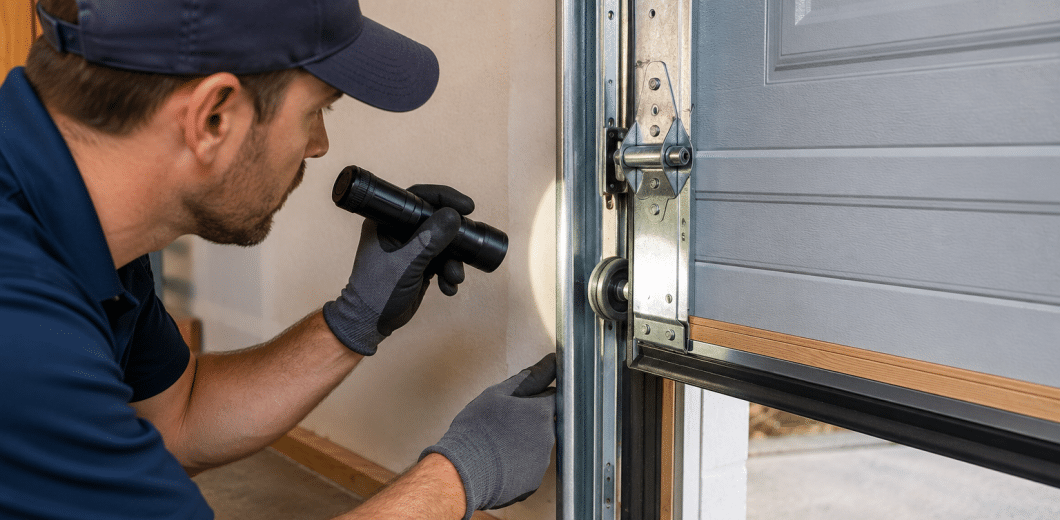
Garage door pinch points are the gaps between door panels that open and close like scissors during operation. These section joints account for 59.5 percent of all garage door injuries, with finger crushing as the most common result. Most Parker homeowners do not recognize these gaps as hazards until an injury occurs.
Key Takeaways
- Section joints between panels are responsible for 59.5 percent of garage door injuries
- Finger injuries account for 27.8 percent of all garage door incidents nationally
- Pinch-resistant panels eliminate the dangerous gaps at section joints
- Children under 14 are the most vulnerable group for pinch point injuries
- A visual inspection of panel gaps takes five minutes and reveals whether upgrades are needed
A garage door looks like a single solid panel from a distance. Up close, it is made of four to five horizontal sections connected by hinges. Every time the door moves, the gaps between those sections open and close with the full weight of the door behind them.
These pinch points are the leading cause of garage door injuries in the United States, and most homeowners have never thought about them. Select Garage Doors helps Parker families identify and address pinch point risks before an injury happens.
Where Are the Pinch Points on a Garage Door?
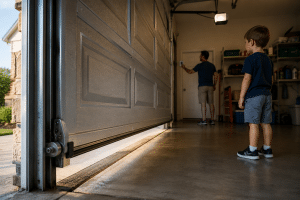
The most dangerous pinch points are the section joints themselves. When the door closes, the panels fold together at each joint. The gap narrows from roughly half an inch to nearly zero as the panels align. Any finger, hand, or object in that gap when it closes gets caught between two steel or wood panels with no give.
The track radius is the second hazard zone. Where the vertical track curves to meet the horizontal ceiling track, the door panels pivot sharply. The gaps at this curve open wider than anywhere else on the door, then snap closed as the panel completes the turn. This area is at head height for children standing near the track.
Bottom brackets where the lift cables attach are another pinch zone. These brackets are under constant spring tension and should never be touched. Parker, CO homeowners should teach every household member to keep hands away from all moving parts during door operation.
Why Are Children at the Highest Risk for Pinch Point Injuries?
Children’s fingers are small enough to fit into section joint gaps that adult fingers cannot enter. Combined with a natural curiosity about moving parts, children under 14 account for a disproportionate share of garage door pinch injuries.
Young children often place their hands on the door panels while watching the door operate. They grab the bottom edge as it closes or run their fingers along the section joints out of curiosity. The gap closes with enough force to fracture small bones and cause deep lacerations.
The Consumer Product Safety Commission tracked 46 child fatalities from garage doors between 1982 and 1990. While the 1993 federal mandate for auto-reverse and sensors reduced deaths, pinch point injuries remain common because these safety features do not prevent finger placement at section joints.
Families with young children should consider upgrading to pinch-resistant panels and scheduling a professional safety assessment to evaluate all pinch points on the door.
What Are Pinch-Resistant Garage Door Panels?
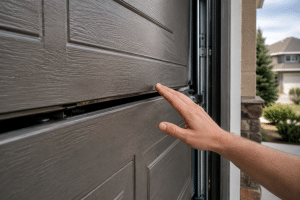
Traditional panel joints create a V-shaped gap that opens and closes during operation. Pinch-resistant designs replace this with a stepped or overlapping joint where the panels interlock without exposing an open gap at any point in the travel path.
Most major garage door manufacturers now offer pinch-resistant panel options. Retrofit is possible on some existing doors by replacing individual panels, but full door replacement is often more cost-effective if the door is older than 15 to 20 years.
Call for a free estimate.
How Can Parker Homeowners Reduce Pinch Point Risks Today?
Immediate steps include teaching household rules about hand placement, adding visual warning labels near section joints, and scheduling a professional evaluation of the door’s pinch point exposure.
Steps to reduce risk without replacing the door:
- Teach all household members to never touch the door while it is moving
- Apply bright warning stickers at each section joint as a visual reminder
- Install a wall button lockout to prevent unsupervised operation by children
- Keep fingers at least six inches from any section joint at all times
- Never reach into the gap between the door and the frame while the door is in motion
For a long-term solution, upgrading to pinch-resistant panels or a new door with modern safety features provides the most protection. For more on how modern materials improve garage door safety, read about modern materials in garage door design.
Frequently Asked Questions
How Many People Are Injured by Garage Door Pinch Points Each Year?
Pinching injuries from section joints account for 59.5 percent of over 20,000 annual garage door injuries in the United States. Finger injuries are the most common type at 27.8 percent of all incidents.
Are Pinch-Resistant Panels Required by Law?
No. Federal law requires auto-reverse mechanisms and photo-eye sensors but does not mandate pinch-resistant panels. However, many building codes and insurance providers recommend or incentivize them for family homes.
Can I Add Pinch-Resistant Panels to My Existing Parker Garage Door?
Some doors allow individual panel replacement with pinch-resistant versions. However, compatibility depends on the door manufacturer and model. A professional assessment determines whether retrofit or full replacement is the better option.
How Do I Know If My Garage Door Has Pinch-Resistant Panels?
Look at the section joints while the door is stationary. If the panels overlap or interlock without an exposed V-shaped gap, the door has pinch-resistant design. If you can see daylight through the joint gaps, the door uses traditional panels.
What Should I Do If Someone Gets a Finger Caught in a Garage Door in Parker?
Do not attempt to move the door. Call 911 if the injury is severe. If possible, use the manual release to disconnect the opener and carefully open the door by hand to free the trapped finger. Seek medical attention for any pinch injury.
Do Pinch-Resistant Panels Affect Garage Door Performance?
No. Pinch-resistant panels operate identically to traditional panels in terms of weight, insulation, and appearance. The only difference is the joint design that eliminates the exposed gap.
How Much Do Pinch-Resistant Garage Door Panels Cost in Parker?
Call for a free estimate.
At What Age Should Children Learn About Garage Door Pinch Points?
Children should learn basic garage door safety rules as soon as they are old enough to be in the garage unsupervised, typically around age four or five. The primary rule is simple: never touch the door while it is moving.





Looking for a deal?
Call us or to learn about our current promotions and seasonal offers.



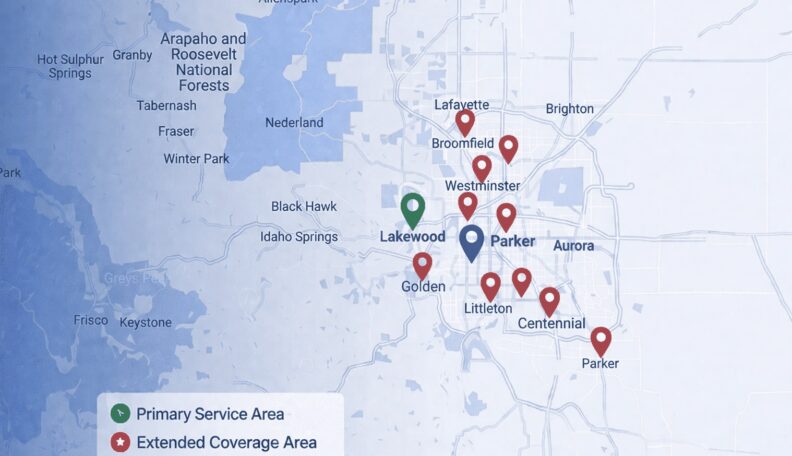
Service Area: 50+ Cities Across Metro Denver
Select Your Nearest Location
Hours: Mon-Fri 8am-5pm
Sunday Emergency Only
Avg Response Time: 18 minutes
Hours: Mon-Fri 8am-5pm
Sunday Emergency Only
Avg Response Time: 18 minutes
Hours: Mon-Fri 8am-5pm
Sunday Emergency Only
Avg Response Time: 18 minutes
Hours: Mon-Fri 8am-5pm
Sunday Emergency Only
Avg Response Time: 18 minutes
Hours: Mon-Fri 8am-5pm
Sunday Emergency Only
Avg Response Time: 18 minutes
Hours: Mon-Fri 8am-5pm
Sunday Emergency Only
Avg Response Time: 18 minutes
Hours: Mon-Fri 8am-5pm
Sunday Emergency Only
Avg Response Time: 18 minutes
Hours: Mon-Fri 8am-5pm
Sunday Emergency Only
Avg Response Time: 18 minutes
Hours: Mon-Fri 8am-5pm
Sunday Emergency Only
Avg Response Time: 18 minutes
Hours: Mon-Fri 8am-5pm
Sunday Emergency Only
Avg Response Time: 18 minutes
Hours: Mon-Fri 8am-5pm
Sunday Emergency Only
Avg Response Time: 18 minutes
Hours: Mon-Fri 8am-5pm
Sunday Emergency Only
Avg Response Time: 18 minutes
Hours: Mon-Fri 8am-5pm
Sunday Emergency Only
Avg Response Time: 18 minutes
Hours: Mon-Fri 8am-5pm
Sunday Emergency Only
Avg Response Time: 18 minutes
We Service: Parker, Castle Rock, Greenwood Village, Lakewood, Littleton, Centennial, Highlands Ranch 40+ More Cities