

Why You Should Consider Professional Parker Garage Door Opener Installation Services
Functionality Improvements at a Glance
A professional opener installation in Parker, CO upgrades five distinct aspects of how your garage door system operates: security, convenience, noise level, energy use, and long-term reliability. The before-and-after below shows what each upgrade actually changes about your day-to-day experience.
Upgrading your garage door opener is one of those home improvements where the difference is felt every single day. The features that come standard on a modern opener (rolling code security, smartphone control, belt drive, LED lighting, battery backup) didn’t exist on openers installed even ten years ago. If your existing opener was installed before 2015, the gap between what you have and what’s available now is significant.
At Select Garage Doors, we install professional opener systems across Parker, CO and the wider Denver Metro area, and the five upgrades below show what changes for homeowners after a professional install. The before-and-after framing is meant to give you a realistic picture of what improves, not just a list of marketing claims.
Want a technician to assess your existing opener and recommend the right replacement? Contact us today for a no-obligation consultation.
Security That Stops Modern Threats, Not Just 1995-Era Code Grabbers
Modern garage door openers come equipped with rolling code security, encrypted Wi-Fi connections, and learn-button protection that prevent the kind of code-grabbing attacks that worked on garage openers manufactured before 2010. If your opener uses a fixed-code remote (button held down to broadcast a single repeating signal), it can be cloned by an inexpensive scanning device available online. Modern systems eliminate that entire attack class.
Before installation: a fixed-code opener vulnerable to code-grabbing, with all family remotes using the same broadcast signal that any nearby device could intercept.
After installation: rolling code technology generates a new encrypted access code with every remote button press, with all old codes invalidated. Optional Wi-Fi camera integration and motion-activated lighting close additional security gaps.
Convenience That Removes the “Did I Close the Garage?” Mental Loop
Smartphone control is the biggest single quality-of-life improvement a modern opener adds. Once paired through the manufacturer’s app (myQ, Aladdin Connect, or equivalents), the opener becomes a remote-accessible device. You can check the door’s status, close it from anywhere, get real-time alerts when someone opens or closes it, and grant temporary access to service providers without sharing a physical remote.
Before installation: a once-a-day “did I close the garage?” mental loop, plus a backup trip home to confirm if you can’t remember.
After installation: the app tells you the door’s current status. You close it from anywhere with a tap. Family members get keypad PINs instead of dedicated remotes. Service providers get time-limited access codes that expire automatically.
Quiet Operation That Doesn’t Wake the Bedroom Above the Garage
A belt-drive opener runs significantly quieter than an older chain-drive unit, transmitting almost no vibration through the garage framing into living spaces above or beside the garage. For Parker homes with bedrooms above the garage, an HOA-shared wall, or a home office adjacent to the garage, the noise reduction alone justifies the upgrade. The difference is often the gap between “wakes the household at 6 a.m.” and “no one notices.”
Before installation: chain-drive clatter on every open and close cycle, plus a metallic grind that signals wear on rollers, hinges, or chain links.
After installation: belt-drive quiet operation that registers at conversation volume rather than vehicle volume. The motor hums; the door moves; the household stays asleep.
Energy Savings That Add Up Through a Colorado Winter
Newer opener motors are more efficient than older models. They use less standby power, ship with LED bulb sockets that handle vibration without burning out, and on smart models, can be tied to automation rules that turn the garage interior light off after a set delay. None of those individual savings are dramatic, but they add up across thousands of cycles a year in a Colorado climate where cold weather forces the opener to work harder.
Before installation: an older opener that draws standby power continuously, a 40-watt incandescent bulb in the housing that burns out every six months from vibration, and no automation tied to the door’s open or close events.
After installation: low-standby motor electronics, LED lighting rated for opener vibration with 10-plus-year lifespans, and smart-rule automation that ties interior lights to door state.
Professional Installation That Catches What DIY Misses
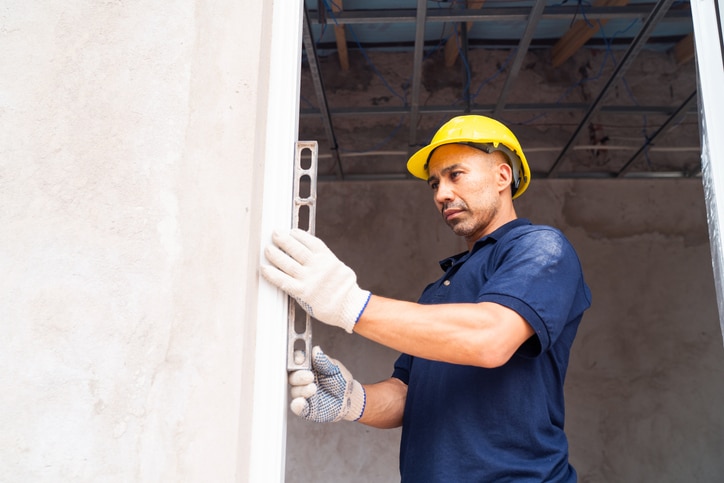
Most install mistakes don’t show up on day one. They show up six to twelve months later, when an incorrectly tensioned spring drops the opener motor’s lifespan in half, or when a misaligned photo-eye sensor causes the door to refuse to close on the coldest morning of the year. Professional installation by experienced technicians includes the calibration checks (force settings, auto-reverse, photo-eye alignment, balance verification) that determine whether the opener you just bought lasts 8 years or 18.
Before installation: a quoted DIY job estimated at 4 hours, frequently stretching to a weekend, with no force-calibration step and no balance verification.
After installation: a verified install with UL 325 safety compliance, calibrated force settings matched to the door’s actual weight and Parker’s seasonal temperature swings, and a workmanship warranty that covers callbacks if anything drifts in the first year. Schedule a garage door opener installation visit to talk through specifics for your existing setup.
What Each Improvement Actually Costs and Delivers
The table below maps each functionality improvement to a typical cost range and the specific value it adds.
| Service | Functionality Improvement | Typical Cost Range |
|---|---|---|
| Rolling code security upgrade | Eliminates code-grabbing vulnerability of pre-2010 openers | Included with new opener install |
| Smart hub (Wi-Fi connectivity) | Phone control, real-time alerts, remote close-from-anywhere | Call for a free estimate. |
| Belt drive opener swap | Replaces chain clatter with quiet belt operation | Call for a free estimate. |
| LED bulb upgrade | Brighter garage light, 10-plus year lifespan | Call for a free estimate. |
| Professional install + calibration | UL 325 compliance, force settings matched to door weight | Call for a free estimate. |
The biggest mental-load win after a smart opener install is the one you don’t notice. You stop wondering if you closed the garage. You just check your phone, and the answer is right there.
What an Installation Day Looks Like
If you’re scheduling a professional opener installation in Parker, here’s a rough timeline of what the day looks like so you know what to expect.
- 8:00 a.m. Technician arrives, confirms scope, and inspects the existing opener and door system.
- 8:30 a.m. Door weight, spring grade, and rail clearance verified. Recommended opener model confirmed.
- 9:00 a.m. Old opener removed and disposed of. New opener mounted, rail attached, motor hardware secured.
- 10:30 a.m. Wiring routed, photo-eye sensors mounted and aligned, force settings calibrated.
- 11:30 a.m. Remotes paired, keypad programmed, smartphone app set up if applicable.
- 12:00 p.m. Auto-reverse safety test, photo-eye test, manual release test, full open and close cycle verification.
- 12:30 p.m. Walkthrough with the homeowner, warranty documents handed over, install complete.
Most residential single-door installs wrap up in 3 to 4 hours total. Double-door installs and battery backup add-ons can stretch the day to 5 hours.
Pick the Upgrade Pace That Fits Your Home
Not every household needs every improvement above on day one. A new opener handles the security, convenience, and quiet-operation gains automatically; accessory upgrades layer in afterward as needs evolve. At Select Garage Doors, we’re a veteran-owned team based in Parker serving the Denver Metro area, and we’ll walk you through which improvements deliver the most value for your specific setup before any work begins. Give us a call at (720) 339-2442.
Frequently Asked Questions
How much does professional garage door opener installation cost in Parker, CO?
Belt drive and direct drive models sit at the upper end; chain drive is the most cost-effective. Labor and parts are usually quoted separately, and a written estimate up front prevents surprise charges.
What’s included in a professional opener installation appointment?
A full appointment includes removal and disposal of the old opener (if applicable), mounting and wiring of the new unit, photo-eye sensor installation, force-setting calibration, auto-reverse and safety testing, remote and keypad programming, smartphone app setup if applicable, and a walkthrough with the homeowner before the technician leaves.
How long does a typical residential opener installation take?
Most residential single-door installs take 3 to 4 hours from arrival to walkthrough. Double-door installs add about an hour. Adding accessories during the same visit (battery backup, smart hub, keypad) can stretch the day to 5 hours total but bundles all the work into one trip.
Can a professional install include accessory add-ons in the same visit?
Yes, and bundling is usually the most efficient approach. Smart hubs, wireless keypads, battery backups, and upgraded photo-eye sensors all integrate with the new opener on install day, so the technician calibrates and tests the full system end-to-end rather than across multiple visits.
What’s the warranty on a professional opener installation?
Two warranties apply: the manufacturer’s warranty on the opener itself (typically 5 to 10 years on the motor, less on parts) and the installer’s workmanship warranty on the install labor (typically 1 to 2 years). Ask for both in writing before signing off. Professional installers honor workmanship issues like misalignment or force-setting drift at no charge during the warranty window.
How do I know if my existing opener needs replacement vs. repair?
Replace when the opener is 12-plus years old, when repair costs would exceed roughly half the price of a new opener, when parts are no longer available for the model, or when the opener lacks rolling code security and battery backup. A technician can assess condition, age, and cost-of-repair during a service visit before recommending replacement.
Will a professional installer recommend a specific brand or model?
A good installer will recommend based on your door weight, garage type (attached or detached), and your smart-home ecosystem if any. LiftMaster and Chamberlain are the most widely supported brands; Genie’s Aladdin Connect line is a strong alternative. The recommendation should be based on fit, not on the brand the installer happens to stock.
Can I keep my old remotes with a new opener?
Usually not, because rolling code security on new openers requires brand-matched remotes that pair to the new motor’s receiver. Universal remotes work in some cases but lose some smart features.
Is there an HOA approval step for a new garage door opener?
For the opener motor itself, generally no. Openers are interior equipment and don’t change the garage door’s exterior appearance. HOA review usually applies only when the door itself is being replaced or the exterior color is changing. Check your HOA documents to confirm, but most opener swaps proceed without architectural review.
What should I do to prepare my garage before installation day?
Move vehicles out of the garage so the technician has full access. Clear a 3-foot perimeter around the door and the ceiling area where the opener mounts. Power down anything connected to the existing opener’s circuit. Have the make and model of your existing opener handy if disposal is part of the appointment. Most pros can handle the rest.
Looking for a deal?
Call us or to learn about our current promotions and seasonal offers.



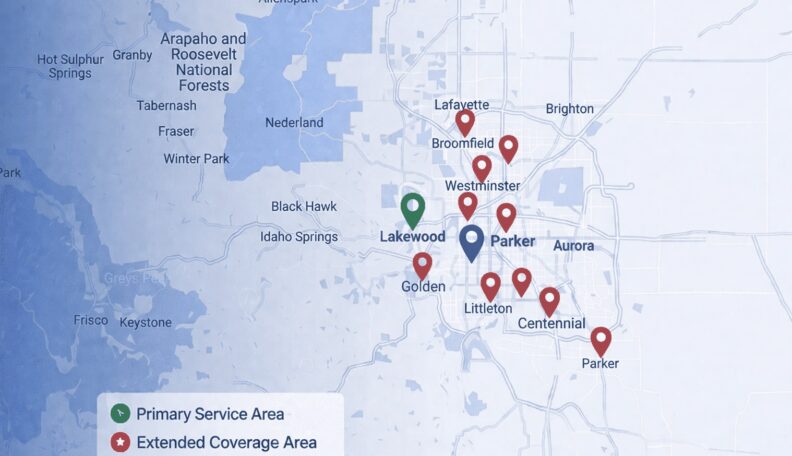
Service Area: 50+ Cities Across Metro Denver
Select Your Nearest Location
Hours: Mon-Fri 8am-5pm
Sunday Emergency Only
Avg Response Time: 18 minutes
Hours: Mon-Fri 8am-5pm
Sunday Emergency Only
Avg Response Time: 18 minutes
Hours: Mon-Fri 8am-5pm
Sunday Emergency Only
Avg Response Time: 18 minutes
Hours: Mon-Fri 8am-5pm
Sunday Emergency Only
Avg Response Time: 18 minutes
Hours: Mon-Fri 8am-5pm
Sunday Emergency Only
Avg Response Time: 18 minutes
Hours: Mon-Fri 8am-5pm
Sunday Emergency Only
Avg Response Time: 18 minutes
Hours: Mon-Fri 8am-5pm
Sunday Emergency Only
Avg Response Time: 18 minutes
Hours: Mon-Fri 8am-5pm
Sunday Emergency Only
Avg Response Time: 18 minutes
Hours: Mon-Fri 8am-5pm
Sunday Emergency Only
Avg Response Time: 18 minutes
Hours: Mon-Fri 8am-5pm
Sunday Emergency Only
Avg Response Time: 18 minutes
Hours: Mon-Fri 8am-5pm
Sunday Emergency Only
Avg Response Time: 18 minutes
Hours: Mon-Fri 8am-5pm
Sunday Emergency Only
Avg Response Time: 18 minutes
Hours: Mon-Fri 8am-5pm
Sunday Emergency Only
Avg Response Time: 18 minutes
Hours: Mon-Fri 8am-5pm
Sunday Emergency Only
Avg Response Time: 18 minutes
Hours: Mon-Fri 8am-5pm
Sunday Emergency Only
Avg Response Time: 18 minutes
We Service: Parker, Castle Rock, Greenwood Village, Lakewood, Littleton, Centennial, Highlands Ranch 40+ More Cities