

How to Troubleshoot Common Garage Door Problems in Parker, CO
Key Takeaways
- Most garage door problems in Parker, CO trace back to one of five components: springs, cables, tracks, rollers, or sensors. Identifying the right one quickly changes how you respond and what it costs.
- Broken torsion springs are the leading cause of a door that won’t lift and should never be treated as a DIY repair. The stored tension makes this a job for a trained technician.
- Safety sensors are a frequent reason a door reverses unexpectedly or won’t close. They’re worth checking yourself before calling anyone, since the fix is often straightforward.
- Most garage door problems in Parker get more expensive the longer they sit. One worn component puts extra stress on everything connected to it.
- Select Garage Doors handles spring replacement, cable repair, roller replacement, track work, and opener service throughout Parker, CO and the Denver metro.
Table of Contents
A garage door that won’t cooperate is more than an inconvenience. It can leave your vehicle trapped, your home unsecured, and your day derailed. Select Garage Doors has been diagnosing and repairing garage door problems throughout Parker, CO and the Denver metro for years, and the reality is that most failures come down to a short list of components. Knowing what to look for changes everything about how you respond.
This guide covers the most common garage door problems we see in Parker, CO homes: what causes them, what the warning signs look like, and which repairs you can reasonably handle yourself versus which ones need a trained technician on-site. It’s not about turning every homeowner into a mechanic. It’s about giving you enough information to make a smart call.
Garage door systems are more connected than they look. When one part wears down, it rarely stays isolated. A bent track strains the rollers. A weak spring stresses the cables. A sensor knocked out of alignment can make the whole opener behave erratically. Troubleshooting well means looking at the full picture, not just the symptom that first got your attention.
1. How Garage Door Systems Fail in Parker, CO
In Parker, CO, garage door failures most often trace back to one of five areas: springs, cables, tracks, rollers, or sensors. Springs and cables carry the mechanical load of the door and wear out over time. Tracks and rollers guide the door through its full travel path. Sensors tell the opener when it’s safe to close. Any one of these failing can shut the whole system down.
Parker’s weather adds wear that homeowners don’t always account for. Cold winters cause metal to contract and lubricants to thicken. Summer heat does the opposite, thinning out lubrication and stressing the opener’s circuit board. This temperature cycling accelerates wear, especially on springs and rollers that are already near the end of their service life.
Before calling anyone, take a few minutes to observe the door. Is it completely unresponsive, or does it move partway and stop? Does it close then immediately reverse? Is there a visible gap or sag in the spring? Is the opener running but the door not moving? Each of those patterns points in a different direction. Start with observation.
2. Track Problems: Misalignment and Obstructions in Parker, CO
Track problems in Parker, CO show up as a door that grinds, sticks, or derails partway through its travel. You may hear scraping or see the door pulling to one side. Visually inspect both tracks for bends, gaps between the track and the wall bracket, or debris lodged in the path. Misaligned tracks are repairable in most cases, though badly bent sections may need full replacement.
The most common track issue is a gap between the rollers and the track wall. This happens when the mounting hardware loosens over time. Tighten the bolts holding the track to the wall bracket and check whether the gap closes. If the track itself is visibly bent, don’t try to force it straight. You’ll likely make it worse and create a more expensive repair.
Debris is worth checking too. Small stones, dried dirt, and ice in winter can all create enough resistance to stall the door or trigger the opener’s safety stop. Clear the tracks with a damp cloth and inspect the full length of both sides before assuming a mechanical failure.
3. Spring and Cable Failures in Parker, CO
A broken torsion spring in Parker, CO is usually obvious: the door won’t lift, or it lifts only a few inches before the opener stalls. You may hear a loud bang when the spring snaps. Look above the door at the horizontal spring along the header. A visible gap in the coil means it’s broken and needs professional replacement before the door can operate safely.
Don’t try to operate the door manually or with the opener if you suspect a broken spring. Torsion springs are under considerable stored tension, and a door without proper counterbalance can drop suddenly. Disconnect the opener and leave the door in the closed position. This is a repair that needs a trained technician with the right tools and replacement hardware.
Extension springs, found on some older Parker, CO homes, run along the horizontal tracks on both sides of the door. If one breaks, the door will be unbalanced and may open unevenly or not at all. The same rule applies: stop using the door and call for service.
Garage door cables in Parker, CO typically fray or break from age, corrosion, and repeated stress. The cables wrap around a drum at the top of each side and unwind as the door opens. When a spring breaks, the cable bears sudden overload and can snap instantly. Frayed cables should be addressed right away. Operating the door on frayed cables risks a sudden drop that can damage the door or create a hazard.
Cable replacement is a job for a trained technician. The cables connect to the spring system, and reinstalling them correctly requires knowing the right tension and routing for your specific door and spring configuration. A cable installed incorrectly will either fail again quickly or leave the door unbalanced during operation.
4. Roller and Panel Issues in Parker, CO
Worn garage door rollers in Parker, CO usually announce themselves with noise before they fail completely. Grinding, rattling, or squeaking during door travel points to rollers that have lost their smooth bearing surface. Visually, look for rollers that are cracked, chipped, or wobbling on their stems. Replacing them is a relatively straightforward repair and one of the more cost-effective ways to extend the system’s life and reduce noise.
Nylon rollers are a popular upgrade for Parker homeowners who want quieter performance. They run smoother than steel rollers on steel tracks and don’t require lubrication as frequently. If your door has been running loud for a while and you haven’t replaced the rollers in several years, it’s worth asking about nylon options when you schedule service.
Single panel damage in Parker, CO is often repairable if the structural frame of the door is still intact. A dented or cracked panel can be replaced without replacing the entire door, provided a matching panel is available for your door’s brand and model. If the damage has warped the frame or if multiple panels are affected, full replacement makes more financial sense. A technician can assess which option is right for your situation.
Panel damage is sometimes overlooked because the door still operates after a minor impact. But a warped panel adds drag to the system and can accelerate wear on tracks and the opener over time. If a vehicle bumped the door or something hit it from the outside, have the frame alignment checked even if the door still moves.
5. Sensor and Remote Malfunctions in Parker, CO
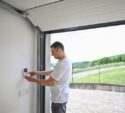
A garage door that reverses before fully closing in Parker, CO is almost always responding to its safety sensors. The two sensors sit a few inches off the ground on either side of the door opening and must be aligned to complete the circuit. If one is bumped, dirty, or blocked, the opener reads it as an obstruction and reverses. Cleaning the lenses and checking alignment is the first step before assuming the opener itself is faulty.
The sensor indicator lights tell you a lot. On most LiftMaster and Chamberlain openers, the receiving sensor shows a solid green light and the sending sensor shows a solid amber light. If either light is blinking or off, the sensors are out of alignment or obstructed. Loosen the wing nut on the receiving sensor, adjust it until the light goes solid, then retighten. For a more detailed walkthrough of sensor and track fixes, see our guide on how to fix garage door sensor and track issues.
If the sensors check out but the door still reverses, the issue may be the close-force setting on the opener. Over time, the door’s weight shifts slightly, and the force calibration needs adjustment. That’s a quick fix a technician can handle during a tune-up visit.
A non-responsive garage door remote in Parker, CO is usually a battery issue first. Replace the batteries before assuming anything else. If fresh batteries don’t fix it, check whether the wall button opens the door. If the wall button works but the remote doesn’t, the remote likely needs reprogramming or the opener’s antenna may be damaged. If neither works, the issue is with the opener unit itself.
Reprogramming a remote is straightforward on most modern openers. Hold the “Learn” button on the opener unit until the indicator light comes on, then press the button on the remote you want to pair. If your opener is more than 10 to 15 years old and remotes keep losing their programming, the logic board may be near the end of its life.
When to DIY and When to Call a Technician in Parker, CO
Parker, CO homeowners can safely handle a few garage door tasks without professional help: cleaning and lubricating the tracks and rollers, replacing remote batteries, checking and realigning sensors, clearing track obstructions, and tightening loose hardware. Anything involving springs, cables, or opener circuit boards should go to a trained technician. The risk isn’t complexity; it’s the stored mechanical energy that can release without warning if handled incorrectly.
Lubrication is a good habit to build. A light application of garage door lubricant (not WD-40, which is a cleaner rather than a lubricant) on the springs, rollers, and hinges every six months slows wear noticeably. It’s especially worthwhile heading into winter in Parker, when cold temperatures make metal components stiffer and more prone to cracking under load.
If you’re unsure whether a repair is in your range, err on the side of caution. The cost of a service call is almost always less than the cost of a secondary repair caused by a misstep. Select Garage Doors offers free estimates in Parker, CO, so you know what you’re dealing with before committing to anything. Get a free quote or call us at 720-339-2442 to schedule a visit.
We serve Parker, Castle Rock, Greenwood Village, Lakewood, and the greater Denver metro area.
Frequently Asked Questions
How much does garage door repair cost in Parker, CO?
Garage door repair costs in Parker, CO depend on what needs fixing. Spring replacement, cable repair, and opener repair are all quoted after an on-site evaluation. Select Garage Doors provides a written estimate before any work begins, so there are no surprises.
How long do garage door springs last in Parker, CO?
Most torsion springs are rated for 10,000 cycles, which works out to roughly 7 to 10 years for a household that opens the door four to six times per day. Heavier doors and high-use households shorten that lifespan. Parker’s temperature swings also accelerate metal fatigue, so springs near the end of their rated cycle count can fail earlier than expected.
Is it safe to open my garage door manually when the spring is broken?
No. A garage door with a broken torsion spring has no counterbalance, meaning the full weight of the door must be supported manually. Most homeowners can’t safely hold that weight, and the door can drop suddenly. Leave the door in the closed position and call for service. Don’t pull the emergency release cord until a technician is on-site and ready to work.
Why does my garage door go down then come back up in Parker, CO?
The most common reasons are misaligned or obstructed safety sensors, an object in the door’s path, or incorrect close-force settings on the opener. Start by checking the sensor lights at the base of the door opening. If both lights are solid (amber on one side, green on the other), the sensors are fine and the issue is likely the opener’s travel limit or force settings. A technician can calibrate both during a service visit.
Can I lubricate my garage door myself in Parker, CO?
Yes, and it’s a good maintenance habit. Use a garage door lubricant or white lithium grease on the springs, rollers, hinges, and the inside of the tracks. Avoid WD-40, which is a water displacer and cleaner rather than a long-term lubricant. Apply it every six months, or more frequently heading into winter, when Parker’s cold temperatures stiffen metal components and increase wear on springs and rollers.
What does it mean when my garage door opener runs but the door doesn’t move?
If the opener motor runs but the door stays put, the most common cause is a disconnected trolley. The emergency release cord, when pulled, disconnects the door from the drive carriage. If someone pulled it and the door was never reconnected, the opener runs without moving anything. Slide the door back until the trolley re-engages the drive. If that’s not the issue, check for a broken spring or snapped cable that’s preventing the door from lifting under load.
How often should I schedule garage door maintenance in Parker, CO?
Annual maintenance is the standard recommendation for most Parker, CO homes. A tune-up includes a full inspection, lubrication of all moving parts, hardware tightening, balance check, and safety reverse test. Homes with high daily use or older systems benefit from a twice-yearly schedule. Catching a worn spring or fraying cable during a maintenance visit is far less costly than dealing with a failure when you need the door most.
Looking for a deal?
Call us or to learn about our current promotions and seasonal offers.



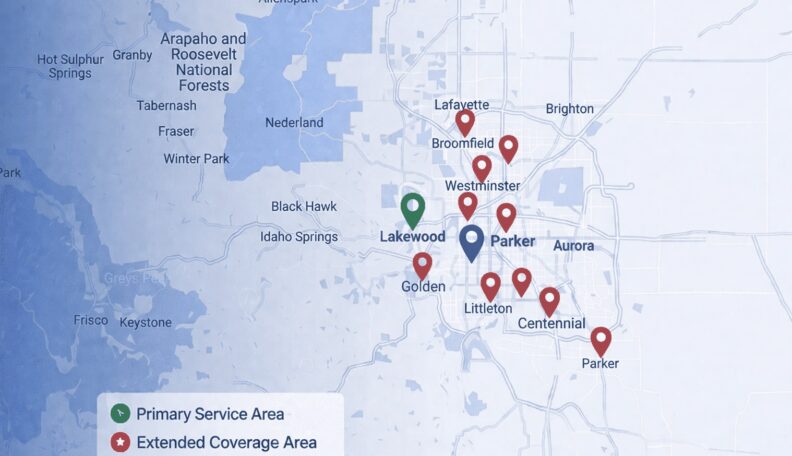
Service Area: 50+ Cities Across Metro Denver
Select Your Nearest Location
Hours: Mon-Fri 8am-5pm
Sunday Emergency Only
Avg Response Time: 18 minutes
Hours: Mon-Fri 8am-5pm
Sunday Emergency Only
Avg Response Time: 18 minutes
Hours: Mon-Fri 8am-5pm
Sunday Emergency Only
Avg Response Time: 18 minutes
Hours: Mon-Fri 8am-5pm
Sunday Emergency Only
Avg Response Time: 18 minutes
Hours: Mon-Fri 8am-5pm
Sunday Emergency Only
Avg Response Time: 18 minutes
Hours: Mon-Fri 8am-5pm
Sunday Emergency Only
Avg Response Time: 18 minutes
Hours: Mon-Fri 8am-5pm
Sunday Emergency Only
Avg Response Time: 18 minutes
Hours: Mon-Fri 8am-5pm
Sunday Emergency Only
Avg Response Time: 18 minutes
Hours: Mon-Fri 8am-5pm
Sunday Emergency Only
Avg Response Time: 18 minutes
Hours: Mon-Fri 8am-5pm
Sunday Emergency Only
Avg Response Time: 18 minutes
Hours: Mon-Fri 8am-5pm
Sunday Emergency Only
Avg Response Time: 18 minutes
Hours: Mon-Fri 8am-5pm
Sunday Emergency Only
Avg Response Time: 18 minutes
Hours: Mon-Fri 8am-5pm
Sunday Emergency Only
Avg Response Time: 18 minutes
Hours: Mon-Fri 8am-5pm
Sunday Emergency Only
Avg Response Time: 18 minutes
Hours: Mon-Fri 8am-5pm
Sunday Emergency Only
Avg Response Time: 18 minutes
We Service: Parker, Castle Rock, Greenwood Village, Lakewood, Littleton, Centennial, Highlands Ranch 40+ More Cities