

Common Issues Addressed by Emergency Garage Door Repair Services in Parker, CO
Key Takeaways
- The five most common emergency garage door issues in Parker, CO are broken springs, faulty openers, off-track doors, damaged panels, and broken cables or rollers. All five can make the door unsafe or inoperable until repaired.
- Colorado’s hail season (April through September) and Front Range temperature swings of 40 to 60 degrees Fahrenheit per day are leading causes of sudden garage door failure in the Parker area.
- Broken torsion springs and off-track doors are the two issues where waiting even 24 to 48 hours creates a compounding safety and security risk. Don’t delay these calls.
- Annual spring inspection, biannual lubrication, and monthly auto-reverse testing (UL 325) are the three highest-impact maintenance habits for Parker homeowners looking to avoid emergency repair calls.
- Select Garage Doors handles emergency garage door repairs throughout Parker, Castle Rock, Greenwood Village, Lakewood, and the greater Denver metro. Call 720-339-2442.
Table of Contents
- Broken Garage Door Springs
- Faulty Garage Door Openers
- Misaligned or Off-Track Doors
- Damaged Garage Door Panels
- Broken Cables and Rollers
- How Colorado Weather Triggers Emergency Repair Calls
- Preventing the Same Emergency from Happening Twice
- When to Call for Emergency Service
- Frequently Asked Questions
A garage door that stops working unexpectedly isn’t just an inconvenience in Parker, CO — in most homes here, the garage is the primary entry point, which means a door that won’t open or close is a security problem that can’t wait. Select Garage Doors handles the full range of emergency garage door problems throughout Parker and the Denver metro, and the calls we respond to follow consistent patterns.
Knowing which issues call for immediate attention versus which can safely wait for a scheduled visit helps Parker homeowners respond faster and avoid turning a manageable problem into a bigger one. Here is a breakdown of the five most common emergency garage door issues in Parker, CO, what causes each one, and what to do while you wait for a technician.
1. Broken Garage Door Springs
Broken torsion springs are the most frequent driver of emergency garage door repair calls in Parker, CO. Springs carry the door’s full weight on every open and close cycle, and when one breaks, the door typically becomes too heavy to lift manually or stops moving entirely. The failure is often announced by a loud bang from the garage and leaves the door inoperable until a trained technician replaces the spring using the correct winding bars and DASMA specifications for the door’s weight.
Residential torsion springs have a rated service life of 7,000 to 10,000 cycles. At four cycles per day, that’s roughly five to seven years. Parker’s overnight temperature drops in fall and winter accelerate spring fatigue by causing the metal to contract under load, which is why spring failures spike at the start of cold weather each year. A spring that is near the end of its service life going into November is at elevated risk of breaking on the first hard cold morning of the season.
Don’t attempt to manually lift a door with a broken spring, and don’t run the opener. The imbalanced load damages the opener motor and cables with every cycle. Common myths about emergency garage door repair lead some Parker homeowners to wait too long before calling, which typically makes the damage worse.
2. Faulty Garage Door Openers
Opener failures in Parker, CO most often trace back to one of three components: the remote or wall button signal, the safety sensors, or the logic board. A door that reverses before fully closing or won’t close while the opener light flashes is almost always a sensor issue rather than a true opener failure. Correctly diagnosing the cause before replacing parts saves money and gets the door working faster.
Start by checking the photo-eye sensors mounted near the floor on both sides of the door. Both need to be aligned with each other and have clean lens faces. A spider web, dirt accumulation, or a sensor shifted slightly from a bump can cause reversal behavior that looks like opener failure. If both sensors show solid indicator lights and the path between them is clear, the force adjustment on the opener itself may need recalibration.
Actual motor failure is less common but does happen. A motor that hums without moving the door is receiving power but can’t drive the gear, which usually means a stripped drive gear or a motor at the end of its service life. Parker homeowners needing fast help can schedule urgent garage door repair in Parker to get the opener assessed and back in service.
3. Misaligned or Off-Track Doors
A garage door that has come off its tracks in Parker, CO should not be operated until a technician has corrected the problem. Off-track doors occur most often from a broken cable releasing one side of the door under spring tension, from impact damage to a panel or track bracket, or from rollers worn enough to lose contact with the track. Operating a door that has left its tracks can cause it to drop suddenly, damage the opener drive rail, or bend the tracks further out of alignment.
If your door goes off-track, disconnect the opener by pulling the red emergency release cord and leave the door in whatever position it’s in. Don’t try to force it back onto the track manually. The door is still under spring tension, and incorrect manipulation can redirect that load in ways that cause injury or additional damage. Secure the door in place with clamps on the track below the bottom roller if it’s in a partially open position, then call for service.
Misalignment that falls short of a full off-track event — where the door is still on the tracks but running unevenly — usually points to a track bracket that has shifted or a roller that has developed a flat spot. Why timely response from emergency repair services matters is especially clear with track alignment: a minor misalignment that continues to run will damage the tracks themselves, turning a simple roller replacement into a full track replacement.
4. Damaged Garage Door Panels
Damaged garage door panels in Parker, CO are most often caused by vehicle impact, hail strikes during Colorado’s spring and summer storm season, or debris impact from Front Range windstorms. Single-panel damage can sometimes be addressed by replacing only the affected section if the manufacturer still produces matching panels and the door’s structural integrity is sound. Full door replacement makes more sense when multiple panels are damaged, when matching panels are no longer available, or when the damage has compromised the frame.
Damaged panels affect more than appearance. A dented or cracked section creates a structural weak point that changes how the door distributes load across the panel assembly during operation. Panels that are buckled inward can also interfere with the door’s travel along the track, creating binding or misalignment that compounds the original damage. Getting a professional assessment quickly after panel damage determines whether the repair can be scoped to one section or whether the full door’s structural integrity needs to be evaluated.
5. Broken Cables and Rollers
Lift cables are closely tied to spring failures in Parker, CO emergency calls. When a torsion spring breaks, the sudden imbalanced load often causes the cable on the affected side to go slack, kink, or snap. Cables can also fail on their own from gradual wear, most commonly at the bottom bracket attachment point where they wrap under the heaviest load. A door that hangs crooked, moves jerkily, or drops lower on one side after a loud bang is showing cable failure symptoms that need immediate attention.
Rollers are the preventive side of this issue. Nylon rollers on residential garage doors in Parker typically last seven to ten years. Worn rollers show flat spots on the wheel, increased grinding during operation, and visible wobbling as the door moves. A roller that fails during operation can allow the door to jump the track, turning a routine maintenance item into an off-track emergency. Catching and replacing worn rollers before they fail extends the life of the tracks and prevents this escalation.
6. How Colorado Weather Triggers Emergency Repair Calls in Parker
Parker, CO’s Front Range location creates a more demanding environment for garage door hardware than most of the country. Hail season runs from April through September, with the Denver metro averaging 9 to 10 hail events per year. A single hail storm can dent multiple panels simultaneously, knock photo-eye sensors off axis from debris impact, and damage weather seals along the door perimeter. Sensors shifted even a few millimeters by flying debris will cause the door to reverse on every close cycle, reading to homeowners as an opener malfunction but tracing directly to the storm impact.
Temperature swings are the second major weather driver of emergency calls in the Parker area. Daily swings of 40 to 60 degrees Fahrenheit are common on the Front Range, and overnight drops in fall and winter routinely exceed 30 to 40 degrees Fahrenheit within a few hours. Cold causes spring metal to become more brittle and contract under load. A spring that is already near the end of its service life will often fail on the first cold morning after a sharp overnight drop, leaving homeowners unable to open the door before work. Cable stiffness follows the same pattern: cables lose flexibility in sustained cold, and the combination of a stiff cable and a contracted spring increases the load on both components beyond design spec.
Front Range windstorms are a third distinct trigger. Sustained winds exceeding 50 mph occur multiple times per year in Douglas County. A wind load against a closed door pushes against the panels and applies lateral force to the track mounting brackets. Doors secured by improperly torqued track fasteners can shift off-track under high wind loading without any physical impact to the door itself.
| Issue | Typical Denver Metro Cost | Urgency | Can You Wait? |
|---|---|---|---|
| Broken torsion spring | $200–$400 | Critical | No — door inoperable |
| Off-track door | $125–$300 | High | No — security risk |
| Broken cable | $150–$250 | High | No — door unsafe |
| Damaged panel (single section) | $150–$400 | Medium | 24–48 hours |
| Faulty opener motor | $200–$450 | Medium | Prompt service needed |
| Misaligned sensors | $50–$150 | Medium | 24 hours OK |
Prices shown are estimates based on current Denver metro market rates and are subject to change without notice. Contact Select Garage Doors for an exact quote.
7. Preventing the Same Emergency from Happening Twice
Most emergency garage door repair calls in Parker, CO result from deferred maintenance. The component that fails in January was usually showing early signs of wear the previous fall. Three maintenance habits prevent the majority of emergency calls: an annual professional spring inspection, biannual lubrication of all moving parts, and a monthly auto-reverse test using a 2×4 laid flat under the door.
- Schedule a professional spring inspection once per year. Springs are the highest-tension component in the system and the most dangerous to fail without warning. An annual inspection catches coil fatigue and corrosion before they cause a sudden break.
- Perform a monthly visual check of your cables. Run your eyes along both lift cables from the bottom bracket to the drum. Fraying, kinking, or rust on any strand is a sign the cable needs replacement before it fails under load.
- Lubricate rollers, hinges, springs, and the torsion bar bearing plates twice per year. Parker’s dry, semi-arid conditions evaporate lubricants faster than manufacturer schedules assume. Use a garage door-specific lubricant spray — not WD-40, which is a solvent that strips residual lubrication from metal surfaces.
- Replace rollers on a seven-year cycle or sooner if you hear grinding or see flat spots on the roller wheel. Worn rollers increase friction on the track, straining the opener and accelerating wear on the motor and track mounting hardware.
- Test the UL 325 auto-reverse function monthly. Place a 2×4 flat on the ground beneath the door, then close it using the wall button or remote. The door must reverse on contact. If it doesn’t, the opener is unsafe to operate until it’s repaired or replaced.
- Clear snow and ice from the bottom seal before operating the door in winter. Frozen weather seals bond to the concrete floor and tear away when the opener forces the door open. Replacing a torn seal is inexpensive; replacing a panel damaged by a forced opening through ice adhesion is not.
8. When to Call for Emergency Garage Door Repair in Parker, CO
Any garage door issue that leaves the door inoperable, prevents it from fully closing, or creates an immediate safety risk calls for emergency repair. Broken torsion springs, off-track doors, and snapped lift cables all meet that threshold because the door can’t be secured or safely operated until the repair is made. A door that closes but fails the auto-reverse test is also an emergency if children or pets are in the household.
Less severe situations are trickier to judge. A door that’s noisy but fully functional, or one with a single dented panel that doesn’t affect operation, can typically wait for a scheduled visit. The test is simple: can the door be closed and locked securely tonight? If yes, it’s not an emergency. If the door can’t be secured or won’t move at all, it needs attention regardless of the time of day.
Select Garage Doors is a veteran-owned, BBB A+ rated company handling emergency garage door repairs throughout Parker and the Denver metro. Call 720-339-2442 to describe what you’re seeing and get a technician dispatched, or request emergency service online.
Select Garage Doors handles emergency garage door repairs across Parker and the Denver metro, including Castle Rock, Greenwood Village, Lakewood, and surrounding communities.
Frequently Asked Questions
What qualifies as a garage door emergency in Parker, CO?
Any issue that leaves the door inoperable, prevents it from fully closing, or creates an immediate safety risk qualifies as an emergency. Broken torsion springs, off-track doors, and snapped lift cables all fall in this category because the door cannot be secured or safely operated until the repair is made. A door that closes but fails the auto-reverse test is also an emergency if children or pets are in the household.
Can a garage door with a broken spring still be opened manually?
Technically yes, but it requires substantial physical effort and carries real injury risk. A standard residential garage door weighs 130 to 350 pounds depending on material and insulation. The torsion spring carries most of that load during normal operation. Without a functional spring, lifting the door by hand means lifting most of its full weight without mechanical advantage. If you must open a door with a broken spring once, two adults should do it together, and the door should not be operated again until the spring is replaced.
How quickly can Select Garage Doors respond to an emergency in Parker, CO?
Select Garage Doors prioritizes emergency repair requests throughout Parker and the greater Denver metro. Calling 720-339-2442 connects you directly with the service team, which can confirm technician availability and an estimated arrival time for your address. Parker is served from the primary location at 11479 South Pine Drive, which reduces drive time compared to Denver-based competitors serving the area.
What should I do if my garage door comes off its tracks?
Stop operating the door immediately and disconnect the opener by pulling the red emergency release cord. Don’t attempt to force the door back onto the track yourself: the door is under cable tension and spring load, and incorrect manual manipulation can cause it to drop suddenly or the cable to snap under redirected load. Secure the door in place with clamps on the track below the bottom roller if possible, then call for emergency service.
Are hail-damaged garage door panels covered by homeowners insurance in Colorado?
Most Colorado homeowners insurance policies cover hail damage to garage door panels under the dwelling coverage section, subject to the policy’s deductible. The damage must be documented with photos immediately after the storm, and a professional repair or replacement estimate should be obtained before filing the claim. Some insurers require the damage to meet a minimum threshold before approving a panel or full door replacement under the hail claim.
How do I know if my garage door cable is broken?
The most visible sign of a broken cable is the door hanging crooked or one side dropping lower than the other during operation. You may also notice the door moving jerkily or hear a loud bang from the garage when the cable snaps under load. On direct inspection, a broken cable will appear frayed at the end near the bottom bracket or coiled loosely on the floor near the cable drum. If either cable shows visible fraying, kinking, or rust, treat it as a pre-failure condition and schedule replacement before it breaks under the door’s full weight.




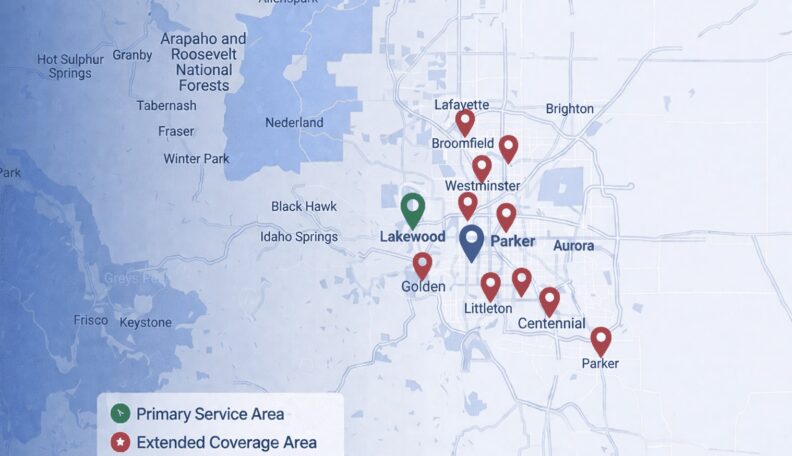
Service Area: 50+ Cities Across Metro Denver
Select Your Nearest Location
Hours: Mon-Fri 8am-5pm
Sunday Emergency Only
Avg Response Time: 18 minutes
Hours: Mon-Fri 8am-5pm
Sunday Emergency Only
Avg Response Time: 18 minutes
Hours: Mon-Fri 8am-5pm
Sunday Emergency Only
Avg Response Time: 18 minutes
Hours: Mon-Fri 8am-5pm
Sunday Emergency Only
Avg Response Time: 18 minutes
Hours: Mon-Fri 8am-5pm
Sunday Emergency Only
Avg Response Time: 18 minutes
Hours: Mon-Fri 8am-5pm
Sunday Emergency Only
Avg Response Time: 18 minutes
Hours: Mon-Fri 8am-5pm
Sunday Emergency Only
Avg Response Time: 18 minutes
Hours: Mon-Fri 8am-5pm
Sunday Emergency Only
Avg Response Time: 18 minutes
Hours: Mon-Fri 8am-5pm
Sunday Emergency Only
Avg Response Time: 18 minutes
Hours: Mon-Fri 8am-5pm
Sunday Emergency Only
Avg Response Time: 18 minutes
Hours: Mon-Fri 8am-5pm
Sunday Emergency Only
Avg Response Time: 18 minutes
Hours: Mon-Fri 8am-5pm
Sunday Emergency Only
Avg Response Time: 18 minutes
Hours: Mon-Fri 8am-5pm
Sunday Emergency Only
Avg Response Time: 18 minutes
Hours: Mon-Fri 8am-5pm
Sunday Emergency Only
Avg Response Time: 18 minutes
Hours: Mon-Fri 8am-5pm
Sunday Emergency Only
Avg Response Time: 18 minutes
We Service: Parker, Castle Rock, Greenwood Village, Lakewood, Littleton, Centennial, Highlands Ranch 40+ More Cities