


5 Warning Signs You Need Emergency Parker Garage Door Opener Repair
Safety Notice
If your garage door is sagging, dropping on its own, sparking, smoking, or showing a snapped cable or spring, stop using the opener immediately. Keep people and vehicles clear of the door’s path until a technician arrives.
Garage door openers do most of their work quietly until they don’t. When yours starts showing one of the symptoms below, the system is telling you it needs attention now, not the next time you remember.
At Select Garage Doors, we get calls on these five symptoms more often than any others when homeowners across Parker, CO and the wider Denver Metro area suspect an emergency. The list below walks through what each symptom usually means, when to stop using the door entirely, and how quickly to book a repair.
If your door is showing any of the red-flag symptoms in the safety notice above, don’t wait. Contact us today and we’ll get you on the schedule.
Is Your Opener Making New Grinding, Squealing, or Banging Noises?
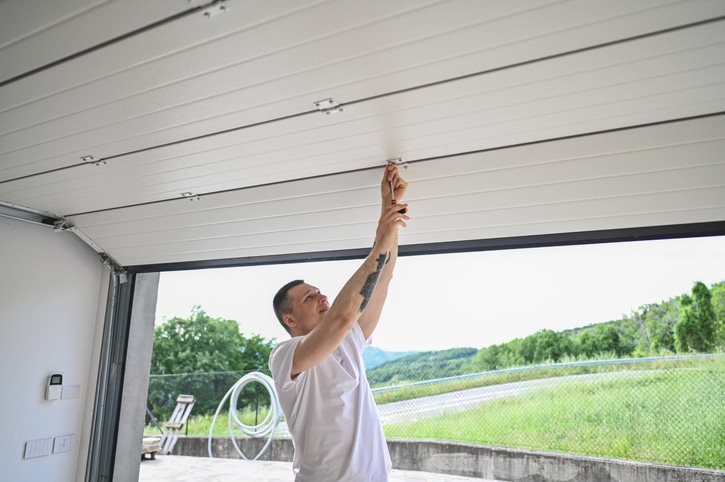
A new grinding, squealing, or banging sound usually points to worn parts inside the drive system. Grinding suggests gears or a worn chain; squealing points to dry rollers or hinges; a loud bang almost always means a spring or cable just failed. Each of these tells the opener it has to fight against something it shouldn’t be fighting.
Stop using if: you hear a single loud bang during operation, or if the noise gets louder fast over a day or two. A broken spring or cable changes the load on the opener motor and can cause cascading damage with continued use.
Call within: 24 hours for a loud bang or rapidly worsening noise. Within the week for slow-developing grinding or squealing.
What’s actually failing
Most commonly: torsion or extension springs, lift cables, drive gear in the motor head, or roller bearings. Each has a different fix and a different urgency, which is why a quick diagnostic visit pays off.
Does the Door Stop Mid-Cycle or Refuse to Close?
A door that opens partway and stops, or refuses to close all the way, has either lost a force-setting calibration or has a sensor obstruction. Sometimes it’s a power issue at the motor; sometimes it’s a logic-board failure. What it isn’t is normal, and you shouldn’t keep cycling the door hoping it resolves itself.
Stop using if: the door stops in a position that leaves your garage open, or if it slams to a stop hard. A door that crashes to a stop is loading the system in a way that wears parts fast.
Call within: 24 hours. An open garage is a security and weather exposure issue.
What’s actually failing
Force settings drifting, photo-eye sensor obstruction or misalignment, logic-board failure, or a worn-out drive gear. Many of these are fast fixes if caught early.
Is Your Remote or Keypad Working Inconsistently?
If the remote sometimes works and sometimes doesn’t, the issue is usually a battery, signal interference, or a failing receiver in the opener. If neither remote nor keypad works, the problem is likely on the opener side and may indicate a failing logic board.
Stop using if: the opener responds at unexpected times (random opens or closes), which can indicate signal interference or a failing receiver that creates a security risk.
Call within: a few days for ongoing inconsistency. Within 24 hours if the door is opening on its own.
What’s actually failing
Remote battery, paired-code memory in the opener, the opener’s receiver board, or external RF interference from a nearby device. Replacement parts are cheap; the diagnostic step matters.
Does the Door Reverse Without an Obstruction?
If the door starts to close and then reverses back open without anything in its path, the photo-eye sensors at the base of the tracks are either obstructed, misaligned, or failing. UL 325 safety standards require these sensors to work properly, and a misalignment isn’t optional to fix.
Stop using if: the sensors are clearly damaged (cracked lens, hanging wire, missing LED light). Operating without working safety sensors is a real risk to pets, kids, and vehicles.
Call within: 24 to 48 hours. Test the alignment yourself first by waving a broom handle through the beam path; the door should reverse instantly.
What’s actually failing
Photo-eye misalignment, dust or cobweb obstruction, water damage to sensor wiring, or a degraded sensor lens at high-UV altitude. Realignment is often a 5-minute fix.
Is the Opener Shaking or Vibrating Hard?
Excessive vibration during operation points to loose hardware, an out-of-balance door, or a failing motor coupling. The opener should hum, not shake. Sustained shaking accelerates wear on every joint in the assembly and can lead to the entire opener pulling away from the ceiling mount.
Stop using if: the opener is visibly moving or shifting in its mount during operation, or if the shake is loud enough you can feel it through the wall in an adjacent room.
Call within: the same week. Mount-pull-away is rare but dangerous when it happens.
What’s actually failing
Loose ceiling-mount hardware, a worn motor coupling, an unbalanced door forcing the motor to work harder, or a failing motor itself. The first three are inexpensive fixes; the last usually means opener replacement.
How Urgent Is Each Symptom?
The table below maps the five symptoms to severity tiers, so you know which ones mean “stop now” and which ones can wait until your next available appointment.
| Symptom | Severity Tier | Likely Cause |
|---|---|---|
| Single loud bang during operation | Stop Now | Broken spring or cable |
| Door stops mid-cycle or won’t fully close | Within 24 Hours | Force-setting drift; logic board |
| Door opens or closes on its own | Within 24 Hours | Failing receiver; signal interference |
| Door reverses with no obstruction | Within 24 to 48 Hours | Photo-eye misalignment or damage |
| Slow grinding or squealing | Within the Week | Dry rollers; worn drive gear |
| Visible opener vibration | Within the Week | Loose hardware; motor coupling |
Emergency vs. Schedule Tomorrow
If you’re trying to decide whether you have a true emergency or just an annoying issue, the checklists below cover the lines that separate the two.
It’s an emergency if any of these apply:
- ✓ You hear a loud bang and the door is now stuck or moving unevenly
- ✓ The door slides on its own or won’t hold position halfway when you stop it manually
- ✓ You see a snapped cable, a gap in the spring coil, or visible smoke from the motor
- ✓ The door has stopped open and you can’t get it to close
- ✓ The opener responds to nothing (remote, wall button, or keypad) and the door is stuck mid-cycle
It can usually wait for your next available appointment if:
- ✓ The door is still operating end-to-end but slower or noisier than before
- ✓ The remote works inconsistently but the wall button works
- ✓ The opener vibrates more than usual but the door is closing fully and the mount is solid
- ✓ The photo-eye reverses on a test object as expected, but the sensors look dusty or off-axis
Anything in the first list calls for a prompt garage door opener repair visit. Anything in the second list can usually wait until the next available appointment.
Don’t Wait Until the Door Falls
The five symptoms above sit on a spectrum from “annoying” to “do not operate this door.” Knowing which tier you’re in is the difference between a routine repair and a serious safety incident. If you’re unsure, treat the symptom as more urgent rather than less. At Select Garage Doors, we’re a veteran-owned team based in Parker serving the Denver Metro area, and we’ll diagnose the issue and tell you straight whether it’s safe to keep using the door. Give us a call at (720) 339-2442.
Frequently Asked Questions
What counts as a garage door opener emergency?
A loud bang followed by the door behaving differently, a snapped cable or spring, smoke or sparking from the motor, a door stuck open that won’t close, or a door that opens or closes on its own. Any of these means you should stop using the opener and call for service before continuing.
Can I keep using my garage door if the opener is making a loud noise?
It depends on the noise. A soft squeal or grind that develops slowly is usually safe to use for a few days while you schedule a service visit. A sudden loud bang, a sharp pop, or a noise that gets dramatically louder fast usually means a spring or cable just failed, and that’s a stop-using-now situation.
Should I unplug my garage door opener if it’s misbehaving?
If the opener is opening or closing on its own, yes — unplug it at the ceiling outlet until a technician can diagnose the receiver. If the issue is intermittent remote response or slow operation, unplugging isn’t necessary, just avoid heavy use until service.
How quickly can a technician usually respond to an emergency?
Response time depends on the day, the time of day, and how busy the schedule is. Call as soon as the symptom shows up so you’re at the front of the next available slot rather than the back. We’ll let you know the soonest appointment when you call.
Is it safe to manually open a garage door if the opener fails?
Only if the door is balanced. Pull the red emergency release cord to disconnect the opener, then lift the door by hand. If the door drops on its own or feels much heavier than it should, the springs have likely failed and the door is unsafe to operate manually. Wait for a technician.
Looking for a deal?
Call us or to learn about our current promotions and seasonal offers.


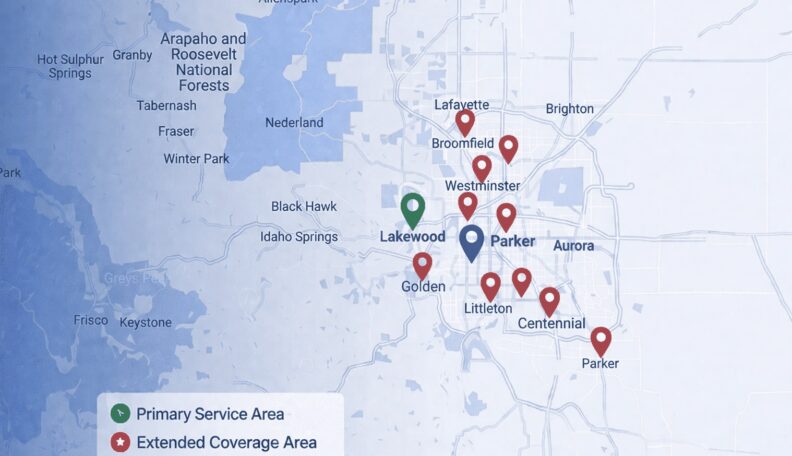
Service Area: 50+ Cities Across Metro Denver
Select Your Nearest Location
Hours: Mon-Fri 8am-5pm
Sunday Emergency Only
Avg Response Time: 18 minutes
Hours: Mon-Fri 8am-5pm
Sunday Emergency Only
Avg Response Time: 18 minutes
Hours: Mon-Fri 8am-5pm
Sunday Emergency Only
Avg Response Time: 18 minutes
Hours: Mon-Fri 8am-5pm
Sunday Emergency Only
Avg Response Time: 18 minutes
Hours: Mon-Fri 8am-5pm
Sunday Emergency Only
Avg Response Time: 18 minutes
Hours: Mon-Fri 8am-5pm
Sunday Emergency Only
Avg Response Time: 18 minutes
Hours: Mon-Fri 8am-5pm
Sunday Emergency Only
Avg Response Time: 18 minutes
Hours: Mon-Fri 8am-5pm
Sunday Emergency Only
Avg Response Time: 18 minutes
Hours: Mon-Fri 8am-5pm
Sunday Emergency Only
Avg Response Time: 18 minutes
Hours: Mon-Fri 8am-5pm
Sunday Emergency Only
Avg Response Time: 18 minutes
Hours: Mon-Fri 8am-5pm
Sunday Emergency Only
Avg Response Time: 18 minutes
Hours: Mon-Fri 8am-5pm
Sunday Emergency Only
Avg Response Time: 18 minutes
Hours: Mon-Fri 8am-5pm
Sunday Emergency Only
Avg Response Time: 18 minutes
Hours: Mon-Fri 8am-5pm
Sunday Emergency Only
Avg Response Time: 18 minutes
Hours: Mon-Fri 8am-5pm
Sunday Emergency Only
Avg Response Time: 18 minutes
We Service: Parker, Castle Rock, Greenwood Village, Lakewood, Littleton, Centennial, Highlands Ranch 40+ More Cities