


The Pros and Cons of Different Garage Door Materials
Steel, wood, aluminum, fiberglass, vinyl, and composite each handle Colorado’s altitude, UV exposure, hail, and temperature swings differently. For most Parker, CO homeowners, insulated steel offers the strongest balance of durability, weather resistance, and long-term value. Select Garage Doors helps homeowners across the Denver metro area choose and install the right material for their home and budget.
Table of Contents
- Garage Door Materials Compared for Parker Homeowners
- How Colorado’s Climate Affects Every Garage Door Material
- Insulation and R-Values for Colorado Homes
- When to Call a Garage Door Professional in Parker
- Choosing the Right Material for Your Parker Home
- Frequently Asked Questions
Replacing a garage door in Parker, CO is not just a style decision. At 6,000 feet of elevation, your garage door faces intense UV radiation, sudden hailstorms, and temperature swings that range from well below zero in January to the mid-90s in July. The material you pick determines how well that door holds up over the next 15 to 30 years, how much energy it saves, and whether it still looks good after five Colorado summers. Select Garage Doors works with Parker homeowners every week on material selection, and the right choice depends on your budget, your HOA requirements, and how your garage connects to your living space.
Garage Door Materials Compared for Parker Homeowners
Is Steel the Best All-Around Material for Colorado Garage Doors?
Steel is the most popular garage door material in the Denver metro area for good reason. It handles hail better than any other option, resists warping in Colorado’s dry climate, requires minimal upkeep, and costs less than wood or composite at every thickness level.
Steel doors come in different gauges (thicknesses). A 24-gauge or 25-gauge steel door resists hail dents far better than a thinner 27- or 28-gauge door. For Parker neighborhoods that see regular spring and summer hailstorms, thicker gauge steel is worth the added cost. Most steel doors also accept polyurethane or polystyrene insulation, which is critical for attached garages in Colorado.
The main drawback of steel is that it can rust if the factory finish gets scratched or chipped. In Parker’s dry climate, rust is less of a concern than in coastal areas, but scratches from everyday use should be touched up with matching paint to prevent corrosion. Steel doors can also dent from heavy impacts, though thicker gauges minimize this risk significantly.
Modern steel doors come in raised panel, flush, and carriage-house styles, making it easy to match Parker’s mix of traditional and contemporary home designs. Many HOA communities in Parker accept steel doors with wood-grain finishes that replicate the look of natural wood without the maintenance.
Should Parker Homeowners Consider Wood Garage Doors?
Wood garage doors offer unmatched curb appeal and full customization, but Colorado’s climate demands a serious maintenance commitment. Without consistent refinishing every two to three years, wood warps, cracks, and fades faster at altitude than in milder regions.
The intense UV exposure along the Front Range breaks down wood finishes quickly. A stain or sealant that lasts five years at sea level may need reapplication in two years in Parker. Wood also expands and contracts with Colorado’s dramatic humidity shifts between seasons, which can lead to gaps, sticking, or warping over time.
That said, wood remains the top choice for homeowners who want a custom look and are willing to invest in maintenance. Cedar and redwood resist rot better than pine or fir. Hemlock is a popular mid-range option. Wood doors work best on detached garages where insulation is less critical and the door is somewhat sheltered from direct sun exposure.
Expect to pay significantly more for a wood door than for steel, both upfront and over its lifetime. The purchase price runs higher, and the ongoing refinishing costs add up. For HOA communities in Parker that require a specific architectural style, wood may be the only material that meets the design requirements.
Are Aluminum Garage Doors a Good Fit for Denver Metro Homes?
Aluminum works well for contemporary and modern home designs across the Denver metro area. It resists corrosion, stays lightweight for easy operation, and holds up against UV exposure without fading. However, aluminum dents easily and provides almost no insulation on its own.
Full-view aluminum doors with glass panels are a popular choice in newer Parker developments and in neighborhoods like Greenwood Village where modern architecture is common. These doors let natural light into the garage and create a clean, high-end appearance.
The biggest limitation in Colorado is durability during hailstorms. Aluminum is softer than steel and dents more easily from hail impact. Those dents are also harder to repair than dents in steel panels. If your home sits in a hail-prone corridor along the Front Range, aluminum panels may need replacement after a severe storm.
Aluminum is also a poor insulator. Without added insulation, an aluminum door does very little to keep cold air out of an attached garage during a Colorado winter. If energy efficiency matters, look for aluminum doors with a thermal break and insulated core, though these cost more than a standard insulated steel door with similar R-values.
What About Fiberglass Garage Doors in Colorado’s Dry Climate?
Fiberglass resists moisture damage and does not rot, rust, or attract insects. It performs well in Colorado’s dry climate and can mimic the look of wood grain at a lower maintenance cost. The trade-off is limited impact resistance and difficulty with repairs.
Fiberglass doors hold up reasonably well under UV exposure when coated with a quality finish. They do not expand or contract as much as wood with temperature changes, which is an advantage given Parker’s wide seasonal temperature range.
The downsides are real, though. Fiberglass can crack on impact, and unlike steel or wood, cracked fiberglass panels are typically not repairable. The entire section or door needs replacement. In a state where hail can reach golf-ball size or larger during severe storms, this is a meaningful consideration. Fiberglass also offers less insulation than steel or composite doors at a comparable price point.
How Do Vinyl and Composite Doors Handle Colorado Weather?
Vinyl and composite are the lowest-maintenance materials available. Both resist dents, moisture, fading, and rust. Composite doors combine a steel core with a moisture-resistant overlay that replicates wood’s appearance without its maintenance demands, making them increasingly popular along the Front Range.
Vinyl doors are made from solid color-through material, so scratches do not show the way they do on painted steel. They hold up well in extreme temperatures without cracking or warping. For Parker homeowners who want a set-it-and-forget-it garage door, vinyl is worth considering.
Composite doors sit at the higher end of the market. They pair a steel frame with a wood-composite overlay that looks like real wood but does not rot, warp, or need refinishing. This makes composite a strong choice for garage door installation in Parker where HOA guidelines call for a wood appearance. The cost is higher than steel but lower than solid wood, and the long-term maintenance savings often close that gap.
Material Comparison at a Glance
| Factor | Steel | Wood | Aluminum | Fiberglass | Vinyl/Composite |
|---|---|---|---|---|---|
| Hail Resistance | High (thick gauge) | Moderate | Low | Low | High (vinyl dent-resistant) |
| UV Durability | Good with factory finish | Poor without frequent refinishing | Excellent | Good with UV coating | Excellent (color-through) |
| Insulation (R-value potential) | R-6 to R-18+ | R-4 to R-8 | R-4 to R-8 (with thermal break) | R-6 to R-10 | R-6 to R-13 |
| Maintenance Level | Low | High (refinish every 2-3 years) | Low | Low | Very low |
| Colorado Climate Suitability | Excellent | Fair (with diligent care) | Good (hail risk) | Good (hail risk) | Excellent |
| Typical Lifespan | 20-30 years | 15-20 years | 20-25 years | 15-20 years | 20-30 years |
How Colorado’s Climate Affects Every Garage Door Material
Parker sits at roughly 6,000 feet of elevation along the Front Range, where the combination of intense UV radiation, frequent hail, low humidity, and extreme temperature swings creates conditions that challenge every garage door material in specific ways. Understanding these factors helps you avoid a costly replacement years before it should be necessary.
Does Colorado’s UV Exposure Really Damage Garage Doors?
Colorado receives over 300 days of sunshine per year, and UV intensity increases roughly 4 percent for every 1,000 feet of elevation gain. At Parker’s altitude, garage doors on south- and west-facing walls absorb significantly more UV radiation than the same door would at sea level. This accelerates paint fading, finish breakdown, and material degradation.
Wood doors are the most vulnerable. Stains and sealants break down faster, requiring refinishing every two to three years instead of the four to five years typical in lower-elevation regions. Steel and fiberglass doors with baked-on factory finishes hold up better, with most finishes lasting 10 to 15 years under normal Colorado sun exposure. Vinyl and composite doors resist UV best because their color runs through the entire material rather than sitting on the surface.
How Should Parker Homeowners Plan for Hail Damage?
Colorado consistently ranks among the top states in the country for hail damage. Hailstorms along the Front Range regularly produce stones over one inch in diameter, and severe storms can drop golf-ball-sized or larger hail. Your garage door faces this threat head-on, literally.
Thicker-gauge steel handles hail best. A 24-gauge steel door absorbs moderate hail impacts without visible damage, while a 27- or 28-gauge door may show dents from the same storm. Aluminum and fiberglass are the most vulnerable. Aluminum dents easily and is difficult to repair, while fiberglass can crack and typically requires full panel replacement. Vinyl’s flexibility allows it to absorb impacts and bounce back without permanent deformation in many cases.
Many Colorado homeowners insurance policies cover hail damage to garage doors. Knowing your material’s hail tolerance helps you weigh the upfront cost against potential insurance deductibles and replacement expenses down the road. If you need a garage door repair after storm damage in Parker, addressing dents and panel cracks quickly prevents bigger problems.
What Do Temperature Swings Mean for Garage Door Performance?
Parker can swing from below zero to near 60 degrees within 48 hours during winter Chinook wind events. Summer highs reach the mid-90s, and winter lows can drop below negative 10 degrees Fahrenheit. That range stresses every material differently.
Wood expands and contracts the most. Panels can bind in their tracks during cold snaps and then develop gaps during warm spells. Metal materials (steel and aluminum) expand and contract less dramatically but still need properly adjusted weatherstripping to maintain a seal. Vinyl and composite remain the most dimensionally stable across the full temperature range Parker experiences.
The right weatherstripping and regular garage door maintenance extend the life of any material by keeping seals tight and hardware properly lubricated through every season.
Insulation and R-Values for Colorado Homes
For attached garages in Parker and the surrounding Denver metro area, insulation is not optional. An uninsulated garage door lets cold air pour into the space that shares a wall with your heated home, driving up energy costs and making adjacent rooms uncomfortable from November through March.
R-value measures thermal resistance. The higher the number, the better the insulation. For Colorado homes with attached garages, an R-value of R-12 or higher is a solid target. If your garage doubles as a workshop or sits directly below a bedroom, R-16 to R-18 provides noticeably better temperature control.
Insulation Types and What They Mean for Your Garage
| Insulation Type | R-Value per Inch | Best Paired With | Colorado Advantage |
|---|---|---|---|
| Polystyrene (foam board) | R-3.5 to R-4 | Budget steel doors | Adequate for detached garages |
| Polyurethane (injected foam) | R-5.5 to R-6.5 | Mid-range and premium steel | Best for attached garages; adds structural rigidity |
| Intellicore (polyurethane variant) | R-18+ | Premium steel and composite | Ideal for garage-to-living-space conversions |
Polyurethane-insulated steel doors are the most common recommendation for Parker homes with attached garages. The foam fills every cavity inside the door panel, which also reduces road noise and adds structural strength to the steel skin. Well-insulated garage doors can reduce heating and cooling costs measurably, especially in homes where the garage shares a wall with the kitchen, living room, or a bedroom above.
When to Call a Garage Door Professional in Parker
Choosing the right garage door material involves more than picking a color and style from a catalog. The size of your opening, your home’s structural framing, your opener’s horsepower rating, and local building codes in Douglas County all factor into which materials and weights will work for your specific garage.
A heavier wood or composite door may require a higher-horsepower opener or upgraded torsion springs. An undersized spring system paired with a heavy door creates safety risks and accelerates wear on the opener. These are details that a quick online comparison cannot account for.
If you are comparing materials for a replacement or new build in Parker, a site visit helps clarify which options fit your opening dimensions, your HOA’s architectural guidelines, and your long-term budget. Select Garage Doors provides material consultations for homeowners across the Denver metro area, including neighborhoods in Castle Rock, Greenwood Village, and Lakewood.
Call 720-339-2442 if you want to discuss material options for your Parker home, or if storm damage has you considering a full replacement. Catching hail damage early, before rust or structural compromise sets in, keeps repair costs lower and extends the life of your existing door.
Choosing the Right Material for Your Parker Home
The best garage door material for your home depends on what you prioritize. If low maintenance and hail resistance top your list, insulated steel or vinyl will serve a Parker home well for decades. If architectural character matters most and you are prepared to maintain it, wood delivers a look that no other material matches. If modern design is the goal, aluminum with glass panels makes a statement.
Whatever material you choose, make sure it meets the insulation needs of your specific garage layout and aligns with any HOA requirements in your Parker or Douglas County community. Select Garage Doors helps homeowners across the Front Range navigate these decisions and handles the hardware, accessories, and installation details that make the final result look and perform the way it should.
We serve Parker, Castle Rock, Greenwood Village, Lakewood, and the greater Denver metro area.
Schedule a free consultation to find the right garage door material for your home.
Frequently Asked Questions
What is the most durable garage door material for Colorado weather?
Insulated steel in 24- or 25-gauge thickness offers the best combination of hail resistance, UV durability, and temperature stability for Colorado’s climate. Vinyl and composite are close alternatives with even lower maintenance requirements.
Do wood garage doors hold up in Parker, CO?
Wood can work in Parker, but it requires refinishing every two to three years due to intense UV exposure at elevation. Cedar and redwood resist moisture better than pine. Budget for ongoing maintenance before choosing wood.
What R-value should a garage door have in Colorado?
For attached garages in Parker and the Denver metro area, target R-12 or higher. If the garage sits below a bedroom or doubles as a workspace, R-16 to R-18 provides noticeably better comfort and energy savings.
Does homeowners insurance cover hail damage to garage doors in Colorado?
Most standard homeowners insurance policies in Colorado cover hail damage to garage doors. Check your policy for a hail-specific deductible, which many Colorado insurers set at 1 to 2 percent of the home’s insured value rather than a flat dollar amount.
Which garage door material is best for HOA communities in Parker?
Composite doors satisfy most Parker HOA requirements because they replicate the appearance of wood without the maintenance. Steel doors with wood-grain finishes also meet many HOA guidelines. Review your community’s architectural standards before purchasing.


Looking for a deal?
Call us or to learn about our current promotions and seasonal offers.


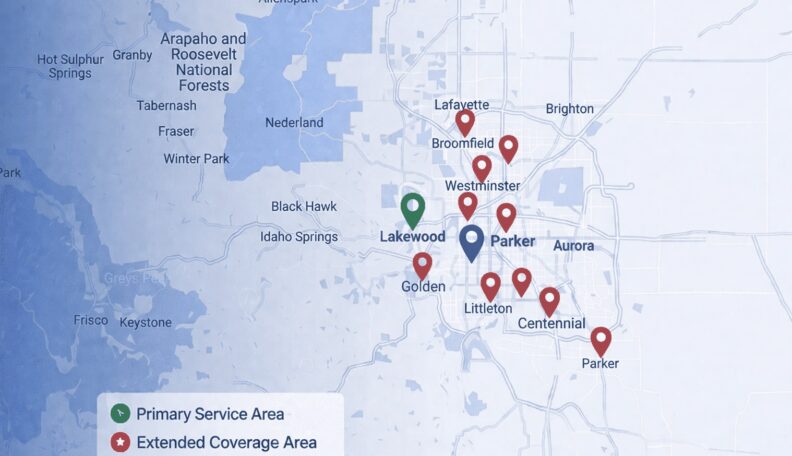
Service Area: 50+ Cities Across Metro Denver
Select Your Nearest Location
Hours: Mon-Fri 8am-5pm
Sunday Emergency Only
Avg Response Time: 18 minutes
Hours: Mon-Fri 8am-5pm
Sunday Emergency Only
Avg Response Time: 18 minutes
Hours: Mon-Fri 8am-5pm
Sunday Emergency Only
Avg Response Time: 18 minutes
Hours: Mon-Fri 8am-5pm
Sunday Emergency Only
Avg Response Time: 18 minutes
Hours: Mon-Fri 8am-5pm
Sunday Emergency Only
Avg Response Time: 18 minutes
Hours: Mon-Fri 8am-5pm
Sunday Emergency Only
Avg Response Time: 18 minutes
Hours: Mon-Fri 8am-5pm
Sunday Emergency Only
Avg Response Time: 18 minutes
Hours: Mon-Fri 8am-5pm
Sunday Emergency Only
Avg Response Time: 18 minutes
Hours: Mon-Fri 8am-5pm
Sunday Emergency Only
Avg Response Time: 18 minutes
Hours: Mon-Fri 8am-5pm
Sunday Emergency Only
Avg Response Time: 18 minutes
Hours: Mon-Fri 8am-5pm
Sunday Emergency Only
Avg Response Time: 18 minutes
Hours: Mon-Fri 8am-5pm
Sunday Emergency Only
Avg Response Time: 18 minutes
Hours: Mon-Fri 8am-5pm
Sunday Emergency Only
Avg Response Time: 18 minutes
Hours: Mon-Fri 8am-5pm
Sunday Emergency Only
Avg Response Time: 18 minutes
Hours: Mon-Fri 8am-5pm
Sunday Emergency Only
Avg Response Time: 18 minutes
We Service: Parker, Castle Rock, Greenwood Village, Lakewood, Littleton, Centennial, Highlands Ranch 40+ More Cities