


Expert Tips for Designing the Perfect Garage Door In Parker
Key Takeaways
- Your garage door is the widest entry point on your home and, in attached garages, separates the outside world from the living space. Material, panel construction, and lock type all determine how well it holds up under pressure.
- Steel and steel-composite doors offer the strongest resistance to forced entry for most Parker, CO homes. Door gauge matters more than finish, 24-gauge steel is meaningfully thicker and more resistant than 28-gauge.
- Modern openers with rolling code technology prevent code-grabbing attacks. Auto-close timers and real-time alerts add another layer of control for homeowners who travel or share garage access.
- Parker’s HOA guidelines and Front Range climate both filter which designs perform well over the long term. Confirming HOA requirements before ordering prevents a costly replacement situation.
- A good door installed poorly underperforms. Gaps around the frame, improperly tensioned springs, and misaligned tracks reduce security and shorten the door’s operating life regardless of how well the door itself is built.
Table of Contents
Your garage door handles more security responsibility than most homeowners give it credit for. It is the widest entry point on the home, often the most visible feature on the front elevation, and in attached garages it separates the outside world directly from the living space. The material, panel construction, locking system, and opener technology built into that door all determine how well it actually performs that job. Parker, CO homeowners working with an aging door, a builder-grade door never specified for security, or a door that no longer fits the home have more options than a straight swap-out. Select Garage Doors provides design consultation and installation for residential garage doors across Parker and the surrounding Denver metro area.
As a veteran-owned, BBB A+ accredited company, we bring the same standards to a design conversation as we do to a repair call. We work through the material, panel, hardware, and technology options that fit the specific home and what the homeowner needs from the door. No upsells, no generic recommendations.
Call (720) 339-2442 to request your free estimate and get started.
1. What Actually Makes a Garage Door Secure
The security of a garage door comes down to three factors: the material it is built from, how the panels are constructed and connected, and the lock system holding the door in place. A door that looks solid from the outside can still have weak points if any of those three elements are underspecified for what the application actually demands.
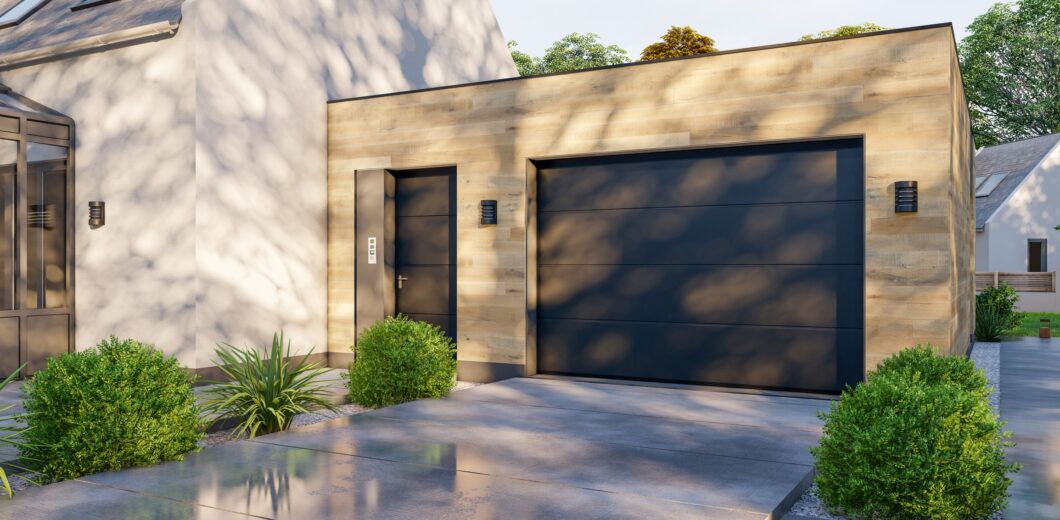
Steel is the most widely used and most security-appropriate material for residential garage doors. The gauge of the steel matters more than the surface finish: a 24-gauge steel door is thicker and more resistant to impact and prying than a 28-gauge door, even when both look identical from the street. Heavier gauge steel is worth specifying when the garage is attached directly to the home’s living space, which applies to most Parker residential properties. Steel-composite and steel-wood composite doors offer comparable security with a wood-look appearance that suits Parker’s mix of traditional and contemporary home styles. Aluminum is lighter and less resistant to impact. Fiberglass and vinyl options exist but do not match steel for applications where forced entry resistance is the primary concern.
2. Locking Systems and Smart Opener Technology
A quality locking system on a well-built door stops forced entry at the point of contact. Modern residential garage doors can be fitted with multi-point locking systems that secure the panel at multiple points along the frame at the same time, distributing force across the full door width rather than concentrating it at a single latch point.
Standard side locks engage at one point on each side of the door. Multi-point systems secure the top, bottom, and both sides simultaneously, making it far harder to force the door open by levering a single edge. These systems are available as upgrades on most residential garage doors and are worth considering for any Parker property where an attached garage forms part of the home’s primary security perimeter.
Modern openers add another layer through rolling code technology, which generates a new authorization code with every use of the remote. This prevents code-grabbing attacks that could defeat older fixed-code systems. Features like auto-close timers, real-time status alerts, and in-app monitoring let homeowners confirm whether the door is open or closed from a phone and close it remotely when needed. For Parker households that travel frequently or have multiple family members with garage access, smart opener integration with a home security system is a practical and visible deterrent.
3. Panel Construction and What It Means for Resistance
Panel thickness, internal reinforcement, the depth of the section profile, and how panels connect at the joints all contribute to how much resistance a garage door provides against impact. A door that appears substantial from the outside may still be a hollow-panel design that offers far less resistance than its appearance suggests at first glance.
A raised or recessed panel design creates natural reinforcement through its geometry, providing more structural resistance at the panel face than a flat or flush panel door of the same steel gauge. Foam-filled insulated sections add meaningful rigidity compared to hollow-panel alternatives and are standard on most mid-to-upper range residential doors today. For Parker homeowners with an attached garage, an insulated foam-filled door also reduces the temperature gap between the garage and the living space, which matters in a climate with cold winters and warm summers. Reinforced or steel-backed bottom sections provide added resistance at the point of entry most commonly targeted in forced-entry attempts.
4. Parker, CO Design Considerations Worth Knowing Before You Order
Choosing a garage door design in Parker, CO involves practical filters beyond material and color. Many Parker neighborhoods operate under HOA guidelines that specify acceptable materials, colors, and panel styles. Getting those details confirmed before placing an order prevents a replacement situation and an additional wait of several weeks for a new door to arrive.
Parker’s climate adds another set of requirements that affect material performance over time. The Front Range’s wide seasonal temperature swings and semi-arid air are harder on solid wood than most homeowners expect. Wood doors can warp, crack, and require refinishing on a cycle that is difficult to keep up with in Colorado’s climate. A steel or steel-composite door with a factory-applied wood-look finish provides the appearance of real wood without the dimensional instability and maintenance demands that come with it.
Wind-load ratings are worth factoring in for Parker properties on exposed lots or elevated terrain near open space. The Front Range delivers sustained wind events that stress panel mounting and track hardware over time. A door specified for the local conditions holds up better and longer than one chosen on appearance alone, and the difference shows up over the course of a few Colorado winters.
5. Why Installation Quality Determines How Well the Door Actually Performs
A well-designed garage door delivers its security benefits only when it is installed correctly. Gaps between the door and the surrounding frame, improperly tensioned springs, misaligned tracks, and incorrectly fitted weatherseals all reduce the door’s protection and shorten its operating life, regardless of how good the door itself is rated to be.
The bottom weatherseal, side seals, and top header seal all need to make consistent contact with the surrounding frame when the door is closed. Light gaps around the perimeter are the first thing a forced-entry attempt probes for leverage. A properly tensioned torsion spring means the door counterbalances correctly and does not sag or drop unevenly when the opener releases it. Tracks that are plumb and parallel prevent the door from binding, which over time wears down rollers, hinges, and cables well ahead of schedule.
If your current door is already showing signs of wear before you begin a design conversation, reviewing common garage door warning signs helps clarify whether the existing door can be serviced and upgraded or whether a full replacement is the right direction. Select Garage Doors handles both the design consultation and the installation, so the door that gets installed is the one that was specified for the opening and built to hold up in the Parker climate.
Ready to Upgrade Your Parker Garage Door Design?
If your current garage door no longer meets your security needs, has aged past the point where repair makes financial sense, or simply does not match the home it sits on, a design consultation is the right starting point. Most decisions about material, panel profile, locking hardware, and opener technology can be worked through in a single conversation at the property.
Select Garage Doors serves Parker and the surrounding Denver metro area with design consultations, full installations, and ongoing residential garage door service. You don’t need to arrive with a specific model in mind. We walk through the options for your opening, your HOA requirements, your budget, and your security priorities, and we recommend what actually fits. Get a free estimate or call (720) 339-2442 to get started today.
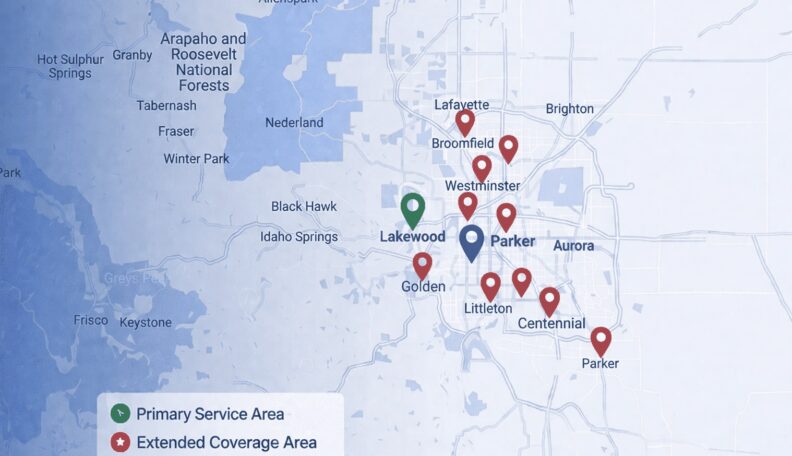
We serve Parker, Castle Rock, Greenwood Village, Lakewood, and the greater Denver metro area. Call 720-339-2442 to schedule.
Frequently Asked Questions
What garage door materials offer the best security for a Parker, CO home?
Steel and steel-composite doors provide the strongest resistance to forced entry for most residential applications. Within the steel category, gauge matters: 24-gauge steel is thicker and more impact-resistant than 28-gauge, and foam-filled insulated sections add rigidity beyond what gauge alone provides. For Parker homes with attached garages, combining heavier-gauge steel, foam-filled panels, and a multi-point locking system is a meaningful step up from a standard builder-grade door.
What is a rolling code garage door opener and why does it matter?
A rolling code opener generates a new access code each time the remote button is pressed. Once the opener verifies and accepts a code, it discards it and prepares a different code for the next use. This prevents someone from recording your remote’s signal and replaying it later to open the door, which was a real vulnerability of older fixed-code systems. Most openers sold today use rolling code technology as standard, but many older openers still in use across Parker neighborhoods do not.
How do I find out if a garage door design meets my HOA guidelines in Parker?
Start with your HOA’s architectural guidelines or CC&Rs, which typically outline approved materials, colors, and sometimes specific panel profiles for garage doors. Many communities require submitting a description or photo of the proposed door for approval before installation. Select Garage Doors can help identify options that fall within your community’s guidelines during the design consultation, so you arrive at an approved choice before any order is placed.
Can I add smart technology to an existing garage door opener?
In many cases, yes. If your existing opener is from a brand that supports smart integration, a compatible wi-fi adapter can add remote monitoring and control through a smartphone app. If the opener is older or uses a fixed-code system, a full opener replacement is often the better direction. New openers with rolling code technology and built-in wi-fi are available at a modest cost and provide a more reliable platform for smart home integration going forward.
How does a garage door upgrade affect home resale value in Parker?
The garage door is typically the single largest visual feature on the front of a home. A dated, damaged, or mismatched door pulls down first impressions and affects perceived value at sale. Replacing or upgrading a garage door is frequently cited as one of the higher-return exterior improvements a homeowner can make. In Parker’s active real estate market, a door that matches the home’s architecture and presents well from the street delivers returns at sale and improves day-to-day security in the meantime.
How should I maintain a steel garage door in Parker’s climate?
Steel garage doors in Parker benefit from twice-yearly lubrication of the rollers, hinges, and torsion spring coils using a garage door-specific lubricant. The Front Range’s semi-arid conditions deplete lubrication faster than more humid regions, and skipping this step accelerates wear on moving parts. Inspect the bottom weatherseal each spring for cracking or flattening, and replace it when it no longer makes consistent contact with the floor. A quick visual check of cables, springs, and hardware for rust or loosening fasteners twice a year keeps small problems from becoming service calls.
What does a garage door design consultation with Select Garage Doors involve?
A design consultation covers your opening dimensions, the home’s architectural style and existing exterior finishes, your security priorities, HOA requirements if applicable, and your budget. From there, we walk through material and gauge options, panel profile choices, insulation values, color and finish options, and compatible locking and opener systems. The goal is a door that fits the opening, suits the home, and holds up in the Parker climate over the long term. Most consultations are completed in a single visit at the property.


Looking for a deal?
Call us or to learn about our current promotions and seasonal offers.



Service Area: 50+ Cities Across Metro Denver
Select Your Nearest Location
Hours: Mon-Fri 8am-5pm
Sunday Emergency Only
Avg Response Time: 18 minutes
Hours: Mon-Fri 8am-5pm
Sunday Emergency Only
Avg Response Time: 18 minutes
Hours: Mon-Fri 8am-5pm
Sunday Emergency Only
Avg Response Time: 18 minutes
Hours: Mon-Fri 8am-5pm
Sunday Emergency Only
Avg Response Time: 18 minutes
Hours: Mon-Fri 8am-5pm
Sunday Emergency Only
Avg Response Time: 18 minutes
Hours: Mon-Fri 8am-5pm
Sunday Emergency Only
Avg Response Time: 18 minutes
Hours: Mon-Fri 8am-5pm
Sunday Emergency Only
Avg Response Time: 18 minutes
Hours: Mon-Fri 8am-5pm
Sunday Emergency Only
Avg Response Time: 18 minutes
Hours: Mon-Fri 8am-5pm
Sunday Emergency Only
Avg Response Time: 18 minutes
Hours: Mon-Fri 8am-5pm
Sunday Emergency Only
Avg Response Time: 18 minutes
Hours: Mon-Fri 8am-5pm
Sunday Emergency Only
Avg Response Time: 18 minutes
Hours: Mon-Fri 8am-5pm
Sunday Emergency Only
Avg Response Time: 18 minutes
Hours: Mon-Fri 8am-5pm
Sunday Emergency Only
Avg Response Time: 18 minutes
Hours: Mon-Fri 8am-5pm
Sunday Emergency Only
Avg Response Time: 18 minutes
Hours: Mon-Fri 8am-5pm
Sunday Emergency Only
Avg Response Time: 18 minutes
We Service: Parker, Castle Rock, Greenwood Village, Lakewood, Littleton, Centennial, Highlands Ranch 40+ More Cities