


- Home > Service Areas > Parker, CO > Garage Door Safety Testing Parker






Key Takeaways
- Three tests cover all federally mandated safety features: auto-reverse, sensors, and manual release
- The 2×4 auto-reverse test is the most important and most commonly failed test
- Photo-eye sensors should be cleaned and tested monthly in Parker due to dust and UV exposure
- A door that fails any safety test should not be operated until a professional adjusts it
- Testing takes under five minutes and requires no special tools
Testing garage door safety features in Parker requires three checks: the auto-reverse force test using a 2×4 on the ground, the photo-eye sensor test by breaking the beam during closing, and the manual release test by pulling the red cord to verify the door disconnects from the opener. These tests take under five minutes and should be performed monthly.
Having the features installed does not mean they are working correctly. Force settings drift with temperature changes, sensor alignment shifts from vibration, and component wear reduces response accuracy over time. In Parker, altitude and climate accelerate every one of these degradation factors. Select Garage Doors recommends monthly safety testing for every Parker garage door.
How Do You Perform the Auto-Reverse Force Test in Parker?
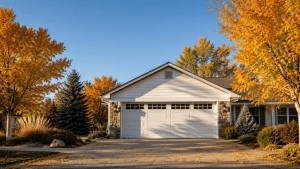
Place a 2×4 flat on the ground in the center of the door opening. Close the door using the opener. When the door contacts the 2×4, it should reverse direction within two seconds. If it does not reverse, the force settings need professional adjustment.
This test verifies the opener’s force sensitivity. The door should reverse on light contact, not push through the obstruction. A door that pushes past the 2×4 has force settings that are too high, which means the door will not reverse if it contacts a person, pet, or object.
For a detailed walkthrough of the auto-reverse mechanism, read about testing your garage door auto-reverse and sensors.
Why Do Garage Door Safety Features Fail More Often in Parker?
Parker’s daily temperature swings of 30 to 50 degrees cause force settings to drift as metal components expand and contract. Dust from dry conditions coats sensor lenses, and UV radiation degrades sensor housing plastics faster than in lower-altitude areas.
Force settings are calibrated for a specific temperature range. When the garage temperature shifts from 60 degrees in the morning to 120 in the afternoon, the metal door, springs, and tracks change dimension. The opener applies the same force, but the door resistance has changed. Over weeks of daily cycling, the calibration drifts enough to affect auto-reverse reliability.
Parker, CO‘s dry conditions also produce fine dust that settles on photo-eye sensor lenses. A thin dust film reduces the beam strength enough to cause false positives (door reverses when nothing is in the path) or false negatives (beam appears unbroken when partially blocked). Monthly lens cleaning with a soft cloth prevents both failure modes.
How Do You Test Photo-Eye Sensors on a Parker Garage Door?
Close the door using the opener while waving a long object like a broom through the sensor beam about six inches off the ground. The door should stop and reverse immediately when the beam is broken. If it does not, the sensors need cleaning, realignment, or replacement.
Photo-eye sensor test steps:
- Verify both sensor lights are lit (one green, one amber on most models)
- Start closing the door with the wall button or remote
- Wave a broom or stick through the sensor beam at floor level
- The door should stop and reverse within one second of beam interruption
- If the door does not reverse, do not operate it until sensors are fixed
Check the sensor alignment by looking at the indicator lights. A flickering or unlit LED usually means the sensors are misaligned. Gently adjust the sensor on its bracket until both LEDs show steady illumination.
If sensor adjustment does not restore proper function, schedule a service today. Wiring issues, damaged lenses, or failed circuit boards require trained diagnosis.
How Do You Test the Manual Release on a Parker Garage Door?
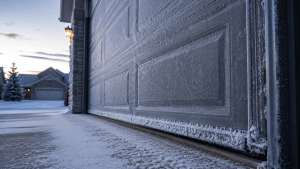
Pull the red manual release handle hanging from the opener trolley. The door should disconnect from the opener and glide freely on its tracks when lifted by hand. If it does not disconnect or feels too heavy to lift, the release mechanism or the door balance needs attention.
Manual release test procedure:
- Close the door completely before testing
- Pull the red cord straight down until you feel the trolley release click
- Lift the door by hand from the bottom center
- The door should move smoothly and stay at any position you stop it
- If the door drops or rises on its own, the springs are out of balance
The manual release is the only way to open the garage door during a power outage. If the release mechanism is stuck, corroded, or broken, the door becomes inaccessible when the power goes out. Testing this feature monthly confirms it will work when needed.
After testing, re-engage the opener by pressing the wall button or remote. The trolley will reconnect automatically on the next full cycle.
| Test | What It Checks | Pass Criteria | Fail Action | Frequency |
|---|---|---|---|---|
| 2×4 auto-reverse | Force sensitivity | Reverses within 2 seconds | Stop using door, call pro | Monthly |
| Photo-eye beam break | Sensor alignment and response | Reverses within 1 second | Clean lenses, check alignment | Monthly |
| Manual release | Emergency disconnect | Door moves freely by hand | Lubricate or replace mechanism | Monthly |
| Balance test | Spring condition | Door holds at halfway | Schedule spring adjustment | Quarterly |
Frequently Asked Questions
How Often Should I Test Garage Door Safety Features in Parker?
Monthly testing is recommended. Parker’s temperature swings and dust conditions cause safety features to drift faster than in stable climates.
What Happens If My Garage Door Fails the Auto-Reverse Test?
Stop using the door immediately. A door that does not reverse on contact can trap, crush, or injure a person, pet, or object. Call a professional to adjust the force settings before operating the door again.
Can I Adjust Garage Door Force Settings Myself in Parker?
Most openers have force adjustment screws on the motor unit. Small adjustments (quarter-turn increments) are safe to attempt. If the door still fails the test after adjustment, the issue may be with the springs, cables, or opener motor, which require professional service.
Why Do My Garage Door Sensors Keep Going Out of Alignment?
Vibration from daily door operation gradually shifts sensor brackets. Temperature changes cause the mounting surface to expand and contract. Accidental contact from vehicles, bikes, or stored items bumps sensors off alignment.
Are Garage Door Safety Tests Required by Law in Parker?
Federal law requires the safety features to be installed, but there is no law requiring homeowners to test them. However, a non-functional safety system creates liability exposure if an injury occurs.
What Is the Most Important Garage Door Safety Test?
The auto-reverse force test is the most important because it directly prevents crush injuries. A door that does not reverse on contact is the leading cause of serious garage door injuries.
Can Garage Door Safety Features Wear Out Over Time?
Yes. Force calibration drifts with temperature and use. Sensor components degrade from UV and heat. Manual release mechanisms corrode from humidity and infrequent use. Regular testing catches degradation before it becomes a safety failure.
- Foundation Settling Affect Garage Doors
- Garage Door Cable Replacement in Parker
- Garage Door Rollers Replace Parker
- Garage Door Safety Testing Parker
- Garage Door Sensors Failure in Parker, CO
- Garage Door Track Alignment Parker, CO
- Hardware and Customization of Doors Parker, CO
- High-Speed Door Repair Parker, CO
- R-Value and Energy Savings Garage Doors Parker
- Sectional and Rolling Steel Doors Parker, CO
- Steel Door Durability Parker, CO


Our Colorado Service Area Coverage
Select Garage Doors provides expert residential and commercial garage door repair and installation services across the Denver metro area and surrounding Colorado communities. We serve homeowners and businesses with garage door repairs, new garage door installation, garage door opener replacement, and other professional garage door services. Check the interactive map below to view our current Colorado service areas. Don’t see your city listed? Reach out to our team, and we’ll let you know if service is available in your area.
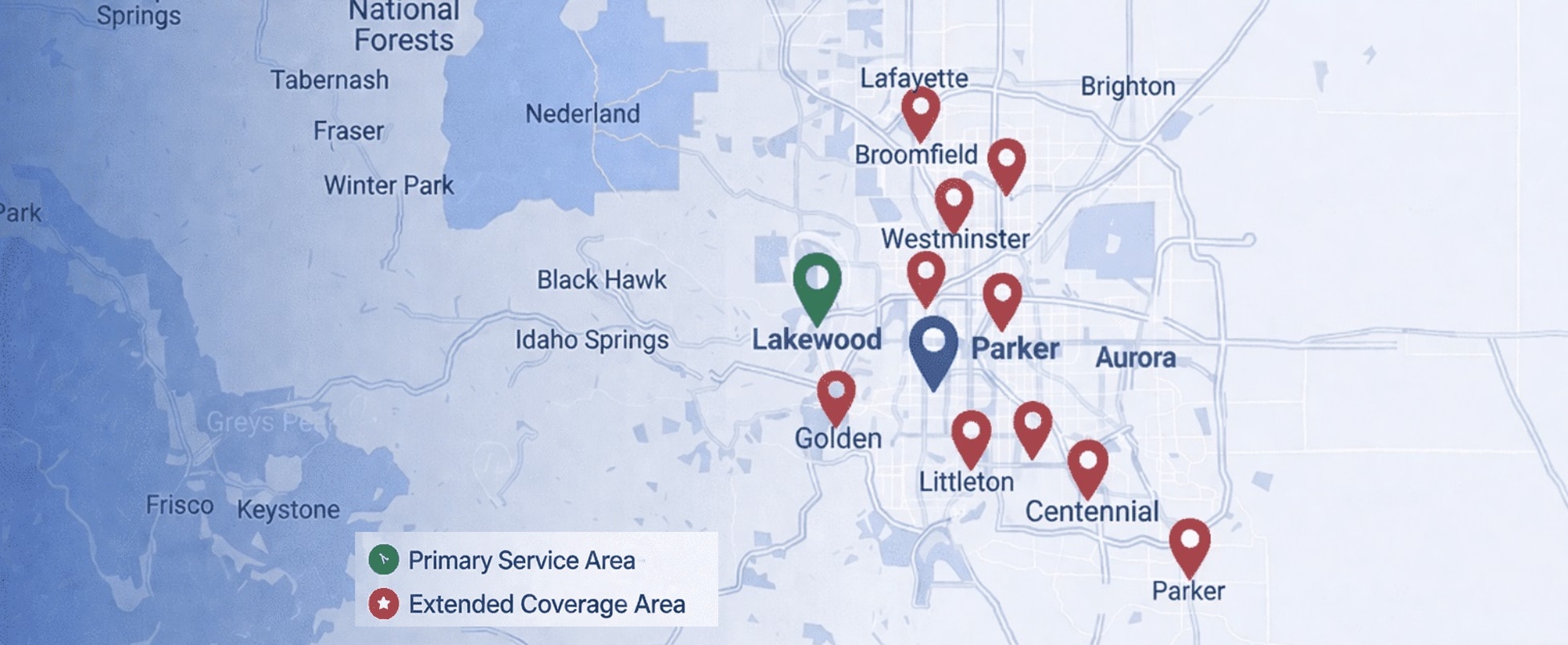
Find Garage Door Services in Your City
Every community we serve receives the same standard of service: licensed technicians, transparent estimates, manufacturer-backed warranties, and the availability that Colorado homeowners and property managers depend on.
Select your city below to view the specific residential and commercial garage door services available in your area, read local customer reviews, and schedule an appointment online.
-
Aurora
-
Brighton
-
Broomfield
-
Castle Rock
-
Centennial
-
Denver
-
Golden
-
Greenwood Village
-
Highlands Ranch
-
Lakewood
-
Littleton
-
Morrison
-
Parker, CO
-
Thornton
-
Westminster
-
Wheat Ridge
Ready to Fix or Upgrade Your Garage Door?
Book Now and Get $25 off your First Service.
This Month's Specials

Valid Until July 31, 2026
Must be mentioned during call booking. Limit one per customer. Cannot be combined with other offers. Restrictions apply. Call for details.