


Is Your Garage Door Auto-Reverse Working Safely in Parker, CO?
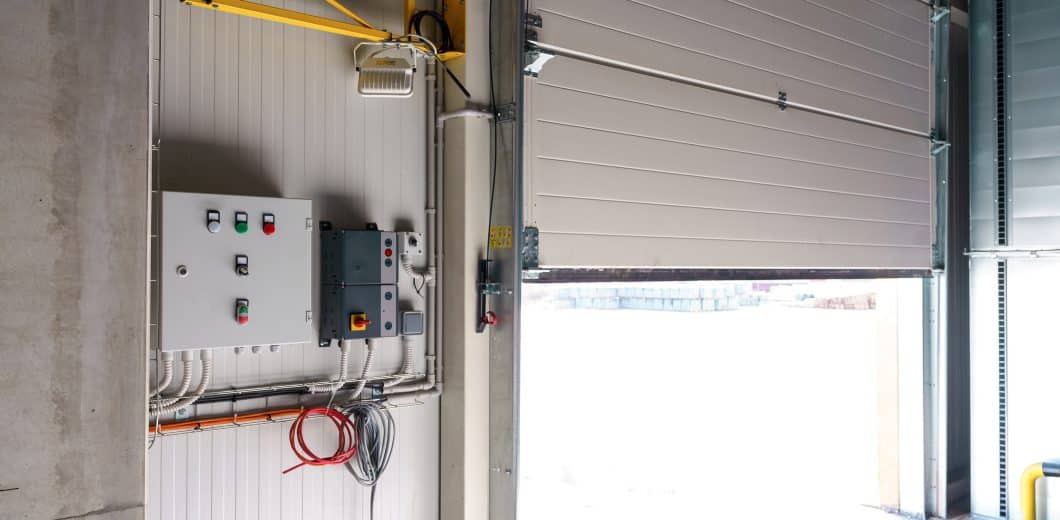
A garage door auto-reverse that fails to activate within two seconds of contact is a serious safety hazard. Federal law has required this feature on all automatic garage doors since 1993, but heat, age, and force setting drift can degrade its performance over time without any visible warning.
Key Takeaways
- Federal law has required auto-reverse on all automatic garage doors since 1993
- The 2×4 test checks auto-reverse function in under two minutes and should be done monthly
- Parker’s heat can cause opener force settings to drift, weakening the reverse response
- A door that does not reverse within two seconds of contact has a malfunctioning safety system
- Photo-eye sensors and mechanical auto-reverse work together as a two-layer safety system
The auto-reverse mechanism is the last line of defense between a closing garage door and a person, pet, or object in its path. When it works, the door contacts an obstruction and immediately reverses direction. When it fails, a 200 to 400 pound door continues closing with enough force to cause serious injury. Most Parker homeowners assume their auto-reverse is working because they have never seen it fail. But that assumption only holds until the day it does not reverse. Select Garage Doors recommends monthly testing to confirm this safety system is performing as designed.
How Does the Garage Door Auto-Reverse Mechanism Work?
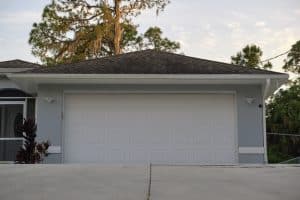 The auto-reverse uses a pressure sensor in the opener that detects resistance when the door contacts an object. Once resistance exceeds the opener’s force threshold, the motor reverses direction and reopens the door.
Modern garage door openers use two safety systems that work together. The mechanical auto-reverse monitors downward force during closing. If the door meets resistance above the preset threshold, the opener reverses. The photo-eye system uses an infrared beam across the door opening about six inches above the floor. If anything breaks the beam while the door is closing, it stops and reverses before making contact.
Both systems must function for the door to be considered safe. A door with working photo-eyes but a failed mechanical reverse still poses a risk if an object sits below the beam height. For more on avoiding safety mistakes during emergencies, read about costly emergency garage door repair mistakes.
How Do You Test the Auto-Reverse on a Parker Garage Door?
Place a 2×4 flat on the floor in the center of the door path and press the wall button to close. When the door contacts the board, it should reverse within two seconds. If it does not, the opener needs immediate service.
The test takes less than two minutes. Place the 2×4 directly below the center of the door so it makes full contact with the bottom section. Use the wall button, not a remote, to start the closing cycle so you can observe the contact point from inside the garage.
What to watch for during the test:
- The door should reverse within two seconds of contacting the board
- The reversal should be smooth and complete, not a brief hesitation followed by continued closing
- The door should travel back to the fully open position after reversing
- If the door pushes the board across the floor instead of reversing, the force settings are too high
Test the photo-eye sensors separately by waving a broom handle through the beam during closing. The door should stop and reverse without making contact with anything.
Why Does the Auto-Reverse Fail Over Time in Parker?
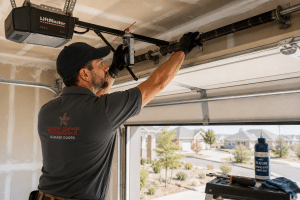 Heat causes the opener’s internal force settings to drift, sensor brackets expand and shift alignment, and age degrades the pressure-sensing components. Parker’s summer temperature swings accelerate all three failure modes.
Force settings on garage door openers are calibrated during installation. Over time, heat causes the internal components that measure downward force to shift their baseline readings. The opener gradually increases the force it considers “normal,” which means it takes more resistance to trigger the reverse. In Parker’s summer, daily temperature swings of 30 to 50 degrees speed up this drift.
Sensor bracket expansion is another cause. The metal brackets holding photo-eye sensors expand in heat and contract in cold. Over months of cycling, this movement can shift the beam path enough that the sensors lose alignment. A misaligned sensor either prevents the door from closing at all or, in worst cases, fails to detect obstructions.
Homeowners who notice their door behaving differently in summer should schedule a safety inspection before the issue progresses. Force recalibration and sensor alignment are standard parts of a professional tune-up.
What Happens If You Ignore a Failed Auto-Reverse in Parker?
Operating a garage door with a failed auto-reverse exposes every person in the household to injury risk from a door that will not stop when it contacts an obstruction. Children and pets are at the highest risk.
A two-car garage door weighs 200 to 400 pounds. Without a functioning auto-reverse, that weight closes with full motor force onto whatever is in the path. The Consumer Product Safety Commission documented 46 child fatalities from garage doors between 1982 and 1990, before the 1993 federal mandate requiring auto-reverse and photo-eye sensors.
If either safety test fails, stop using the automatic opener until the issue is resolved. The door can still be operated manually using the release cord. Parker, CO homeowners should treat a failed auto-reverse test as an urgent repair, not a maintenance item to schedule later.
Frequently Asked Questions
How Often Should I Test My Garage Door Auto-Reverse in Parker?
Monthly testing is recommended. Additional tests should follow any power outage, severe storm, or noticeable change in door behavior. The test takes under two minutes.
Can I Adjust the Auto-Reverse Force Settings Myself?
Most openers have force adjustment screws on the back or side of the motor unit. However, improper adjustment can make the door too sensitive (reversing on its own weight) or too forceful (not reversing on contact). Professional calibration is recommended.
Why Does My Parker Garage Door Reverse on Its Own Without Hitting Anything?
This usually means the force settings are too sensitive, the sensors are misaligned, or there is debris on the track causing unexpected resistance. Clean the tracks and check sensor alignment before adjusting force settings.
Are Garage Doors Made Before 1993 Missing the Auto-Reverse Feature?
Doors installed before the 1993 federal mandate may lack both auto-reverse and photo-eye sensors. These doors should be upgraded with a modern opener that includes both safety features.
Does the Auto-Reverse Work During a Power Outage?
Only if the opener has battery backup. Without backup power, the auto-reverse and all electronic safety features are inactive. The door can only be operated manually during an outage.
Can Heat Cause Photo-Eye Sensors to Malfunction in Parker?
Yes. Direct sunlight can overwhelm the infrared beam, and heat causes the mounting brackets to expand and shift alignment. West-facing garages are most affected during late afternoon summer hours.
What Is the Cost to Repair a Failed Auto-Reverse in Parker?
Call for a free estimate.
Should I Replace My Garage Door Opener If the Auto-Reverse Fails?
Not necessarily. Most auto-reverse failures are caused by force setting drift or sensor misalignment, both of which are repairable. Full opener replacement is only needed if the safety control board or motor is damaged beyond repair.


Looking for a deal?
Call us or to learn about our current promotions and seasonal offers.


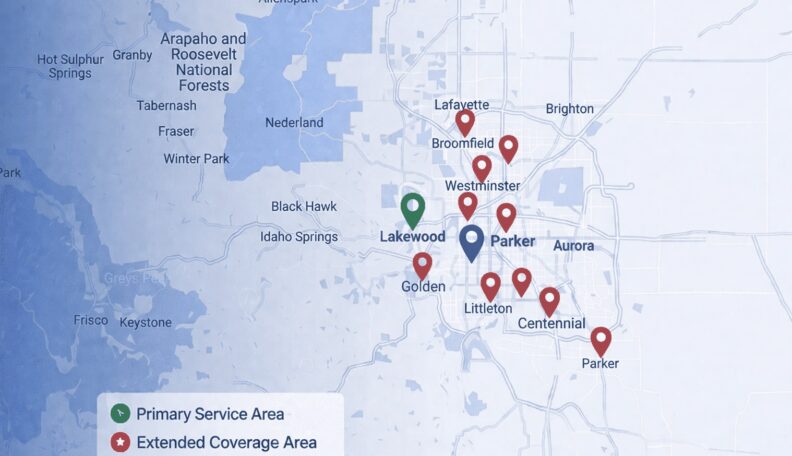
Service Area: 50+ Cities Across Metro Denver
Select Your Nearest Location
Hours: Mon-Fri 8am-5pm
Sunday Emergency Only
Avg Response Time: 18 minutes
Hours: Mon-Fri 8am-5pm
Sunday Emergency Only
Avg Response Time: 18 minutes
Hours: Mon-Fri 8am-5pm
Sunday Emergency Only
Avg Response Time: 18 minutes
Hours: Mon-Fri 8am-5pm
Sunday Emergency Only
Avg Response Time: 18 minutes
Hours: Mon-Fri 8am-5pm
Sunday Emergency Only
Avg Response Time: 18 minutes
Hours: Mon-Fri 8am-5pm
Sunday Emergency Only
Avg Response Time: 18 minutes
Hours: Mon-Fri 8am-5pm
Sunday Emergency Only
Avg Response Time: 18 minutes
Hours: Mon-Fri 8am-5pm
Sunday Emergency Only
Avg Response Time: 18 minutes
Hours: Mon-Fri 8am-5pm
Sunday Emergency Only
Avg Response Time: 18 minutes
Hours: Mon-Fri 8am-5pm
Sunday Emergency Only
Avg Response Time: 18 minutes
Hours: Mon-Fri 8am-5pm
Sunday Emergency Only
Avg Response Time: 18 minutes
Hours: Mon-Fri 8am-5pm
Sunday Emergency Only
Avg Response Time: 18 minutes
Hours: Mon-Fri 8am-5pm
Sunday Emergency Only
Avg Response Time: 18 minutes
Hours: Mon-Fri 8am-5pm
Sunday Emergency Only
Avg Response Time: 18 minutes
Hours: Mon-Fri 8am-5pm
Sunday Emergency Only
Avg Response Time: 18 minutes
We Service: Parker, Castle Rock, Greenwood Village, Lakewood, Littleton, Centennial, Highlands Ranch 40+ More Cities