
What Are the Signs Your Garage Door Opener Is No Longer Safe in Parker?
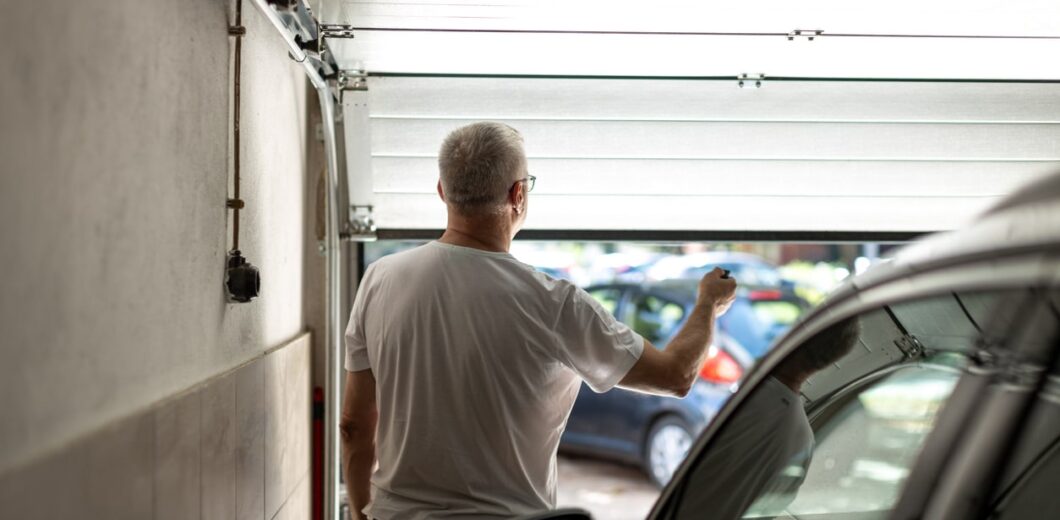
A garage door opener that reverses inconsistently, makes grinding noises, overheats during summer, or lacks modern safety features like rolling codes and battery backup has become a safety liability. Openers older than 15 years often lack the safety technology that current federal standards require.
Key Takeaways
- Openers older than 15 years may lack rolling codes, battery backup, and modern sensor integration
- Grinding or humming without movement indicates stripped gears or motor failure
- Parker’s summer heat causes older motors to overheat and shut down more frequently
- An opener that does not reverse on the 2×4 test is an immediate safety hazard
- Call for a free estimate.
A garage door opener does its job so reliably that most Parker homeowners forget it exists until it stops working. But an opener can become unsafe long before it stops functioning. The motor may still lift the door while the safety features degrade, the force settings drift, and the internal components wear past their safe operating limits. An opener that moves the door is not the same as an opener that moves the door safely. Select Garage Doors helps Parker homeowners recognize when their opener has crossed from aging to hazardous.
What Warning Signs Indicate an Unsafe Garage Door Opener?
Grinding without movement, inconsistent auto-reverse, frequent thermal shutoffs during heat, vibration during operation, and a door that drifts open or closed on its own are all signs that the opener has become unsafe.
Warning signs to watch for:
- Grinding or humming with no door movement (stripped drive gear)
- The door does not fully open or close (travel limit drift)
- Auto-reverse fails the 2×4 test (force setting degradation)
- Opener stops mid-cycle during hot weather (motor overheating)
- Door reverses randomly without obstruction (sensor or logic board failure)
- Excessive vibration or shaking during operation (worn mounting hardware)
Any single sign warrants a professional evaluation. Multiple signs appearing together strongly suggest the opener should be replaced rather than repaired. For guidance on choosing a replacement, read about choosing the right garage door opener installation service.
Why Do Older Openers Become Unsafe Over Time in Parker?
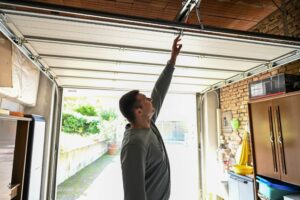 Age degrades internal components that are not visible during normal operation. Parker’s heat accelerates motor wear, UV damages exterior housing and wiring, and years of vibration loosen mounting hardware that affects alignment and force calibration.
The drive gear is usually the first internal component to fail. Most residential openers use a nylon or plastic gear that meshes with a steel worm gear. After 10,000 to 15,000 cycles, the softer gear wears down and begins slipping. The opener still activates but cannot deliver consistent force, which means the auto-reverse may not trigger reliably.
The logic board is the second most common failure. This circuit board controls the opener’s safety features, force settings, and travel limits. Heat cycling over the years causes solder joints to crack and components to drift from their calibrated values. The result is unpredictable behavior that may not show a clear pattern.
Parker homeowners with openers older than 15 years should schedule an opener evaluation to determine whether repair or replacement is the safer and more cost-effective option.
What Safety Features Do Modern Openers Have That Older Models Lack?
Modern openers include rolling code encryption, battery backup, automatic LED lighting, soft-start/soft-stop motor control, built-in Wi-Fi for smart monitoring, and UL 325-compliant safety systems that exceed the original 1993 federal mandate.
Feature comparison:
- Rolling codes change the access frequency with every use, preventing code theft
- Battery backup maintains safety features and operation during power outages
- DC motors with soft-start reduce stress on springs and hardware compared to AC motors
- Timer-to-close automatically shuts the door after a set period
- Motion-activated LED lighting illuminates the garage during entry and exit
For Parker, CO, homeowners, battery backup is particularly valuable. Summer storms and winter outages can leave older openers completely non-functional, disabling all safety features until power returns. A modern opener with battery backup maintains full operation for 24 to 48 hours on a single charge.
When Should a Parker Homeowner Replace Rather Than Repair an Opener?
Replace rather than repair when the opener is older than 15 years, lacks modern safety features, requires repairs costing more than 50 percent of a new unit, or has failed the auto-reverse safety test.
The replacement threshold:
- Age over 15 years: repair costs increase, and parts availability decreases
- No rolling codes: older fixed-code openers are a security vulnerability
- No battery backup: safety features go offline during every power outage
- Call for a free estimate.
- Failed safety test: an opener that cannot pass auto-reverse is not repairable to safe standards in most cases
A new opener with professional installation provides a modern safety system, warranty coverage, and lower operating costs. Select Garage Doors installs LiftMaster and other major brands with same-day service across the Parker area.
Frequently Asked Questions
How Long Do Garage Door Openers Last in Parker?
Most residential openers last 10 to 15 years. In Parker’s climate, heat stress on the motor and logic board can push failures toward the 10-year end of that range for openers without thermal protection features.
Can I Add Safety Features to My Existing Opener?
Photo-eye sensors can be added to older openers, and smart controllers can add Wi-Fi monitoring. However, rolling codes, battery backup, and soft-start motors require a new opener unit.
Is a Noisy Garage Door Opener Dangerous?
Noise itself is not dangerous, but it often signals a failing component. Grinding means stripped gears, humming means a stalled motor, and rattling means loose mounting hardware. All of these can lead to safety issues if ignored.
How Much Does It Cost to Replace a Garage Door Opener in Parker?
Call for a free estimate.
Should I Replace My Opener Before It Completely Fails?
Yes. A planned replacement allows you to choose the right model and schedule installation conveniently. An emergency replacement after a failure often means limited options and premium pricing for urgent service.
Do New Openers Work With My Existing Garage Door in Parker?
Yes. New openers are compatible with virtually all existing residential garage doors. The technician may need to adjust the mounting bracket or replace the door arm connector, but the door itself does not need to be changed.
Can a Failing Opener Damage My Parker Garage Door?
Yes. An opener with stripped gears or drifted force settings can push the door past its travel limits, bending tracks, damaging panels, or stripping the drive mechanism. Replacing a failing opener prevents collateral damage to the door.
What Brand of Garage Door Opener Does Select Garage Doors Install?
Select Garage Doors is an authorized LiftMaster dealer. LiftMaster openers are manufactured by Chamberlain and are the most widely installed professional-grade brand in the United States.

Looking for a deal?
Call us or to learn about our current promotions and seasonal offers.


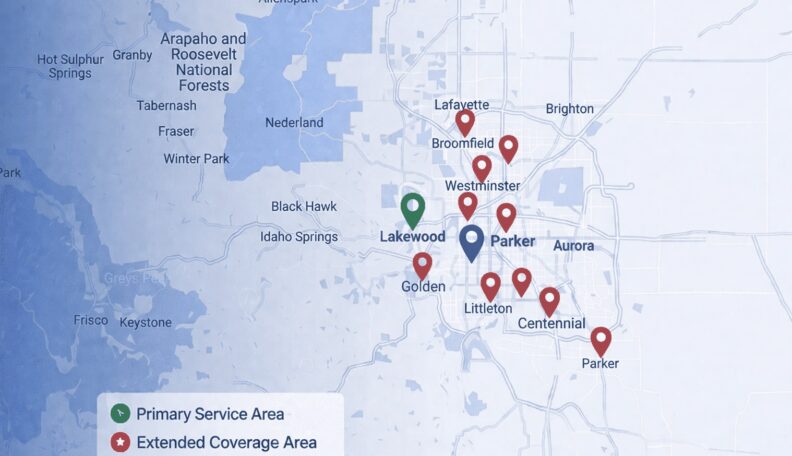
Service Area: 50+ Cities Across Metro Denver
Select Your Nearest Location
Hours: Mon-Fri 8am-5pm
Sunday Emergency Only
Avg Response Time: 18 minutes
Hours: Mon-Fri 8am-5pm
Sunday Emergency Only
Avg Response Time: 18 minutes
Hours: Mon-Fri 8am-5pm
Sunday Emergency Only
Avg Response Time: 18 minutes
Hours: Mon-Fri 8am-5pm
Sunday Emergency Only
Avg Response Time: 18 minutes
Hours: Mon-Fri 8am-5pm
Sunday Emergency Only
Avg Response Time: 18 minutes
Hours: Mon-Fri 8am-5pm
Sunday Emergency Only
Avg Response Time: 18 minutes
Hours: Mon-Fri 8am-5pm
Sunday Emergency Only
Avg Response Time: 18 minutes
Hours: Mon-Fri 8am-5pm
Sunday Emergency Only
Avg Response Time: 18 minutes
Hours: Mon-Fri 8am-5pm
Sunday Emergency Only
Avg Response Time: 18 minutes
Hours: Mon-Fri 8am-5pm
Sunday Emergency Only
Avg Response Time: 18 minutes
Hours: Mon-Fri 8am-5pm
Sunday Emergency Only
Avg Response Time: 18 minutes
Hours: Mon-Fri 8am-5pm
Sunday Emergency Only
Avg Response Time: 18 minutes
Hours: Mon-Fri 8am-5pm
Sunday Emergency Only
Avg Response Time: 18 minutes
Hours: Mon-Fri 8am-5pm
Sunday Emergency Only
Avg Response Time: 18 minutes
Hours: Mon-Fri 8am-5pm
Sunday Emergency Only
Avg Response Time: 18 minutes
We Service: Parker, Castle Rock, Greenwood Village, Lakewood, Littleton, Centennial, Highlands Ranch 40+ More Cities