


Why Does Your Lakewood Garage Door Opener Hum but Not Open?

A Lakewood garage door opener that hums but does not move the door usually has a stripped drive gear, a disconnected trolley, a failed capacitor, or a door that is jammed. The motor is running, so the fault sits between the motor and the door.
Key Takeaways
- A hum means the motor has power, so the problem is mechanical rather than electrical supply.
- The most common cause on older units is a worn plastic drive gear that no longer grips.
- If the trolley has been left disconnected from the manual release, the motor runs with nothing attached.
- A jammed or frozen door also produces a hum, because the opener is straining against something solid.
- Select Garage Doors services openers of all major types and holds a 5-year parts warranty.
Few garage door faults are as recognisable as the hum. Press the button, the motor comes to life, and the door stays exactly where it is. Select Garage Doors treats this as a useful symptom rather than a vague one, because a humming opener narrows the possibilities considerably. Power is reaching the unit and the motor is turning. Something between that motor and the door is not doing its job.
What Does a Humming Opener Actually Tell You?
It tells you the electrical side is working. The fault lies in the drive mechanism, the connection to the door, or the door itself being stuck.
That immediately rules out a dead outlet, a tripped breaker and a flat remote battery, which are the usual first suspects when a door does not move at all. A silent opener points at power. A humming one points at mechanics.
Homeowners can schedule a service request once they have confirmed the hum, because that single detail saves a technician a good deal of diagnostic time.
Why Would the Drive Gear Be the Problem?
Many openers use a plastic gear that meshes with a worm drive. Those teeth wear down over years of use, and once they round off the motor spins without transferring any force.
This is the classic cause on an opener that has given long service. The hum sounds healthy, sometimes even smooth, because nothing is under load. Looking at the unit, the motor is clearly running.
A tell-tale sign is fine plastic dust on the garage floor beneath the opener. That is shed gear material, and it means the gear has been wearing for a while. Homeowners in Lakewood often spot it when sweeping and think nothing of it.
Could the Door Simply Be Disconnected or Stuck?
Yes, and this is the cheapest outcome. A trolley left disconnected after using the manual release, or a door frozen or jammed in its track, both produce the same hum.
The manual release cord disconnects the door from the opener so it can be moved by hand during a power cut. If it is never reconnected, the motor runs the trolley back and forth with nothing attached.
A jammed door gives a different flavour of hum: strained rather than free-running, often with the unit cutting out after a few seconds. That is the opener protecting itself. Anyone whose remote has also been behaving oddly may find the piece on what to do when a garage door remote stops working useful as a companion read.
| How the Hum Sounds | Likely Cause | Next Step |
|---|---|---|
| Free-running, no strain | Stripped drive gear | Professional gear replacement |
| Runs, trolley moves, door does not | Trolley disconnected | Reconnect the manual release |
| Strained, cuts out quickly | Door jammed, frozen or unbalanced | Stop and check the door itself |
| Loud hum, no movement at all | Failed capacitor | Professional, do not open the unit |
| Hum with grinding | Gear partially engaging | Stop using, book a visit |
What Should a Homeowner Check, and What Should They Leave Alone?
Check the manual release and whether the door moves freely by hand. Leave the capacitor, the motor housing and any internal wiring to a technician.
With the opener switched off at the wall, pull the release cord and try lifting the door by hand. If it glides, the door is fine and the opener is at fault. If it resists, the door is the problem and the opener was simply straining against it.
Capacitors are the firm boundary. They store an electrical charge even when the unit is unplugged, and they are not a part for a homeowner to handle. Anyone wanting the unit looked at can find the Lakewood location on Google Maps. The call line is staffed 24/7, with service scheduled during regular business hours.
Is It Worth Repairing an Older Opener That Hums?
It depends on the age of the unit and what else has been replaced. A gear kit on an otherwise sound opener is usually worth doing; a third repair on a tired unit rarely is.
A technician weighs a few things. How old is the opener, and are parts still readily available for it? Has it already had the gear, the logic board or the trolley replaced? Does it still have working safety sensors and a functioning auto-reverse?
If the answer is a single worn gear on a unit that is otherwise reliable, repair is sensible and keeps a working machine out of landfill. If the opener has had several repairs, lacks modern safety features, or struggles on every cold morning, replacement is the better value even though it costs more on the day.
There is also the door to consider. An opener that has spent years straining against a heavy or unbalanced door will wear out its replacement just as quickly unless the door is corrected at the same time. A good technician checks the balance before recommending anything, because fitting a new opener to a bad door simply moves the problem.
Frequently Asked Questions
Does a humming opener always need replacing?
No. A stripped gear is a repair rather than a replacement on many units. A technician will weigh the age of the opener against the cost of the fix and advise accordingly.
What is the plastic dust under the opener?
It is shed material from a worn drive gear. Finding it is a strong indication that the gear is the cause of the hum and is close to failing completely.
How do you reconnect the manual release?
With the door fully closed, pull the cord towards the door or run the opener until the trolley re-latches, depending on the model. If it will not re-engage, have it checked rather than forced.
Can cold weather cause a humming opener?
Indirectly. Cold stiffens the door and thickens lubricant, so an opener already near its limit may strain and hum rather than lift. The door, not the opener, is the real cause.
Is it safe to keep pressing the button?
No. Repeated attempts overheat the motor and can damage the drive further. Once the hum is identified, switch the unit off at the wall until it is looked at.
Why does the door move by hand but not with the opener?
That points squarely at the opener rather than the door. The drive gear, trolley or capacitor is the usual culprit, and the door itself is in good order.
Can a homeowner replace a drive gear themselves?
It involves opening the motor housing, where the capacitor is also located. That makes it a job for a technician rather than a weekend project.
How long should a garage door opener last?
It varies with use and maintenance. A well-maintained unit on a balanced door lasts considerably longer than one that has spent years pulling against a stiff or unbalanced door.

Looking for a deal?
Call us or to learn about our current promotions and seasonal offers.



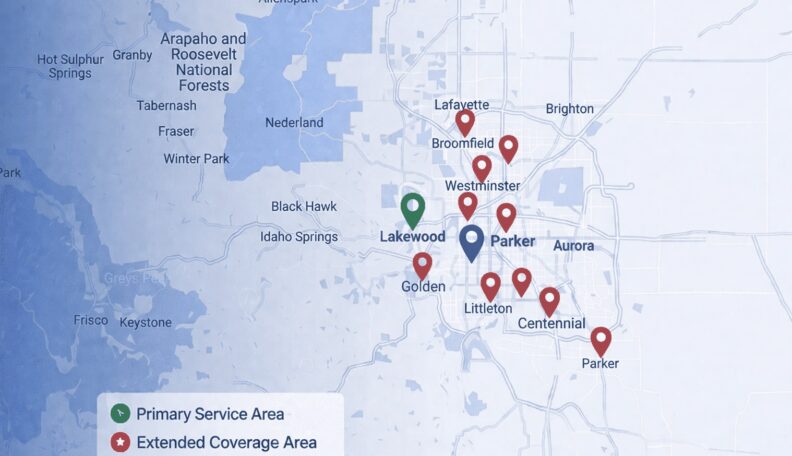
Service Area: 50+ Cities Across Metro Denver
Select Your Nearest Location
Hours: Mon-Fri 8am-5pm
Sunday Emergency Only
Avg Response Time: 18 minutes
Hours: Mon-Fri 8am-5pm
Sunday Emergency Only
Avg Response Time: 18 minutes
Hours: Mon-Fri 8am-5pm
Sunday Emergency Only
Avg Response Time: 18 minutes
Hours: Mon-Fri 8am-5pm
Sunday Emergency Only
Avg Response Time: 18 minutes
Hours: Mon-Fri 8am-5pm
Sunday Emergency Only
Avg Response Time: 18 minutes
Hours: Mon-Fri 8am-5pm
Sunday Emergency Only
Avg Response Time: 18 minutes
Hours: Mon-Fri 8am-5pm
Sunday Emergency Only
Avg Response Time: 18 minutes
Hours: Mon-Fri 8am-5pm
Sunday Emergency Only
Avg Response Time: 18 minutes
Hours: Mon-Fri 8am-5pm
Sunday Emergency Only
Avg Response Time: 18 minutes
Hours: Mon-Fri 8am-5pm
Sunday Emergency Only
Avg Response Time: 18 minutes
Hours: Mon-Fri 8am-5pm
Sunday Emergency Only
Avg Response Time: 18 minutes
Hours: Mon-Fri 8am-5pm
Sunday Emergency Only
Avg Response Time: 18 minutes
Hours: Mon-Fri 8am-5pm
Sunday Emergency Only
Avg Response Time: 18 minutes
Hours: Mon-Fri 8am-5pm
Sunday Emergency Only
Avg Response Time: 18 minutes
Hours: Mon-Fri 8am-5pm
Sunday Emergency Only
Avg Response Time: 18 minutes
We Service: Parker, Castle Rock, Greenwood Village, Lakewood, Littleton, Centennial, Highlands Ranch 40+ More Cities