

How Does UV Exposure at High Elevation Fade Garage Doors in Parker, CO?

Sitting at almost 6,000 feet, Parker’s atmosphere is thinner, which means it filters out far less UV radiation than locations closer to sea level. That heightened sun exposure attacks the chemical bonds holding garage door paint and finishes together, speeding up fading, causing oxidation, and leaving surfaces with a dull, chalky look over time.
Key Takeaways
- Parker’s 5,900-foot elevation means 18% more UV exposure than sea level, accelerating garage door fading.
- Painted garage doors last 7-10 years in high-altitude Parker, compared to 12-15 years at lower elevations.
- Low Colorado humidity (20-30% in summer) removes the protective moisture barrier, making UV damage worse.
- Wood garage doors are most vulnerable to UV damage, with UV breaking down the wood’s natural lignin.
- Powder-coated steel and aluminum doors resist fading better than painted finishes.
- Lighter-colored doors and shade structures (awnings) dramatically reduce UV exposure and fading.
Parker’s 5,900-foot elevation receives 18% more ultraviolet radiation than sea level, causing garage doors to fade, chalk, and peel in 7-10 years instead of 12-15 years. The combination of intense altitude UV and Colorado’s low humidity accelerates paint degradation, making high-altitude sun protection critical for Parker homeowners.
Garage door fading is a common problem for Parker residents due to altitude and Colorado’s intense sun. At Select Garage Doors, they help homeowners understand the “why” behind door damage and offer proven solutions to protect and restore your garage door investment.
Why Does Parker’s High Elevation Cause Faster Garage Door Fading?
Parker sits at 5,900 feet elevation, which means 2% more UV exposure for every 1,000 feet above sea level. This adds up to roughly 18-20% stronger ultraviolet radiation hitting your garage door than what homeowners at lower elevations experience.
UV radiation increases with altitude because there’s less atmosphere to filter the sun’s rays. At sea level, the entire atmosphere acts as a protective shield. As you climb elevation, the air column thins, allowing more unfiltered UV to reach the ground. Parker’s elevation of nearly a mile above sea level creates conditions where the sun’s rays are noticeably more intense.
Colorado receives an average of 300+ days of sunshine per year, combined with high elevation and low humidity, creates a triple threat to garage door finishes. Your door is under constant UV bombardment.
How Fast Does Paint Degrade at Parker’s Elevation?
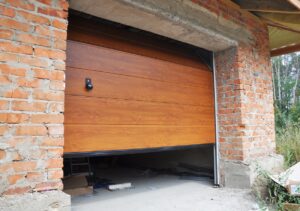
The degradation process happens in stages. Year 1-2: Colors fade and become dull. Year 3-5: Chalking begins, where you notice a powdery white residue on your fingers when touching the door. Year 5-7: Paint starts peeling and cracking. By year 7-10, major damage is visible and your door’s protective coating has failed, exposing the underlying material.
The chalking you notice is paint binder oxidation. UV rays break down the resin that holds paint pigments together, leaving behind powder instead of a protective coating. This exposes your garage door frame to moisture, temperature swings, and further deterioration.
Which Garage Door Materials Are Most Vulnerable to UV Damage?
Wood doors are most vulnerable to UV damage, followed by fiberglass and painted steel. Powder-coated aluminum and steel doors resist fading best. Material choice directly impacts how long your door looks new in Parker’s intense sun.
| Material | UV Lifespan in Parker | Fading Speed | Maintenance | Cost Range |
|---|---|---|---|---|
| Wood | 3-5 years | Very fast | Annual stain/paint required | Call for a free estimate. |
| Fiberglass | 8-12 years | Fast | Every 5-7 years | Call for a free estimate. |
| Painted Steel | 7-10 years | Fast | Every 5-7 years | Call for a free estimate. |
| Powder-Coated Steel/Aluminum | 15-20+ years | Slow | Minimal (every 10+ years) | Call for a free estimate. |
Wood Garage Doors
Wood is the most UV-vulnerable material. UV radiation breaks down lignin, the natural compound that holds wood fibers together. This causes surface graying, deep structural cracks, and eventual wood splitting. A wood garage door at Parker’s elevation can show visible damage within 3-5 years without protective stain or paint applied annually.
Fiberglass Garage Doors
Fiberglass doors resist dents better than wood or steel but aren’t immune to UV. Extended sun exposure causes yellowing, loss of gloss, and a chalky surface. Fiberglass doors typically hold up better than wood but still fade noticeably after 8-12 years at Parker’s elevation.
Painted Steel Garage Doors
Steel doors with standard painted finishes experience rapid fading in Parker’s high-altitude UV. Paint chalking appears within 5-7 years. Once paint fails, steel begins to rust underneath, creating a cascading failure.
Powder-Coated Steel and Aluminum
Powder-coated finishes resist fading longest. The tough, industrial-grade coating withstands Parker’s UV for 15-20+ years with minimal color change. This is why Select Garage Doors recommends powder-coated finishes for Parker homeowners.
How Does Colorado’s Low Humidity Make UV Damage Worse?
Colorado humidity drops to 20-30% in summer, removing the protective moisture barrier that paint finishes rely on at coastal and humid locations. Without this natural protection, UV damage accelerates rapidly in Parker.
In humid regions (60-80% humidity), atmospheric moisture forms a protective layer on painted surfaces. This moisture buffer reduces surface temperature and shields the paint from direct UV exposure. Parker’s desert-like air (20-30% summer humidity) strips this protection. Your garage door is exposed to the full intensity of high-altitude UV in bone-dry air, dramatically speeding up paint breakdown.
This combination of high UV, high elevation, low humidity, and 300+ sunny days per year creates what industry experts call “accelerated weathering conditions.” Parker sits in an ideal storm for garage door fading.
What Can Parker Homeowners Do to Prevent Garage Door Fading?
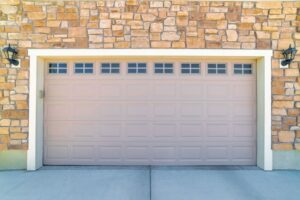
Choose Powder-Coated Finishes
Powder-coated steel or aluminum doors vastly outperform painted finishes in Parker’s UV environment. The industrial-grade coating lasts 15-20+ years compared to 7-10 for painted doors. If you’re replacing your door, this is the single most important UV protection decision.
Install an Awning or Shade Structure
A shade structure above the garage door deflects the sun’s most intense rays. This simple addition can reduce surface temperature by 20-30 degrees Fahrenheit and cut UV exposure by 40-60%, dramatically extending your door’s life.
Select Light Colors
Light colors (white, cream, tan) reflect sunlight and heat. Dark colors (black, dark brown, dark gray) absorb both. A light-colored door stays cooler, experiences less thermal stress, and fades less noticeably than a dark door.
Plan for Refinishing Every 5-7 Years
For painted doors in Parker, accept that refinishing is maintenance, not optional. Repainting or refinishing every 5-7 years stops UV damage from becoming structural.
When Should You Call a Garage Door Professional for UV Damage?
Call a professional when you see chalking that doesn’t wipe away, paint peeling larger than a few inches, visible cracks in the door surface, or rust appearing underneath failed paint. These are signs the damage has progressed beyond cosmetic.
If you notice any of these issues, Select Garage Doors can evaluate whether refinishing will restore your door or whether replacement is the more cost-effective solution. Schedule a consultation to get a free assessment of your door’s UV damage.
Don’t wait until your garage door is structurally compromised. Early intervention catches damage while refinishing is an option. Once water penetrates the door’s core through failed paint and cracks, replacement becomes the only choice.
Protect Your Garage Door from Parker’s Intense UV Exposure
Parker homeowners understand that high elevation brings unique challenges. Your garage door faces constant UV bombardment at 5,900 feet. The good news: you have proven strategies to slow fading and extend your door’s life. For more specific maintenance tips, check out our garage door maintenance guide.
If you’re ready for a professional evaluation or replacement, schedule a service with Select Garage Doors in Parker.
Frequently Asked Questions
How much more UV exposure does Parker have compared to Denver?
Parker at 5,900 feet receives about 18% more UV exposure than Denver at 5,280 feet, a difference of about 620 feet elevation. This translates to noticeably faster fading and paint degradation in Parker.
Can I prevent garage door fading without replacing my door?
Yes. Install an awning above the door, repaint every 5-7 years with UV-protective paint, or apply UV-blocking clear coat. These measures extend the life of your current door and slow fading.
Which color garage door fades least in Parker?
Light colors fade much slower than dark colors because they reflect heat and UV. White, cream, and tan doors show less visible fading than black, dark brown, or dark gray doors in Parker’s intense sun.
Is powder-coated better than regular paint for Parker homes?
Absolutely. Powder-coated finishes last 15-20+ years in Parker’s UV, while regular paint lasts 7-10 years. The industrial coating is worth the extra upfront cost given the high-altitude UV exposure.
How do I know if my garage door UV damage is still cosmetic?
Cosmetic damage shows as color fading and surface chalking. Structural damage appears as paint peeling over large areas, visible cracks in the door, or rust forming underneath. Cosmetic damage can be refinished; structural damage usually requires replacement.
What’s the cost difference between refinishing and replacing a garage door?
Refinishing is much cheaper if the underlying door material is still sound.
Does homeowners insurance cover garage door UV fading?
No, standard homeowners insurance does not cover UV fading as it’s considered normal wear and tear, not sudden damage. However, if a storm or impact compounds the UV damage, that may be covered.
Can I use regular outdoor paint on my garage door?
Regular outdoor paint works but degrades faster in Parker’s UV. Specialty garage door paint or UV-protective coatings last longer. Powder-coating is the best option if you’re willing to invest.

Looking for a deal?
Call us or to learn about our current promotions and seasonal offers.


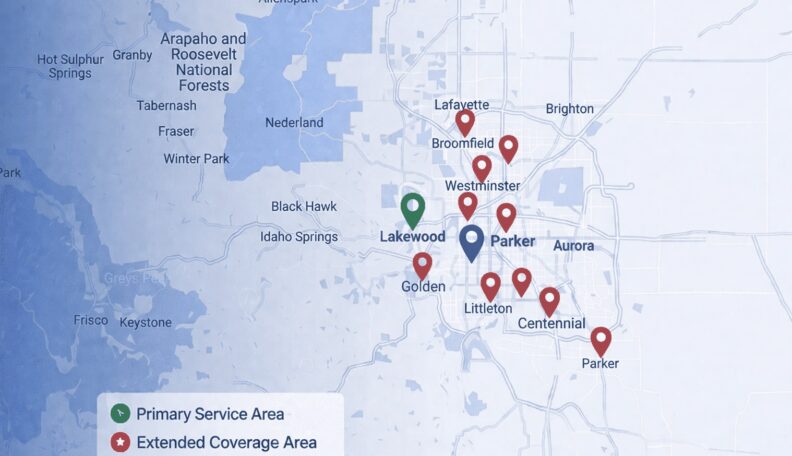
Service Area: 50+ Cities Across Metro Denver
Select Your Nearest Location
Hours: Mon-Fri 8am-5pm
Sunday Emergency Only
Avg Response Time: 18 minutes
Hours: Mon-Fri 8am-5pm
Sunday Emergency Only
Avg Response Time: 18 minutes
Hours: Mon-Fri 8am-5pm
Sunday Emergency Only
Avg Response Time: 18 minutes
Hours: Mon-Fri 8am-5pm
Sunday Emergency Only
Avg Response Time: 18 minutes
Hours: Mon-Fri 8am-5pm
Sunday Emergency Only
Avg Response Time: 18 minutes
Hours: Mon-Fri 8am-5pm
Sunday Emergency Only
Avg Response Time: 18 minutes
Hours: Mon-Fri 8am-5pm
Sunday Emergency Only
Avg Response Time: 18 minutes
Hours: Mon-Fri 8am-5pm
Sunday Emergency Only
Avg Response Time: 18 minutes
Hours: Mon-Fri 8am-5pm
Sunday Emergency Only
Avg Response Time: 18 minutes
Hours: Mon-Fri 8am-5pm
Sunday Emergency Only
Avg Response Time: 18 minutes
Hours: Mon-Fri 8am-5pm
Sunday Emergency Only
Avg Response Time: 18 minutes
Hours: Mon-Fri 8am-5pm
Sunday Emergency Only
Avg Response Time: 18 minutes
Hours: Mon-Fri 8am-5pm
Sunday Emergency Only
Avg Response Time: 18 minutes
Hours: Mon-Fri 8am-5pm
Sunday Emergency Only
Avg Response Time: 18 minutes
Hours: Mon-Fri 8am-5pm
Sunday Emergency Only
Avg Response Time: 18 minutes
We Service: Parker, Castle Rock, Greenwood Village, Lakewood, Littleton, Centennial, Highlands Ranch 40+ More Cities