


Common Parker Garage Door Opener Installation Mistakes
Installing a garage door opener looks like a one-afternoon job in the YouTube tutorials, but the failure rate on DIY and rushed-professional installs is higher than most homeowners expect. A bad install isn’t just an inconvenience. It costs you in repeat repairs, voided warranties, and in the worst cases, injuries from improperly tensioned springs or off-square panels.
At Select Garage Doors, we’ve seen the aftermath of every install mistake on this list in service calls across Parker, CO and the wider Denver Metro area. The pattern is consistent: small shortcuts taken on install day grow into expensive repairs six to eighteen months later. Knowing what to watch for, before you sign off on a job, is the cheapest way to protect your investment.
Want a technician to handle the install correctly the first time or audit an install you’re not sure about? Contact us today for a no-obligation assessment.
Skipping the Manufacturer’s Instructions
Every opener model has its own wiring layout, drive-rail length, sensor placement, and force-setting procedure. Tutorials and “universal” guides skip the small differences that matter most for your specific unit. Reading the manufacturer’s instructions cover to cover before any tool comes out is the single highest-ROI 15 minutes in the install.
- Why it costs you: Skipped instructions lead to voided warranties, incorrect force settings that wear out the motor early, and safety features that don’t engage properly. Manufacturers reject warranty claims when the install doesn’t match the documented procedure.
- The fix: Read every step before you start. Print the instruction sheet if your phone screen is too small to reference while working. If you spot a step you’re not sure about, that’s the moment to call a pro. Doing it after you’ve partway installed is harder and more expensive.
Making Assumptions About Wall Mounting Clearance
Wall-mount openers (jackshaft models) sit beside the door on the wall rather than on the ceiling. The clearance requirements around the motor, the angle of the torque tube, and the panel-to-wall gap all matter. An installer who assumes “it’ll fit” without measuring ends up with a motor that grinds against the panel mid-cycle.
- Why it costs you: Wrong clearances mean the door binds, the motor strains, and the warranty almost certainly doesn’t cover the failure. Worst case, the opener pulls itself off the wall mid-operation.
- The fix: Measure twice before mounting. Confirm the manufacturer’s clearance specs match your specific door, framing, and panel thickness. For jackshaft openers, this measurement step is the difference between a clean install and a service call within six months.
Underestimating the Garage Door’s Weight
Opener motors are rated for specific door weight ranges. A 1/2 HP unit handles a standard single residential door. A 3/4 HP handles most double doors. Insulated panels, wood doors, and oversized carriage doors can push weights past 200 pounds and demand a 1 HP or jackshaft motor. Installing an under-rated unit guarantees premature failure.
- Why it costs you: An undersized opener fails three to five years earlier than a properly matched unit, and pulls down spring life with it. Replacing both the opener and the springs costs more than buying the right opener the first time.
- The fix: Weigh your door if you don’t know the number, or have a technician verify weight before you buy. Match horsepower or drive type (chain, belt, jackshaft) to the door’s actual mass, not what the marketing copy claims is “compatible.”
Ignoring Photo-Eye Sensor Alignment
The two photo-eye sensors at the base of each track form an invisible beam that triggers auto-reverse when broken. Even a half-degree misalignment causes the door to refuse to close, or worse, to close without the safety beam engaged. UL 325 sets the standard for these sensors, and a misaligned pair is the single most common reason garage doors injure people every year.
- Why it costs you: A non-functional safety beam exposes everyone who walks under the door, including pets, kids, and vehicles. It’s also a clear liability issue if anything goes wrong.
- The fix: Test the photo-eye alignment after install by waving a broom handle across the beam path mid-close. The door should reverse instantly. If it doesn’t, stop using the opener until the sensors are realigned. Persistent misalignment usually calls for a garage door opener repair visit to verify the sensor wiring is intact.
Neglecting Post-Install Lubrication
A new opener and a new spring system both need a light coat of lubricant before the first 100 cycles to seat properly. Skipping post-install lubrication leaves dry friction points that grind down rollers, hinges, and the motor coupling. Six months later, the door is noisy and wear on parts shows up sooner than it should.
- Why it costs you: Premature wear on rollers, hinges, and springs. Noise problems within months of install. Reduced lifespan on every moving component.
- The fix: Lubricate hinges, rollers (the bearings, not the wheel face), springs, and the top of the rails with a silicone-based or lithium-based garage door lubricant immediately after install. Repeat every six months thereafter.
The Cost of a Bad Install
The five mistakes above don’t fail equally. Some show up as a noisy door within a month; others take a year to surface as a major component failure. The table below maps each mistake to the typical downstream cost so you know which corners are the most expensive to cut.
| Mistake | Cost If Ignored | Fix |
|---|---|---|
| Skipping the manufacturer’s instructions | Voided warranty; premature motor wear; safety features not engaging | Read every step before tools come out; call a pro if any step is unclear |
| Wrong wall-mount clearance | Motor grinds against the panel; opener pulls off the wall | Measure twice; confirm specs match your door, framing, and panel thickness |
| Underestimated door weight | Opener fails 3 to 5 years early; springs wear out with it | Match horsepower and drive type to the door’s actual mass |
| Misaligned photo-eye sensors | Safety beam fails; serious injury risk; UL 325 non-compliance | Test with a broom handle mid-close; realign or service if door doesn’t reverse |
| No post-install lubrication | Noisy door within months; rollers, hinges, springs all wear early | Apply silicone or lithium-based lubricant right after install; repeat every 6 months |
If your install was recent and any of the five rows above sound familiar, a professional garage door opener installation audit catches the issue before downstream wear sets in.
Catching a Bad Install Before It Costs You
Install mistakes are easiest to fix in the first 30 days after the work is done, before the manufacturer warranty clock starts taking hits and before downstream parts start wearing out. If you’ve recently had a new opener installed and any of the five mistakes above match what you saw, schedule a verification visit before the issues compound.
At Select Garage Doors, we’re a veteran-owned team based in Parker serving the Denver Metro area, and we audit recent installs as well as handle clean installs from scratch. Give us a call at (720) 339-2442.
Frequently Asked Questions
How do I tell if my garage door opener was installed correctly?
Run three quick tests: open and close the door from the wall button, the remote, and the keypad. The door should travel smoothly without binding, the auto-reverse should engage when you place a roll of paper towels in the path, and the photo-eyes should reverse the door when the beam is broken. Any failure on those three points usually points to an install issue.
What’s the most expensive install mistake to fix later?
An undersized motor on a heavy door. By the time it fails, the springs have usually worn out alongside it, so the repair becomes an opener plus a spring set rather than just one or the other. Wall-mount clearance issues run a close second since they often require remounting the entire unit.
Can a bad install be partially corrected, or does it require a full reinstall?
Most issues can be corrected without a full reinstall if caught early. Photo-eye alignment, force settings, and lubrication are quick fixes. Wall-mount clearance and motor sizing are bigger jobs and may require partial remounting or unit replacement, especially if the original installer used parts that void the manufacturer warranty.
Should I get a second opinion before paying my installer?
If something feels off during the final walkthrough, yes. A second-opinion visit costs less than a wrong install left in place for six months. Ask the new technician to verify motor sizing, clearance, photo-eye alignment, and force settings against the manufacturer’s spec sheet.



Looking for a deal?
Call us or to learn about our current promotions and seasonal offers.



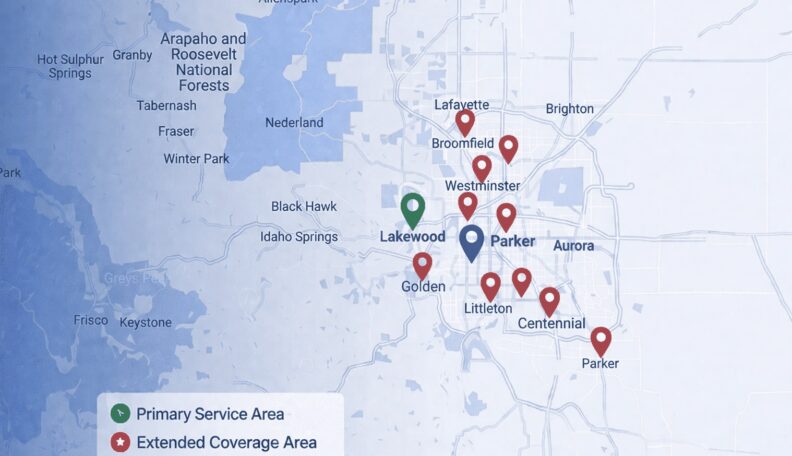
Service Area: 50+ Cities Across Metro Denver
Select Your Nearest Location
Hours: Mon-Fri 8am-5pm
Sunday Emergency Only
Avg Response Time: 18 minutes
Hours: Mon-Fri 8am-5pm
Sunday Emergency Only
Avg Response Time: 18 minutes
Hours: Mon-Fri 8am-5pm
Sunday Emergency Only
Avg Response Time: 18 minutes
Hours: Mon-Fri 8am-5pm
Sunday Emergency Only
Avg Response Time: 18 minutes
Hours: Mon-Fri 8am-5pm
Sunday Emergency Only
Avg Response Time: 18 minutes
Hours: Mon-Fri 8am-5pm
Sunday Emergency Only
Avg Response Time: 18 minutes
Hours: Mon-Fri 8am-5pm
Sunday Emergency Only
Avg Response Time: 18 minutes
Hours: Mon-Fri 8am-5pm
Sunday Emergency Only
Avg Response Time: 18 minutes
Hours: Mon-Fri 8am-5pm
Sunday Emergency Only
Avg Response Time: 18 minutes
Hours: Mon-Fri 8am-5pm
Sunday Emergency Only
Avg Response Time: 18 minutes
Hours: Mon-Fri 8am-5pm
Sunday Emergency Only
Avg Response Time: 18 minutes
Hours: Mon-Fri 8am-5pm
Sunday Emergency Only
Avg Response Time: 18 minutes
Hours: Mon-Fri 8am-5pm
Sunday Emergency Only
Avg Response Time: 18 minutes
Hours: Mon-Fri 8am-5pm
Sunday Emergency Only
Avg Response Time: 18 minutes
Hours: Mon-Fri 8am-5pm
Sunday Emergency Only
Avg Response Time: 18 minutes
We Service: Parker, Castle Rock, Greenwood Village, Lakewood, Littleton, Centennial, Highlands Ranch 40+ More Cities