


Why Do Castle Rock Families Trust Professional Assessment Over DIY Garage Door Solutions?
Castle Rock families lean on professional assessment because a garage door hides its worst risks from untrained eyes: the tension system that can injure, the wear that spreads quietly, and the safety features that fail silently are all things a technician sees and a weekend fix misses.
Key Takeaways
- The spring and cable system carries the door’s full weight under tension and is never a safe DIY project.
- DIY fixes tend to treat the symptom a homeowner can see, not the cause a technician would find.
- Safety features can fail silently, and families are exactly who they protect.
- A professional assessment costs a routine visit; a DIY mistake can cost far more.
- Homeowners still own a valuable role: watching, listening, and keeping things clean.
There is a healthy DIY instinct in most homeowners, and plenty of the house rewards it. The garage door is the exception with the strongest case. Select Garage Doors meets Castle Rock families every week who tried the honest weekend route first, and the pattern repeats: the visible symptom got attention while the actual cause kept working in the dark. Here is why the professional assessment wins that trade so consistently.
What Makes a Garage Door Different From Other Home Projects?
It is the largest moving object in the house, powered by a tension system that stores enough force to cause serious injury, which puts it in a different category from a faucet or a fence board.
A garage door looks approachable because it moves slowly and lives at home. Underneath, springs and cables counterbalance its full weight under constant tension, and that force does not care about good intentions. Families in Castle Rock, CO also depend on the door behaving predictably around kids, pets, and daily traffic, which raises the stakes of a fix that almost worked. Painting a bedroom wrong costs a repaint; adjusting a torsion system wrong can cost a hand. The project category is simply different, and treating it that way is not caution, it is accuracy.
Where Do DIY Garage Door Fixes Usually Go Wrong?
They go wrong by fixing the visible symptom, missing the underlying cause, and occasionally disabling the safety feature that was in the way.
None of these moves come from carelessness; they come from working with what is visible. The trouble is that a garage door’s causes hide behind its symptoms, and some of its symptoms are safety features doing their job. The Select guide on why a garage door is more dangerous than you think walks through the risks in detail, and the summary is simple: the door is engineered to be safe to use, not safe to disassemble.
| Common DIY Move | What Usually Happens | What a Technician Does Instead |
|---|---|---|
| Tightening whatever looks loose | Masks the noise while wear continues | Traces the noise to its actual source |
| Adjusting opener force to push through | Overrides a safety response | Finds why the door resists and fixes it |
| Bypassing blinking sensors | Removes the family’s main protection | Cleans, aligns, or rewires the sensors |
| Touching springs or cables | Serious injury risk | Handles tension with training and tools |
What Does a Professional Assessment Actually Deliver?
It delivers a whole-system diagnosis: springs, cables, balance, opener, tracks, and safety features checked together, with findings explained and priced before any work begins.
The value is in the word system. A technician does not ask what is broken; they ask how the whole door is aging, because components wear each other. A tired spring strains the opener, a bent track chews rollers, a dusty sensor hides all of it behind false reversals. An assessment reads those relationships, catches the cause behind the symptom, and turns the findings into a plain-language plan with fair upfront pricing. Select backs that work with a limited labor and installation warranty and completes most Castle Rock visits the same day, which means the professional route is usually also the fast one.
What Is the Homeowner’s Rightful Part of the Job?
Watching, listening, wiping sensor lenses, keeping tracks clear, and calling early: the observation layer belongs to the family, and it matters.
Choosing professional assessment does not make a homeowner passive. Nobody knows a door’s normal sounds and habits better than the people who use it daily, and that knowledge is what catches drift early. Wiping the sensor lenses, keeping the tracks free of clutter, and noticing that the door groans on cold mornings are all genuinely useful work. The handoff point is anything involving tension, wiring, or disassembly. Castle Rock families can put a local face on the professional side at the Castle Rock location on Google Maps, where the team behind 1,900+ five-star reviews handles the part of the job that should never be a weekend project.
The families who get this right run a simple split: they own the watching, and they hand the wrenching to people trained for it. That balance keeps the door safe, the repairs small, and the weekends free. When the door starts asking for more than observation, schedule a service request and let the assessment do what assessments do.
Frequently Asked Questions
Is any garage door repair safe to DIY?
Cleaning sensor lenses, clearing tracks of clutter, and observing the door’s behavior are safe. Anything involving springs, cables, opener internals, or track disassembly belongs to a professional.
Why are garage door springs so dangerous?
They hold the door’s full weight under constant tension. If one releases while being handled, the stored force can cause serious injury, which is why spring work always requires training and proper tools.
What does a professional garage door assessment include?
A whole-system check: springs, cables, balance, tracks, rollers, opener, and all safety features, followed by plain-language findings and upfront pricing for anything that needs work.
Isn’t DIY cheaper than calling a professional?
Only when it works. DIY fixes that mask causes, strain other parts, or disable safety features tend to cost more than the assessment would have, sometimes much more.
How do I know if my safety sensors are working?
The door should reverse when something crosses its path while closing, and the sensor indicator lights should hold steady. Blinking lights or random reversals mean the system needs attention.
What should I do while waiting for a technician?
Stop using the door if it shows spring trouble, feels heavy, or will not reverse. Keep kids and pets away from it, and leave the manual release alone unless you know the door’s condition.
How fast can Select Garage Doors get to a Castle Rock home?
Most calls are completed the same day, with a 24/7 call line for urgent situations and service scheduled during regular business hours.
Is Select Garage Doors licensed and insured?
Yes. Select Garage Doors is licensed and insured, veteran-owned since 2019, BBB A+ rated, with 1,900+ five-star reviews and a limited labor and installation warranty.




Looking for a deal?
Call us or to learn about our current promotions and seasonal offers.



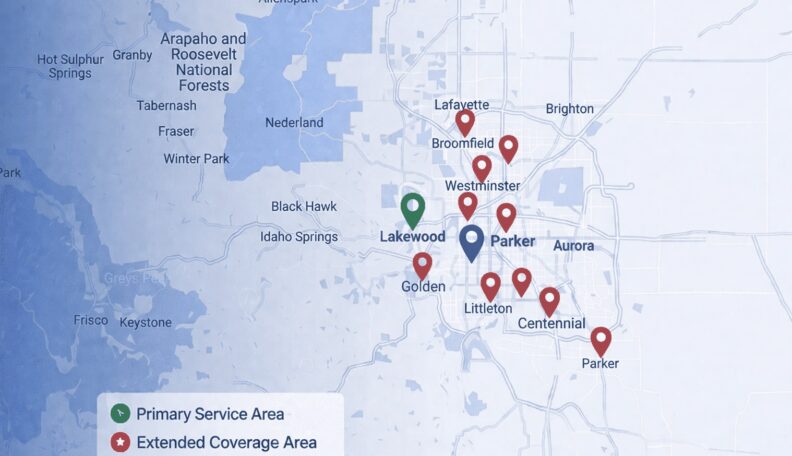
Service Area: 50+ Cities Across Metro Denver
Select Your Nearest Location
Hours: Mon-Fri 8am-5pm
Sunday Emergency Only
Avg Response Time: 18 minutes
Hours: Mon-Fri 8am-5pm
Sunday Emergency Only
Avg Response Time: 18 minutes
Hours: Mon-Fri 8am-5pm
Sunday Emergency Only
Avg Response Time: 18 minutes
Hours: Mon-Fri 8am-5pm
Sunday Emergency Only
Avg Response Time: 18 minutes
Hours: Mon-Fri 8am-5pm
Sunday Emergency Only
Avg Response Time: 18 minutes
Hours: Mon-Fri 8am-5pm
Sunday Emergency Only
Avg Response Time: 18 minutes
Hours: Mon-Fri 8am-5pm
Sunday Emergency Only
Avg Response Time: 18 minutes
Hours: Mon-Fri 8am-5pm
Sunday Emergency Only
Avg Response Time: 18 minutes
Hours: Mon-Fri 8am-5pm
Sunday Emergency Only
Avg Response Time: 18 minutes
Hours: Mon-Fri 8am-5pm
Sunday Emergency Only
Avg Response Time: 18 minutes
Hours: Mon-Fri 8am-5pm
Sunday Emergency Only
Avg Response Time: 18 minutes
Hours: Mon-Fri 8am-5pm
Sunday Emergency Only
Avg Response Time: 18 minutes
Hours: Mon-Fri 8am-5pm
Sunday Emergency Only
Avg Response Time: 18 minutes
Hours: Mon-Fri 8am-5pm
Sunday Emergency Only
Avg Response Time: 18 minutes
Hours: Mon-Fri 8am-5pm
Sunday Emergency Only
Avg Response Time: 18 minutes
We Service: Parker, Castle Rock, Greenwood Village, Lakewood, Littleton, Centennial, Highlands Ranch 40+ More Cities