

Common Signs You Need Garage Door Spring Repair in Parker, CO
Key Takeaways
- A door that feels unusually heavy, closes too fast, or travels unevenly are the three most common early signs of a failing spring.
- Parker sits at 5,869 ft elevation, and the Front Range’s 40-60°F daily temperature swings cause torsion springs to expand and contract far more rapidly than in lower-altitude, more stable climates.
- Torsion springs last 15,000 to 25,000 cycles; standard residential springs at 4 cycles per day last roughly seven to ten years before needing replacement.
- Replacing both springs at the same time, even if only one broke, prevents a second service call within months and keeps the door balanced.
- Never attempt to adjust, tighten, or wind a torsion spring yourself. They operate under hundreds of pounds of torque and cause serious injuries when mishandled.
Table of Contents
Your garage door springs carry the full weight of the door on every open and close cycle. Over time, this component can get damaged, resulting in serious issues. Recognizing the signs of a failing spring early can help Parker, CO homeowners avoid hazards and costly repairs. Select Garage Doors outlines the most common indicators that something is wrong with your springs.
1. The Garage Door Feels Heavy
A door that requires extra effort to lift or feels noticeably heavier than usual is one of the clearest indicators of spring failure. Garage door springs are designed to counterbalance the door’s weight on every cycle. When they weaken or break, the opener and your arms are left carrying what the springs normally handle.
If your garage door seems unusually heavy or requires extra effort to lift, it might indicate a problem with the springs. Garage door springs are designed to counterbalance the weight of the door, making it easy to open and close. When the springs are damaged or broken, the door can feel noticeably heavier.
2. Visible Wear and Tear
Physical inspection reveals damage that performance symptoms alone cannot confirm. Gaps in the coil winding, surface rust or corrosion, and visible stretching beyond the spring’s resting length are all signs that the spring has reached or passed the point where replacement is needed.
Regularly inspect your garage door springs for signs of damage. Look for gaps, rust, or stretches. If you notice any of these signs, it is a clear indication that the springs are deteriorating and need to be replaced.
3. The Door Closes Too Quickly
A garage door that descends faster than normal or lands with a loud bang has lost the tension control that springs provide. Springs regulate the speed of descent by counterbalancing the door’s weight throughout the full travel cycle. When that tension is gone, the door drops rather than lowers in a controlled motion.
A garage door that closes too quickly or with a loud bang can be dangerous. This behavior often indicates that the springs are no longer providing the necessary tension to control the door descent. Prompt repair is needed to prevent accidents and further damage.
4. Loud Noises During Operation
Creaking, squeaking, or sudden popping sounds during a cycle indicate that springs or other components are under abnormal stress. Some noise is expected from an aging door, but sharp or repetitive sounds at the same point in the open or close cycle often point to a specific mechanical problem worth investigating.
Hearing unusual creaking, squeaking, or banging noises when operating your garage door is another sign of spring issues. Spring problems often overlap with other mechanical wear, and common warning signs for garage door repair covers the broader range of issues that can develop when components are stressed.
5. The Door Is Crooked or Uneven
A garage door that tilts to one side or sits higher on one end during operation is almost always a sign that one spring has failed while the other remains intact. The working spring continues lifting its side while the failed side droops, creating a visible imbalance that adds strain to every other component.
If your garage door appears crooked or uneven when used, one of the springs is likely damaged or broken. This imbalance can cause additional strain on the door components and should be repaired to maintain proper alignment and function.
Catching spring problems early prevents the kind of sudden failures that leave a door stuck mid-cycle. Before attempting any adjustments yourself, common mistakes in garage door spring repair is worth reading first. Some errors make the problem far more expensive to fix. If any of these signs look familiar, spring repair in Parker can restore safe, balanced operation before the issue gets worse. Book your spring repair in Parker, CO today and we will get a technician out quickly.
Parker homeowners dealing with spring issues can also find Select Garage Doors serving Castle Rock, Greenwood Village, Lakewood, and the greater Denver metro area. Call 720-339-2442 to schedule.
Why Colorado’s Temperature Swings Accelerate Spring Failure
Parker’s 5,869-foot elevation and the Front Range’s wide daily temperature swings create conditions that are measurably harder on torsion spring coils than lower-altitude, climatically stable environments. Metal expands and contracts with every temperature cycle, accumulating fatigue stress that shortens spring life faster than manufacturer ratings suggest.
Parker sits at 5,869 feet above sea level, and the Front Range climate is not kind to metal components under tension. A single day in April or October can swing 40 to 60 degrees Fahrenheit from morning low to afternoon high. Every one of those temperature cycles causes the metal in your torsion spring coils to expand slightly as temperatures rise and contract as they drop. Over hundreds and then thousands of cycles, that constant expansion and contraction weakens the metal at a molecular level, a process called metal fatigue, at a rate that is measurably faster than what homeowners in Denver’s lower-altitude suburbs or in more climatically stable states would experience.
Semi-arid conditions add another layer of wear. Without adequate humidity to slow the process, bare metal on spring coils oxidizes and develops surface rust faster in Colorado than in most of the country. Rust compromises the coil surface, creates stress concentration points, and shortens the spring’s functional life. Proper lubrication, specifically with a garage door-specific lubricant rated for low-humidity environments, slows this down considerably. Standard WD-40 is not a substitute; it evaporates too quickly at altitude and leaves the metal more vulnerable than before.
The Front Range also averages a 25-degree overnight temperature drop even during May, which means springs that were fully warm during the afternoon are contracting again before the next morning cycle. Homeowners who notice their door behaving strangely in the early morning, requiring more effort to open or moving unevenly on the first cycle, are often seeing the result of overnight thermal contraction on springs that are already near the end of their service life.
High-cycle torsion springs, rated for 25,000 cycles versus the standard 10,000-cycle residential spring, are worth the cost difference for most Colorado garages. The added investment is a fraction of what a second spring replacement call costs within a few years, and the superior metallurgy handles thermal stress better. Select Garage Doors can advise on whether a high-cycle upgrade makes sense for your specific door weight and usage pattern.
Torsion vs. Extension Springs: Side-by-Side Comparison
The type of spring on your door determines how it fails, how safely it fails, and what the repair involves. Torsion springs mount above the door on a horizontal shaft and store energy by twisting. Extension springs run along the upper side tracks and store energy by stretching outward as the door closes.
| Feature | Torsion Spring | Extension Spring |
|---|---|---|
| Location | Above door, horizontal | Along side tracks |
| Typical lifespan | 15,000 to 25,000 cycles | 10,000 to 15,000 cycles |
| How they fail | Sudden break (loud bang) | Gradual stretch or snap |
| Safety if broken | Contained on shaft | Can become projectile if no safety cable |
| Best for | Most residential and commercial | Lighter, older doors |
| Colorado performance | Better: consistent torque at altitude | Adequate for lighter doors |
| Repair difficulty | Requires certified tech | Requires certified tech |
How to Inspect Your Springs Without Touching Them
A safe visual inspection takes less than five minutes and can confirm whether a spring has broken or is showing early signs of failure. The critical rule throughout every step: look, don’t touch. Springs under tension cause serious injury if disturbed without the correct tools and training. These steps are observation only.
- Stand inside the garage with the door closed and use good overhead lighting to look up at the horizontal spring above the door (torsion system) or the springs running along the upper side tracks (extension system). You need a clear, unobstructed view before you can assess anything.
- Look for visible gaps in the coil winding. Even a quarter-inch separation in the coil indicates a full break. On torsion springs, a gap appears as a distinct space between two sections of the coil. On extension springs, a snapped spring will hang loosely along the track.
- Check the outer coils for surface rust or corrosion, which shows as reddish-brown discoloration or flaking. Light surface rust can be addressed with lubrication; heavy corrosion that has pitted the metal surface means the spring is past its reliable service life.
- With the door closed and the opener disconnected, manually lift the door to about four feet and let go carefully with both hands. A door in good balance holds its position or drops very slowly. A door that falls immediately or drops faster than a controlled descent indicates spring tension is insufficient to counterbalance the door weight.
- Listen for creaking, popping, or uneven resistance through the full open-and-close cycle. Creaking at a specific point in the travel often indicates a coil that is binding rather than moving smoothly, which is an early-stage warning before a full break.
These inspections are observation-only. If any of these steps reveals a problem, stop using the opener and call a technician. Never attempt to tighten, wind, or adjust a torsion spring yourself. They operate under several hundred pounds of torque, and improper handling causes severe injuries. Extension springs that lack a safety cable running through the center of the coil can become projectiles when they snap.
Spring Lifespan and Replacement Planning for Parker Homeowners
Standard residential torsion springs are rated for 10,000 cycles, which works out to roughly seven to ten years at four daily cycles. Parker homeowners with higher usage rates, those who work from home or use the garage as the primary entry point, often reach that limit in five to six years.
A standard residential torsion spring is rated for approximately 10,000 cycles. At a typical household rate of four open-and-close cycles per day, that translates to roughly seven to ten years of service life. Parker homeowners who work from home, have teenagers learning to drive, or use the garage as the primary household entry point may clock eight to ten cycles per day, which compresses that timeline to five or six years.
The high-cycle upgrade to a 25,000-cycle spring costs more than a standard replacement but lasts two to three times longer. For a Parker garage door running eight cycles daily in a climate that subjects the spring to thermal expansion and contraction year-round, the upgrade is almost always worth the difference. That is far less than the cost of a second full spring replacement service call within a few years.
One consistent recommendation from technicians: replace both springs at the same time, even if only one has broken. Springs on the same door age at the same rate. If one has failed at the 10,000-cycle mark, the second is at the same wear stage. Installing a single new spring next to an end-of-life partner means you will be booking another service call within months. It also means the door runs unbalanced until then, which adds strain to the opener motor and cable system.
Door orientation affects lifespan in a minor but real way. A north-facing garage in Parker stays cooler through more of the day, reducing the frequency of extreme thermal expansion cycles compared to a south-facing door that catches direct sun through the afternoon. It is a marginal difference, but homeowners with south-facing garages who notice their springs failing sooner than expected are not imagining it.
What to Do If Your Parker Garage Door Spring Is Failing
The five signs above cover the most common indicators of spring trouble, but every door system is different. The only reliable way to confirm whether your springs need adjustment, lubrication, or full replacement is a hands-on inspection by a certified technician. One visit takes the guesswork out of the decision entirely.
Your safety and the safety of anyone using that door should be the deciding factor. A spring operating on borrowed time puts the opener motor, cables, and tracks under extra stress with every cycle. The longer you wait, the more components are affected, and the more costly the repair tends to become.
Select Garage Doors serves Parker and the surrounding Denver metro with upfront pricing and technicians who carry the springs and hardware for most repairs on the truck. You don’t have to figure out whether it’s a torsion or extension issue, whether you need one spring or two, or whether a high-cycle upgrade makes sense for your door. That’s what the inspection is for. Call (720) 339-2442 to get a technician scheduled.
Frequently Asked Questions
How long do garage door springs typically last in Parker, CO?
Standard residential torsion springs are rated for 10,000 cycles, which works out to roughly seven to ten years at four daily cycles. In Parker’s climate, where temperature swings of 40-60°F per day accelerate metal fatigue and semi-arid conditions promote corrosion without regular lubrication, homeowners often see springs reach the end of their service life at the lower end of that range. High-cycle springs rated for 25,000 cycles typically last 15-25 years at the same usage rate and are worth considering at replacement time, particularly for households with higher-than-average daily usage.
Is it dangerous to continue using a garage door with a broken spring?
Yes. A door with a broken spring is operating without adequate counterbalance, which places the full weight of the door on the opener motor, the cables, and the tracks. Standard residential openers are not designed to lift the door unassisted, and continuing to run the opener under those conditions can burn out the motor, snap a cable, or cause the door to fall suddenly during operation. Manually lifting a door with a broken spring is also dangerous because the door can drop without warning. Stop using the opener immediately if you suspect a spring failure and call for repair.
Can I replace just one spring if only one is broken?
Technically yes, but most technicians advise against it. When one spring has completed its cycle lifespan and broken, the second spring on the same door is at the same wear stage and will likely fail within months. Replacing both at the same time costs slightly more than a single spring but avoids a second service call, a second service fee, and the period of unbalanced operation that strains the opener and cables in the interim. For most Parker homeowners, replacing both springs simultaneously is the more cost-effective choice.
Why did my garage door spring break in cold weather?
Cold temperatures cause metal to contract, which increases the tension on a spring that is already at or near its cycle limit. The combination of a spring that has accumulated fatigue stress over thousands of cycles and a sudden overnight temperature drop creates the conditions for a break. This is why spring failures cluster in late fall and early winter on the Front Range, when overnight lows drop sharply after warm fall afternoons. A spring with remaining service life can handle the contraction; a spring near the end of its rated lifespan often cannot.
What is the difference between torsion and extension garage door springs?
Torsion springs are mounted horizontally above the door on a steel shaft and work by twisting to store energy as the door closes and releasing it to assist the door opening. Extension springs run along the upper side tracks and stretch outward as the door closes, then contract to assist opening. Torsion springs are more common on modern residential doors, last longer, and when they break, stay contained on the shaft. Extension springs, if they snap and lack a safety cable running through the coil center, can fly loose. Both types require a certified technician for repair or replacement.
How do I know if my garage door spring needs repair vs. replacement?
A spring that shows a visible gap in the coil, heavy corrosion, or stretching past its original tension length is beyond repair and needs replacement. A spring that is still intact but producing noise, minor rust, or slight imbalance may be a candidate for lubrication and adjustment, depending on how many cycles it has accumulated. Because it is difficult to assess remaining cycle life from appearance alone, the practical answer for most homeowners is that a spring within two to three years of its rated lifespan on an actively used door is worth replacing proactively rather than waiting for it to break mid-cycle.


Looking for a deal?
Call us or to learn about our current promotions and seasonal offers.


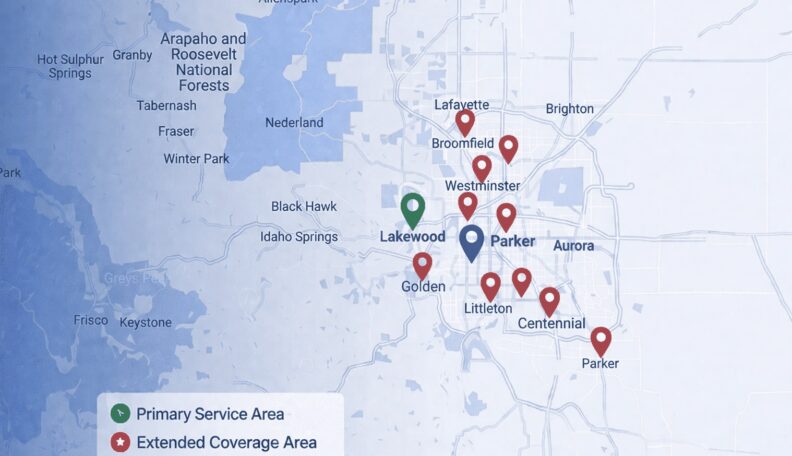
Service Area: 50+ Cities Across Metro Denver
Select Your Nearest Location
Hours: Mon-Fri 8am-5pm
Sunday Emergency Only
Avg Response Time: 18 minutes
Hours: Mon-Fri 8am-5pm
Sunday Emergency Only
Avg Response Time: 18 minutes
Hours: Mon-Fri 8am-5pm
Sunday Emergency Only
Avg Response Time: 18 minutes
Hours: Mon-Fri 8am-5pm
Sunday Emergency Only
Avg Response Time: 18 minutes
Hours: Mon-Fri 8am-5pm
Sunday Emergency Only
Avg Response Time: 18 minutes
Hours: Mon-Fri 8am-5pm
Sunday Emergency Only
Avg Response Time: 18 minutes
Hours: Mon-Fri 8am-5pm
Sunday Emergency Only
Avg Response Time: 18 minutes
Hours: Mon-Fri 8am-5pm
Sunday Emergency Only
Avg Response Time: 18 minutes
Hours: Mon-Fri 8am-5pm
Sunday Emergency Only
Avg Response Time: 18 minutes
Hours: Mon-Fri 8am-5pm
Sunday Emergency Only
Avg Response Time: 18 minutes
Hours: Mon-Fri 8am-5pm
Sunday Emergency Only
Avg Response Time: 18 minutes
Hours: Mon-Fri 8am-5pm
Sunday Emergency Only
Avg Response Time: 18 minutes
Hours: Mon-Fri 8am-5pm
Sunday Emergency Only
Avg Response Time: 18 minutes
Hours: Mon-Fri 8am-5pm
Sunday Emergency Only
Avg Response Time: 18 minutes
Hours: Mon-Fri 8am-5pm
Sunday Emergency Only
Avg Response Time: 18 minutes
We Service: Parker, Castle Rock, Greenwood Village, Lakewood, Littleton, Centennial, Highlands Ranch 40+ More Cities