

Common Warning Signs That You Need Garage Door Repair In Parker
Key Takeaways
- A slow opener response, unusual sounds, and a door that won’t fully open or close are the most common early signs that your system needs professional attention.
- Parker’s Front Range elevation and wide seasonal temperature swings accelerate wear on springs, cables, rollers, and weatherstripping faster than in more stable climates.
- Catching small problems early typically means a simpler, less expensive fix. Most issues that go ignored grow to involve multiple components.
- A door that reverses before fully closing is a safety and security problem that should be inspected promptly, not worked around.
- Visible cable fraying or loose track hardware signal that a more serious failure is approaching. Both are worth addressing before that point.
Table of Contents
Your garage door is the largest moving piece of equipment on your property, and it runs through more cycles each year than most homeowners expect. When something goes wrong, the door doesn’t always fail completely right away. More often, the warning signs appear gradually: a little more noise here, a slower response there, a door that feels heavier than it used to. Parker, CO homeowners who catch these early signs can avoid the sudden, inconvenient failures that always seem to happen at the worst possible moment. Select Garage Doors outlines the most common warning signs that your garage door system needs a professional look.
1. The Opener Is Slow to Respond
A properly working garage door opener should respond within a second or two of pressing the remote or wall button. A noticeable delay before the door begins to move points to a problem with the opener’s logic board, the remote signal, the safety sensors, or the door’s mechanical resistance placing extra load on the motor.
Start with the obvious checks: fresh batteries in the remote, a cleared sensor path, and no obstruction in the door’s travel. If those pass and the delay continues, the opener may be working harder than it should to move the door. Springs that have lost tension or tracks that have drifted out of alignment both increase the mechanical resistance the motor fights on every cycle. A slow response that gets progressively worse over weeks is one of the clearest signs the system needs a technician’s attention before something stops working entirely.
2. Grinding, Scraping, or Banging Sounds
A garage door in good working order makes some mechanical noise, but grinding, scraping, or banging at any point in the cycle is outside normal. These sounds usually point to something specific: a roller catching on a damaged track, a spring under uneven tension, a worn gear inside the opener, or a loose hardware component vibrating against the door frame.
Grinding often comes from rollers or hinges that need lubrication or replacement. A consistent scraping sound through the full travel of the door suggests something is catching on the track surface. A single loud bang that doesn’t repeat is typically a spring breaking and should be followed immediately by a call for repair. Sounds that happen at the same point in every cycle are easier for a technician to isolate and diagnose, so noting when and where in the travel the noise occurs is worth doing before the service call.
3. The Door Won’t Open or Close Fully
A door that stops short of fully open, reverses before reaching the floor, or gets stuck partway through a cycle has a mechanical or sensor issue that won’t resolve on its own. Every incomplete cycle adds wear to the opener motor, cables, and tracks, and the underlying cause tends to get worse the longer it goes unaddressed.
The most common causes are misaligned or dirty safety sensors, incorrect limit settings on the opener, a track obstruction, or insufficient spring tension to carry the door through the full range of motion. If the door reverses consistently before closing, check whether both sensor indicator lights are showing steady, not blinking. A blinking sensor light means something is interrupting the beam, which could be as simple as debris in the sensor path. If cleaning the sensors doesn’t resolve it, the underlying alignment or mechanical cause needs a technician to properly diagnose and correct.
4. Sagging Sections or Visibly Damaged Panels
A garage door with sagging sections, deep dents, or panels that have separated from the frame is not only a cosmetic issue. Structural damage affects how the door seals against weather, compromises the door’s rigidity during operation, and can interfere with the track and roller system as the panels flex and shift through each cycle.
Minor surface dents from impact don’t always require panel replacement if the door structure is still intact and the travel remains smooth. Sections that have buckled, panels that have separated at the seams, or a door that no longer sits level when closed are problems that tend to worsen with continued use. For Parker homeowners whose garages face the prevailing west wind, weather-damaged bottom seals and warped lower panels are worth inspecting each spring after the freeze-thaw season runs its course.
5. Frayed Cables or Loose Hardware
Cables and hardware components are visible if you know where to look, and a quick inspection takes less than two minutes. A frayed cable, a loose cable drum, misaligned tracks, or mounting hardware that has worked loose from the wall are all signs the system is approaching a more serious failure and needs attention before that happens.
Garage door cables run parallel to the vertical tracks and anchor to the bottom corners of the door. A cable showing fraying, kinking, or visible wear should be replaced before it snaps, at which point the door hangs unevenly and places the full load on the remaining cable and the spring system. Track hardware, including lag bolts, brackets, and mounting plates, can vibrate loose over years of operation. Check that all visible hardware is seated firmly and that the tracks are parallel and free of bends or gaps. Cable wear and spring wear often develop together, so if you spot one, check the other. Common mistakes in garage door spring repair covers what goes wrong when homeowners try to address these issues without the right tools or training.
How Parker’s Climate Accelerates Garage Door Wear
Parker sits at 5,869 feet above sea level, and the Front Range climate puts consistent pressure on every mechanical component in a garage door system. Wide daily temperature swings, dry semi-arid air, and pronounced freeze-thaw cycling through fall, winter, and spring all work against the hardware, lubrication, and rubber seals that keep a door running smoothly.
The daily temperature swings common on the Front Range, sometimes 40 to 60 degrees Fahrenheit from morning low to afternoon high, cause metal components to expand and contract repeatedly. Over hundreds and thousands of cycles, that movement creates fatigue stress in springs, loosens hardware connections, and wears down roller surfaces faster than the same door would experience in a lower-altitude, more stable climate.
Dry air at altitude depletes lubrication faster than manufacturer maintenance schedules account for. A door that would benefit from lubrication once a year in a humid climate may need attention twice a year in Parker. Weatherstripping and rubber bottom seals degrade faster in semi-arid conditions as well, reducing the door’s ability to seal against wind, dust, and cold. Staying on a consistent annual maintenance schedule is the most direct way to get ahead of these effects before they turn into a service call.
How to Tell a Minor Issue from One That Won’t Wait
Not every garage door problem demands an immediate service call, but some do. A door that won’t close and leaves the garage open overnight, a spring that has visibly broken, a cable that has snapped, or a door that is hanging at an angle are situations where continued use risks injury or further damage to the system.
For issues that seem minor but are getting progressively worse, scheduling a service call sooner rather than later is almost always the right call. A door that has started squeaking, slowing down, or responding inconsistently isn’t at the emergency stage yet, but those symptoms don’t improve on their own. Every cycle adds a little more wear to whatever component is already stressed. Addressing the problem while it’s still a small fix is consistently less expensive than waiting until the door stops working entirely.
When to Call Select Garage Doors in Parker, CO
If your door is showing any of the signs above, a professional inspection is the next step. Most garage door problems are diagnosed on a single visit, and the repair is typically completed the same day during business hours. Getting a technician out early protects the rest of the system from the added strain of a component that isn’t doing its job.
Select Garage Doors serves Parker and the surrounding Denver metro area with upfront pricing and technicians who carry parts for the most common repairs. You don’t have to know whether the problem is the opener, the springs, the cables, or the tracks. That’s what the inspection is for. Book a service appointment or call (720) 339-2442 to get scheduled.
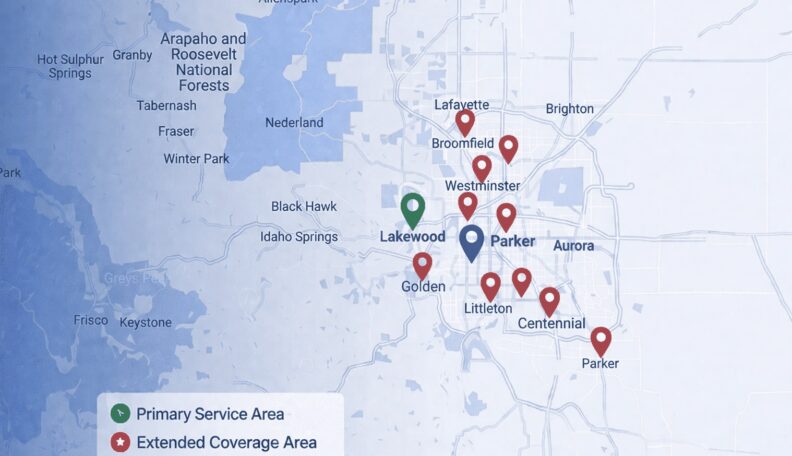
We serve Parker, Castle Rock, Greenwood Village, Lakewood, and the greater Denver metro area. Call 720-339-2442 to schedule.
Frequently Asked Questions
How do I know if my garage door problem is an emergency?
A door that won’t close and leaves the garage open, a broken spring (usually announced by a loud bang), a snapped cable, or a door that is visibly hanging at an angle are situations that should be addressed promptly rather than worked around. A door that is slowing down or making new noises but still functioning is not an emergency, but it is worth scheduling service before the issue progresses.
Why does my garage door reverse before it closes all the way?
The most common cause is a misaligned or dirty safety sensor. Both sensors should show a steady indicator light. If either light is blinking, something is interrupting the beam, and cleaning the sensor lenses is the first step. If the sensors are clear and the problem continues, the opener’s close-limit setting may need adjustment or the tracks may need alignment, both of which a technician can address on a single visit.
Is a noisy garage door always a sign something is wrong?
Not always, but new or worsening noise is worth paying attention to. A door that has become noticeably louder than it used to be, or that makes grinding, scraping, or popping sounds at a specific point in the cycle, is telling you something about the condition of the rollers, springs, tracks, or opener. Consistent noise at the same point in every cycle is easier to diagnose and usually points to a specific component.
How often should a garage door be serviced in Parker, CO?
Annual service is the standard recommendation for most residential doors. For Parker homes, where the Front Range climate puts additional stress on lubrication, hardware, and rubber seals, staying on a yearly schedule helps catch wear before it becomes a breakdown. Households with higher-than-average daily use may benefit from service every six to eight months.
Can I lubricate my garage door myself?
Yes, and it’s one of the most worthwhile things a homeowner can do to extend the system’s service life. Use a garage door-specific lubricant on the rollers, hinges, and the torsion spring coils. Avoid WD-40, which evaporates too quickly at altitude and can leave the metal more exposed than before. Do not lubricate the tracks themselves, as that makes them slippery and can interfere with roller contact.
What does it mean if my garage door feels heavier than usual?
A door that feels heavier to lift manually or that the opener struggles to raise is almost always a spring issue. Garage door springs counterbalance the door’s weight on every cycle, and when they weaken or break, the door’s full weight transfers to the opener motor and anyone lifting it manually. This is not a safe condition to continue using. A technician can inspect and replace the springs, typically on the same visit.
How long do garage door cables typically last?
Cables generally last as long as the springs they work with, roughly seven to ten years at average residential use. Because they age under the same load as the springs, technicians typically recommend inspecting cables whenever springs are serviced or replaced. A cable showing fraying, kinking, or visible wear near the drum or bottom bracket should be replaced before it fails completely.

Looking for a deal?
Call us or to learn about our current promotions and seasonal offers.



Service Area: 50+ Cities Across Metro Denver
Select Your Nearest Location
Hours: Mon-Fri 8am-5pm
Sunday Emergency Only
Avg Response Time: 18 minutes
Hours: Mon-Fri 8am-5pm
Sunday Emergency Only
Avg Response Time: 18 minutes
Hours: Mon-Fri 8am-5pm
Sunday Emergency Only
Avg Response Time: 18 minutes
Hours: Mon-Fri 8am-5pm
Sunday Emergency Only
Avg Response Time: 18 minutes
Hours: Mon-Fri 8am-5pm
Sunday Emergency Only
Avg Response Time: 18 minutes
Hours: Mon-Fri 8am-5pm
Sunday Emergency Only
Avg Response Time: 18 minutes
Hours: Mon-Fri 8am-5pm
Sunday Emergency Only
Avg Response Time: 18 minutes
Hours: Mon-Fri 8am-5pm
Sunday Emergency Only
Avg Response Time: 18 minutes
Hours: Mon-Fri 8am-5pm
Sunday Emergency Only
Avg Response Time: 18 minutes
Hours: Mon-Fri 8am-5pm
Sunday Emergency Only
Avg Response Time: 18 minutes
Hours: Mon-Fri 8am-5pm
Sunday Emergency Only
Avg Response Time: 18 minutes
Hours: Mon-Fri 8am-5pm
Sunday Emergency Only
Avg Response Time: 18 minutes
Hours: Mon-Fri 8am-5pm
Sunday Emergency Only
Avg Response Time: 18 minutes
Hours: Mon-Fri 8am-5pm
Sunday Emergency Only
Avg Response Time: 18 minutes
Hours: Mon-Fri 8am-5pm
Sunday Emergency Only
Avg Response Time: 18 minutes
We Service: Parker, Castle Rock, Greenwood Village, Lakewood, Littleton, Centennial, Highlands Ranch 40+ More Cities