


Top 5 Signs It’s Time to Call a Parker Garage Door Company
Your garage door is one of the heaviest moving pieces of equipment in your home, and the warning signs of a failing system usually show up well before a full breakdown. Most homeowners wait too long because the symptoms feel manageable at first.
At Select Garage Doors, we get service calls on these five symptoms more than any others in Parker, CO and the wider Denver Metro area. The list below covers what each symptom usually points to and how quickly you should act on it. The earlier you call, the smaller the repair tends to be.
Worried about a noise, a slow door, or a panel that doesn’t look right anymore? Contact us today for a no-obligation assessment.
Grinding, Scraping, or Banging Noises
A garage door at the start of its service life moves smoothly with only the muffled hum of the motor. Once you start hearing grinding, scraping, banging, or popping, something has shifted in the system. The most common culprits are dry hinges and rollers, a worn drive belt or chain, a loosening bracket, or a spring near the end of its cycle life.
Don’t ignore this if: the noise is sudden, loud, or accompanied by visible movement in the door panels. A loud bang is often a spring breaking, and continuing to operate the door after a spring failure can damage the opener and the cables.
When it’s urgent
If the noise is followed by the door refusing to open or moving unevenly, stop using the opener and call a technician. A door under partial spring load is unsafe to operate manually.
Slow Response Time
If the door takes longer than usual to start moving after you press the remote or wall button, or if it travels more slowly than it used to, that delay is your opener telling you something is dragging the system. The cause is usually a logic-board issue, a force-setting drift, a low remote battery, or an unbalanced door making the motor work harder.
Don’t ignore this if: the delay gets longer over weeks, or if the door sometimes fails to close completely. A slowing door is often the last symptom before the motor or logic board fails entirely.
When it’s urgent
A slow-closing door that doesn’t fully seat against the floor leaves your garage open to weather, pests, and security risks. Schedule a garage door opener repair visit within a few days rather than weeks.
Sagging or Uneven Movement
A door that visibly sags, tilts to one side, or moves up the tracks unevenly has lost balance. The cause sits in the springs, cables, or rollers, with one side doing more work than the other. Visually, you’ll see the gap between the door and the frame look different on the left vs. the right.
Don’t ignore this if: the sag is accompanied by groaning sounds, cable fraying, or the door jerking mid-cycle. An off-balance door under tension is one of the higher-risk system failures and shouldn’t be operated.
When it’s urgent
Cable wear progresses faster on an unbalanced door, and a snapped cable can drop the door suddenly. If you see fraying or hear popping during open and close, stop using the door until a technician inspects the springs and cables.
Door Won’t Hold Position When Stopped Halfway
A properly balanced garage door should stay in place when you stop it manually at waist height. If it drifts up or slides down, the spring tension is off. Heavy doors with under-rated springs slide down; doors with over-tensioned springs creep up. Either condition forces the opener to fight gravity on every cycle.
Don’t ignore this if: the door slides quickly, struggles to stay still, or makes noise during the manual test. Spring adjustment requires winding bars, training, and proper grade matching. It’s not a DIY task.
When it’s urgent
An unbalanced door burns through opener motors years early and stresses every joint and cable on the assembly. Booking garage door spring repair within a week prevents downstream damage to other components.
Visible Damage to Panels or Tracks
Dents in the panels, cracks in the surface, or visible deformation in the tracks tell you the door took a hit somewhere: vehicle bump, falling object, weather damage, or just metal fatigue after many years. Cosmetic damage on insulated doors also creates thermal bridges that hurt energy efficiency in a Colorado winter.
Don’t ignore this if: the damage is on a structural element (track, hinge mount, bottom bracket) rather than just a panel face. Structural damage compromises the door’s ability to operate safely.
When it’s urgent
A bent track can cause the door to derail mid-cycle. If the damage involves the tracks, hinges, or bottom bracket, stop using the door immediately and call for a professional garage door repair assessment.
How Soon to Call: A Quick Reference
Each symptom has a different urgency window. The table below maps the five signs to their typical cause and how quickly you should book a service visit so the problem doesn’t grow.
| Symptom | Likely Cause | How Soon to Call |
|---|---|---|
| Grinding or banging noises | Worn rollers, loose hardware, breaking spring | Same week (immediately if loud bang) |
| Slow response time | Force-setting drift, logic board, low battery, unbalanced door | Within 1 to 2 weeks |
| Sagging or uneven movement | Spring imbalance, cable wear | Same week; stop using if cables fraying |
| Won’t hold position halfway | Off-balance spring tension | Within a few days |
| Visible damage | Impact, weather, metal fatigue | Immediately if structural; within 1 to 2 weeks if cosmetic |
What to Do Before the Technician Arrives
If you’ve already called for a service visit, a few quick steps can speed up the diagnosis and keep the problem from growing worse in the meantime.
- Stop using the opener if the door is unsafe. Loud bangs, dramatic sagging, frayed cables, or a door that won’t stay put manually all mean “leave it alone until a tech is on-site.”
- Document what you noticed and when. Note the noise type, the time of day, what you were doing right before, and anything that changed in the home (new opener, recent weather event, recent install).
- Clear the area around the door. Move vehicles, bikes, and stored items at least three feet from the door’s path on both sides so the technician has full access.
- Check what is plugged into the opener. Some smart hubs and battery backups can interfere with diagnostic mode; mentioning them up front saves troubleshooting time.
Don’t Wait Until It’s an Emergency
Garage door problems almost never get cheaper with time. Catching the symptoms above early is the single highest-return habit for keeping your repair costs predictable.
At Select Garage Doors, we’re a veteran-owned team based in Parker serving the Denver Metro area, and we handle everything from quick diagnostics to full panel replacements. Give us a call at (720) 339-2442.
Frequently Asked Questions
How quickly should I call after I hear a new garage door noise?
Within the same week. Most garage door noises start small and get worse fast. A bang or pop usually means a spring or cable just failed, and that’s a same-day call. Grinding or scraping is usually a roller, hinge, or alignment issue that gets cheaper to fix the sooner you act.
Can I keep using my garage door if a spring breaks?
No. A door with a broken spring puts hundreds of pounds of weight on the opener, which is not designed to lift the door without spring assistance. Continuing to operate it can burn out the motor, snap the cables, or send the door crashing down. Stop using it until a technician replaces the spring.
What’s the most common reason a garage door slows down?
Drifting force settings or an unbalanced door. Both make the motor work harder and slow the cycle. A technician can recalibrate the force settings or run a balance test and adjust the springs to restore normal speed.
Are sagging garage doors safe to operate?
Not for long. A sagging door points to spring imbalance or cable wear, both of which can fail suddenly under load. Operate the door manually if you must move it, but avoid using the opener until a technician inspects the springs and cables.
How do I check my door’s balance myself?
Pull the red emergency release cord to disconnect the opener, then lift the door by hand to waist height and let go. A balanced door stays put. A door that drifts up or slides down has off-balance springs that need a technician’s attention.
Should I repair or replace a damaged garage door panel?
Single-panel replacement is usually possible on sectional doors and is far cheaper than full replacement. Multiple damaged panels, structural damage to tracks or hinges, or a door 20-plus years old typically tips the calculation toward full replacement.

Looking for a deal?
Call us or to learn about our current promotions and seasonal offers.


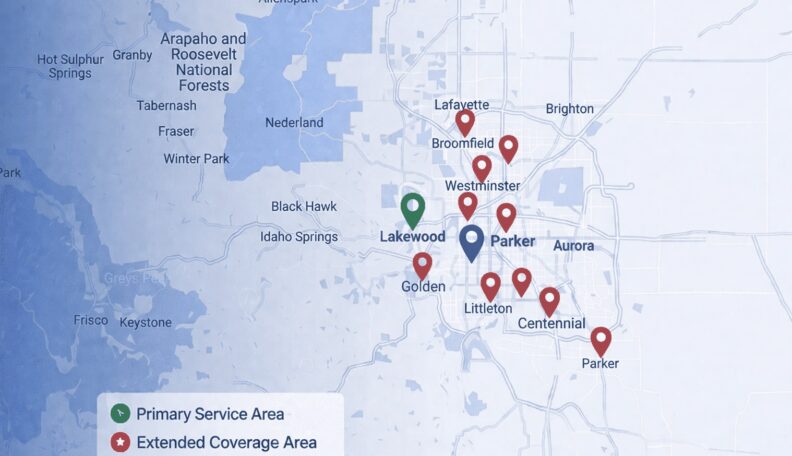
Service Area: 50+ Cities Across Metro Denver
Select Your Nearest Location
Hours: Mon-Fri 8am-5pm
Sunday Emergency Only
Avg Response Time: 18 minutes
Hours: Mon-Fri 8am-5pm
Sunday Emergency Only
Avg Response Time: 18 minutes
Hours: Mon-Fri 8am-5pm
Sunday Emergency Only
Avg Response Time: 18 minutes
Hours: Mon-Fri 8am-5pm
Sunday Emergency Only
Avg Response Time: 18 minutes
Hours: Mon-Fri 8am-5pm
Sunday Emergency Only
Avg Response Time: 18 minutes
Hours: Mon-Fri 8am-5pm
Sunday Emergency Only
Avg Response Time: 18 minutes
Hours: Mon-Fri 8am-5pm
Sunday Emergency Only
Avg Response Time: 18 minutes
Hours: Mon-Fri 8am-5pm
Sunday Emergency Only
Avg Response Time: 18 minutes
Hours: Mon-Fri 8am-5pm
Sunday Emergency Only
Avg Response Time: 18 minutes
Hours: Mon-Fri 8am-5pm
Sunday Emergency Only
Avg Response Time: 18 minutes
Hours: Mon-Fri 8am-5pm
Sunday Emergency Only
Avg Response Time: 18 minutes
Hours: Mon-Fri 8am-5pm
Sunday Emergency Only
Avg Response Time: 18 minutes
Hours: Mon-Fri 8am-5pm
Sunday Emergency Only
Avg Response Time: 18 minutes
Hours: Mon-Fri 8am-5pm
Sunday Emergency Only
Avg Response Time: 18 minutes
Hours: Mon-Fri 8am-5pm
Sunday Emergency Only
Avg Response Time: 18 minutes
We Service: Parker, Castle Rock, Greenwood Village, Lakewood, Littleton, Centennial, Highlands Ranch 40+ More Cities