


Understanding Garage Door Opener Sensors in Parker, CO
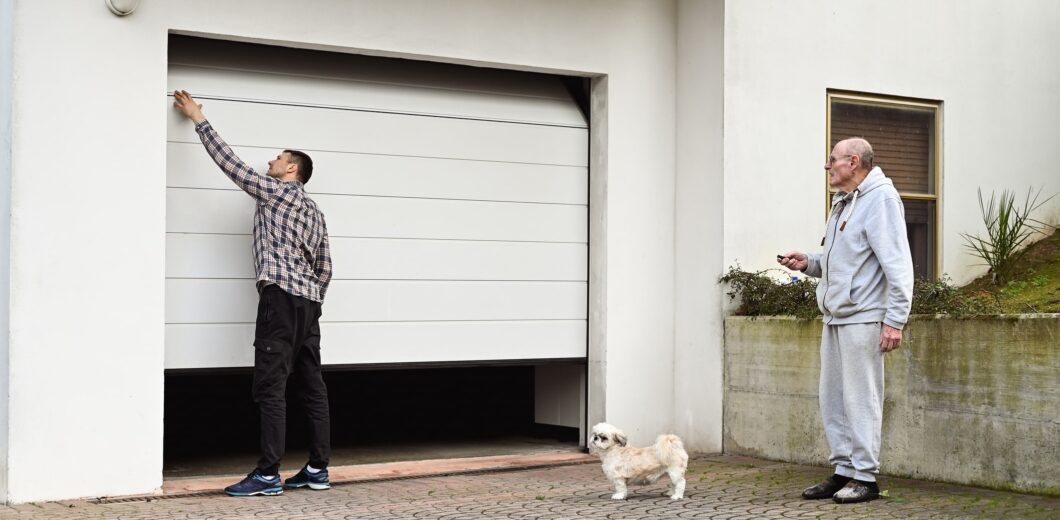
Key Takeaway: Garage door sensors are the safety eyes that keep your opener from closing on people, pets, or vehicles. When they fail, the door either refuses to close or stops mid-cycle. Most sensor problems trace back to misalignment, dirty lenses, or sun glare, and many are quick fixes.
Most homeowners never give garage door sensors a second thought, until the door stops closing and the opener starts blinking. Those small black boxes mounted near the floor on each side of the door opening are the reason your garage door reverses when something gets in its way, and they have been required by federal safety standard UL 325 since 1993. Knowing how they work helps you spot the difference between a five-minute fix and a service call.
At Select Garage Doors, we handle sensor calls every week from Parker, CO homeowners whose doors started misbehaving for no obvious reason. The fix is often simpler than people expect once you understand what the sensor is actually doing. Here is what every Parker homeowner should know about garage door opener sensors.
What Garage Door Sensors Actually Do
Garage door sensors do one job, and they do it constantly. They scan the area near the floor of the door opening with an invisible infrared beam, and the moment that beam is broken, the opener stops closing the door and reverses it. The technology is photoelectric: one sensor sends out the beam, and the other receives it. As long as the beam reaches the receiver, the door is allowed to close. If anything blocks the beam, even a stray leaf or a coiled-up garden hose, the door bounces back open.
This is the core safety feature on every modern residential garage door. Before UL 325 made photo-eye sensors mandatory in 1993, garage doors could and did close on people, pets, and stored items. The sensors are the reason that no longer happens, and they are also the reason a door refusing to close is almost always a sensor problem, not a motor problem.
The Two Types of Sensors on Most Garage Doors
Most residential garage door systems use two distinct sensor technologies, often together. Knowing which one is throwing the fault helps you target the fix.
- Photo-eye sensors (safety beam): the pair of small boxes mounted about six inches off the ground on each side of the door opening. They communicate with an invisible infrared beam. This is the type required by UL 325.
- Force-sensing or contact reversal: built into the opener motor itself, this detects sudden resistance during travel and reverses the door if it hits an obstruction the photo-eye missed (like a low pet or a forgotten bicycle wheel).
Some newer smart openers also add a third sensor type, a door position sensor that tells the opener exactly where the door is in its travel cycle. This one rarely fails, and when it does, the opener usually reports a specific error code instead of just refusing to close.
Common Sensor Problems and What They Mean
Sensor faults usually announce themselves in predictable ways. The table below covers the most common symptoms we see in Parker homes and what each one typically points to.
| Symptom | Likely Cause | Quick Test |
|---|---|---|
| Door reverses immediately after starting to close | Sensors misaligned or blocked | Check both LED lights; both should be solid |
| One sensor LED is off or blinking | Wiring fault or dead sensor | Check wire connections at sensor and opener |
| Door closes only if you hold the wall button | Safety bypass triggered by faulty sensors | Confirm alignment; replace if LED behavior is erratic |
| Door reverses partway down | False trigger or force setting too sensitive | Inspect lenses for dust, spider webs, or sun glare |
| Door closes fine at night but not in daylight | Sun glare hitting the receiver sensor | Add a sensor sun-shield or reposition the angle |
| Sensors clicking or flickering randomly | Frayed sensor wire or loose connection | Walk the wire path looking for damage |
Quick Sensor Fixes You Can Try Yourself
Before scheduling a service call, work through these safe homeowner checks. Most sensor issues are resolved in under fifteen minutes once you know what to look for.
- Wipe both sensor lenses with a soft dry cloth. Dust, cobwebs, and grime are the number one culprit on Parker garages, where summer dust and spring pollen build up quickly.
- Check the alignment. The two LED lights, one on each sensor, should both be solid (color depends on brand: LiftMaster uses green and amber, Chamberlain similar). If one is off or blinking, the beams are not lining up. Gently adjust the sensor brackets until both LEDs go solid.
- Look for sun glare. The receiver sensor (usually the side that shuts down first) can be overwhelmed by direct afternoon sun, especially in west-facing Parker garages. A small sensor sun-shield, available at any hardware store, blocks the glare without affecting the beam.
- Trace the wires. Walk the path of the sensor wires from each sensor back to the opener motor. Look for cuts, fraying, or chew marks (mice love sensor wire). A loose staple or a single nicked wire can knock out the whole system.
- Reset the opener. Unplug the opener for sixty seconds, then plug it back in. This clears soft electrical faults and resets the sensor handshake with the motor.
When Sensor Problems Need a Professional
A few sensor symptoms point to issues beyond DIY territory. Call a technician if you see any of these:
- Sensor wire damage running inside walls or behind drywall: chasing wiring through finished space is not a DIY job and requires drilling, fishing, and re-stapling that can damage finishes.
- Recurring alignment issues after multiple adjustments: sensors that drift out of alignment within days usually have a loose mounting bracket, a bent track, or a vibration source that needs structural investigation.
- Both sensors completely dead (no LED on either side): this often signals a failed logic board in the opener motor rather than a sensor problem, and the fix is a board swap or full opener replacement.
- Door reverses even with sensors clearly aligned and clean: force-sensing fault that requires opener calibration.
- Sensors triggering randomly during the day: could be radio frequency interference from a neighbor’s opener, a smart-home device, or a failing capacitor in the motor, and diagnosis requires test equipment.
How Parker, CO, Conditions Affect Sensor Reliability
Parker’s high-altitude semi-arid climate creates a few sensor problems that you would not see at sea level. Knowing the local pattern saves diagnostic time.
Bright high-altitude sun is the most common culprit. Parker sits at 5,869 feet, and UV intensity is roughly 25% stronger than at sea level. That extra brightness saturates the receiver sensor when the sun hits at the wrong angle, especially late summer afternoons on west-facing garages. Sun shields solve it, but most builder-grade installs do not include them.
Cold winter mornings cause condensation on sensor lenses when warm garage air meets the chilled lens glass. The condensation breaks the beam temporarily, then clears as the lens warms up. Homeowners often describe this as “the door works fine after the sun comes up, but not first thing in the morning,” and it is almost always condensation, not a failed sensor.
Dust is the third Parker-specific factor. Spring construction dust from Douglas County growth, summer dry-season dust, and post-storm settling all coat the sensor lenses faster than in a wet climate. We recommend wiping sensor lenses with a dry microfiber cloth once per quarter as part of standard maintenance.
Get Help With Stubborn Sensor Issues
If you have worked through the quick checks and the door still will not close, the next step is a professional diagnosis. The technician brings test equipment to check beam strength, voltage at the sensor, and the opener’s logic-board response, none of which can be confirmed visually.
At Select Garage Doors, our veteran-owned team handles sensor and opener calls across our Denver Metro service areas with upfront pricing and a 100% satisfaction guarantee. For professional garage door services in Parker, we are a phone call away.
Call us at (720) 339-2442 to book a sensor diagnostic visit.
Frequently Asked Questions
Why won’t my garage door close, but it opens fine?
This is the single most common sensor symptom. The opener is designed to open without sensor feedback for emergency situations, but it requires both safety sensors to be aligned and unblocked before it will close. Check the photo-eye sensors first, before assuming the motor is at fault.
How do I know if my garage door sensors are broken?
Look at the small LED lights on each sensor. Both should be solid (color depends on brand). If one LED is off, blinking, or flickering, the sensor pair is not communicating properly. Confirm there is nothing blocking the beam, then try cleaning the lenses and gently adjusting the alignment.
Can I bypass my garage door sensors?
You can override sensors temporarily by holding the wall control button down through the entire close cycle. This is intended for emergency situations and should never be a permanent workaround. Bypassed sensors mean the door can close on people, pets, or vehicles, which is exactly what UL 325 was designed to prevent.
How much does it cost to replace a garage door sensor?
Replacing both sensors together is usually only marginally more expensive because the service call fee dominates the price.
Why are my sensor lights blinking?
Blinking LEDs almost always indicate a misalignment or beam interruption. The receiver sensor blinks when it cannot consistently see the sender’s beam, which means either the sensors are pointed slightly wrong or something keeps crossing the beam path.
Can sunlight really stop my garage door from closing?
Yes, especially in Parker. Direct sun hitting the receiver sensor can overpower the infrared beam and trick the opener into thinking the beam is broken. The fix is a small sensor sun shield, available at any hardware store, or repositioning the sensor angle slightly downward.
Are garage door sensors required by law?
Yes for residential installations. UL 325 has required automatic-reversing safety devices on residential garage door openers since 1993. Disabling or bypassing the sensors creates a safety hazard and may affect homeowners’ insurance coverage if an injury occurs.
How often should I clean my garage door sensors?
For Parker homes, once a quarter is a good baseline. Dust, pollen, and cobwebs accumulate on the lenses faster in a semi-arid climate than in a wet one. A dry microfiber cloth on each lens takes about thirty seconds and prevents the most common sensor faults.

Looking for a deal?
Call us or to learn about our current promotions and seasonal offers.


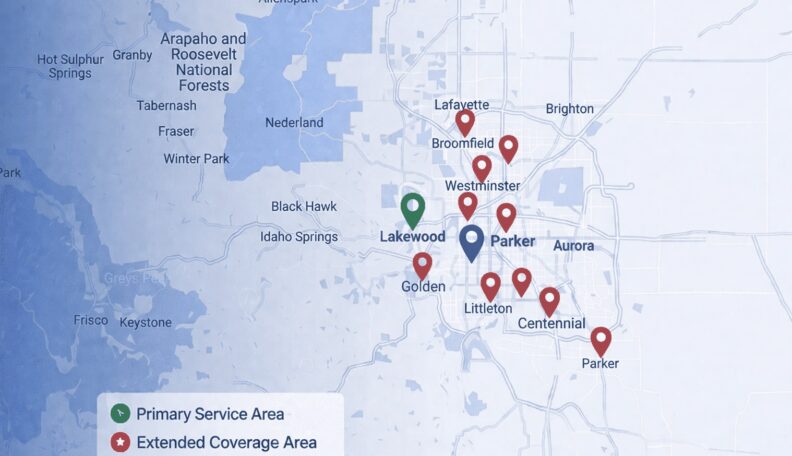
Service Area: 50+ Cities Across Metro Denver
Select Your Nearest Location
Hours: Mon-Fri 8am-5pm
Sunday Emergency Only
Avg Response Time: 18 minutes
Hours: Mon-Fri 8am-5pm
Sunday Emergency Only
Avg Response Time: 18 minutes
Hours: Mon-Fri 8am-5pm
Sunday Emergency Only
Avg Response Time: 18 minutes
Hours: Mon-Fri 8am-5pm
Sunday Emergency Only
Avg Response Time: 18 minutes
Hours: Mon-Fri 8am-5pm
Sunday Emergency Only
Avg Response Time: 18 minutes
Hours: Mon-Fri 8am-5pm
Sunday Emergency Only
Avg Response Time: 18 minutes
Hours: Mon-Fri 8am-5pm
Sunday Emergency Only
Avg Response Time: 18 minutes
Hours: Mon-Fri 8am-5pm
Sunday Emergency Only
Avg Response Time: 18 minutes
Hours: Mon-Fri 8am-5pm
Sunday Emergency Only
Avg Response Time: 18 minutes
Hours: Mon-Fri 8am-5pm
Sunday Emergency Only
Avg Response Time: 18 minutes
Hours: Mon-Fri 8am-5pm
Sunday Emergency Only
Avg Response Time: 18 minutes
Hours: Mon-Fri 8am-5pm
Sunday Emergency Only
Avg Response Time: 18 minutes
Hours: Mon-Fri 8am-5pm
Sunday Emergency Only
Avg Response Time: 18 minutes
Hours: Mon-Fri 8am-5pm
Sunday Emergency Only
Avg Response Time: 18 minutes
Hours: Mon-Fri 8am-5pm
Sunday Emergency Only
Avg Response Time: 18 minutes
We Service: Parker, Castle Rock, Greenwood Village, Lakewood, Littleton, Centennial, Highlands Ranch 40+ More Cities