

Why Is My Garage Door Making Strange Noises in Parker, CO?
Key Takeaways
- Grinding often means worn gears or rollers, while squeaking points to dry hinges or tracks
- Parker’s 30 to 50 degree daily temperature swings accelerate metal expansion and contraction, making noise issues worse
- Popping and banging sounds can indicate spring fatigue or loose mounting hardware
- A properly maintained garage door should operate near-silently
- Spring-related noises require professional attention and should never be a DIY repair
Strange garage door noises in Parker typically signal worn rollers, dry hinges, loose hardware, or failing springs. Each sound points to a specific component, and identifying the noise early can prevent costly repairs or a complete door failure.
A garage door opens and closes roughly 1,500 times per year. Over time, the constant cycling wears on every moving part, from torsion springs to nylon rollers. When a garage door starts making unfamiliar sounds, most Parker homeowners write it off as normal aging. But each noise carries a message about which component is struggling, and some of those messages are urgent. Select Garage Doors helps Parker residents identify these sounds before a minor issue turns into a major repair.
What Does Grinding Mean When a Garage Door Opens?
Grinding during operation usually means the opener’s drive gear is wearing down or the rollers are dragging against the tracks. Both problems worsen quickly without attention.
A grinding sound that starts faint and grows louder over weeks often traces back to the opener’s internal gears. Opener motors use a plastic or nylon drive gear that meshes with a worm gear. As the teeth wear, the gear slips, and the grinding noise is the sound of stripped teeth struggling to engage. Continuing to run the opener past this point can burn out the motor entirely.
Metal rollers are another common source of grinding. Over time, steel rollers lose their bearings and begin dragging against the track walls. The result is a harsh scraping sound that vibrates through the door panels. Homeowners who notice grinding should check whether the rollers spin freely. If they wobble or resist turning, replacement is overdue. Nylon rollers reduce noise and last longer than steel, making them a popular upgrade for Parker, CO homeowners who want quieter operation.
Why Does a Garage Door Squeak or Creak?
Squeaking and creaking usually mean moving parts have lost lubrication. Hinges, rollers, and springs need periodic lubrication to operate smoothly, and Parker’s dry climate accelerates the process.
Parker sits at 5,869 feet with average humidity below 40 percent during summer months. That dry air pulls moisture from lubricants faster than in coastal or lower-altitude regions. Silicone-based spray applied to hinges, roller stems, and spring coils every three to four months keeps these parts quiet.
Squeaking that continues after lubrication may indicate a more serious issue. Worn hinge pins, bent tracks, or misaligned brackets can all produce squeaking sounds that lubrication alone cannot fix. If the squeak changes pitch or volume when the door reaches a specific position, the track may have a dent or flat spot at that height.
Torsion springs also squeak as they wind and unwind. A light coating of garage door lubricant (not WD-40, which is a solvent and evaporates quickly) along the coils reduces this friction. Springs under tension should only be lubricated, never adjusted, by anyone other than a trained technician.
What Causes Popping or Banging Sounds from a Garage Door?
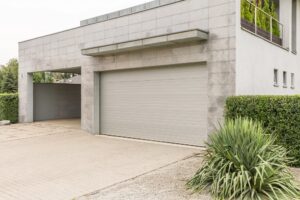
Popping and banging sounds typically come from loose hardware, spring tension shifts, or panels catching on damaged track sections. Sudden loud pops can also signal a spring break, which requires immediate professional attention.
A single loud bang that echoes through the garage is the hallmark of a broken torsion spring. Torsion springs store massive amounts of energy, and when one snaps, the release is violent and unmistakable. If this happens, do not attempt to operate the door. A broken spring leaves the door unbalanced and dangerously heavy.
Rhythmic popping that occurs at the same point in the door’s travel often traces to loose mounting brackets or worn bearing plates. Parker’s daily temperature swings of 30 to 50 degrees cause metal hardware to expand and contract repeatedly, slowly loosening bolts and lag screws over months. A periodic walk-through with a socket wrench to snug loose fasteners prevents this from escalating.
Banging at the bottom of the travel path usually means the opener’s force settings need adjustment. When the opener pushes the door past its closed position, the bottom section slams against the floor instead of seating gently. Homeowners who notice this pattern can schedule a service today to have a technician recalibrate the travel limits and force settings.
When Should Parker Homeowners Call a Professional About Garage Door Noise?
Any noise involving springs, cables, or the opener motor calls for professional attention. DIY repairs on high-tension components carry serious injury risk.
Some noise issues are safe to address at home. Lubricating hinges, tightening hardware, and replacing worn weatherstripping are all homeowner-friendly tasks that reduce operational noise. But anything involving the spring system, cables, or opener motor internals should be left to a trained technician.
Springs are under enough tension to cause severe injury if they release unexpectedly. Cables wrapped around cable drums can whip violently if disconnected incorrectly. Opener motors carry electrical hazards that compound the risk. Select Garage Doors in Parker provides a 24/7 call line for homeowners dealing with sudden noise changes or suspected spring failures.
For more on how Parker’s climate affects garage door components, read about how temperature swings affect garage door performance.
| Noise Type | Likely Cause | Urgency | DIY or Pro? |
|---|---|---|---|
| Grinding | Worn opener gears or metal rollers | Medium | Pro for opener; DIY for rollers |
| Squeaking | Dry hinges, rollers, or springs | Low | DIY (lubricate) |
| Popping | Loose hardware or spring tension shift | Medium | DIY for hardware; Pro for springs |
| Banging | Opener force settings or broken spring | High (if spring) | Pro |
| Rattling | Loose nuts, bolts, or track brackets | Low | DIY (tighten) |
| Scraping | Misaligned track or bent panel | Medium | Pro |
Frequently Asked Questions
Can I Use WD-40 to Stop Garage Door Squeaking?
WD-40 is a solvent, not a lubricant. It evaporates quickly and can strip existing lubrication from metal parts. Use a silicone-based or lithium-based garage door lubricant instead for lasting results.
How Often Should I Lubricate My Garage Door in Parker?
Parker’s dry, high-altitude climate dries out lubricants faster than average. Apply silicone-based lubricant to hinges, rollers, springs, and tracks every three to four months, or whenever squeaking returns.
Is a Loud Bang from the Garage Always a Broken Spring?
A single loud bang is the most common sign of a broken torsion spring. However, it can also come from a snapped cable or a large piece of hardware falling off the door. Do not operate the door until a technician inspects it.
Why Does My Garage Door Make Noise Only in Winter?
Cold temperatures cause metal components to contract, tightening tolerances between moving parts. Lubricants also thicken in cold weather, reducing their effectiveness. Both factors increase friction and noise.
Do Nylon Rollers Reduce Garage Door Noise?
Nylon rollers operate much quieter than steel rollers because they do not require ball bearings and do not create metal-on-metal contact with the track. They also last longer in Parker’s dry climate.
Should I Worry About a Humming Noise from My Garage Door Opener?
A brief hum when the opener activates is normal. Continuous humming without door movement usually means the motor is running but the drive gear has stripped. This requires professional repair.
Can Loose Hardware Cause a Garage Door to Come Off the Tracks?
Yes. Loose track brackets, hinge bolts, and roller stems can allow the door to shift during operation. If enough hardware loosens simultaneously, the door can jump the track, creating a safety hazard.


Looking for a deal?
Call us or to learn about our current promotions and seasonal offers.



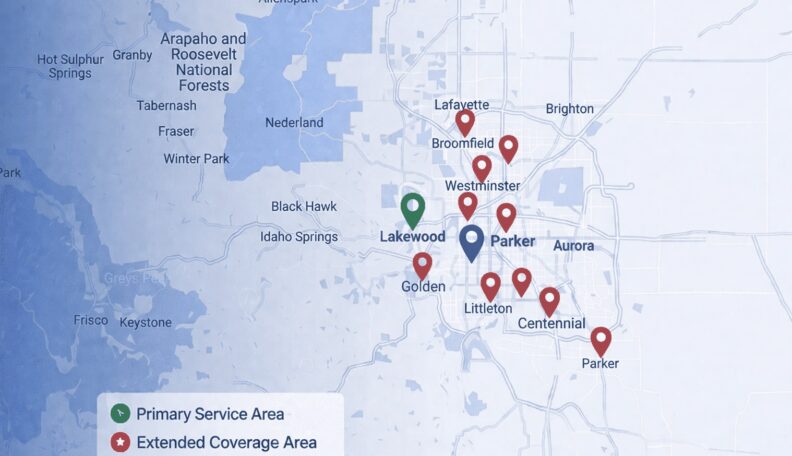
Service Area: 50+ Cities Across Metro Denver
Select Your Nearest Location
Hours: Mon-Fri 8am-5pm
Sunday Emergency Only
Avg Response Time: 18 minutes
Hours: Mon-Fri 8am-5pm
Sunday Emergency Only
Avg Response Time: 18 minutes
Hours: Mon-Fri 8am-5pm
Sunday Emergency Only
Avg Response Time: 18 minutes
Hours: Mon-Fri 8am-5pm
Sunday Emergency Only
Avg Response Time: 18 minutes
Hours: Mon-Fri 8am-5pm
Sunday Emergency Only
Avg Response Time: 18 minutes
Hours: Mon-Fri 8am-5pm
Sunday Emergency Only
Avg Response Time: 18 minutes
Hours: Mon-Fri 8am-5pm
Sunday Emergency Only
Avg Response Time: 18 minutes
Hours: Mon-Fri 8am-5pm
Sunday Emergency Only
Avg Response Time: 18 minutes
Hours: Mon-Fri 8am-5pm
Sunday Emergency Only
Avg Response Time: 18 minutes
Hours: Mon-Fri 8am-5pm
Sunday Emergency Only
Avg Response Time: 18 minutes
Hours: Mon-Fri 8am-5pm
Sunday Emergency Only
Avg Response Time: 18 minutes
Hours: Mon-Fri 8am-5pm
Sunday Emergency Only
Avg Response Time: 18 minutes
Hours: Mon-Fri 8am-5pm
Sunday Emergency Only
Avg Response Time: 18 minutes
Hours: Mon-Fri 8am-5pm
Sunday Emergency Only
Avg Response Time: 18 minutes
Hours: Mon-Fri 8am-5pm
Sunday Emergency Only
Avg Response Time: 18 minutes
We Service: Parker, Castle Rock, Greenwood Village, Lakewood, Littleton, Centennial, Highlands Ranch 40+ More Cities