

Garage Door Maintenance: Simple Steps for Longevity and Reliability
A garage door in Parker, CO can last 15 to 30 years depending on material quality, usage patterns, and how well you maintain it against Colorado’s altitude, UV exposure, and temperature swings. Select Garage Doors helps Parker homeowners get the longest possible life from every component through routine inspections, targeted lubrication, and timely part replacement before small wear becomes a full system failure.
Your garage door is one of the largest moving parts of your Parker home, and it takes a beating every single day. Between Colorado’s intense UV rays at elevation, dramatic temperature swings from morning to afternoon, and the occasional hail storm rolling through the Denver metro, the components that keep your door running face conditions most homeowners never think about. The good news: with the right maintenance approach, a garage door in Parker can easily reach 20 or even 30 years of reliable service. Select Garage Doors works with Parker homeowners every week to catch the small problems that cut years off a door’s working life.
This guide focuses specifically on longevity. Not just how to keep your door running today, but how to make it last as long as the manufacturer intended. You will learn which components wear out first in Colorado’s climate, what maintenance tasks actually extend lifespan versus what is just cosmetic, and how to recognize when a door has reached the point where continued repair costs more than replacement.
Garage Door Maintenance for Long-Term Reliability in Parker
How Long Should a Garage Door Really Last in Parker’s Climate?
A well-maintained steel garage door in Parker should last 20 to 30 years, but Colorado’s high altitude and dry air can shorten that to 15 years or less without consistent upkeep. The combination of UV intensity at 5,800 feet, low humidity that dries out seals and lubricants, and 50-degree daily temperature swings puts more stress on door components than most other U.S. climates.
Material choice matters. Single-layer steel doors typically last 15 to 20 years. Triple-layer insulated steel doors can push past 25. Wood doors look beautiful on Parker’s suburban homes but demand more frequent attention to prevent cracking and warping in dry conditions. Aluminum is lightweight but dents easily, making it a poor match for neighborhoods along the Front Range where hail is a regular summer event.
The biggest variable is not the door panel itself. It is the components behind it. Springs, rollers, cables, and weatherstripping all have shorter lifespans than the door, and neglecting any one of them accelerates wear across the entire system. Parker homeowners who schedule routine garage door maintenance consistently get 5 to 10 additional years from the same hardware compared to homeowners who only call when something breaks.
What Maintenance Steps Actually Extend a Garage Door’s Lifespan?
The maintenance tasks that truly add years to your garage door focus on friction reduction, balance correction, and weatherproofing. Lubricating springs, rollers, and hinges twice a year prevents the metal fatigue that causes the most common failures in Parker garages. Keeping the door balanced reduces strain on the opener motor and prevents uneven spring wear.
Start with lubrication. Colorado’s dry air causes lubricants to evaporate faster than in humid climates. A silicone-based or lithium-based spray applied to torsion springs, roller stems, and hinge pivot points every six months keeps friction low and prevents the micro-cracking that leads to spring failure. Avoid WD-40 for this purpose. It is a solvent, not a long-term lubricant, and it attracts dust in Parker’s dry conditions.
Balance testing is the second priority. Disconnect the opener and lift the door manually to the halfway point. If it drifts up or down, the spring tension is off. An unbalanced door forces the opener motor to compensate on every cycle, shortening the motor’s life from 12 to 15 years down to 7 or 8. It also causes uneven cable wear, which can lead to a door jumping its track.
Weatherstripping replacement is the task most homeowners skip. The bottom seal and side seals keep moisture, dirt, and cold air out. In Parker, UV exposure and dry air cause rubber seals to crack and harden within 3 to 5 years. Replacing them before they fail completely protects the interior hardware from temperature extremes and keeps your energy costs down during Colorado winters.
Which Garage Door Components Wear Out First in Colorado?
Torsion springs are the first major component to fail, typically lasting 7 to 12 years or roughly 10,000 open-close cycles. In Parker, where morning cold and afternoon heat cause repeated expansion and contraction of the metal, springs often reach fatigue faster than their rated cycle count suggests.
Rollers are next. Nylon rollers last about 10 to 15 years. Steel rollers without sealed bearings may only last 5 to 7 years because Parker’s airborne dust and low humidity dry out bearing grease quickly. If your rollers are grinding or squeaking despite recent lubrication, they are past the point where maintenance helps.
Cables typically last 8 to 15 years but can fray sooner if the door runs out of balance for extended periods. Frayed cables are a safety hazard. If you see any broken strands, stop using the door and schedule a garage door repair immediately.
Garage door openers have their own clock. Most belt-drive and chain-drive openers last 10 to 15 years. The motor works harder when the door is heavy or unbalanced, so keeping everything tuned directly extends opener life as well.
How Does Colorado’s Climate Specifically Shorten Garage Door Life?
Colorado’s Front Range climate attacks garage doors on multiple fronts: UV radiation at altitude degrades finishes and seals faster, dry air strips lubricants and cracks rubber, temperature swings stress metal through constant expansion and contraction, and summer hail can dent panels and damage tracks in a single storm.
Parker sits at roughly 5,800 feet of elevation. At that altitude, UV radiation is about 25% more intense than at sea level. Factory paint finishes on steel doors that might last 15 years in the Midwest may start chalking and fading within 8 to 10 years here. Wood doors absorb and release moisture with every weather shift, leading to warping and splitting if they are not sealed and refinished on a regular schedule.
The temperature factor is underestimated. On a typical spring day in Parker, morning temperatures can sit in the 30s and climb past 70 by afternoon. Metal springs, tracks, and hinges expand and contract with every swing. Over thousands of cycles across years, that thermal stress accumulates into metal fatigue. It is the same principle that causes bridges to need expansion joints.
Hail is the wild card. Douglas County averages multiple hail events per year, and a single severe storm can dent panels, crack weatherstripping, and knock sensors out of alignment. After any significant hail event, a full inspection is worth the cost to catch damage before it compounds into bigger failures.
What Is the Real Cost of Skipping Garage Door Maintenance?
Skipping routine maintenance does not just risk a breakdown. It systematically shortens the lifespan of every connected component. A door that could last 25 years with annual service may need full replacement at 12 to 15 years without it, turning a few hundred dollars in maintenance into a multi-thousand-dollar replacement bill.
The math is straightforward. An annual maintenance visit costs a fraction of a single spring repair. But the real savings come from catching problems while they are still small. A worn roller that costs little to replace can, if ignored, damage the track it rides in. A track replacement costs significantly more and takes the door out of service longer.
There is also an energy cost. Cracked weatherstripping and gaps around the door let conditioned air escape. In Parker, where winter nights drop well below freezing, a poorly sealed garage door can raise heating bills noticeably, especially for homes with living space above the garage.
For homeowners in Parker’s HOA communities, a visibly deteriorating garage door also affects curb appeal and can trigger compliance notices. Maintaining the door’s appearance and function is not just mechanical. It protects your home’s value in a neighborhood where exterior standards matter.
When Should You Replace a Garage Door Instead of Continuing to Maintain It?
Once repair costs in a single year approach 40 to 50 percent of a new garage door installation, replacement usually makes better financial sense. Other clear signals include multiple component failures within the same season, visible panel rust or rot, persistent balance problems after spring adjustment, and a door that no longer meets current safety standards.
Age alone is not always the deciding factor. A 20-year-old door with solid panels and recently replaced springs may have another decade of service left. A 12-year-old door with rust spreading from dents, broken seals, and an opener that strains on every cycle may already be past the point of cost-effective repair.
Safety is the non-negotiable line. Garage doors manufactured before 1993 may lack the photoelectric sensors and auto-reverse mechanisms that are now standard. If your Parker home has an older door without these features, replacement is not optional. It is a safety requirement, especially in homes with children or pets.
Garage Door Component Lifespan Comparison
| Component | Typical Lifespan | Colorado/Parker Factor | Maintenance Action |
|---|---|---|---|
| Torsion Springs | 7 to 12 years (10,000 cycles) | Thermal cycling accelerates metal fatigue | Lubricate every 6 months; balance test annually |
| Nylon Rollers | 10 to 15 years | Dust and dry air reduce bearing life | Inspect for cracks; replace at first sign of wear |
| Steel Rollers (unsealed) | 5 to 7 years | Grease dries out faster at low humidity | Lubricate quarterly; upgrade to nylon if possible |
| Cables | 8 to 15 years | Unbalanced doors fray cables faster | Visual inspection every 6 months for fraying |
| Weatherstripping | 3 to 5 years | UV and dry air crack rubber seals quickly | Replace when cracked or stiff; check annually |
| Garage Door Opener | 10 to 15 years | Thin air reduces motor cooling efficiency | Keep door balanced to reduce motor strain |
| Steel Door Panels | 20 to 30 years | Hail dents, UV fading reduce cosmetic life | Touch up paint; inspect after hail storms |
| Hinges | 15 to 20 years | Dry conditions increase pivot friction | Lubricate pivot points every 6 months |
When Maintenance Is Not Enough and Replacement Makes More Sense
Maintenance extends life. It does not make a garage door immortal. There comes a point with every door where the cost of keeping it running exceeds what a new door would cost spread over its first several years of service.
Watch for these signs that your Parker garage door is approaching end of life:
- Springs have been replaced twice and the door is over 15 years old
- Panels show spreading rust, deep dents from hail, or visible warping
- The door cannot hold balance even after spring adjustment
- You are calling for repairs more than once per year
- The opener strains, reverses unexpectedly, or makes grinding sounds despite recent service
- Weatherstripping gaps persist even after replacement because the frame has shifted
If two or more of those apply, schedule an honest assessment with a garage door technician who can evaluate whether continued maintenance is protecting your investment or just delaying an inevitable replacement. Sometimes the smartest maintenance decision is knowing when to stop.
Protect Your Garage Door Investment in Parker
A garage door is one of the highest-value exterior features of any Parker home. The right maintenance schedule, adjusted for Colorado’s elevation and climate, can add a full decade of reliable service to your door. Select Garage Doors works with homeowners across the Denver metro area to build maintenance plans that match your door’s age, material, and usage patterns.
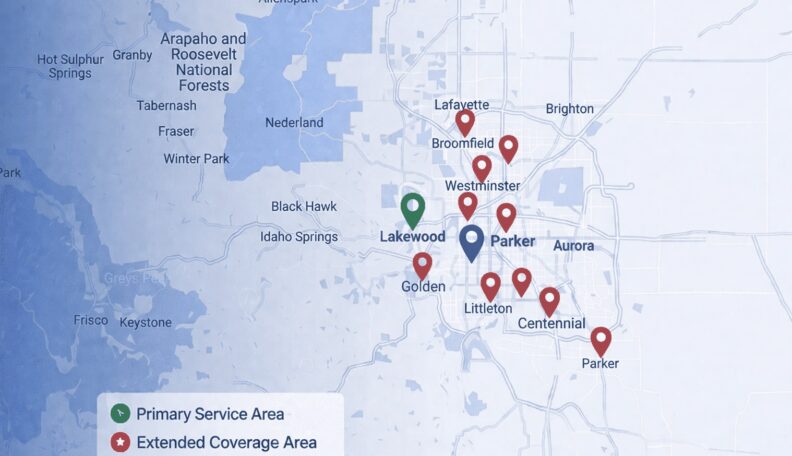
We serve Parker, Castle Rock, Greenwood Village, Lakewood, and the greater Denver metro area.
Call 720-339-2442 to schedule a maintenance visit or get a straightforward assessment of your door’s remaining service life.
Frequently Asked Questions
How often should I have my garage door serviced in Parker, CO?
At least once per year. Parker’s dry air and temperature swings wear out lubricants and seals faster than average, so twice-yearly lubrication is ideal for springs and rollers.
Can maintenance really add years to a garage door’s life?
Yes. Consistent annual maintenance typically adds 5 to 10 years of service life by catching worn parts before they damage other components.
What is the average lifespan of a garage door in the Denver metro area?
Most steel garage doors last 20 to 30 years with regular maintenance. Without maintenance, Colorado’s climate can shorten that to 12 to 15 years.
How do I know if my garage door springs are wearing out?
The door feels heavier when lifted manually, does not stay at the halfway point during a balance test, or the opener strains more than usual. Visible gaps between spring coils when the door is closed also indicate fatigue.
Should I replace my garage door or keep repairing it?
If annual repair costs reach 40 to 50 percent of a new door’s price, or you have had multiple component failures in the same year, replacement is usually the better investment.
Does hail damage in Parker affect how long my garage door lasts?
Yes. Hail dents compromise panel integrity, crack weatherstripping, and can knock tracks and sensors out of alignment. Inspect your door after every significant storm in Douglas County.
Looking for a deal?
Call us or to learn about our current promotions and seasonal offers.



Service Area: 50+ Cities Across Metro Denver
Select Your Nearest Location
Hours: Mon-Fri 8am-5pm
Sunday Emergency Only
Avg Response Time: 18 minutes
Hours: Mon-Fri 8am-5pm
Sunday Emergency Only
Avg Response Time: 18 minutes
Hours: Mon-Fri 8am-5pm
Sunday Emergency Only
Avg Response Time: 18 minutes
Hours: Mon-Fri 8am-5pm
Sunday Emergency Only
Avg Response Time: 18 minutes
Hours: Mon-Fri 8am-5pm
Sunday Emergency Only
Avg Response Time: 18 minutes
Hours: Mon-Fri 8am-5pm
Sunday Emergency Only
Avg Response Time: 18 minutes
Hours: Mon-Fri 8am-5pm
Sunday Emergency Only
Avg Response Time: 18 minutes
Hours: Mon-Fri 8am-5pm
Sunday Emergency Only
Avg Response Time: 18 minutes
Hours: Mon-Fri 8am-5pm
Sunday Emergency Only
Avg Response Time: 18 minutes
Hours: Mon-Fri 8am-5pm
Sunday Emergency Only
Avg Response Time: 18 minutes
Hours: Mon-Fri 8am-5pm
Sunday Emergency Only
Avg Response Time: 18 minutes
Hours: Mon-Fri 8am-5pm
Sunday Emergency Only
Avg Response Time: 18 minutes
Hours: Mon-Fri 8am-5pm
Sunday Emergency Only
Avg Response Time: 18 minutes
Hours: Mon-Fri 8am-5pm
Sunday Emergency Only
Avg Response Time: 18 minutes
Hours: Mon-Fri 8am-5pm
Sunday Emergency Only
Avg Response Time: 18 minutes
We Service: Parker, Castle Rock, Greenwood Village, Lakewood, Littleton, Centennial, Highlands Ranch 40+ More Cities