

How to Fix Garage Door Sensor and Track Issues in Parker, CO
Key Takeaway: Sensor and track issues account for the majority of garage door faults that look serious but are not. Most sensor problems are cleaning and alignment fixes; most track problems are inspection-then-decide situations where minor adjustments are DIY-safe and structural damage needs a pro.
A garage door that refuses to close, jumps in its tracks, or stops mid-cycle usually has a problem in one of two systems: the photo-eye sensors or the door tracks. Both systems show up at the bottom of the door (sensors near the floor on each side, tracks running vertically up the wall), and the symptoms can look similar at first. Narrowing down which is the real culprit saves a service call and points you toward the right fix.
At Select Garage Doors, we handle sensor and track diagnostics every week across Parker, CO. The steps below are the same checklist our technicians run when they pull up to your home. Most homeowners can work through the first three on their own; the rest are where it makes sense to bring in a professional.
How Sensors and Tracks Work Together
Sensors and tracks share the bottom-of-door real estate, and a problem in either one creates symptoms that look like a problem in the other. Knowing how each system works helps you trace the right fault:
- Photo-eye sensors: the pair of small boxes mounted about six inches off the floor on each side of the door opening. They send an invisible infrared beam across the doorway and tell the opener to reverse if the beam is broken during a close cycle.
- Vertical tracks: the metal channels running from floor level up to the curved transition. The door’s rollers ride inside these channels on the way up and down. Damage to vertical tracks usually shows up as binding or jumping near the bottom of the cycle.
- Horizontal tracks: the ceiling-level rails that support the door when it is open. Damage to horizontal tracks usually shows up as binding or sagging when the door is fully open.
Diagnosing Whether It Is a Sensor or Track Issue
The same symptom can point to either system. The table below covers the most common ones and what each typically points to:
| Symptom | More Likely Sensor | More Likely Track |
|---|---|---|
| Door reverses immediately after starting to close | Yes (most common cause) | Less common |
| Door binds or jumps partway through travel | No | Yes |
| Loud scraping or grinding noise on travel | No | Yes (worn rollers in track) |
| Door closes but bounces on contact | Yes (force settings or sensor lag) | No |
| Door tilts to one side during travel | No | Yes (cable or track on affected side) |
| Door pulls away from door frame at edges | No | Yes (track loose or shifted) |
If the symptom does not appear above, work through both systems sequentially. Start with the sensor checks (cheaper and easier), then move to the track inspection.
Cleaning and Realigning Photo-Eye Sensors
Sensor cleaning and realignment is the most common DIY fix and handles a large share of “door will not close” calls.
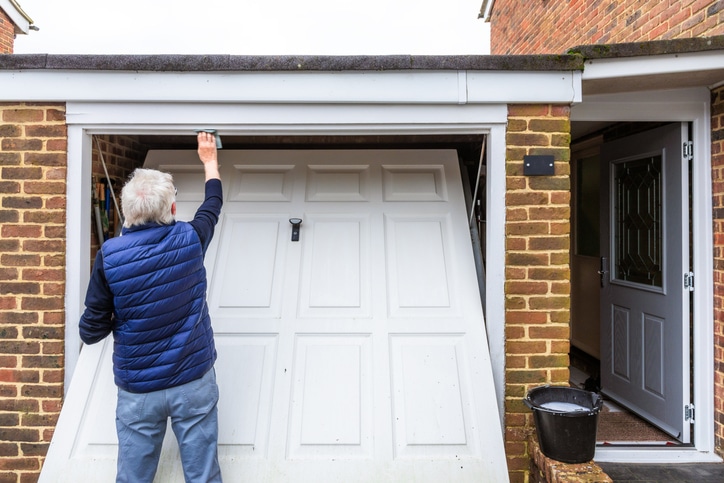
- Wipe both sensor lenses with a dry microfiber cloth. Dust, cobwebs, and pollen are the number one culprit on Parker garages. Skip wet cleaners; moisture can fog the lens.
- Check the LED indicator lights. Both sensors have a small LED, one on each side. Both should be solid (color depends on brand). If either is off or blinking, the pair is misaligned or one has failed.
- Gently adjust the brackets until both LEDs go solid. Loosen the bracket screw just enough to swivel the sensor, line up both LEDs, and re-tighten. The whole adjustment usually takes under a minute once the brackets move freely.
- Look for anything crossing the beam path. Stray leaves, garden tools, a coiled-up hose, or even an LED holiday-light strand can break the beam without you noticing. Walk the floor between sensors and clear the path.
Inspecting Garage Door Tracks for Damage
Track inspection is where most homeowner garage door diagnostics stop short. Pull a flashlight and a step ladder. The signs of track trouble are usually obvious once you know what to look for:
- Visible dents or kinks in the vertical track: the most common cause is a vehicle bumping the track on entry or exit. Even a minor dent in the channel deflects the roller path.
- Gap between the door and the track: stand the door fully closed and look at the side. The track should sit roughly 1/8 to 1/2 inch from the door edge along its full height. Larger gaps signal the track has shifted outward.
- Loose or missing lag bolts: look for bolts holding the track to the door frame and ceiling joists. Loose bolts let the track flex during travel, which causes binding.
- Debris in the track channel: loose pebbles, leaves, dried grease, or insect nests inside the track interrupt smooth roller travel.
- Bent transition curve at the top of the vertical track: the curved section where vertical meets horizontal takes the most stress and is the most common bend point. A bent curve causes the door to hesitate or jump as it passes through the transition.
When DIY Track Realignment Is and Is Not Safe
Some track adjustments are DIY-safe; others require a technician with the right tools.
| DIY-Safe Track Tasks | Tasks That Need a Professional |
|---|---|
| Tightening loose lag bolts to spec | Replacing bent track sections |
| Clearing debris from track channels | Cutting and splicing new track |
| Lubricating roller pivot points (silicone or lithium, not WD-40) | Adjusting spring tension to compensate for track changes |
| Adjusting track-to-door gap by less than 1/4 inch | Replacing rollers on a door under high tension |
| Replacing exterior weatherstripping along track edges | Anything involving the cables or springs |
When in doubt, the rule is simple: if the work involves cutting, removing major hardware, or anything connected to spring tension, stop and call a pro. The cost of professional alignment is small compared to the cost of fixing damage from an attempted DIY job.
How Parker Climate Affects Sensors and Tracks
Parker’s climate creates a few sensor and track issues you would not see at lower elevations or in wetter climates:
- Sun glare and sensor false trips: Parker’s high-altitude UV is roughly 25% more intense than at sea level. Late summer afternoons can overwhelm the receiver sensor and cause the door to reverse even with a clean lens. A simple sensor sun-shield from any hardware store fixes the issue.
- Cold-weather contraction in tracks: steel tracks contract slightly in sub-freezing temperatures. Doors that fit precisely in summer may bind for 30 to 60 seconds on cold mornings as the system warms up. This is normal as long as the door does not jam mid-travel.
- Dust accumulation in tracks: Parker’s semi-arid climate puts more airborne dust in garages than wetter markets. A quarterly track wipe-down with a dry cloth removes the buildup before it stiffens roller travel.
Get Help with Stubborn Sensor or Track Issues
If you have worked through sensor cleaning and track inspection and the door still misbehaves, the issue is past DIY range. A technician brings test equipment to check beam strength, voltage at the sensor, and structural play in the track that homeowner eyes cannot catch.
At Select Garage Doors, our veteran-owned team handles sensor and track repairs across our Denver Metro service areas with upfront pricing, parts on the truck, and a 100% satisfaction guarantee. For professional garage door services in Parker, we are a phone call away.
Call us at (720) 339-2442 to book a sensor and track diagnostic visit.
Frequently Asked Questions
How do I know if my garage door problem is a sensor issue or a track issue?
Check the indicator LEDs on the sensors first. If both LEDs are solid and the door still reverses or binds, the problem is more likely in the tracks. If an LED is off or blinking, sensors are the first thing to fix. Visible track damage (dents, kinks, loose bolts) is the other key tell.
Can I bend a garage door track back into shape myself?
Minor bends in non-load-bearing sections can sometimes be straightened with a pair of pliers and patient pressure. Bends in the curved transition section or in vertical track sections under load should be left to a technician. The risk of making the misalignment worse outweighs the savings.
How much does it cost to replace a garage door track?
Call for a free estimate.
Why does my garage door keep going off track?
Repeated track derailment usually traces to one of four causes: a loose or shifting track bracket, a worn roller, an out-of-balance spring system pulling the door unevenly, or a damaged cable on one side. A technician can identify which cause is at play in 15 to 20 minutes.
How often should garage door tracks be inspected?
A visual inspection twice a year (typically spring and fall) catches most issues before they cause damage. Most homeowners can do this themselves in five minutes. Professional inspection is included in any annual tune-up service.
What causes garage door sensors to fail prematurely?
The most common causes are physical damage from being bumped, water intrusion in the housing, frayed or chewed sensor wires (mice are a frequent culprit), and high-UV exposure that degrades the plastic housing over years. Parker’s climate accelerates the last factor noticeably.
Can I disable my garage door sensors to get the door to close?
You can override sensors temporarily by holding the wall control button down through the entire close cycle. This is intended for emergency situations only and should not be a permanent workaround. Bypassed sensors mean the door can close on people, pets, or vehicles, which is exactly what UL 325 was designed to prevent.
What is the lifespan of a garage door track?
Tracks themselves often last the full lifespan of the door (20 to 30 years) if they are not bumped or impacted. The rollers running inside the track wear out faster, typically every 7 to 12 years.
Looking for a deal?
Call us or to learn about our current promotions and seasonal offers.


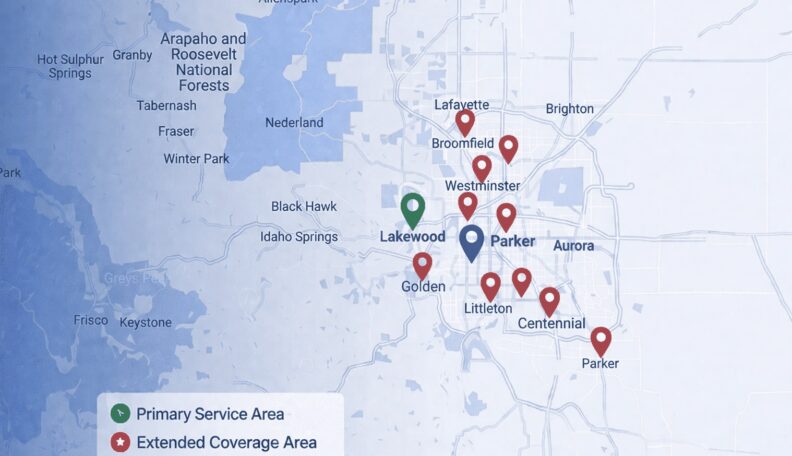
Service Area: 50+ Cities Across Metro Denver
Select Your Nearest Location
Hours: Mon-Fri 8am-5pm
Sunday Emergency Only
Avg Response Time: 18 minutes
Hours: Mon-Fri 8am-5pm
Sunday Emergency Only
Avg Response Time: 18 minutes
Hours: Mon-Fri 8am-5pm
Sunday Emergency Only
Avg Response Time: 18 minutes
Hours: Mon-Fri 8am-5pm
Sunday Emergency Only
Avg Response Time: 18 minutes
Hours: Mon-Fri 8am-5pm
Sunday Emergency Only
Avg Response Time: 18 minutes
Hours: Mon-Fri 8am-5pm
Sunday Emergency Only
Avg Response Time: 18 minutes
Hours: Mon-Fri 8am-5pm
Sunday Emergency Only
Avg Response Time: 18 minutes
Hours: Mon-Fri 8am-5pm
Sunday Emergency Only
Avg Response Time: 18 minutes
Hours: Mon-Fri 8am-5pm
Sunday Emergency Only
Avg Response Time: 18 minutes
Hours: Mon-Fri 8am-5pm
Sunday Emergency Only
Avg Response Time: 18 minutes
Hours: Mon-Fri 8am-5pm
Sunday Emergency Only
Avg Response Time: 18 minutes
Hours: Mon-Fri 8am-5pm
Sunday Emergency Only
Avg Response Time: 18 minutes
Hours: Mon-Fri 8am-5pm
Sunday Emergency Only
Avg Response Time: 18 minutes
Hours: Mon-Fri 8am-5pm
Sunday Emergency Only
Avg Response Time: 18 minutes
Hours: Mon-Fri 8am-5pm
Sunday Emergency Only
Avg Response Time: 18 minutes
We Service: Parker, Castle Rock, Greenwood Village, Lakewood, Littleton, Centennial, Highlands Ranch 40+ More Cities