

Emergency Garage Door Repair Services: Myths and Facts
Key Takeaways
- Most emergency garage door failures don’t happen without warning. Springs, cables, and openers give off signs weeks before they break, including unusual noise, sluggish movement, and visible wear. Catching them early prevents a midnight breakdown.
- DIY spring repair is one of the most dangerous things a Parker homeowner can attempt. Torsion springs store hundreds of pounds of tension and can release violently if handled incorrectly. Professional repair is the safe call every time.
- Calling a technician fast doesn’t always mean paying more. Delaying a repair often turns a straightforward fix into a multi-part job that costs significantly more in the end.
- Colorado’s temperature swings hit garage door components hard. Parker winters push springs into brittle territory, while summer heat thins lubricants. Seasonal maintenance cuts emergency call frequency noticeably.
- Select Garage Doors serves Parker homeowners and the greater Denver metro with honest assessments and reliable repairs. No upselling, no unnecessary replacements, just the fix your door actually needs.
Parker homeowners deal with a lot of garage door noise. Literally. The cold snaps in late fall, the temperature whiplash between February and March, the high winds that roll through from the foothills. All of it beats on your door year-round. When something finally goes wrong, it’s easy to act on the first piece of advice you find. The problem is that a lot of the “common knowledge” circulating about emergency garage door repair is flat wrong. Select Garage Doors has seen the consequences when homeowners make decisions based on myths rather than facts. This post clears the record on the ones that show up most often.
Common Emergency Garage Door Repair Myths That Affect Parker Homeowners
Garage door systems are mechanical. They wear out gradually, not all at once. Most emergency situations are the end of a process that started weeks or months earlier, but a few stubborn myths cause homeowners to misread the signs, attempt unsafe repairs, or delay calls that could have prevented the problem from getting worse. Here is what you actually need to know.
Myth 1: A Loud Pop Means Your Door Just Broke
The fact: A loud bang, snap, or pop usually means a spring reached the end of its rated cycle life. That’s something that was coming for a while. The sound feels sudden, but the failure is almost never instant.
Torsion springs, which are the coiled springs mounted above the door opening on most Parker homes, are rated for 10,000 to 20,000 cycles. One cycle equals one full open-and-close of the door. The typical household opens and closes their garage door three to four times a day, which puts standard springs on a seven-to-ten-year clock. In Parker, Colorado’s freeze-thaw cycles add additional stress on the metal. Steel contracts in the cold, becomes more brittle, and is far more likely to snap on a cold January morning than during a mild fall day.
The warning signs are there before the break. If the door felt heavier when lifting it manually, if you noticed a slight drag or uneven movement, if the door seemed to hang crooked. Those were all signals. A loud pop is usually just the finish line for a spring that had been losing tension for months.
What to do when it happens: don’t try to operate the door. A broken spring means the door has no counterbalance for its weight (typically 150 to 300 pounds). Operating it risks damaging the opener, bending the track, or worse. Call for service and leave the door in place.
Myth 2: Spring Repair Is a Good DIY Project
The fact: Torsion spring replacement is one of the most physically dangerous home repair tasks a person can attempt. The springs store enormous tension, and a release in the wrong direction can cause serious injury.
This myth persists because YouTube makes spring replacement look straightforward. The reality is that torsion springs are under 150 to 300 pounds of stored force at all times. A winding bar slip, a wrong turn, or a miscalculated spring size can send hardware flying across your garage at serious speed. This isn’t a loose cabinet hinge. It’s a high-tension mechanical system with no margin for errors by an untrained person.
Extension springs, which run parallel to the horizontal tracks on older doors, carry their own risks. When an extension spring snaps, it can whip across the garage uncontrolled. Safety cables are supposed to contain them, but those cables wear out too and are often overlooked during DIY inspections.
Beyond the injury risk, incorrect spring sizing causes long-term damage. The wrong spring puts an uneven load on the opener, wears out cables faster, and causes the door to come out of balance within months. A repair that seemed to work can quietly destroy other components over the following season. Save yourself the risk and the follow-up repair bill. Spring replacement is a job for someone with the right tools, training, and parts on hand.
Myth 3: Calling a Repair Company Right Away Costs More
The fact: Delaying a repair almost always increases the final cost. A single broken spring handled quickly is a contained job. A broken spring that gets operated around for a week can mean a bent track, a burned-out opener, and cable damage on top of the original spring.
Homeowners sometimes put off calling because they’re busy, or because they assume prices are higher during evening or weekend hours. The pricing concern is valid. After-hours calls can carry a premium. But the math shifts when you factor in what happens to a compromised door that keeps getting used.
Forcing a door open on a broken spring puts all the lifting work on the opener motor. Openers aren’t designed for that. Running one under sustained overload will burn out the motor significantly faster than normal use would. Tracks can bow. Cables that were already showing wear reach their limit faster.
The honest answer is that most non-urgent repairs are best handled during regular service hours to avoid any after-hours fees. But when a door is stuck open, when it won’t close at night, or when a spring failure leaves your garage inaccessible, waiting is the more expensive option. Call, get a clear estimate, and get it fixed right.
Myth 4: If the Door Is Still Working, It Doesn’t Need Attention
The fact: A door that opens and closes reliably can still have components deep into wear. Springs, cables, rollers, and weather seals don’t announce themselves before they fail. They quietly degrade until one day they don’t.
This is one of the most common mindsets that leads to emergency calls. A door operating normally gives no visible sign that a spring is in its ninth year of a ten-year cycle, or that the cable is showing fraying near the drum. By the time you hear grinding, resistance, or uneven movement, the component is already close to its limit.
Parker’s climate makes this worse. The daily temperature swings from winter morning lows to afternoon highs expand and contract the metal components repeatedly throughout the season. Lubricants thin out in summer heat and thicken in cold, affecting how well rollers and springs are protected between maintenance visits. A door that ran fine all summer may struggle to open on the first genuinely cold morning of fall.
Annual maintenance isn’t just for doors that are having problems. A check-in before the cold season helps catch the spring that’s at 80% of its cycle life before it becomes a 6 a.m. failure on a January workday. Replacing one spring proactively costs a fraction of what an emergency call, plus potential cable and opener damage, runs.
| Component | Typical Lifespan | Parker Climate Factor |
|---|---|---|
| Torsion Springs | 7-14 years / 10,000-20,000 cycles | Freeze-thaw cycles accelerate metal fatigue |
| Extension Springs | 7-10 years / 7,000-12,000 cycles | More susceptible to snap failure in cold |
| Cables | Often tied to spring lifespan | Inspect annually; fraying accelerates with temperature stress |
| Rollers (nylon) | 10,000-15,000 cycles | Wind-driven grit wears them faster in Parker |
| Photo-Eye Sensors | 10+ years with cleaning | Bright Colorado sun can cause misreads; keep lenses clean |
Myth 5: Any Garage Door Company Can Handle Any Repair
The fact: Garage door systems vary significantly by brand, opener type, spring configuration, and door weight. A company that doesn’t stock the right parts or has limited experience with your specific setup can create new problems while attempting to fix the original one.
This matters for Parker homeowners in practical ways. Many newer homes in the area use LiftMaster openers, which have specific diagnostic systems and require correct replacement parts to maintain their warranty. Installing a generic substitute part on a brand-specific opener can void coverage and create compatibility problems that don’t show up immediately.
Spring sizing is another area where experience matters. Springs must be matched to the exact weight and height of your door. An undersized spring strains the opener. An oversized spring can force the door open too hard and throw it off its tracks. Getting the calculation right requires knowing the door, not just the repair.
When evaluating a repair company, look for licensed and insured service, clear written estimates before work begins, and a warranty on parts and labor. Ask about experience with your opener brand. A company that does solid work will have no problem answering those questions directly.
When to Call for Garage Door Service in Parker, CO
Some situations need a call right away. Others can be scheduled. Here’s a practical breakdown for Parker homeowners:
Call immediately: Door stuck in the open position with no way to secure it. Broken spring with the door unable to close. Cables snapped or visibly came off their drums. The door came off its tracks. Any situation where your home is exposed, or the door poses a physical hazard.
Schedule within a few days: The door is slow, noisy, or slightly uneven, but still functional. One spring broke while the other is intact (both should be replaced together, since they wear at the same rate and the surviving spring is likely near its limit). The opener is intermittent or making unusual sounds. Weather seals are torn or missing.
Handle during annual maintenance: General lubrication and hardware tightening. Balance testing. Photo-eye alignment. Track cleaning. Full safety inspection before winter. Catching any of the above items during a scheduled visit is far cheaper than dealing with them as an emergency.
Get Honest Garage Door Help in Parker, CO
When your door breaks, the last thing you need is to wade through misinformation. Select Garage Doors serves Parker and the surrounding Denver metro with straightforward assessments, fair pricing, and repairs that hold up. Whether you’re dealing with a broken spring at an inconvenient hour or you just want a pre-winter inspection before something goes wrong, call us at 720-339-2442.
We serve Parker, Castle Rock, Greenwood Village, Lakewood, and the greater Denver metro area. Ready to book? Schedule your service appointment here.
Frequently Asked Questions About Emergency Garage Door Repair
How can I tell if my garage door spring is about to break?
The most reliable early sign is a door that feels noticeably heavier when you lift it manually. Disconnect the opener by pulling the red emergency release cord, then try raising the door by hand. A properly balanced door with healthy springs should lift smoothly with minimal effort. If it requires real force or feels lopsided, the springs have lost tension. Other signs include visible gaps between coils on the torsion spring above the door, a door that doesn’t stay in place when stopped halfway, unusual squeaking or grinding on operation, and slight sagging or unevenness in how the door sits in the frame. In Parker, cold weather is a particular trigger. If any of these signs appear heading into fall, have the springs inspected before the first hard freeze arrives.
Is it safe to manually open a garage door with a broken spring?
It depends on the situation, and the answer is usually no for repeated use. Garage doors typically weigh 150 to 300 pounds, and torsion springs carry most of that load. With a broken spring, the full weight shifts to you. Lifting it once to move a vehicle out of an urgent situation may be necessary, and the red emergency release cord allows for that. However, attempting to use the door normally under these conditions risks injury from dropping weight, and running the opener motor under full door load burns it out quickly. The safer approach is to leave the door in a closed and secured position after the initial move and wait for a proper spring replacement before operating it again.
What counts as a true garage door emergency in Parker?
A true emergency is any failure that leaves your home unsecured or creates an immediate physical hazard. A door stuck in the open position with no way to secure it is an emergency, particularly overnight or during a storm. A door that closes unevenly and could drop suddenly is an emergency. A cable off its drum that has caused the door to hang at an angle is an emergency. On the other hand, a door that’s slow, noisy, or intermittent but still closing fully is a repair to schedule within a few days, not something that requires immediate response. Parker winters add context here: a door that won’t open in January when temperatures have dropped below freezing may be less of a mechanical failure and more of a weatherstripping or freeze issue at the bottom seal.
Should I replace both springs even if only one broke?
Yes, and the reason is straightforward. Both springs are installed at the same time and work under the same load and conditions. If one has reached the end of its cycle life, the other one is almost certainly close behind it. Replacing just the broken spring leaves you with a mismatched pair: one new spring and one near-failure spring working at different tension levels. That imbalance puts extra strain on your opener and creates an uneven load on the door. You’ll also be paying for another service call within a year when the remaining spring gives out. Replacing both at once during a single visit is the more efficient and cost-effective approach, and any reputable garage door company in Parker will recommend it.
How much does emergency garage door repair typically cost in the Denver metro area?
Costs vary by the type of repair, parts involved, and whether the call falls outside regular service hours. For context, torsion Spring replacement, cable repair, and opener repair are all quoted after an on-site evaluation. Cable repairs, track realignment, and opener motor issues each carry their own pricing depending on the parts and labor involved. The best practice is to get a written estimate before authorizing work. A company doing honest work will give you a clear price before touching the door, not a surprise number after the job is done.
Looking for a deal?
Call us or to learn about our current promotions and seasonal offers.


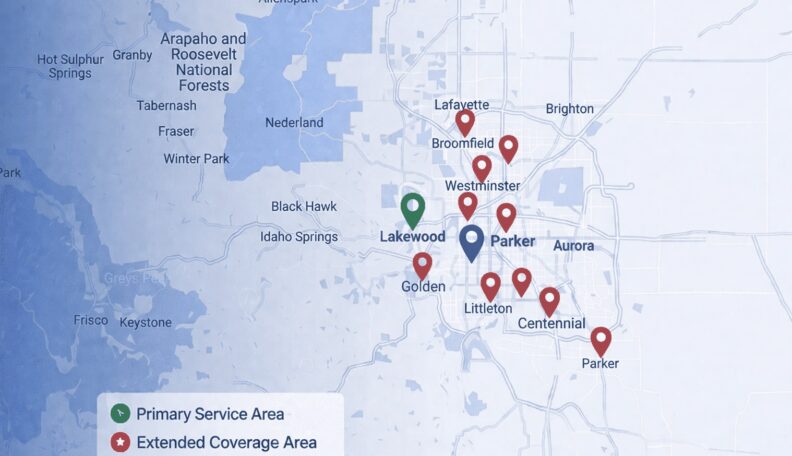
Service Area: 50+ Cities Across Metro Denver
Select Your Nearest Location
Hours: Mon-Fri 8am-5pm
Sunday Emergency Only
Avg Response Time: 18 minutes
Hours: Mon-Fri 8am-5pm
Sunday Emergency Only
Avg Response Time: 18 minutes
Hours: Mon-Fri 8am-5pm
Sunday Emergency Only
Avg Response Time: 18 minutes
Hours: Mon-Fri 8am-5pm
Sunday Emergency Only
Avg Response Time: 18 minutes
Hours: Mon-Fri 8am-5pm
Sunday Emergency Only
Avg Response Time: 18 minutes
Hours: Mon-Fri 8am-5pm
Sunday Emergency Only
Avg Response Time: 18 minutes
Hours: Mon-Fri 8am-5pm
Sunday Emergency Only
Avg Response Time: 18 minutes
Hours: Mon-Fri 8am-5pm
Sunday Emergency Only
Avg Response Time: 18 minutes
Hours: Mon-Fri 8am-5pm
Sunday Emergency Only
Avg Response Time: 18 minutes
Hours: Mon-Fri 8am-5pm
Sunday Emergency Only
Avg Response Time: 18 minutes
Hours: Mon-Fri 8am-5pm
Sunday Emergency Only
Avg Response Time: 18 minutes
Hours: Mon-Fri 8am-5pm
Sunday Emergency Only
Avg Response Time: 18 minutes
Hours: Mon-Fri 8am-5pm
Sunday Emergency Only
Avg Response Time: 18 minutes
Hours: Mon-Fri 8am-5pm
Sunday Emergency Only
Avg Response Time: 18 minutes
Hours: Mon-Fri 8am-5pm
Sunday Emergency Only
Avg Response Time: 18 minutes
We Service: Parker, Castle Rock, Greenwood Village, Lakewood, Littleton, Centennial, Highlands Ranch 40+ More Cities