


Should You Repair or Replace Your Garage Door Opener in Parker, CO?
Key Takeaway: The right answer to “repair or replace?” depends as much on you as it does on the opener. Your household’s usage pattern, budget, timeline for moving, and existing smart-home setup all change which choice makes sense. Two homeowners with identical opener problems can have opposite right answers.
Most repair-versus-replace guides focus on the opener and ignore the homeowner. That misses half the picture. Two Parker, CO homeowners can have identical 12-year-old openers with identical failed gears and end up with opposite right answers, simply because one cycles the door eight times a day for a workshop and the other uses it twice on the weekend. The technical analysis is only one input.
At Select Garage Doors, we walk Parker homeowners through this personal-fit conversation every week. The framework below helps you map your situation, not just your opener’s situation, to the right next move. The answer that lands depends on how you actually use the door, what you plan to do with the home, and how the decision fits into your bigger household goals.
Three Homeowner Scenarios and the Right Call for Each
Most repair-versus-replace decisions look like one of these three scenarios. Find the one closest to your situation:
- The light-use weekend driver: opener used 1 to 2 cycles per day, home is the family’s long-term residence, opener is 12+ years old but mechanically sound apart from one component. Right call: Call for a free estimate.
- The daily-driver family hub: opener used 4 to 6 cycles per day (school runs, errands, multiple vehicles), opener is 8 to 12 years old with one or more failures in the past year. Right call: replace. Heavy cycle counts age openers faster than the calendar suggests, and repair cycles tend to chain together in this usage tier.
- The forever-home long-term thinker: opener is in any age range, the home is the long-term residence, you want minimal callbacks over the next 10 years. Right call: replace if the opener is over 10 years old, even on a non-critical repair. Newer units run quieter, integrate with smart-home routines, and reset the wear clock for the next decade.
Your Household Usage Pattern Matters More Than You Think
Opener manufacturers rate their products by duty cycle, which is a fancy way of saying how many open and close cycles per day the unit is built to handle. Real-world usage often exceeds the rating, and that gap accelerates wear.
- Light residential (1 to 3 cycles per day): standard 1/2 horsepower openers handle this load comfortably for 15+ years.
- Standard residential (3 to 5 cycles per day): the duty cycle most residential units are designed for. Lifespan tracks the standard 10 to 15 year average.
- Heavy residential (6 to 10 cycles per day): common for households with multiple drivers, RV bay use, or workshop traffic. Standard 1/2 HP openers wear faster; 3/4 HP units last longer.
- Light commercial or workshop (10+ cycles per day): standard residential openers are not rated for this; expect a 5 to 8 year lifespan unless you upgrade to a jackshaft or commercial unit.
If your household sits in the heavy-residential tier and the opener is approaching the 10-year mark, replacement is often the smarter call even when the immediate repair is cheap. The next failure is usually weeks away, not years.
When Budget Drives the Decision
For homeowners on a tight budget, the right move is sometimes the repair even when the math leans toward replacement. The key is being honest about what kind of repair makes sense in your situation:
- One last small repair to buy 1 to 2 more years: legitimate strategy for households that need to delay the bigger expense.
- A repair to bridge to a planned home upgrade: if you are remodeling, refinancing, or moving in 12 to 24 months, a small bridge-repair often makes more sense than a full replacement that gets credited at sale.
- A repair to bridge to insurance or warranty coverage: some home warranty plans cover opener replacement. Check what is covered before paying out of pocket.
- Borrowing or financing the replacement: newer openers often qualify for 0% financing through the installer. If the long-term math favors replacement, financing can spread the cost without delaying the upgrade.
When Future Plans Drive the Decision
Your timeline for the home shapes the calculus more than most homeowners realize:
- Selling in 1 to 3 years: a new garage door opener does not return its full cost at resale the way a new door does, but a non-functional or visibly aging opener can become a buyer-objection item in inspection. Choose the option that keeps the unit reliable through sale: repair if cheap, replace if marginal.
- Staying 5 to 10 years: standard math applies. The 50% rule, age check, and modern-feature considerations all matter.
- Forever home: the long horizon favors replacement at the first sign of multiple-component wear. Lifetime cost of replace-now is usually lower than chained repairs across 20+ years.
Matching the Decision to Your Parker, CO Home
Parker-specific factors do shift the decision in real ways. The most common situations we see:
- Newer construction in The Pinery, Stonegate, or Pradera: openers installed in the last 5 to 10 years are usually still in the wear-curve sweet spot. Lean repair on single-component failures.
- Older Parker subdivisions (pre-2000 builds): original openers are at or past UL 325 vintage. Replacement for safety alone, regardless of repair cost.
- Detached garages and workshop bays: higher cycle counts, more weather exposure, and longer wire runs. Lean replacement at the 10-year mark.
- Attached garages on hilltop or west-facing lots: more sun and wind exposure. Plan for 12-year typical replacement timing rather than the 15-year national average.
What to Tell the Technician When You Call
A few specific details upfront save diagnostic time and get you a more accurate decision on the call:
- Opener brand and model number: found on a sticker on the side of the motor housing. Helps the technician check part availability before arriving.
- Approximate age: if you do not remember, the install year is usually printed on the same sticker.
- Specific symptom: door does not close, opener runs but door does not move, noisy operation, intermittent. The more specific, the better.
- Daily usage pattern: how often the door cycles per day. This shapes the repair-vs-replace recommendation.
- Plans for the home: selling in 18 months versus staying long-term changes the right answer. Share the context.
Get a Personalized Opener Recommendation
The right repair-versus-replace call comes from pairing the opener’s condition with your specific household and timeline. We bring the technical assessment; you bring the context that only you know. Together the right answer falls out of the conversation.
At Select Garage Doors, our veteran-owned team handles opener decisions across our Denver Metro service areas with upfront pricing and a 100% satisfaction guarantee. For professional garage door services in Parker, we are a phone call away.
Call us at (720) 339-2442 for a personalized recommendation on your opener.
Frequently Asked Questions
How does my household’s usage pattern affect when I should replace my garage door opener?
Higher daily cycle counts accelerate opener wear in a non-linear way. A door used 6 times a day will reach mechanical end-of-life roughly twice as fast as one used 2 times a day. If your household runs heavy on garage usage (multiple drivers, workshop, RV bay), the typical 10 to 15 year lifespan compresses to 7 to 10 years.
Should I get a more powerful opener if I have heavy usage?
Yes. Standard 1/2 horsepower openers are built for 3 to 5 cycles per day. If your household runs heavier than that, a 3/4 HP or 1 HP unit lasts longer and runs cooler under load.
Is it worth replacing my garage door opener before selling my home?
It depends on the buyer pool and the opener’s current condition. A visibly aged, noisy, or sketchy opener can become a buyer objection during inspection. If the opener works reliably and quietly, replacement before sale rarely returns its full cost. If it has caused a recent failure or is mid-failure, replacing it before listing avoids a price-down at inspection.
What kind of opener should I choose if I am staying in my home long-term?
Lean toward a belt-drive smart opener with battery backup. Belt drives run quieter and last longer than chain drives. Smart integration adds value over the home’s life as your home automation grows. Battery backup keeps the door functional during power outages, which matters along the Front Range.
How do I know if I have heavy residential or commercial-level usage?
Count the typical cycles per day during a normal week. Three cycles or fewer is light to standard. Six to ten cycles is heavy residential. Anything above ten cycles, especially with a workshop or business use, is light commercial and needs a commercial-grade or jackshaft opener.
Can I just upgrade specific features on my current opener instead of replacing it?
Some features can be added: external Wi-Fi adapters (MyQ Smart Garage Hub, for example) can add smartphone control to non-smart openers, and battery backup retrofit kits exist for some models. Rolling-code security, belt-drive quiet operation, and modern safety features cannot be retrofitted and require a full replacement.
What is the difference between a homeowner’s repair budget and a smart repair strategy?
Replacement often wins on lifetime cost even when the immediate repair is cheaper.
What if I want a new opener but the rest of the system is fine?
Opener replacement alone is straightforward and usually takes 2 to 4 hours on site. The technician removes the old motor, installs the new one, transfers or replaces the rail, sets new sensor positions, and programs the remotes. The existing door, springs, tracks, and hardware stay in place unless they show wear during the install inspection.


Looking for a deal?
Call us or to learn about our current promotions and seasonal offers.


Service Area: 50+ Cities Across Metro Denver
Select Your Nearest Location
Hours: Mon-Fri 8am-5pm
Sunday Emergency Only
Avg Response Time: 18 minutes
Hours: Mon-Fri 8am-5pm
Sunday Emergency Only
Avg Response Time: 18 minutes
Hours: Mon-Fri 8am-5pm
Sunday Emergency Only
Avg Response Time: 18 minutes
Hours: Mon-Fri 8am-5pm
Sunday Emergency Only
Avg Response Time: 18 minutes
Hours: Mon-Fri 8am-5pm
Sunday Emergency Only
Avg Response Time: 18 minutes
Hours: Mon-Fri 8am-5pm
Sunday Emergency Only
Avg Response Time: 18 minutes
Hours: Mon-Fri 8am-5pm
Sunday Emergency Only
Avg Response Time: 18 minutes
Hours: Mon-Fri 8am-5pm
Sunday Emergency Only
Avg Response Time: 18 minutes
Hours: Mon-Fri 8am-5pm
Sunday Emergency Only
Avg Response Time: 18 minutes
Hours: Mon-Fri 8am-5pm
Sunday Emergency Only
Avg Response Time: 18 minutes
Hours: Mon-Fri 8am-5pm
Sunday Emergency Only
Avg Response Time: 18 minutes
Hours: Mon-Fri 8am-5pm
Sunday Emergency Only
Avg Response Time: 18 minutes
Hours: Mon-Fri 8am-5pm
Sunday Emergency Only
Avg Response Time: 18 minutes
Hours: Mon-Fri 8am-5pm
Sunday Emergency Only
Avg Response Time: 18 minutes
Hours: Mon-Fri 8am-5pm
Sunday Emergency Only
Avg Response Time: 18 minutes
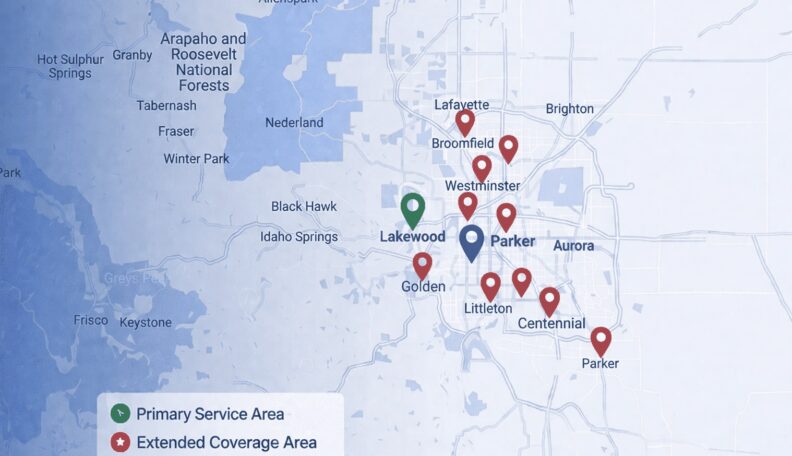
We Service: Parker, Castle Rock, Greenwood Village, Lakewood, Littleton, Centennial, Highlands Ranch 40+ More Cities