


Why Is Your Parker Garage Door More Dangerous Than You Think?
Key Takeaways
- Garage doors are the heaviest moving object in most homes, weighing 150 to 400 pounds
- Over 20,000 people are injured in garage door accidents annually in the U.S.
- Torsion springs under tension store enough energy to cause broken bones and lacerations
- Finger injuries account for 27.8 percent of all garage door incidents
- Homes built before 1993 may lack federally required auto-reverse and sensor safety features
A standard garage door weighs 150 to 400 pounds and operates under high-tension spring force strong enough to cause serious injury. Over 20,000 garage door injuries occur in the United States each year, and many result from worn components, missing safety features, or attempted DIY repairs.
Most homeowners open and close the garage door without thinking twice. It operates with a button press, and when everything works, there is no reason to question it. But a garage door is the largest moving object in the home, cycling through thousands of operations under spring tension that most people never see or think about. When components wear out or safety features fail, the risk of injury is real. Select Garage Doors helps Parker homeowners identify and address garage door hazards before they become emergencies.
How Common Are Garage Door Injuries in the United States?
Emergency rooms across the country treat over 20,000 garage door injuries each year. Pinching and crushing account for the majority, with children and older adults facing the highest risk.
The U.S. Consumer Product Safety Commission tracks garage door injuries through emergency room data. The numbers break down into distinct categories. Pinching injuries from section joints account for 59.5 percent of incidents. Falling doors cause 16.5 percent. Injuries while working on or repairing a door make up 12.7 percent.
Finger injuries are the most common type at 27.8 percent of all cases, followed by head injuries at 22.2 percent. Adults over 65 account for 25.5 percent of injuries, often because slower reaction times make it harder to move clear of a closing door.
Between 1982 and 1990, before federal safety requirements took effect, 46 children under age 14 died in garage door accidents. The 1993 federal mandate requiring auto-reverse mechanisms and photoelectric sensors has reduced child fatalities, but these safety features only work when they are tested and maintained. Parker homeowners who are unsure whether their safety systems are functioning correctly can schedule a service today for a full evaluation.
What Parts of a Garage Door Are the Most Dangerous?

Torsion springs, cables, and section joints carry the highest injury risk. Springs store enough energy to cause severe harm, cables can whip when they snap, and section joints can pinch fingers with considerable force.
Torsion springs mount above the door opening and wind under extreme tension to counterbalance the door’s weight. A standard two-car garage door spring holds 100 to 200 foot-pounds of stored energy. When a spring breaks, it releases that energy instantly. Attempting to adjust or replace springs without proper tools and training accounts for some of the most severe garage door injuries each year.
Lift cables run from the cable drums at the top of the door to the bottom brackets. These braided steel cables bear the door’s full weight every cycle. A frayed or worn cable that snaps under load can whip with enough force to cut skin and break bones.
Section joints are the horizontal lines where door panels meet. When the door is moving, these joints open and close like scissors. Fingers placed near a closing joint can be crushed with the full weight of the door behind them. Modern doors include tamper-resistant bottom brackets and pinch-resistant panel designs, but older doors often lack these features. For a look at how modern garage door design addresses safety concerns, explore the latest garage door design trends.
| Safety Feature | What It Does | How to Test | Replace/Service When |
|---|---|---|---|
| Auto-reverse mechanism | Reverses door on contact | 2×4 test monthly | Fails to reverse within 2 seconds |
| Photo-eye sensors | Detects objects in door path | Beam-break test monthly | Misaligned, dirty, or unresponsive |
| Manual release cord | Allows manual operation during power loss | Pull test quarterly | Cord is stuck or mechanism jammed |
| Tamper-resistant brackets | Prevents cable release at bottom | Visual inspection annually | Brackets are loose or non-standard |
| Battery backup | Maintains safety during outages | Power-off test annually | Battery older than 3 years |
| Pinch-resistant panels | Prevents finger crushing at joints | Visual check for panel gaps | Gaps wider than 1/4 inch |
How Do You Test Garage Door Safety Features at Home?
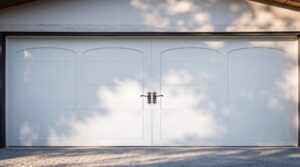
Two simple tests check the most critical safety features. The auto-reverse test uses a piece of lumber under the door, and the photo-eye test blocks the sensor beam during closing. Both tests take under five minutes and should be performed monthly.
Auto-reverse test: Place a 2×4 flat on the floor in the center of the door’s path. Close the door using the wall button. When the door contacts the wood, it should reverse direction within two seconds. If it does not reverse, the opener’s force settings or safety mechanism may need adjustment.
Photo-eye test: While the door is closing, wave a broom handle or similar object through the sensor beam about six inches above the floor. The door should stop and reverse immediately. If it continues closing, the sensors may be misaligned, dirty, or malfunctioning.
Both tests are safe to perform and do not require any tools. If either test fails, stop using the automatic opener until the issue is resolved. Operating a door with failed safety features puts every person in the household at risk.
What Safety Upgrades Should Parker Homeowners Consider?
Homes with garage doors installed before 1993 may lack federally required safety features. Even newer doors benefit from updated sensors, battery backup openers, and pinch-resistant panels.
Upgrades to consider:
- Photo-eye sensors with LED alignment indicators for easier maintenance
- Battery backup openers that maintain safety features during power outages
- Pinch-resistant panel designs that prevent finger injuries at section joints
- Tamper-resistant bottom brackets that reduce cable-related injury risk
- Timer-to-close features that automatically shut an open door after a set period
Parker’s storm-related power outages make battery backup particularly important. Without battery backup, the opener’s auto-reverse and sensor systems go offline during a power loss. The door can still be operated manually, but all electronic safety features are inactive until power returns. Select Garage Doors serves Parker, CO with professional safety inspections and upgrades. The team evaluates existing safety features and recommends targeted improvements based on the door’s age, condition, and the household’s specific needs.
Frequently Asked Questions
How Common Are Garage Door Injuries?
Over 20,000 garage door injuries are treated in U.S. emergency rooms each year. Pinching injuries from section joints account for 59.5 percent, falling doors cause 16.5 percent, and DIY repair injuries make up 12.7 percent.
Can a Garage Door Spring Kill You?
A torsion spring under full tension stores 100 to 200 foot-pounds of energy. A sudden release can cause broken bones, deep lacerations, and in rare cases, fatal injuries. Spring repair should always be handled by a trained technician.
How Do I Know If My Garage Door Has Auto-Reverse?
Place a 2×4 flat on the ground in the door’s path and close the door. If the door contacts the board and reverses within two seconds, the auto-reverse is working. All openers sold after 1993 are required to include this feature.
Are Garage Doors Made Before 1993 Unsafe?
Doors installed before 1993 may lack federally mandated auto-reverse mechanisms and photo-eye sensors. These doors can be retrofitted with modern safety features, and upgrading is strongly recommended for any household with children or pets.
What Is the Most Dangerous Part of a Garage Door?
Torsion springs carry the highest injury risk because of the extreme tension they hold. Cables under load and section joints during door movement are the next highest risk areas. All three should be serviced only by professionals.
How Often Should I Test My Garage Door Safety Features?
Test the auto-reverse and photo-eye sensors monthly. Each test takes under five minutes. Also test the manual release cord quarterly and visually inspect brackets, panels, and battery backup annually.
Does a Battery Backup Matter for Garage Door Safety?
Yes. Without battery backup, auto-reverse and photo-eye sensors go offline during a power outage. The door can still be opened manually, but all electronic safety features are inactive until power returns.


Looking for a deal?
Call us or to learn about our current promotions and seasonal offers.


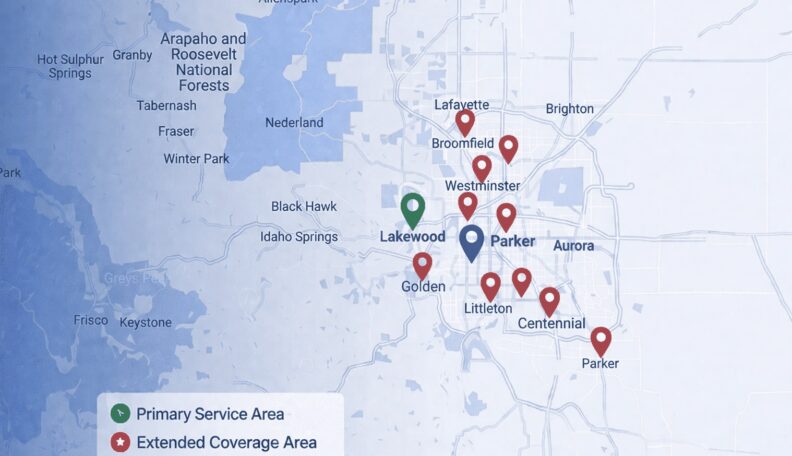
Service Area: 50+ Cities Across Metro Denver
Select Your Nearest Location
Hours: Mon-Fri 8am-5pm
Sunday Emergency Only
Avg Response Time: 18 minutes
Hours: Mon-Fri 8am-5pm
Sunday Emergency Only
Avg Response Time: 18 minutes
Hours: Mon-Fri 8am-5pm
Sunday Emergency Only
Avg Response Time: 18 minutes
Hours: Mon-Fri 8am-5pm
Sunday Emergency Only
Avg Response Time: 18 minutes
Hours: Mon-Fri 8am-5pm
Sunday Emergency Only
Avg Response Time: 18 minutes
Hours: Mon-Fri 8am-5pm
Sunday Emergency Only
Avg Response Time: 18 minutes
Hours: Mon-Fri 8am-5pm
Sunday Emergency Only
Avg Response Time: 18 minutes
Hours: Mon-Fri 8am-5pm
Sunday Emergency Only
Avg Response Time: 18 minutes
Hours: Mon-Fri 8am-5pm
Sunday Emergency Only
Avg Response Time: 18 minutes
Hours: Mon-Fri 8am-5pm
Sunday Emergency Only
Avg Response Time: 18 minutes
Hours: Mon-Fri 8am-5pm
Sunday Emergency Only
Avg Response Time: 18 minutes
Hours: Mon-Fri 8am-5pm
Sunday Emergency Only
Avg Response Time: 18 minutes
Hours: Mon-Fri 8am-5pm
Sunday Emergency Only
Avg Response Time: 18 minutes
Hours: Mon-Fri 8am-5pm
Sunday Emergency Only
Avg Response Time: 18 minutes
Hours: Mon-Fri 8am-5pm
Sunday Emergency Only
Avg Response Time: 18 minutes
We Service: Parker, Castle Rock, Greenwood Village, Lakewood, Littleton, Centennial, Highlands Ranch 40+ More Cities