


The Garage Door Design Process in Parker, CO: A Homeowner’s Guide
A garage door takes up a huge slice of any home’s street-facing facade, often close to a third of what passers-by actually see. That makes the design choice less about a single panel and more about how your whole curb appeal reads from the driveway. Picking a door at random rarely lands well, which is why the design process matters.
At Select Garage Doors, we walk Parker, CO homeowners through this design conversation every week, from the first sketch on a kitchen counter to the final install on the rails. The process has clear steps, and knowing what each one covers helps you arrive at a door that fits your home, your budget, and the way you actually use the space.
Here is what the design journey looks like from start to finish.
How the Garage Door Design Process Works
The design process is built around five stages: an initial consultation, style selection, material selection, feature integration, and a final design review. Each stage narrows the choices a little further, and the order matters because some decisions lock in others. Choosing a heavy wood door first, for example, changes which opener and spring system you can pair with it later. Working through the stages in sequence keeps the final door balanced in look, performance, and price.
Start With an Initial Consultation
The consultation is the foundation of the whole design. We use it to understand the home, the homeowner’s preferences, and the day-to-day use of the garage. It usually takes 30 to 60 minutes on site or by video call, with measurements, photos of the home, and a short conversation about what is and is not working with the current door.
To get the most out of the consultation, it helps to come prepared with:
- Photos of your home’s front facade: ideally taken in daylight from across the street.
- A rough budget range: even a wide range narrows the material conversation quickly.
- A list of frustrations with the current door: noise, slow operation, dings, cold spots.
- Your timeline: stock doors install faster than custom builds.
- Use patterns: daily driver door vs. RV bay vs. workshop door.
- HOA or covenant rules: some Parker neighborhoods restrict colors, materials, or window styles.
Pick a Style That Fits Your Home
Style selection lines up the door with your home’s architectural language. A ranch home in Parker calls for a different door than a mountain-contemporary build in the foothills or a modern flat-roof design closer to Highlands Ranch. Most door styles fall into one of three buckets:
- Traditional raised-panel: the most common look across Denver Metro homes, with embossed panels and clean lines that suit ranches, colonials, and bungalows.
- Carriage house: overlay panels, decorative hardware, and sometimes faux-wood texture; pairs well with craftsman, farmhouse, and Tudor-leaning builds.
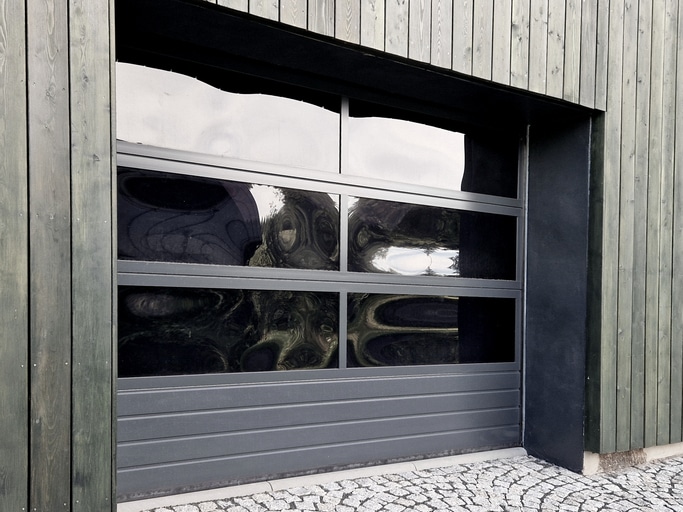
- Modern flush or full-view: aluminum frames with frosted glass or wood-grain composite; fits mountain-contemporary and minimalist new builds.
Once the style direction is locked, color and window placement come next. Color choices should pull from your home’s trim or roof, not the siding, so the door reads as an accent rather than a billboard.
Choose the Right Material
Material drives both how the door looks and how it holds up over the long Parker winters. Each option has a trade-off between cost, weight, insulation, and maintenance. The table below covers the five most common materials and where each one fits.
| Material | Price Tier | Look | Insulation | Maintenance |
|---|---|---|---|---|
| Steel | $ | Versatile, paintable | Available with foam core | Low; touch up rust on dings |
| Aluminum and glass | $$$ | Modern, flush, sleek | Lower R-value | Low; check seals yearly |
| Wood | $$$$ | Premium, custom grain | Naturally insulating | High; reseal every 1 to 3 years |
| Fiberglass | $$ | Smooth or wood-look | Mid R-value | Low; resists rust and rot |
| Composite (faux-wood) | $$$ | Wood-grain finish | Solid R-value | Low; no annual sealing |
Steel is the workhorse for budget-conscious builds. Wood is the premium choice when curb appeal is the priority and you can keep up with refinishing. Composite splits the difference for homeowners who want the wood look without the upkeep.
Add Features That Make the Door Smarter
Modern garage door systems offer features that go well beyond the open-close basics. The right additions depend on how often you use the door, who else uses it, and how connected the rest of the home already is. Common feature categories include:
- Smart openers and app control: Wi-Fi openers like MyQ and Aladdin Connect let you open, close, and monitor the door from anywhere.
- Battery backup: keeps the opener working through power outages, which matters during Colorado wind and snow events.
- Insulation upgrades: most useful when the garage is attached to the home or used as a workshop in winter.
- Motion-activated lighting: built into newer openers; saves wiring a separate fixture.
- Window inserts: add natural light and break up a long door visually.
- Reinforced security: Kevlar-belt drives, encrypted rolling-code remotes, and tamper-resistant brackets.
Not every feature belongs on every door. A driveway-only door used twice a day rarely needs the same setup as a daily-driver door with kids and a workshop behind it. The consultation usually trims the list back to the three or four features that actually move the needle for your home.
Review the Final Design Before Install
The final review pulls everything together: style, material, color, hardware, opener, and any feature add-ons. We bring a rendering or visual mock-up to this stage so you can see the door against your actual home before the installer touches a single panel. This is the right moment to push back, swap a window pattern, or change the handle finish. After the design is approved and signed off, the door is ordered and the install slot is scheduled. Stock doors usually arrive within 1 to 2 weeks. Custom doors run 4 to 8 weeks depending on the manufacturer and finish.
Common Design Mistakes to Avoid in Parker, CO
After thousands of installs across the Denver Metro, the same handful of design mistakes show up over and over. Watching for these saves rework and disappointment:
- Picking a door color that fights the siding: the door should harmonize with the trim and roof, not compete with the wall behind it.
- Skipping insulation on an attached garage: uninsulated doors push heating costs up through Parker’s long winters.
- Choosing a wood door without a maintenance plan: Colorado UV is rough on stains; reseal every 1 to 3 years or the finish fades fast.
- Under speccing the opener: a 1/2 horsepower opener struggles with a heavy wood or insulated steel door over 200 pounds.
- Ignoring HOA rules: Some Parker subdivisions restrict door styles, window inserts, or paint codes; check the covenants before signing the order.
Get a Design Consultation Built Around Your Home
The right starting point for any garage door project is a free, no-pressure consultation that puts the design conversation ahead of the sales pitch. A trustworthy shop walks the property with you, looks at the home’s architectural cues, asks how you actually use the garage, and only then opens a catalog. If the conversation jumps straight to a quote before anyone has looked at your home, that is a signal to slow down.
At Select Garage Doors, our veteran-owned team has helped Parker and Denver Metro homeowners design and install residential and custom doors with a 100% satisfaction guarantee. We cover everything from stock raised-panel installs to custom carriage-house builds, and we work across our Denver Metro service areas. For professional garage door services in Parker, we are a phone call away.
Call us at (720) 339-2442 to book your free design consultation.
Frequently Asked Questions
How long does the garage door design process take?
The full process, from first consultation to a finished install, usually runs 2 to 4 weeks for stock doors and 6 to 12 weeks for custom builds. The design conversation itself takes 1 to 2 weeks of back-and-forth before the order is placed.
Do I have to know what I want before the consultation?
No. A good designer treats the first conversation as a discovery session and brings sample materials, color swatches, and style examples to help you narrow things down. Coming in with no firm preference is normal.
What is the best garage door material for a Parker, CO home?
Steel with foam-core insulation is the most popular choice for Parker homes because it balances price, R-value, and durability against Colorado UV and temperature swings. Composite faux-wood is a strong second when curb appeal is the priority.
How much does a custom garage door cost?
Wood and full-view aluminum doors sit at the higher end of the range.
Can I add a garage door designer to a new construction build?
Yes. Builders usually install a builder-grade stock door, but you can swap it out during framing or right after closing for a designed door that fits the home’s architecture better. The earlier in construction, the smoother the swap.
What is the difference between a designer and an installer?
A designer focuses on look, material, and feature selection before the order is placed. An installer handles measuring, hanging, springs, and balance after the door arrives. Many companies, including ours, cover both roles in the same visit.
Do smart garage door openers work with Alexa and Google Home?
Most modern smart openers, including MyQ and Aladdin Connect, work with Google Assistant and IFTTT routines, and some support direct Alexa integration. Confirm compatibility for the specific opener model before purchase.
How do I know if my HOA allows the door style I want?
Check your community’s covenants or call the HOA management office before locking in a design. Restrictions usually cover color, window patterns, and material; some neighborhoods also limit decorative hardware.



Looking for a deal?
Call us or to learn about our current promotions and seasonal offers.



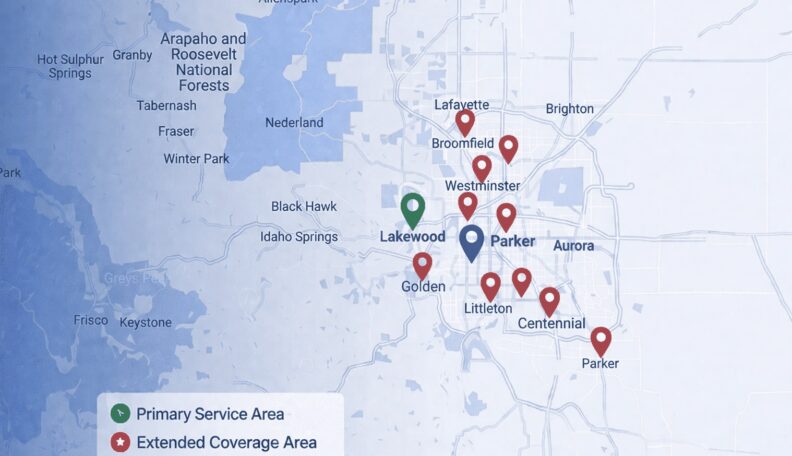
Service Area: 50+ Cities Across Metro Denver
Select Your Nearest Location
Hours: Mon-Fri 8am-5pm
Sunday Emergency Only
Avg Response Time: 18 minutes
Hours: Mon-Fri 8am-5pm
Sunday Emergency Only
Avg Response Time: 18 minutes
Hours: Mon-Fri 8am-5pm
Sunday Emergency Only
Avg Response Time: 18 minutes
Hours: Mon-Fri 8am-5pm
Sunday Emergency Only
Avg Response Time: 18 minutes
Hours: Mon-Fri 8am-5pm
Sunday Emergency Only
Avg Response Time: 18 minutes
Hours: Mon-Fri 8am-5pm
Sunday Emergency Only
Avg Response Time: 18 minutes
Hours: Mon-Fri 8am-5pm
Sunday Emergency Only
Avg Response Time: 18 minutes
Hours: Mon-Fri 8am-5pm
Sunday Emergency Only
Avg Response Time: 18 minutes
Hours: Mon-Fri 8am-5pm
Sunday Emergency Only
Avg Response Time: 18 minutes
Hours: Mon-Fri 8am-5pm
Sunday Emergency Only
Avg Response Time: 18 minutes
Hours: Mon-Fri 8am-5pm
Sunday Emergency Only
Avg Response Time: 18 minutes
Hours: Mon-Fri 8am-5pm
Sunday Emergency Only
Avg Response Time: 18 minutes
Hours: Mon-Fri 8am-5pm
Sunday Emergency Only
Avg Response Time: 18 minutes
Hours: Mon-Fri 8am-5pm
Sunday Emergency Only
Avg Response Time: 18 minutes
Hours: Mon-Fri 8am-5pm
Sunday Emergency Only
Avg Response Time: 18 minutes
We Service: Parker, Castle Rock, Greenwood Village, Lakewood, Littleton, Centennial, Highlands Ranch 40+ More Cities