


Common Garage Door Installation Mistakes to Avoid in Parker, CO
Key Takeaways
- Garage door installation mistakes in Parker, CO, most often stem from skipped permits, wrong spring tension, and measurements taken without accounting for the garage’s actual rough opening rather than the door panel size.
- Parker, CO, sits at a 5,869-foot elevation, where Front Range temperature swings of 40 to 60 degrees Fahrenheit in a single day cause metal tracks and springs to shift between installation sessions. A torsion spring set at correct tension on a warm October afternoon may be under-tensioned by the next morning after a hard overnight temperature drop.
- Douglas County requires a building permit for garage door replacement on most residential properties. Skipping that step can void your homeowner’s insurance claim if the door fails and cause problems at resale inspection.
Table of Contents
- Incorrect Measurements and Sizing
- Neglecting the Importance of Proper Tools
- Improper Spring Tension Adjustment
- Ignoring Manufacturer Instructions
- Rushing Through the Process
- What Parker Homeowners Miss Before Calling for Installation
- How Colorado’s Climate Creates Bigger Problems
- When Should You Call a Pro Instead of DIY?
- Frequently Asked Questions
Installing a garage door in Parker, CO, might look straightforward from the outside, but the technicalities involved can lead to real problems if they are not handled correctly from the start. Replacing or installing a new door without getting the fundamentals right is the difference between a door that performs reliably for years and one that starts causing trouble within months. Select Garage Doors works with Parker homeowners on installation projects where precision matters from the first panel to the final adjustment.
1. Incorrect Measurements and Sizing
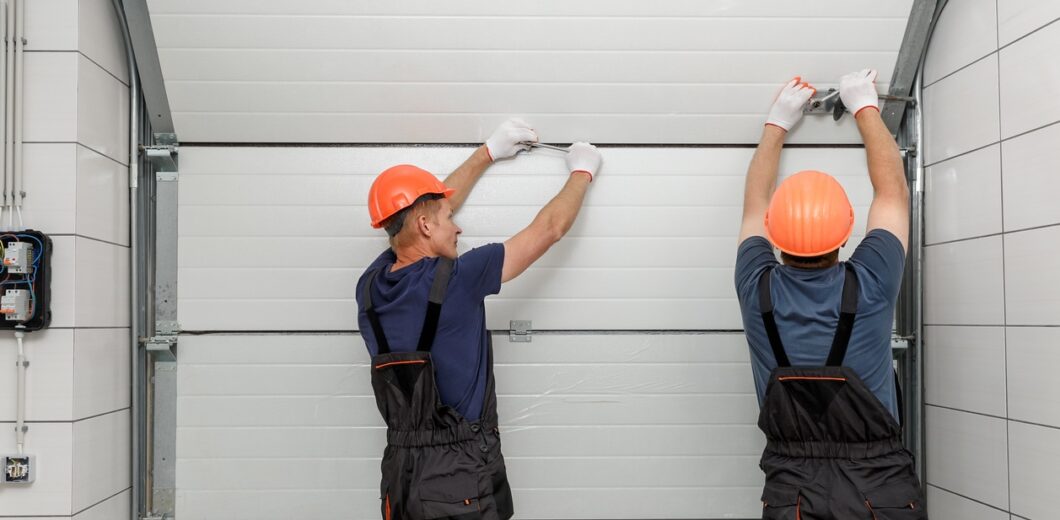
Inaccurate measurements are the most fundamental installation error in Parker, CO garage door projects, and they show up in ways that are expensive to correct after the door is in place. The rough opening measurement determines the door size, and it needs to be taken at multiple points—width at the floor, mid-height, and header; height at both sides—because residential framing is rarely perfectly square. The smallest dimension at each axis is the one that determines the door size, not the largest.
Failing to measure the opening correctly can result in a door that doesn’t fit properly, leading to operational problems and potentially compromising security. Panels that are slightly too wide bind against the framing during operation. Panels that are slightly too narrow create a gap at the perimeter that lets in cold air, insects, and moisture — all of which are more consequential in Parker’s semi-arid, high-elevation climate than in more forgiving environments.
2. Neglecting the Importance of Proper Tools
Using incorrect tools or working without the right equipment makes garage door installation in Parker, CO, more difficult and raises the likelihood of errors that aren’t visible until the door has been running for a while. The key tools for a correct installation include calibrated spring winding bars matched to the torsion bar diameter, a torque specification for the hardware, a level long enough to span the full door height, and a clamp for securing panels during assembly before the hardware is tightened.
Investing in or renting the right tools ensures smoother assembly and produces a better finished installation. Improvised substitutes for winding bars are the most dangerous shortcut in this category. A pipe or bar that isn’t the correct fit for the winding cone can slip during spring winding, releasing the spring’s stored energy without control. The correct winding bars for residential torsion springs are inexpensive, and the difference between a safe installation and a dangerous one.
3. Improper Spring Tension Adjustment
Adjusting torsion spring tension incorrectly during a Parker, CO garage door installation creates two separate problems: a door that doesn’t balance correctly and a safety risk that persists every time the door operates. A spring under tension for the door’s weight allows the door to fall faster than it should and puts strain on the opener motor and cables on every cycle. Over-tensioned springs can cause the door to shoot upward when released and wear through the spring’s rated service life faster.
To adjust the springs safely, it’s important to follow the manufacturer’s guidelines precisely or seek professional help. Working with a trained technician gets the spring tension set correctly the first time. Common mistakes in garage door spring repair show what goes wrong when this step is rushed or handled without proper training.
4. Ignoring Manufacturer Instructions
Skipping the installation manual or not following the specific requirements for the door brand and model being installed in Parker, CO produces results that may look correct on the outside but fail sooner than they should. Each door type has documented requirements for header bracket placement, cable drum winding sequence, spring sizing by door weight, and opener force settings. Generic installation assumptions that work for one brand often don’t translate correctly to another.
Ignoring manufacturer instructions can also void the door’s warranty. Most residential garage door warranties require installation according to the documented procedure. A door installed by someone who skipped or modified those steps has no warranty coverage for early failures, even if the failure appears to be a manufacturing defect. Warranty validity is worth protecting, particularly on higher-cost wood or insulated steel doors where the coverage represents real financial protection.
5. Rushing Through the Process
Patience and attention to detail during garage door installation in Parker, CO, prevent the problems that surface weeks or months after the job appears to be done. Misaligned tracks that are off by a fraction of an inch at installation drift further out of alignment as the temperature cycles across a Colorado year. Fasteners that weren’t torqued correctly loosen over time and allow hardware to shift. Opener mounting that is slightly off-center places lateral load on the drive rail on every cycle, which accelerates wear on both the trolley and the drive gear.
The installation requires patience and attention to detail at every step. Rushing through steps can lead to mistakes like misaligned tracks or inadequate fastening, compromising both safety and functionality. A door that seems to work fine at the end of the installation day may reveal these issues within the first several months of use as the components settle and the temperature swings of a Parker, CO winter begin working on the system.
Avoiding these common installation mistakes saves time, money, and effort in the long run. By taking accurate measurements, using proper tools, adjusting spring tension correctly, following manufacturer instructions, and taking sufficient time at each step, the installation outcome improves and so does the door’s service life.
These same principles apply once the door is running. Avoiding costly mistakes with emergency opener repairs covers the post-installation pitfalls that catch homeowners off guard.
6. What Parker Homeowners Miss Before Calling for Installation
Two approvals stop many Parker, CO garage door installations before they should start: a building permit from the Town of Parker or Douglas County and a written sign-off from the Architectural Review Committee for HOA properties. Parker has one of the highest HOA penetration rates in Colorado, and many subdivisions require written ARC approval before any exterior door replacement begins. Skipping the ARC step can result in fines or a requirement to remove and redo the installation at your own expense, even if the new door looks identical to the one it replaced.
The Town of Parker Building Division handles permits for properties inside town limits, while unincorporated Douglas County properties fall under the Douglas County Building Division at (303) 660-7497. Many homeowners do not know which jurisdiction their address falls under. You can verify using the Property Search tool on the Douglas County Assessor page before scheduling any work. Select Garage Doors pulls permits on Parker-area installation jobs, so the paperwork is handled before a single panel goes up.
Front Range weather adds another pre-installation variable. Parker’s elevation of 5,869 feet means temperature swings of 40 to 60 degrees Fahrenheit can occur within a single day. A concrete slab that reads level at noon may shift slightly after a cold night, changing headroom and sideroom clearances. Taking final measurements on the day of installation rather than the day of the initial consultation reduces the chance of a gap or binding issue caused by overnight temperature change.
7. How Colorado’s Climate Creates Bigger Problems
Parker, Colorado’s semi-arid climate and wide daily temperature swings accelerate the consequences of installation errors that would be minor inconveniences in a more stable climate. A torsion spring set to slightly low tension during a warm afternoon install may fall short of counterbalancing the door’s full weight the following morning after overnight temperatures drop below freezing. DASMA rates standard residential torsion springs at 10,000 cycles, but that rating assumes springs are installed at the correct tension for the door’s actual weight from day one.
Track alignment errors compound in the same way. Metal expands and contracts with temperature, and tracks fastened too tightly to a cold garage wall on a January morning may bind against the rollers when summer heat causes the framing to expand. Select Garage Doors technicians serving the Parker area account for seasonal thermal movement when setting track bracket spacing, a step that installers unfamiliar with Colorado’s Front Range climate often skip. Properly spaced track brackets allow for the minor expansion that keeps rollers running smoothly through the full annual temperature range.
Sensor placement is the third area where Colorado conditions expose otherwise acceptable installations. Photo-eye sensors mounted low on the door frame can be blinded by direct afternoon sun through a west-facing garage door opening, a common orientation in newer Parker subdivisions. A sensor that passes its post-install test in cloudy weather may trigger false reversals on any sunny afternoon. Angling sensors slightly downward and inward eliminates most sun-angle interference without requiring special equipment.
| Installation Mistake | Likely Consequence | How to Avoid It | Parker-Specific Note |
|---|---|---|---|
| Skipping permit and HOA approval | Fines, required removal, insurance claim denial at resale | Verify jurisdiction (Town of Parker vs. Douglas County), submit ARC form before scheduling | Parker HOA ARC review can take days to weeks depending on meeting schedule |
| Wrong rough-opening measurements | Door gaps, security vulnerabilities, operational binding | Measure width at floor, mid-height, and header; use the smallest dimension | Re-measure on install day after overnight temperature drop |
| Incorrect torsion spring tension | Door won’t balance, accelerated spring fatigue, safety risk | Use a qualified technician; follow DASMA specs for door weight and spring size | Set tension during coldest part of day; Parker’s temperature swings affect balance |
| Off-center opener mounting | Door twists, track binding, premature opener motor failure | Align rail center with door center before mounting header bracket | Belt drive openers recommended in HOA communities for quieter operation |
| Sun-angle sensor misalignment | False reversals every afternoon, door won’t close reliably | Angle sensors slightly downward; test in full afternoon sun before signing off | West-facing garages in newer Parker subdivisions are most affected |
8. When Should You Call a Pro Instead of DIY?
Garage door installation in Parker, CO, becomes a professional job the moment torsion springs are part of the work. Torsion springs operate under extreme tension, storing enough energy to cause serious injury if released suddenly during installation without proper winding bars and technique. A spring set incorrectly can snap during the first operation cycle, and the energy release from a wound spring without control is not survivable. The Consumer Product Safety Commission tracks garage door injuries annually, and spring-related incidents account for a meaningful share of them.
Beyond spring work, the UL 325 safety standard requires that every residential garage door opener pass an auto-reverse test before it is considered installed correctly. A door that fails this test presents a crush hazard. Verifying UL 325 compliance requires the right tools and knowledge of the force adjustment procedure for the specific opener model being installed. Select Garage Doors technicians serving Parker, Colorado, complete this test on every opener installation as a standard step, not an optional add-on.
Parker homeowners who want to verify a technician’s credentials before booking can search the Douglas County contractor registration database online. Registered contractors have submitted proof of liability insurance and workers’ compensation coverage to the county. Booking a technician who appears in that database is one of the fastest ways to confirm you are working with a legitimate, insured business.
For Parker, Castle Rock, Greenwood Village, Lakewood, and the greater Denver metro area, Select Garage Doors handles garage door installation with the precision these projects require. Schedule your garage door installation in Parker, CO, or call 720-339-2442 to get started.
Frequently Asked Questions
Do I need a permit to replace a garage door in Parker, Colorado?
Most garage door replacements in Parker, Colorado, require a building permit, though requirements vary depending on whether your property sits inside the Town of Parker limits or in unincorporated Douglas County. The Douglas County Building Division at (303) 660-7497 can confirm which jurisdiction applies to your address. Select Garage Doors pulls permits on installation projects in the Parker area, so homeowners do not have to navigate that process alone.
What is the most dangerous garage door installation mistake a homeowner can make?
Attempting to adjust or replace torsion springs without professional training is the most dangerous installation mistake. Torsion springs on residential garage doors store significant mechanical energy, and releasing that energy without the correct winding bars and technique can cause serious injury. Select Garage Doors technicians handle all torsion spring work in Parker, Colorado, with the proper tools and DASMA-aligned specifications for each door’s weight and spring size.
How does Colorado’s climate affect garage door installation?
Parker, Colorado’s Front Range location creates temperature swings of 40 to 60 degrees Fahrenheit within a single day, which affects spring tension, track alignment, and sensor performance immediately after installation. Springs set at correct tension on a warm afternoon may be under-tensioned after a cold overnight drop. Select Garage Doors accounts for Parker’s 5,869-foot elevation and daily temperature variation when setting spring tension and track bracket spacing on every installation.
Does my HOA need to approve my new garage door in Parker?
Most Parker, Colorado, subdivisions require written approval from the Architectural Review Committee before any exterior door replacement. Many Parker HOAs restrict garage door colors, panel styles, and materials to maintain consistent neighborhood aesthetics. Skipping the ARC approval can result in fines or a mandatory replacement at your expense, even if the new door looks similar to the original. Your CC&R documents or your HOA management company can provide the specific requirements for your community.
What should I look for in a garage door installer in Parker?
Verify that any garage door installer serving Parker, Colorado, is registered with Douglas County and carries liability insurance and workers’ compensation coverage. You can confirm registration using the contractor search tool on the Douglas County Building Services website. Ask whether the company pulls permits, tests for UL 325 auto-reverse compliance, and sets spring tension using DASMA specifications. Select Garage Doors meets all of these standards on every Parker-area installation.
Can a misaligned track cause long-term damage to my garage door in Colorado?
A misaligned track in Parker, Colorado, causes accelerated roller wear and can lead to the door jumping the track during operation, which is a safety hazard. Colorado’s Front Range temperature swings cause metal components to expand and contract daily, meaning a track that is only slightly off at installation tends to drift further out of alignment over successive seasonal cycles. Catching and correcting track alignment during installation prevents more costly repairs down the road.






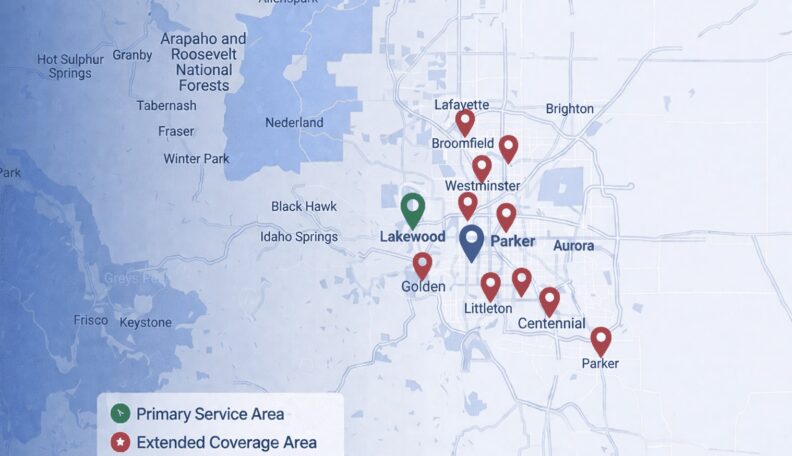
Service Area: 50+ Cities Across Metro Denver
Select Your Nearest Location
Hours: Mon-Fri 8am-5pm
Sunday Emergency Only
Avg Response Time: 18 minutes
Hours: Mon-Fri 8am-5pm
Sunday Emergency Only
Avg Response Time: 18 minutes
Hours: Mon-Fri 8am-5pm
Sunday Emergency Only
Avg Response Time: 18 minutes
Hours: Mon-Fri 8am-5pm
Sunday Emergency Only
Avg Response Time: 18 minutes
Hours: Mon-Fri 8am-5pm
Sunday Emergency Only
Avg Response Time: 18 minutes
Hours: Mon-Fri 8am-5pm
Sunday Emergency Only
Avg Response Time: 18 minutes
Hours: Mon-Fri 8am-5pm
Sunday Emergency Only
Avg Response Time: 18 minutes
Hours: Mon-Fri 8am-5pm
Sunday Emergency Only
Avg Response Time: 18 minutes
Hours: Mon-Fri 8am-5pm
Sunday Emergency Only
Avg Response Time: 18 minutes
Hours: Mon-Fri 8am-5pm
Sunday Emergency Only
Avg Response Time: 18 minutes
Hours: Mon-Fri 8am-5pm
Sunday Emergency Only
Avg Response Time: 18 minutes
Hours: Mon-Fri 8am-5pm
Sunday Emergency Only
Avg Response Time: 18 minutes
Hours: Mon-Fri 8am-5pm
Sunday Emergency Only
Avg Response Time: 18 minutes
Hours: Mon-Fri 8am-5pm
Sunday Emergency Only
Avg Response Time: 18 minutes
Hours: Mon-Fri 8am-5pm
Sunday Emergency Only
Avg Response Time: 18 minutes
We Service: Parker, Castle Rock, Greenwood Village, Lakewood, Littleton, Centennial, Highlands Ranch 40+ More Cities