


Common Questions About Garage Door Spring Repair in Parker, CO
Garage door springs raise a predictable set of questions: which type do I have, how do I tell when they are failing, can I handle the repair myself, and what does the work cost. The answers depend on whether you have torsion or extension springs, how the door is behaving, and how recently the system was serviced. The sections below cover each question with the specifics that actually matter for the decision.
At Select Garage Doors, we are a veteran-owned shop based in Parker, CO that handles garage door spring diagnostics and repair across the Denver Metro area. Our team carries the tension gauges, winding bars, and spring assemblies that turn a same-week call into a single-visit fix. If you are weighing whether to call a tech right now, start with Select Garage Doors for service backed by our 100% Satisfaction Guarantee.
Torsion vs. Extension Springs and How to Tell Which You Have
Residential garage doors use one of two spring systems. Torsion springs mount horizontally above the door on a metal shaft and store energy by twisting. Extension springs run along the horizontal tracks on each side of the door and store energy by stretching.
Quick visual ID:
- Look at the wall above the closed door. If you see a long horizontal shaft with one or two coiled springs wrapped around it, you have torsion springs.
- Look up at the ceiling-mounted tracks running back from the door. If you see long stretched springs running parallel to the tracks (with safety cables threaded through them on safer installs), you have extension springs.
Torsion is the modern standard, used on most homes built after 1990. Extension is more common on older builds and very wide doors. Knowing which type you have changes the repair approach and the safety considerations.
How to Recognize Spring Damage Before It Fully Fails
Springs rarely break without warning. A monthly visual check plus paying attention to operational changes catches most failures days or weeks before the spring snaps.
Early Warning Signs to Watch For
- The door opens or closes unevenly (one side lags)
- A grinding, popping, or clicking sound during the cycle
- The door feels much heavier than usual when lifted by hand
- The opener strains audibly on the up cycle and may reverse partway
- A visible gap or rust pattern in the spring coil
Any single sign on its own is worth a visit. Multiple signs at the same time mean the spring is close to letting go; book a tech visit before the next time you need to open the door.
When to Hire a Tech vs. When DIY Is Safe
Most garage door work has a DIY lane and a tech lane. Spring work is one of the few areas where the line sits hard on the tech side.
Safe to handle yourself:
- Visual inspection of the spring shaft for rust, coil gaps, or visible wear
- Lubrication of the coil with a lithium-based spray (twice a year)
- Tightening loose bolts on the spring shaft bearings (snug only, no over-torque)
Tech-Only Repair Tasks
- Winding or adjusting torsion spring tension (the winding bar can fly across the garage if it slips)
- Replacing a broken spring (the install requires balance math and tension measurement)
- Diagnosing a door that is unbalanced after a previous DIY attempt
- Any work that involves the cable drums or bottom brackets connected to the spring system
More than 20,000 people are sent to U.S. emergency rooms annually for garage door-related injuries; spring winding is one of the top causes.
How to Extend the Life of Your Springs Through Routine Care
Most spring failures are accelerated by neglect rather than caused by it. A short list of habits adds two to four years of useful life to a standard spring set.
What actually extends spring life:
- Lubricate the spring coils with a lithium-based spray twice per year (spring and fall in Colorado)
- Have a tech verify spring balance at the annual tune-up (the door should hold at half-open under hand)
- Address any unbalanced door immediately; running an unbalanced door fatigues the surviving spring fast
- Upgrade to 25,000-cycle springs at the next replacement if your daily cycle count is above six
Standard 10,000-cycle springs last seven to ten years at typical residential use. Upgraded 25,000-cycle springs run fifteen to twenty years at the same use rate.
Quick-Reference Table for Common Spring Questions
The table below collapses the most-asked questions into a single answer line. Use it as a starting point before reading the full sections above for context.
| Question | Quick Answer |
|---|---|
| Which spring type do I have? | Torsion if you see a coiled shaft above the door; extension if springs run along the side tracks |
| How do I know my spring is failing? | Loud pop, uneven lift, door feels heavy by hand, visible gap in the coil |
| Can I replace a spring myself? | No; the winding bar can slip and cause serious injury under stored torque |
| Should I replace one spring or both? | Both, always; the surviving spring will fail within months of the broken one |
| How long does a spring last? | 7 to 10 years for standard 10,000-cycle springs; 15 to 20 years for 25,000-cycle upgrades |
| How much does spring replacement cost in Parker? | Call for a free estimate. |
| What is the loud bang from my garage? | Almost always a spring section letting go under stored tension |
How to Schedule a Spring Diagnostic in Parker
If your door is showing any of the warning signs above, leave it where it is and call. Running the opener against a failing or broken spring strips drive gears and damages cables, both of which add cost on top of the spring replacement itself.
Our team handles spring diagnostics and repair across the Denver Metro service area out of our Parker, CO shop. Most visits diagnose and complete the repair in a single trip.
Call (720) 339-2442 to describe the symptom, ask about urgency, or request a written estimate.
Frequently Asked Questions
What are the two types of garage door springs?
Torsion springs mount above the door on a horizontal shaft and store energy by twisting. Extension springs run along the side tracks and store energy by stretching. Torsion is the modern standard and is safer when it fails.
How do I know if my garage door spring is broken?
The clearest signs are a loud bang from the garage when no one was using the door, a door that opens partway and stops, an opener that strains and reverses on the up cycle, or a visible gap in the spring coil. The door also feels much heavier than usual when lifted by hand.
Can I replace a garage door spring myself?
No. Winding a torsion spring requires turning a metal bar against hundreds of pounds of stored torque. A slipped bar can cause serious injury, and the CPSC tracks more than 20,000 garage door-related ER visits per year, many of them spring-related.
Should I replace both springs when only one breaks?
Yes, always. The surviving spring has completed the same number of cycles and is under the same fatigue stress; replacing only the broken spring leaves a weakened spring under uneven load that typically fails within months.
How long do garage door springs last in Parker, CO?
Standard 10,000-cycle springs last seven to ten years in Colorado’s climate. Upgrading to 25,000-cycle springs extends that to fifteen to twenty years and is the better long-term value for Front Range homes with wide temperature swings.
How much does garage door spring replacement cost in Parker, CO?
The total includes parts plus labor; the price climbs for higher-cycle upgrades and double-spring systems.
How can I prevent garage door spring failure?
Lubricate the spring coils with a lithium-based spray twice per year, address any unbalanced door immediately, and schedule an annual tech tune-up that includes a balance test. The cheapest prevention beats every reactive repair.
Can I keep using my garage door with a broken spring?
No. Running the opener against a broken spring puts the full door weight on the motor and can strip the drive gear within a single attempted lift. Stop using the door and book a same-week tech visit for spring replacement.



Looking for a deal?
Call us or to learn about our current promotions and seasonal offers.


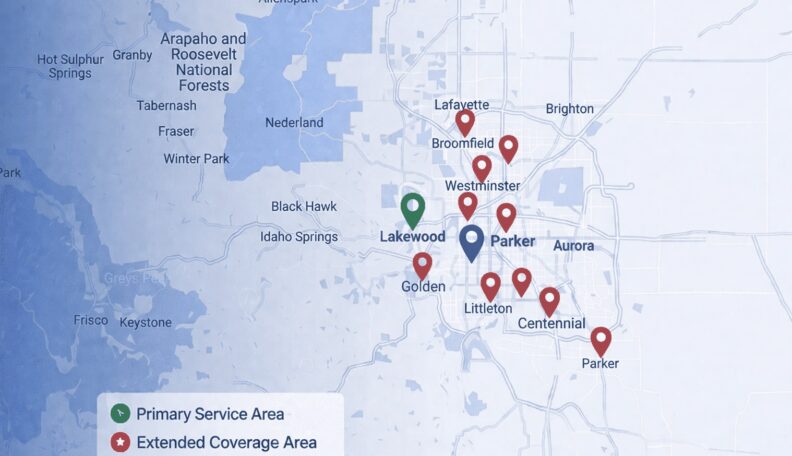
Service Area: 50+ Cities Across Metro Denver
Select Your Nearest Location
Hours: Mon-Fri 8am-5pm
Sunday Emergency Only
Avg Response Time: 18 minutes
Hours: Mon-Fri 8am-5pm
Sunday Emergency Only
Avg Response Time: 18 minutes
Hours: Mon-Fri 8am-5pm
Sunday Emergency Only
Avg Response Time: 18 minutes
Hours: Mon-Fri 8am-5pm
Sunday Emergency Only
Avg Response Time: 18 minutes
Hours: Mon-Fri 8am-5pm
Sunday Emergency Only
Avg Response Time: 18 minutes
Hours: Mon-Fri 8am-5pm
Sunday Emergency Only
Avg Response Time: 18 minutes
Hours: Mon-Fri 8am-5pm
Sunday Emergency Only
Avg Response Time: 18 minutes
Hours: Mon-Fri 8am-5pm
Sunday Emergency Only
Avg Response Time: 18 minutes
Hours: Mon-Fri 8am-5pm
Sunday Emergency Only
Avg Response Time: 18 minutes
Hours: Mon-Fri 8am-5pm
Sunday Emergency Only
Avg Response Time: 18 minutes
Hours: Mon-Fri 8am-5pm
Sunday Emergency Only
Avg Response Time: 18 minutes
Hours: Mon-Fri 8am-5pm
Sunday Emergency Only
Avg Response Time: 18 minutes
Hours: Mon-Fri 8am-5pm
Sunday Emergency Only
Avg Response Time: 18 minutes
Hours: Mon-Fri 8am-5pm
Sunday Emergency Only
Avg Response Time: 18 minutes
Hours: Mon-Fri 8am-5pm
Sunday Emergency Only
Avg Response Time: 18 minutes
We Service: Parker, Castle Rock, Greenwood Village, Lakewood, Littleton, Centennial, Highlands Ranch 40+ More Cities