

Emergency Garage Door Repair: What to Do When Disaster Strikes
Key Takeaways
- A broken spring, snapped cable, or off-track door is a safety hazard that requires immediate attention. Stop using the door, disconnect the opener, and keep everyone away from the garage until a trained technician inspects it.
- Parker homeowners can handle minor issues like sensor realignment or remote battery swaps, but high-tension components like torsion springs and cables should never be a DIY project. The force stored in those parts can cause serious injury in seconds.
- Colorado weather puts extra stress on garage door systems. Hail, rapid temperature swings, and freeze-thaw cycles common in the Denver metro area accelerate wear on springs, rollers, and weatherstripping.
- Select Garage Doors provides emergency garage door repair across Parker, Castle Rock, Greenwood Village, Lakewood, and the surrounding Denver metro area. Call 720-339-2442 when you need fast, reliable service.
- Routine maintenance twice a year can prevent most emergency breakdowns. Lubricating moving parts, tightening hardware, and testing safety reversals catches small problems before they become urgent ones.
Table of Contents
A garage door that suddenly refuses to open, slams shut on its own, or hangs crooked off the tracks turns an ordinary Parker morning into an urgent situation. Whether the problem happens during a January cold snap or after a summer hailstorm rolls through the Denver metro area, you need to know what steps to take right now and what to avoid. Select Garage Doors helps Parker homeowners handle exactly these situations, and this guide walks you through everything from initial safety steps to knowing when it is time to pick up the phone.
Emergency Garage Door Repair in Parker: Your Questions Answered
What Should You Do First When Your Garage Door Breaks?
Stop using the door immediately, disconnect the automatic opener by unplugging it, and clear everyone out of the garage. A malfunctioning garage door can weigh 150 to 250 pounds or more, and operating it when something is broken risks further damage to the system and serious injury to anyone standing nearby.
Once the area is clear, take a moment to observe the problem without touching any components. Look for obvious signs: a gap above the door where a spring used to be, a cable hanging loose on one side, or panels that are visibly bent or cracked. These visual clues help you describe the problem accurately when you call for repair, and they help the technician arrive prepared with the right parts.
If your door is stuck in the open position and you cannot close it, focus on securing the opening. Move vehicles and valuables away from the exposed area if possible. In Parker neighborhoods where attached garages connect directly to the home, an open garage door creates both a security concern and an entry point for weather and wildlife.
Is a Broken Garage Door Spring Dangerous?
Yes. A broken torsion or extension spring is one of the most dangerous garage door failures a Parker homeowner can face. These springs are wound under extreme tension to counterbalance the full weight of the door, and when they snap, they release that stored energy instantly.
Torsion springs sit on a metal shaft above the door opening. When one breaks, you will often hear a loud bang that sounds like a gunshot. The door will feel extremely heavy if you try to lift it manually, because the spring was doing most of the work. Do not attempt to open or close the door after a spring failure.
Extension springs run along the horizontal tracks on both sides of the door. These are equally dangerous when they break, and older systems without safety cables can send a broken spring flying across the garage. If your Parker home has an older extension spring system, ask your technician about adding safety cables during the repair visit.
The Consumer Product Safety Commission (CPSC) tracks garage door injuries each year, and spring-related incidents are among the most common causes. This is not a repair to attempt yourself. The winding bars and tension involved require training and the right tools.
Can You Manually Open a Garage Door During an Emergency?
You can use the emergency release cord to disconnect the door from the opener, but only do this when the door is in the closed position and you are confident the springs are intact. Pulling the release on a door with broken springs can cause the full weight of the door to drop suddenly.
The emergency release is the red handle hanging from the opener rail inside your garage. Pull it straight down to disengage the trolley from the opener chain or belt. Once disconnected, you should be able to lift the door manually by gripping the bottom edge and pushing upward.
If the door feels unusually heavy, stop immediately. That extra weight means the springs are likely broken or weakened, and forcing the door open could bend the tracks or damage the panels. Set the door back down gently and call for help instead.
Parker homeowners who lose power during a storm often need to use this release to get a vehicle out of the garage. Practice locating the cord before an emergency happens so you are not searching for it in the dark.
What Garage Door Problems Can Wait and What Cannot?
Broken springs, snapped cables, an off-track door, and a door that falls on its own are all emergencies that need immediate attention. Minor issues like a noisy roller, a remote control that needs a new battery, or a small cosmetic dent can usually wait until you schedule a regular service appointment.
| Problem | Urgency Level | What to Do |
|---|---|---|
| Broken torsion or extension spring | Emergency | Stop using, call for repair |
| The cable snapped or frayed | Emergency | Do not operate; call immediately |
| Door off track | Emergency | Do not force back; call for help |
| The door falls or slams shut | Emergency | Disconnect the opener, keep clear |
| Sensor misalignment | Non-urgent | Realign sensors yourself or schedule service |
| Noisy rollers or hinges | Non-urgent | Lubricate and schedule inspection |
| The remote or keypad is not responding | Non-urgent | Replace battery, reprogram, or schedule service |
| Small panel dent (no structural damage) | Non-urgent | Schedule repair at your convenience |
The distinction matters because emergency calls outside of regular business hours often cost more. If the problem is cosmetic or the door still operates safely, scheduling a standard appointment saves money. But when safety is at stake, do not wait.
How Does Colorado Weather Affect Garage Door Emergencies?
Colorado’s rapid temperature swings, hail, and heavy snow put unique stress on garage door components that homeowners in milder climates rarely experience. Parker sits at over 5,800 feet of elevation, where winter lows can drop well below zero, causing metal springs and hardware to become brittle and more prone to snapping.
Hailstorms are a frequent concern across the Denver metro area, especially from late spring through summer. A severe hailstorm can dent panels badly enough to prevent the door from tracking properly, turning a cosmetic issue into a functional one. If your door is not seating correctly after a storm, check the tracks for bends and the panels for warping before attempting to use it.
Freeze-thaw cycles also take a toll on weatherstripping along the bottom of the door. When the rubber seal freezes to the garage floor, and you activate the opener, the motor strains against the bond. Over time, this repeated stress can damage the opener motor, strip gears, or tear the seal entirely. Breaking the ice bond gently with a flat tool before opening the door in winter protects both the seal and the opener.
Many Parker homes in neighborhoods like Stonegate, The Pinery, and Ridgegate have three-car garages with heavier doors that amplify all of these weather-related stresses. Larger doors require stronger springs, and when those springs fail, the consequences are more significant.
What Should You Never Do During a Garage Door Emergency?
Never attempt to repair or adjust torsion springs, cables, or bottom brackets yourself. Never force a door that is off track back into position by hand. And never continue to operate a door that is making grinding, scraping, or popping noises. Each of these actions risks turning a repairable problem into a costly replacement or a trip to the emergency room.
Torsion spring adjustment requires specialized winding bars and knowledge of the correct number of turns for your specific door weight. Online tutorials make this look simple, but even experienced technicians treat spring work with extreme caution. A winding bar that slips under hundreds of pounds of tension can cause severe injury.
Forcing an off-track door back into alignment often bends the tracks further, damages the rollers, and can crack panels. The proper repair involves carefully releasing tension, repositioning the door, and realigning the track brackets. This work requires the door to be supported safely throughout the process.
If your garage door opener continues to run but the door is not moving, disconnect power to the opener. Running the motor against a jammed door burns out gears and can overheat the unit, adding opener replacement to your repair bill.
When to Call for Emergency Garage Door Repair in Parker
Some garage door problems give you time to research options and schedule at your convenience. Others demand a phone call right now. Here is how to tell the difference.
Call immediately if your door has fallen or is falling on its own, if you heard a loud bang and the door will not open, if cables are visibly broken or hanging loose, or if the door is off its tracks and leaning at an angle. These situations pose a direct safety risk to your family and your property.
You should also call promptly if your door is stuck open and you cannot secure it manually. In Parker, an open garage overnight exposes your home to weather, animals, and security risks. Douglas County has seen property crime fluctuations like any growing suburban community, and an unsecured garage is an easy target.
For issues that are not immediately dangerous but still need attention soon, like a door that opens but sounds rough, an opener that works intermittently, or a panel that took hail damage, scheduling a garage door repair appointment within a few days is the right move. Waiting weeks or months turns minor wear into a major failure.
Fast Garage Door Repair for Parker, CO Homeowners
When your garage door breaks, the steps you take in the first few minutes matter. Disconnect the opener, clear the area, and call a qualified technician who can diagnose the problem and fix it correctly the first time. Attempting to save money with a DIY spring or cable repair almost always costs more in the end.
Select Garage Doors has been handling emergency garage door situations for homeowners across Parker and the greater Denver metro area. Whether you are dealing with a broken spring after a cold night, storm damage to your panels, or a door that jumped its tracks, we respond quickly and provide upfront pricing with no surprises.
We serve Parker, Castle Rock, Greenwood Village, Lakewood, and the greater Denver metro area.
Call 720-339-2442 or book your repair appointment online to get your garage door working safely again.
Frequently Asked Questions
How much does emergency garage door repair cost in Parker, CO?
Costs vary based on the type of repair needed. Spring replacements, cable repairs, and off-track corrections each have different pricing. Contact Select Garage Doors at 720-339-2442 for a specific quote based on your situation.
Can I open my garage door if the spring is broken?
You should not. A broken spring means the full weight of the door is unsupported. Attempting to lift it manually risks injury and further damage to the door and tracks.
How do I secure my garage if the door is stuck open?
Move valuables inside the home, block the opening with a vehicle if possible, and call for repair. If you cannot secure the opening, notify Douglas County non-emergency services for a welfare check while you wait for a technician.
Do garage doors break more often in Colorado winters?
Yes. Cold temperatures make metal springs and hardware more brittle, increasing the chance of failure. Parker homeowners should schedule maintenance in early fall to catch weakened components before winter arrives.
Should I try to fix a garage door cable myself?
No. Cables are under significant tension and connect to the spring system. Improper handling can cause the cable to snap or the door to drop. Leave cable repairs to a trained technician.
What is the red cord hanging from my garage door opener?
That is the emergency release handle. Pulling it disconnects the door from the opener so you can operate the door manually. Only use it when the door is fully closed and the springs are intact.

Looking for a deal?
Call us or to learn about our current promotions and seasonal offers.


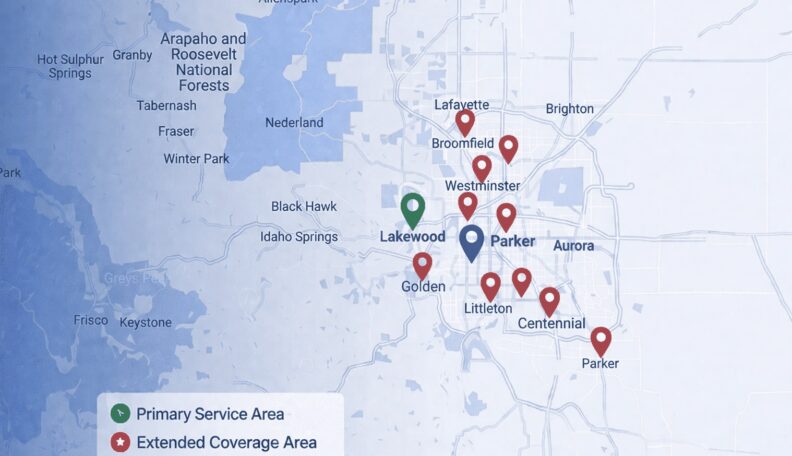
Service Area: 50+ Cities Across Metro Denver
Select Your Nearest Location
Hours: Mon-Fri 8am-5pm
Sunday Emergency Only
Avg Response Time: 18 minutes
Hours: Mon-Fri 8am-5pm
Sunday Emergency Only
Avg Response Time: 18 minutes
Hours: Mon-Fri 8am-5pm
Sunday Emergency Only
Avg Response Time: 18 minutes
Hours: Mon-Fri 8am-5pm
Sunday Emergency Only
Avg Response Time: 18 minutes
Hours: Mon-Fri 8am-5pm
Sunday Emergency Only
Avg Response Time: 18 minutes
Hours: Mon-Fri 8am-5pm
Sunday Emergency Only
Avg Response Time: 18 minutes
Hours: Mon-Fri 8am-5pm
Sunday Emergency Only
Avg Response Time: 18 minutes
Hours: Mon-Fri 8am-5pm
Sunday Emergency Only
Avg Response Time: 18 minutes
Hours: Mon-Fri 8am-5pm
Sunday Emergency Only
Avg Response Time: 18 minutes
Hours: Mon-Fri 8am-5pm
Sunday Emergency Only
Avg Response Time: 18 minutes
Hours: Mon-Fri 8am-5pm
Sunday Emergency Only
Avg Response Time: 18 minutes
Hours: Mon-Fri 8am-5pm
Sunday Emergency Only
Avg Response Time: 18 minutes
Hours: Mon-Fri 8am-5pm
Sunday Emergency Only
Avg Response Time: 18 minutes
Hours: Mon-Fri 8am-5pm
Sunday Emergency Only
Avg Response Time: 18 minutes
Hours: Mon-Fri 8am-5pm
Sunday Emergency Only
Avg Response Time: 18 minutes
We Service: Parker, Castle Rock, Greenwood Village, Lakewood, Littleton, Centennial, Highlands Ranch 40+ More Cities