

Key Factors When Selecting and Installing a Garage Door Opener in Parker, CO
Key Takeaways
- Parker, Colorado, homeowners choosing a garage door opener should prioritize belt drive or direct drive systems for attached garages, since chain drive openers produce vibration that transmits through framing into living spaces, and the noise is amplified in Parker homes at a 5,869-foot elevation, where garage use is higher during long winters.
- Select Garage Doors works with all major opener brands in Parker, Colorado, and can recommend the correct horsepower rating for the door’s weight, since heavier insulated doors common in Front Range homes require 3/4 or 1 horsepower rather than the 1/2 horsepower standard used in warmer climate regions with lighter doors.
- Professional installation by Select Garage Doors ensures that force limits, auto-reverse function, and the UL 325 safety standard compliance are all verified at startup, which DIY installation frequently misses and which Parker homeowners are responsible for maintaining under Colorado residential code.
Choosing the right garage door opener involves more variables than most Parker, CO homeowners expect. Drive type, horsepower, security features, and connectivity all factor into the decision. This guide walks through each consideration, and Select Garage Doors is available to help narrow it down once you know what you need.
- Drive Types: Garage door openers come in different drive types, including belt drive, chain drive, and screw drive. Chain drives are durable and cost-effective, but they tend to be noisier. Belt drives operate quietly but may have a higher price tag. Screw drives offer robust performance and minimal maintenance requirements.
- Horsepower: Consider the horsepower required for your garage door opener. Single-car doors typically need 1/2 or 1/3 horsepower, while heavier or larger doors may require 3/4 or 1 horsepower. Ensure that your opener has sufficient lifting capacity for your specific door.
- Security Features: Look for garage door openers with advanced security features, such as rolling codes and encryption, to prevent code grabbing and unauthorized access. Some models offer additional security accessories like keyless entry keypads or smartphone integration for convenience and peace of mind.
- Remote Controls and Connectivity: Evaluate the number of remote controls you need for your household. Check if the opener supports additional accessories like keypads, allowing keyless entry. Consider models that offer smartphone connectivity, enabling you to control and monitor your garage door remotely.
- Professional Installation: While DIY installation is possible, engaging professional installation is recommended. Proper installation, alignment, and programming optimize the performance and lifespan of your opener. Choosing the right garage door opener installation service walks through how to evaluate providers before committing to a job.
- Maintenance and Warranty: Consider the maintenance requirements of the garage door opener and inquire about the warranty. A reliable warranty protects against defects and provides peace of mind. What to look for when hiring garage door opener installation services covers the vetting questions worth asking before scheduling.
Understanding the options narrows your decision, but the installation itself matters just as much. Garage door opener installation in Parker ensures proper alignment and programming from day one, so your system performs reliably from the start. When you are ready to move forward, schedule opener installation in Parker, CO, today, and we will handle the rest.
If you are in Parker, Castle Rock, Greenwood Village, Lakewood, or elsewhere in the Denver metro area, Select Garage Doors handles opener installation from selection through final programming. Call (720) 339-2442 to discuss your options.
How Does Parker’s Altitude Affect Garage Door Opener Performance?
Parker, Colorado, sits at 5,869 feet above sea level, and that elevation affects electric motor performance in ways that homeowners who have moved from lower-altitude cities often do not anticipate. Electric motors, including the motors inside residential garage door openers, produce slightly less torque at altitude because the thinner air reduces cooling efficiency.
A motor running at Parker’s elevation runs warmer than the same motor at sea level under the same load, which shortens motor winding life over time if the opener is undersized for the door weight it is lifting. National big-box guides that recommend 1/2 horsepower for a standard single-car door are written for sea-level conditions.
In Parker, Colorado, Select Garage Doors technicians consistently recommend stepping up to a 3/4 horsepower model for single-car doors heavier than 150 pounds, particularly insulated doors with multiple layers of steel and foam that are common in Front Range homes built after 2010.
The temperature swing factor compounds the altitude issue. Front Range temperature swings of 40-60 degrees Fahrenheit within a single 24-hour period cause the torsion spring that counterbalances the door to lose tension in cold conditions, which means the opener motor carries proportionally more of the lifting load on cold mornings than the manufacturer’s rating assumed.
This is one reason Select Garage Doors includes an opener force calibration check as part of every annual maintenance visit in Parker, Colorado. An opener that is properly calibrated for summer door weight may be straining by January when spring tension drops and the door feels heavier.
Visit garage door opener installation in Douglas County to speak with a technician about the correct horsepower rating for your specific door weight and insulation level.
Belt Drive vs. Chain Drive vs. Screw Drive: Which Fits Parker Homes Best?
The three most common residential garage door opener drive types each have distinct trade-offs in noise, maintenance, and temperature performance. For Parker, Colorado homes, the right choice depends on whether the garage is attached or detached, how close the garage wall is to bedrooms or living areas, and how much cold-weather maintenance the homeowner is willing to perform.
Belt drive openers use a rubber or polyurethane belt to move the trolley along the rail. Belt drives are the quietest option and transmit the least vibration through the garage framing into attached living spaces. Belt drives perform consistently across Parker’s temperature range and require no lubrication of the drive mechanism itself, though the torsion spring and rail hardware still require annual service.
- Best for: attached garages adjacent to bedrooms or living areas, HOA communities with shared walls, homes where opener noise has been a complaint.
- Trade-off: Belts have a finite lifespan and need replacement every 10 to 15 years.
Chain drive openers use a steel chain similar to a bicycle chain and are the most common type installed in builder-grade Parker homes built before 2015. Chain drives are durable and less expensive than belt drives, but they produce a distinctive clatter and vibration during operation. In detached garages where the noise does not transmit into living spaces, a chain drive is a practical and cost-effective choice.
- Best for: detached garages, budget-priority installations, and garages used for storage or shop space rather than adjacent to living areas.
- Trade-off: noticeable clatter and vibration that transmits into attached living spaces. A chain stretched over time can require annual tensioning.
Screw drive openers use a threaded steel rod and require less headroom clearance than belt or chain systems (8 inches vs. 12 inches), making them useful in Parker garages with low ceiling clearance. The significant disadvantage in Colorado is temperature sensitivity: screw drives require lubrication of the threaded rod, and the lubricant used can thicken in cold temperatures and thin in summer heat, causing the opener to run inconsistently across Parker’s 40-60 degree Fahrenheit daily swings.
- Best for: garages with low ceiling clearance where belt or chain rail systems do not fit.
- Trade-off: temperature-sensitive lubricant on the threaded rod can thicken in Parker winters and thin in summer, causing inconsistent operation across the seasons. Manufacturers have improved screw drive designs in recent years, but belt drive remains the more stable choice for Parker’s temperature variability.
Industry estimates suggest belt drive openers run 50 to 70 percent quieter than chain drive openers measured at 3 feet from the motor, which is the practical difference between a door cycle that wakes a sleeping family member and one that does not.
| Drive Type | Noise Level | Best Use Case | Parker Altitude Note |
|---|---|---|---|
| Belt drive | Low; minimal vibration transmission through framing | Attached garages adjacent to bedrooms or living areas; HOA communities with shared walls | Performs consistently across Parker’s 40-60 degree Fahrenheit daily swings; no lubricant that thickens in cold |
| Chain drive | Moderate to high; metallic clatter is audible inside attached garages | Detached garages; budget-priority installations where noise is not a concern | Reliable in cold, chain lubrication is needed annually at Parker’s semi-arid conditions |
| Screw drive | Moderate; less chain noise but some mechanical sound on movement | Garages with low ceiling clearance (under 12 inches of headroom); simpler mechanical systems | Temperature-sensitive lubricant on threaded rod can thicken in Parker winters; monitor seasonally |
| Direct drive (wall mount) | Very low; motor mounts directly to the torsion spring tube with no rail | Garages with high ceilings, limited ceiling clearance, or dedicated shop spaces; premium applications | Well-suited for Parker’s temperature range; no overhead rail vibration; a common premium selection for Parker garages with space constraints |
What Smart Features Should Parker Homeowners Look for in a New Opener?
Modern garage door openers offer connectivity and monitoring features that have moved well beyond the basic remote control. For Parker, CO, homeowners evaluating a new opener installation, the most useful smart features fall into three categories: remote access, security monitoring, and home automation integration.
Remote access through smartphone apps, such as myQ-compatible control platforms, allows homeowners to open, close, and check the status of the garage door from anywhere with a cellular connection. For Parker, CO, families where multiple household members use the garage at different hours, remote access eliminates the “did I close the garage?” uncertainty and allows temporary access to be granted to service providers without sharing a physical remote. Select Garage Doors in Parker installs and programs myQ-compatible systems and can demonstrate the app during the installation appointment.
Security monitoring features on newer smart opener models include motion-activated interior lighting, real-time open and close alerts pushed to the homeowner’s phone, and rolling code technology that changes the access code with every remote transmission to prevent code-grabbing. Rolling code technology, now standard on most openers installed after 2010, is a meaningful security upgrade over older fixed-code systems still in use in some Parker homes built in the late 1990s and early 2000s. Battery backup is a separate smart-era feature worth considering: Parker, CO, experiences periodic power outages during summer hailstorms, and a battery-backed opener ensures the door remains operable when the grid goes down. Battery-backed opener models maintain full open and close cycles for several hours on a charged battery, which covers the duration of most Front Range storm outages. Contact Select Garage Doors at (720) 339-2442 for model-specific recommendations based on your current door weight and desired feature set.
How to Pick Your Install Path
Use the conditional checklist below to narrow your opener choice before scheduling installation. Each line maps a specific home or use-case condition to the drive type and feature set that fits.
- If your garage is attached and shares a wall with a bedroom or living area: choose a belt drive or direct drive opener for the lowest vibration transmission.
- If your garage is detached and budget is the priority: a chain drive opener is reliable and the most cost-effective choice.
- If your door is insulated, heavier than 150 pounds, or oversized: step up to a 3/4 or 1 horsepower motor regardless of drive type.
- If you have less than 12 inches of headroom above the door: consider a screw drive (low clearance) or direct drive wall-mount (no overhead rail).
- If your opener was installed before 2010 or lacks rolling code security: replacement, not just an accessory, is the right path.
- If you live in Douglas County or anywhere along the Front Range: battery backup pays for itself the first time a summer hailstorm cuts power.
- If you want smartphone control and home automation: match your opener brand to your existing ecosystem (LiftMaster myQ for Google/Alexa, manufacturer bridge for Apple HomeKit).
Frequently Asked Questions
What horsepower garage door opener do I need for a Parker, CO, home?
Most Parker, CO, homeowners with insulated residential garage doors need at a minimum a 1/2 horsepower opener, but many Front Range homes with heavier insulated doors benefit from a 3/4 horsepower model. Parker’s elevation at 5,869 feet causes electric motors to run warmer than at sea level, and the torsion spring counterbalance loses tension in cold conditions, placing additional load on the opener motor during winter mornings. Select Garage Doors technicians assess the door weight, insulation level, and usage frequency before recommending a specific horsepower rating during the installation consultation.
How long does a professional garage door opener installation take?
A professional garage door opener installation by Select Garage Doors in Parker, CO, is typically completed in a single visit. The timeline depends on whether the old opener needs to be removed, whether any wiring updates are required, and the complexity of the programming and connectivity setup. Installations that include smart app configuration, battery backup setup, and keypad programming are generally still wrapped up before the technician leaves. Select Garage Doors schedules installation appointments with a confirmed arrival window so homeowners do not have to wait all day for a technician.
Is a belt drive or a chain drive better for a Parker home with an attached garage?
For attached garages in Parker, Colorado, belt drive openers are the better choice in the majority of cases because they produce significantly less vibration and noise than chain drives. Chain drive openers use a steel chain that creates a clatter and vibration during operation, which transmits through the garage framing into adjacent living spaces. In Parker homes where the garage shares a wall with a master bedroom, home office, or main living area, the difference between belt and chain drives is noticeable on every open and close cycle. Select Garage Doors installs quality belt drive openers from all major brands, all well-suited to Parker’s temperature range and HOA community noise expectations.
Does cold weather affect garage door opener performance in Colorado?
Yes, cold weather in Parker, CO, affects garage door opener performance in two ways. First, the motor works harder on cold mornings because torsion spring tension decreases in low temperatures, meaning the opener carries more of the door’s weight than it does in warmer months. Second, screw drive openers are particularly vulnerable because the lubricant on the threaded rod thickens in cold temperatures, causing the opener to strain or stall on the coldest Front Range mornings. Belt-drive openers are more thermally stable and the preferred choice for Parker homeowners experiencing cold-weather opener problems. Select Garage Doors includes a motor force calibration check during every annual maintenance visit to compensate for seasonal spring tension changes.
What is rolling code technology, and do I need it in Parker, Colorado?
Rolling code technology is a security feature standard on most garage door openers manufactured after 2010 that generates a new encrypted access code with every remote transmission. Each button press sends a unique code that the opener’s receiver accepts and then discards, so even if a code is intercepted by a scanning device, it cannot be replayed to open the door. For Parker, CO, homeowners still using openers manufactured before 2010, upgrading to a rolling code system is a meaningful security improvement. Select Garage Doors installs rolling code openers across all major brands and can assess whether your current system meets current security standards during an inspection visit.
Should I get a battery backup on my new garage door opener in Parker, Colorado?
A battery backup is a practical addition for Parker, Colorado homes, given the Front Range’s summer hailstorm frequency during the April-through-September season. Severe hailstorms in Douglas County produce power outages that can last several hours, and without a battery backup, a garage door opener is completely inoperable during an outage, trapping vehicles inside or leaving the garage accessible only manually. Battery backup opener models provide enough charge for multiple open and close cycles, which covers most storm outage durations in the Parker area. Select Garage Doors includes battery backup installation as a standard option during all new opener installations in Parker, Colorado.
What is the difference between a direct drive and a belt drive opener?
A belt drive opener uses a rubber or polyurethane belt running along an overhead rail to move the trolley that lifts the door. A direct drive opener (also called a wall-mount or jackshaft) mounts to the torsion spring tube on the wall beside the door and turns the spring directly with no overhead rail at all. Direct drives are the quietest option, save ceiling space, and are common in Parker garages with high or vaulted ceilings. They cost more upfront than belt drives but require less maintenance long-term.
Can a smart opener still be operated manually if power is out and there is no battery backup?
Yes. Every garage door opener, including smart models, has a red emergency release cord that disconnects the door from the opener trolley. Pull the cord, and the door can be lifted by hand. The downside is that a properly balanced residential door still weighs 100 to 250 pounds, and the lift requires care. A battery backup eliminates this scenario entirely by keeping the opener powered through outages, which is why Select Garage Doors recommends battery backup as a standard add-on for Parker installations.
How often does a garage door opener need to be replaced?
A residential garage door opener typically lasts 10 to 15 years with regular maintenance, sometimes longer for premium belt drive or direct drive units. Replacement makes sense when the unit is 12-plus years old and showing repeat issues, when parts are no longer available for the model, when the opener lacks rolling code security, or when repair costs would exceed roughly half the price of a new opener. Select Garage Doors can assess opener age, condition, and value-of-repair during a service visit before recommending replacement.


Looking for a deal?
Call us or to learn about our current promotions and seasonal offers.


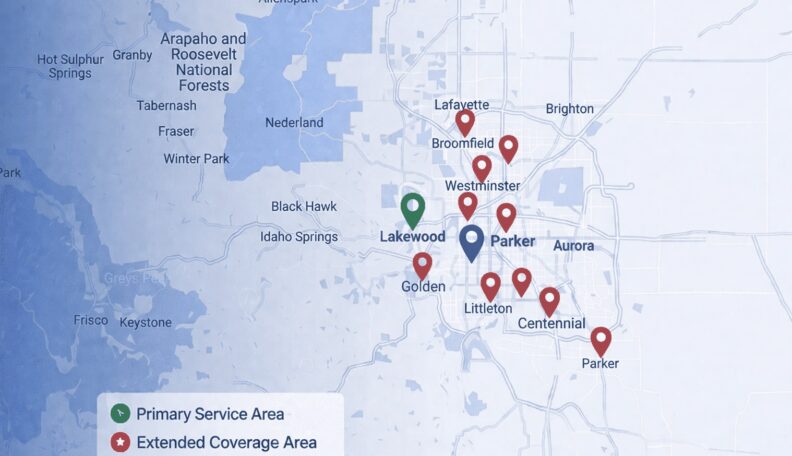
Service Area: 50+ Cities Across Metro Denver
Select Your Nearest Location
Hours: Mon-Fri 8am-5pm
Sunday Emergency Only
Avg Response Time: 18 minutes
Hours: Mon-Fri 8am-5pm
Sunday Emergency Only
Avg Response Time: 18 minutes
Hours: Mon-Fri 8am-5pm
Sunday Emergency Only
Avg Response Time: 18 minutes
Hours: Mon-Fri 8am-5pm
Sunday Emergency Only
Avg Response Time: 18 minutes
Hours: Mon-Fri 8am-5pm
Sunday Emergency Only
Avg Response Time: 18 minutes
Hours: Mon-Fri 8am-5pm
Sunday Emergency Only
Avg Response Time: 18 minutes
Hours: Mon-Fri 8am-5pm
Sunday Emergency Only
Avg Response Time: 18 minutes
Hours: Mon-Fri 8am-5pm
Sunday Emergency Only
Avg Response Time: 18 minutes
Hours: Mon-Fri 8am-5pm
Sunday Emergency Only
Avg Response Time: 18 minutes
Hours: Mon-Fri 8am-5pm
Sunday Emergency Only
Avg Response Time: 18 minutes
Hours: Mon-Fri 8am-5pm
Sunday Emergency Only
Avg Response Time: 18 minutes
Hours: Mon-Fri 8am-5pm
Sunday Emergency Only
Avg Response Time: 18 minutes
Hours: Mon-Fri 8am-5pm
Sunday Emergency Only
Avg Response Time: 18 minutes
Hours: Mon-Fri 8am-5pm
Sunday Emergency Only
Avg Response Time: 18 minutes
Hours: Mon-Fri 8am-5pm
Sunday Emergency Only
Avg Response Time: 18 minutes
We Service: Parker, Castle Rock, Greenwood Village, Lakewood, Littleton, Centennial, Highlands Ranch 40+ More Cities