

How Does Parker’s High Elevation and Summer Heat Impact Your Garage Door?
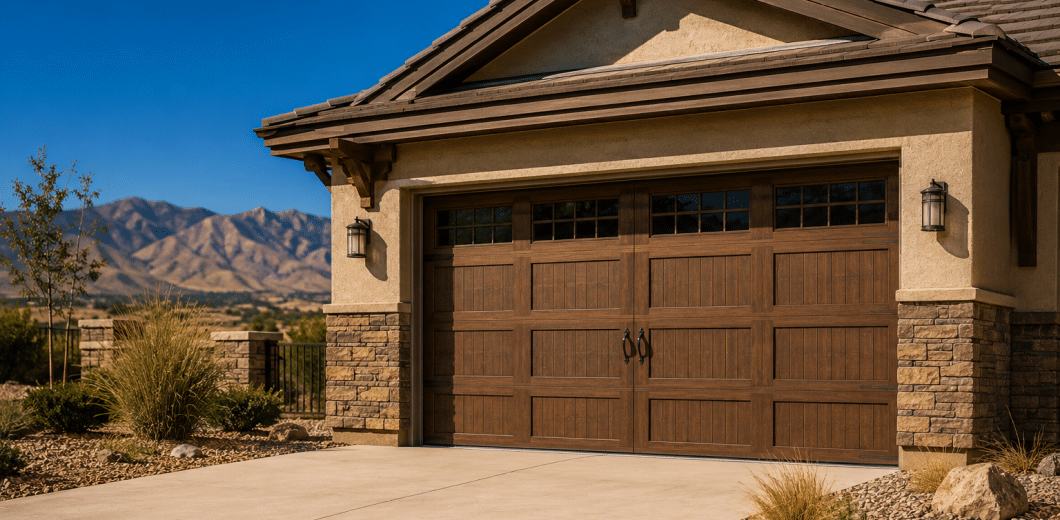
Parker’s 5,869-foot elevation amplifies the effects of summer heat on garage doors through increased UV intensity, thinner air that reduces cooling, and low humidity that accelerates material breakdown. Components that would last years at sea level wear out months or years sooner in Parker’s combined altitude and heat conditions.
Key Takeaways
- UV intensity at Parker’s elevation is roughly 40 percent stronger than at sea level
- Thinner air provides less cooling for opener motors, increasing overheat risk
- Low humidity at altitude dries lubricants and seals two to three times faster
- Spring tension shifts more in Parker due to amplified thermal cycling
- Altitude-appropriate maintenance schedules extend component lifespan by 20 to 30 percent
Parker sits at 5,869 feet on Colorado’s Front Range, where the atmosphere is thinner, UV radiation is stronger, and summer humidity rarely climbs above 30 percent. These altitude-related factors do not just change how hot a garage door gets. They change the way heat interacts with every material in the door system.
Springs fatigue faster, seals degrade sooner, and openers work harder than identical systems installed at lower elevations. Select Garage Doors helps Parker homeowners understand how elevation shapes garage door wear and what maintenance adjustments make the biggest difference.
How Does UV Intensity at Altitude Affect Garage Door Materials?
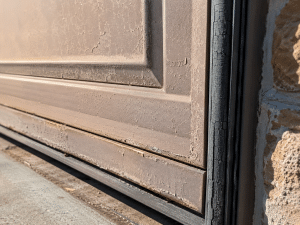 UV radiation increases by approximately 7 percent for every 1,000 feet of elevation. At Parker’s altitude, garage door surfaces receive roughly 40 percent more UV exposure than at sea level, breaking down paint, rubber, and vinyl at an accelerated rate.
UV radiation does not just fade colors. It breaks molecular bonds in polymers, the building blocks of rubber weatherstripping, vinyl seals, and plastic components.
At sea level, these materials degrade slowly enough that homeowners rarely notice. At Parker’s altitude, the process is fast enough to cause visible cracking within two to three years.
Paint takes the second-hardest hit. UV exposure causes paint to oxidize, chalk, and eventually flake off steel panels. Once the protective paint layer fails, the bare metal underneath is exposed to moisture from rain and condensation, starting the corrosion process. Parker, CO homeowners with south or west-facing garage doors face the highest UV exposure and should inspect paint condition at least twice per year.
Why Do Garage Door Openers Struggle More at Altitude in Parker?
Thinner air at altitude provides less convective cooling for electric motors. Opener motors in Parker run hotter than identical units at sea level, reducing their efficiency and shortening their lifespan during summer.
Air density at 5,869 feet is approximately 17 percent lower than at sea level. Electric motors cool themselves by dissipating heat into the surrounding air. When that air is thinner, the motor retains more heat per operating cycle. During a Parker summer when garage temperatures reach 130 to 140 degrees, the motor starts hot and only gets hotter.
The practical effect is that openers cycle more slowly, draw more current, and trip thermal protection shutoffs more frequently. Homeowners who notice their opener pausing mid-cycle or running sluggishly during hot afternoons are likely seeing altitude-amplified heat effects on the motor.
Ensuring adequate garage ventilation reduces ambient temperature around the motor. A passive vent near the ceiling and one near the floor creates natural convection that can lower garage temperature by 10 to 15 degrees.
Does Altitude Affect Garage Door Spring Performance in Parker?
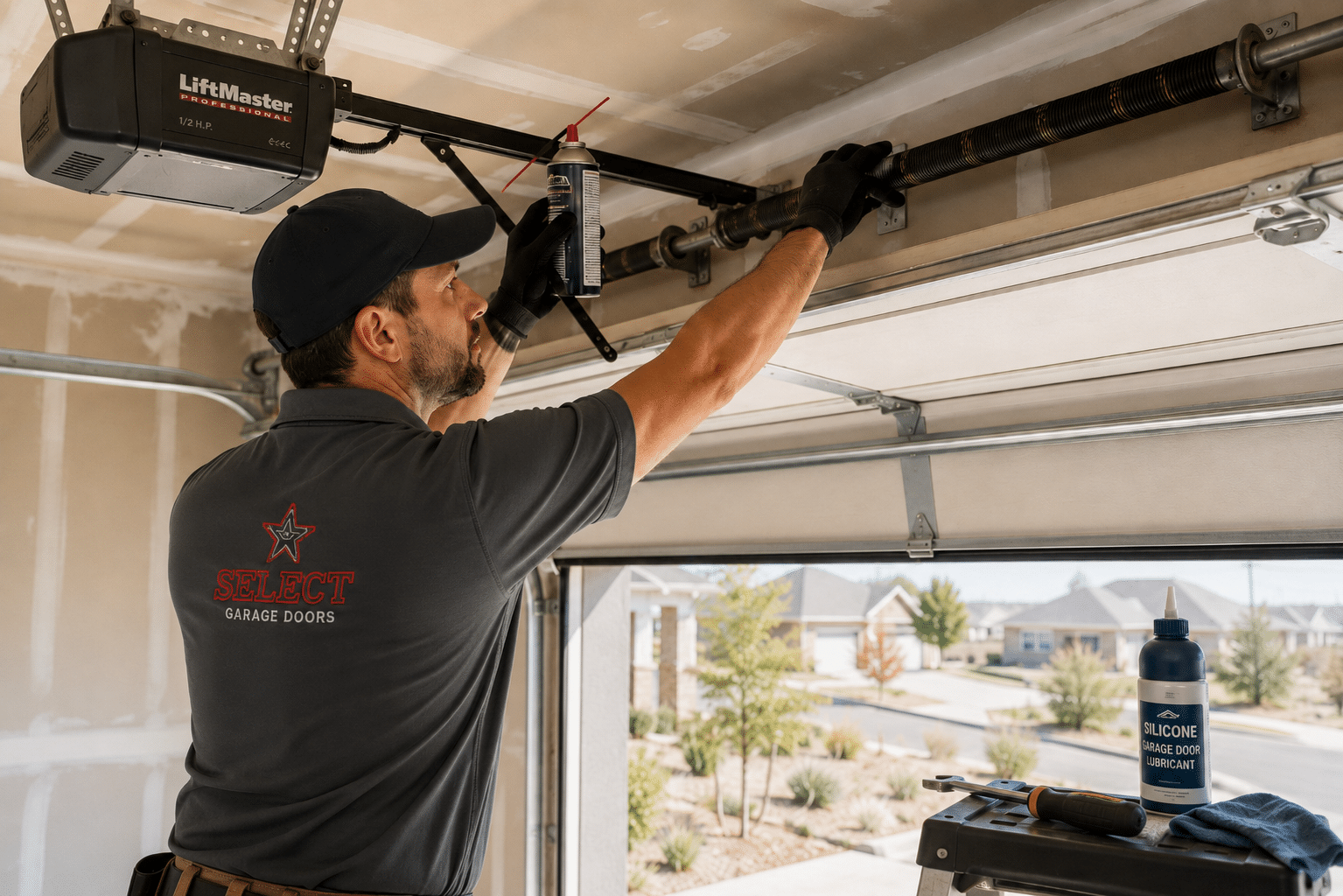 Yes. Altitude amplifies thermal cycling stress on springs because thinner air allows faster temperature changes at the metal surface.
Springs at Parker’s elevation experience more rapid expansion and contraction than springs at lower elevations exposed to the same temperature range.
Torsion springs are calibrated for a specific weight and tension. Heat causes the steel to expand, reducing tension. Cold causes contraction, increasing tension. The speed of these changes matters because rapid shifts concentrate stress at the weakest points in the spring coils.
At lower elevations with denser, more humid air, temperature changes at the metal surface happen more gradually. The air acts as a thermal buffer. At Parker’s altitude, that buffer is reduced, and springs respond faster to ambient temperature changes.
The practical impact is measurable. Springs in Parker may lose 15 to 25 percent of their rated cycle life compared to springs in a sea-level community with the same temperature range. Homeowners looking to extend spring life should consider insulated garage doors that reduce the temperature differential the springs experience.
What Maintenance Adjustments Should Parker Homeowners Make for Altitude?
Shorter lubrication intervals, more frequent seal inspections, and UV-protective treatments address the three biggest altitude-amplified wear patterns.
Altitude-specific adjustments:
- Lubricate every eight to ten weeks during summer instead of quarterly
- Inspect weatherstripping twice per summer (June and August) rather than once per year
- Apply UV-resistant paint or sealant to exposed surfaces before each summer
- Monitor opener performance for heat-related slowdowns and ensure garage ventilation
- Test spring balance monthly during summer when thermal cycling is most intense
These adjustments cost little in time or money but extend component lifespan. Select Garage Doors offers free estimates and same-day service for Parker homeowners dealing with altitude-related wear on their garage door systems.
Frequently Asked Questions
At What Elevation Do Garage Door Components Start Wearing Faster?
Above 4,000 feet, UV intensity and reduced air density begin producing measurable differences in component wear. Parker’s 5,869-foot elevation is well into the range where altitude-adjusted maintenance makes a noticeable difference.
Does Altitude Affect All Garage Door Materials Equally?
No. Rubber and vinyl degrade fastest at altitude due to UV sensitivity. Steel and aluminum are less affected by UV but more affected by thermal cycling. Wood suffers from both UV damage and moisture loss in dry air.
Should I Buy a Specific Garage Door Opener for High Altitude in Parker?
Look for openers with thermal protection features and higher-rated motors. DC motors with soft-start technology handle heat better than older AC motors and draw less current at sustained high temperatures.
How Does Parker’s Altitude Compare to Other Front Range Communities?
Parker sits higher than Denver (5,280 feet) and Aurora (5,471 feet) but lower than Castle Rock (6,202 feet) and Evergreen (7,220 feet). Higher communities face even more UV and cooling challenges.
Do Insulated Garage Doors Help with Altitude-Related Wear in Parker?
Yes. Insulation reduces the temperature swing between the exterior and interior surfaces, slowing thermal cycling on springs and protecting interior-facing seals from direct heat.
Can I Use the Same Lubricant at Altitude as at Sea Level?
The same silicone-based products work, but they need more frequent application. Petroleum-based products perform poorly at altitude due to faster evaporation in dry, thin air.
Why Does My Garage Door Opener Overheat in Summer but Not Winter in Parker?
In winter, cooler ambient temperatures compensate for thin air. In summer, the combination of high ambient heat and reduced air cooling overwhelms the motor’s ability to dissipate heat.
How Much Does Altitude-Adjusted Maintenance Cost in Parker?
The difference is frequency.
Looking for a deal?
Call us or to learn about our current promotions and seasonal offers.


Service Area: 50+ Cities Across Metro Denver
Select Your Nearest Location
Hours: Mon-Fri 8am-5pm
Sunday Emergency Only
Avg Response Time: 18 minutes
Hours: Mon-Fri 8am-5pm
Sunday Emergency Only
Avg Response Time: 18 minutes
Hours: Mon-Fri 8am-5pm
Sunday Emergency Only
Avg Response Time: 18 minutes
Hours: Mon-Fri 8am-5pm
Sunday Emergency Only
Avg Response Time: 18 minutes
Hours: Mon-Fri 8am-5pm
Sunday Emergency Only
Avg Response Time: 18 minutes
Hours: Mon-Fri 8am-5pm
Sunday Emergency Only
Avg Response Time: 18 minutes
Hours: Mon-Fri 8am-5pm
Sunday Emergency Only
Avg Response Time: 18 minutes
Hours: Mon-Fri 8am-5pm
Sunday Emergency Only
Avg Response Time: 18 minutes
Hours: Mon-Fri 8am-5pm
Sunday Emergency Only
Avg Response Time: 18 minutes
Hours: Mon-Fri 8am-5pm
Sunday Emergency Only
Avg Response Time: 18 minutes
Hours: Mon-Fri 8am-5pm
Sunday Emergency Only
Avg Response Time: 18 minutes
Hours: Mon-Fri 8am-5pm
Sunday Emergency Only
Avg Response Time: 18 minutes
Hours: Mon-Fri 8am-5pm
Sunday Emergency Only
Avg Response Time: 18 minutes
Hours: Mon-Fri 8am-5pm
Sunday Emergency Only
Avg Response Time: 18 minutes
Hours: Mon-Fri 8am-5pm
Sunday Emergency Only
Avg Response Time: 18 minutes
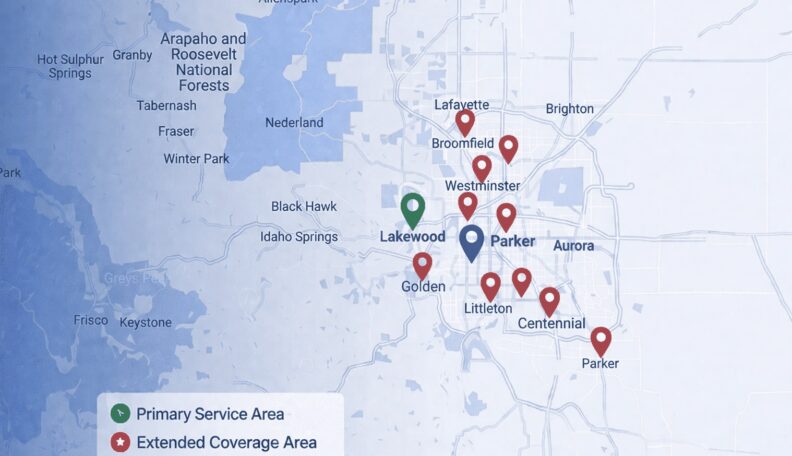
We Service: Parker, Castle Rock, Greenwood Village, Lakewood, Littleton, Centennial, Highlands Ranch 40+ More Cities