

Key Takeaways
- Forcing a stuck door or attempting spring repairs without training is the fastest way to turn a $150 service call into a $500-plus repair.
- Parker’s freeze-thaw cycles, sensor fogging, and lubricant hardening cause most winter emergency opener failures, not motor failure.
- The emergency release cord must be pulled while the door is fully stopped, straight down only, not at an angle and never mid-cycle.
- Hail dents shift door weight distribution and stress the spring and track system, often causing opener failures weeks after the storm.
- Select Garage Doors recommends switching to silicone-based lubricant before September to prevent the majority of cold-weather emergency opener calls in Parker.
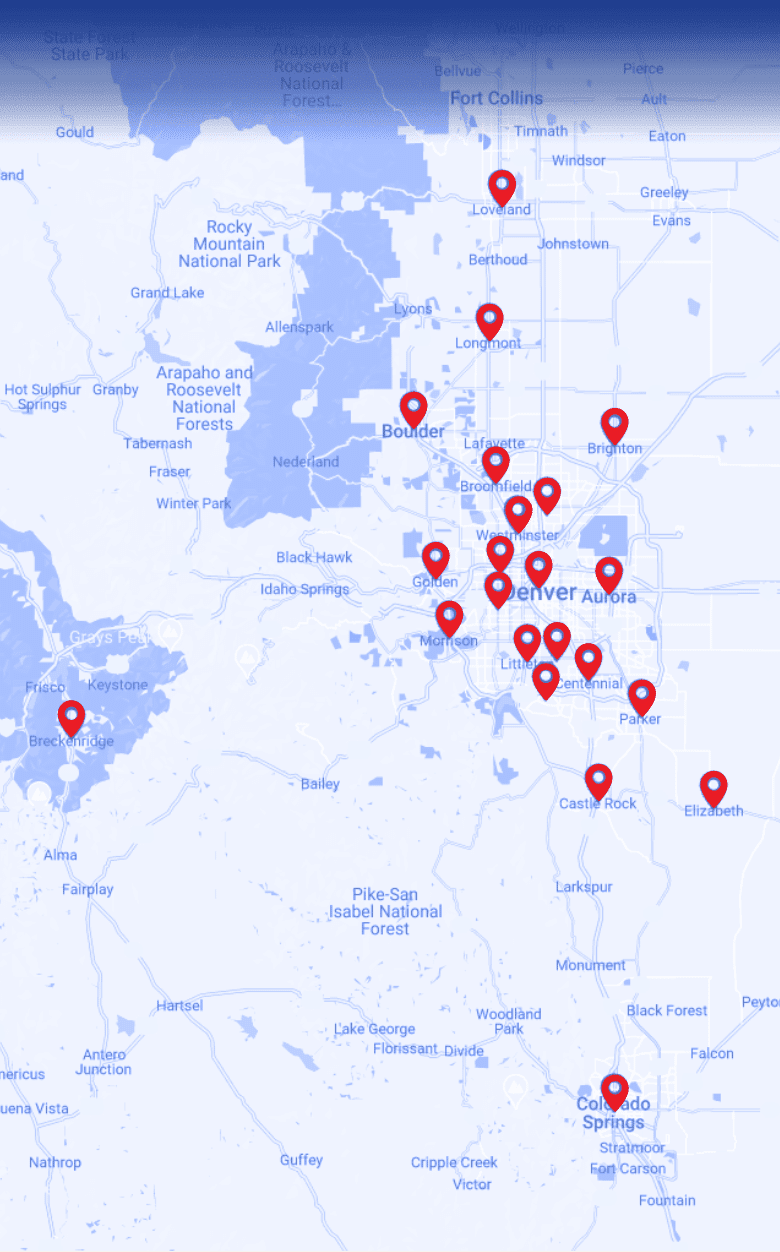
The costliest mistake Parker homeowners make during a garage door opener emergency is forcing the door or attempting spring repairs without training. At 5,869 feet, freeze-thaw cycles and sensor fogging cause most Front Range emergency calls, and the wrong response turns a $150 repair into a $500-plus job. Select Garage Doors handles emergency opener failures across Parker, Castle Rock, Lakewood, and Greenwood Village.
A garage door opener that quits in the middle of the night or traps your car in the garage is a genuine emergency. The instinct to force the door, yank the emergency cord without reading the instructions first, or fire up a YouTube tutorial at midnight is understandable. It is also how a $150 repair call becomes a $600 visit. Parker sits at 5,869 feet on the Palmer Divide, and the freeze-thaw cycles, UV exposure, and temperature swings that come with that elevation put opener hardware under stresses that most national troubleshooting guides do not account for. Understanding what not to do during an opener emergency saves money and keeps the door safe.
In This Article
- Why Parker Garage Door Openers Face More Emergency Situations
- The Mistakes That Turn a Small Problem Into a Large Repair Bill
- How to Use the Emergency Release Cord Safely
- What Actually Causes Most Emergency Opener Failures in Parker
- Repair or Call? A Situation Guide
- What Emergency Garage Door Opener Repair Costs in Parker
- Preventing the Next Emergency: Maintenance for Colorado Conditions
- Frequently Asked Questions
Why Parker Garage Door Openers Face More Emergency Situations
Parker averages 242 sunny days per year and 3 to 5 hail events annually from its position on the Palmer Divide, one of the most hail-active zones in the country. The same elevation that delivers bright winters also means temperature swings of 40 to 60 degrees Fahrenheit within a single 24-hour period. Metal springs, tracks, and drive systems expand and contract through that range repeatedly across a season. Over years, the cumulative stress shortens opener lifespan below the national average of 10 to 15 years that manufacturers advertise.
Cold snaps below 20 degrees Fahrenheit cause lubricant in older openers to harden, increasing the load on the motor. Photo-eye sensors fog in sudden temperature drops, triggering false obstruction readings that prevent the door from closing. Remote batteries drain faster in cold. Each of these is a real failure mode specific to the Front Range climate, and each leads to the kind of after-hours call that tempts homeowners into making the first costly mistake.
The Mistakes That Turn a Small Problem Into a Large Repair Bill
Most emergency opener situations are recoverable with a professional visit that costs $75 to $150 for the service call plus parts. The following actions consistently escalate that cost.
Forcing the door open or closed manually. When an opener fails mid-cycle, the door may stop halfway. Pushing or pulling the door to force movement while the opener is still engaged can strip drive gears, bend tracks, or snap a partially wound spring. A snapped torsion spring alone runs $150 to $350 to replace.
Attempting spring or cable repairs without training. Torsion springs hold several hundred pounds of stored tension. A spring that releases unexpectedly during an amateur repair attempt causes serious injury. This is the one category where DIY is not a cost-saving decision under any circumstances.
Using the emergency release cord incorrectly. The red emergency release cord disconnects the trolley from the drive carriage so the door can be moved manually. Pulling it while the door is in motion, or without checking whether the door is balanced, and can cause it to drop suddenly. The correct sequence is to stop all door movement first, then pull the cord straight down, then verify the door stays in place before moving it by hand.
Treating a temporary fix as a permanent solution. Homeowners who wedge a door open or tape a sensor wire to stop a false-obstruction error often live with that workaround for months. Meanwhile, the underlying cause worsens. A fogged sensor that gets taped over is often a symptom of failing weatherstripping that is now letting cold air damage the motor housing.
Attempting electrical repairs without training. Opener logic boards can be fried by power surges, which are common during Parker hail and lightning seasons. Replacing a logic board costs $100 to $250 in parts and requires handling low-voltage wiring correctly. Incorrectly rewired boards can damage the motor or create a fire risk.
How to Use the Emergency Release Cord Safely
Knowing how to disengage the opener correctly is the one skill every Parker homeowner should have before an emergency happens. The sequence matters.
First, stop the door completely. If it is mid-cycle and still moving, use the wall button to halt it. Do not pull the cord while the trolley is in motion. Second, pull the red cord straight down, not at an angle. This disengages the trolley from the drive carriage. Third, manually lift or lower the door to test whether it moves freely. A properly balanced door should stay in place at any position without the opener holding it. If the door drops on its own when you release it, the springs are out of balance. That is a technician call, not a manual-operation situation. Set the door in the fully open or fully closed position for security until the opener is repaired.
What Actually Causes Most Emergency Opener Failures in Parker
Understanding the real failure mode helps homeowners describe the problem accurately when they call, which speeds up diagnosis and reduces service visit time.
Cold-related sensor fogging accounts for a significant portion of winter emergency calls. The photo-eye sensors sit near the floor on both sides of the door frame. When outside air drops rapidly, moisture condenses on the sensor lenses and the beam breaks. The opener interprets this as an obstruction and refuses to close. Wiping the lenses with a dry cloth resolves the immediate issue, but if fogging happens repeatedly, it usually means the door seals are failing and cold air is entering the sensor housing.
Lubricant hardening causes a second category of winter failures. Standard petroleum-based greases thicken below 40 degrees Fahrenheit and can freeze solid below 20. At Parker elevations, this slows the chain or belt drive enough that the opener motor trips its thermal overload protection and shuts down. Silicone-based lubricants rated for temperatures down to minus 40 degrees Fahrenheit do not harden in Colorado winters. Technicians who service Parker doors regularly switch clients to silicone lubricant as a standard maintenance step.
Hail impact causes a third category. Dented panels change the door weight distribution, which shifts load onto the spring system and creates track alignment issues. An opener that worked fine before a hail storm and then struggles or reverses unexpectedly afterward usually has a track alignment problem caused by the structural change in the panels, not a failing motor.
Repair or Call? A Situation Guide
| Situation | Safe to Handle at Home | Call a Technician |
|---|---|---|
| Remote battery dead | Replace battery, test wall button | If wall button also fails |
| Sensor lenses fogged | Wipe dry, test door | If fogging repeats within days |
| Door stopped mid-travel | Use emergency release, close manually | If door will not stay in position |
| Grinding noise during operation | Do not operate door | Immediately: drive gear likely stripping |
| Door reverses before closing | Check for obstructions, wipe sensors | If reversal continues with clear path |
| Visible spring gap or crack | Do not operate door | Immediately: spring failure risk |
| Opener hums but door does not move | Do not force the door | Motor capacitor or gear failure |
| Logic board blink code pattern | Note the pattern | Call with blink code for faster diagnosis |
What Emergency Garage Door Opener Repair Costs in Parker
Costs in the Parker and Denver metro market run slightly above national averages due to demand and service area travel. The following ranges reflect 2025 to 2026 market data for Douglas County and the Front Range.
| Service | Typical Cost Range |
|---|---|
| Emergency service call (after hours) | $75 to $150 |
| Sensor replacement (pair) | $50 to $150 |
| Drive gear replacement | $100 to $200 |
| Logic board replacement | $100 to $250 |
| Torsion spring replacement (one) | $150 to $300 |
| Torsion spring replacement (both) | $200 to $400 |
| Full opener replacement (standard) | $250 to $550 installed |
| Full opener replacement (smart/belt drive) | $400 to $900 installed |
Prices shown are estimates based on current Denver metro market rates and are subject to change without notice. Contact Select Garage Doors for an exact quote.
Homeowners who call during business hours versus after-hours emergency response pay significantly different rates for the same repair. If the situation is safe to leave overnight, with the door fully closed, vehicle out, and no security risk, waiting until morning reduces the service call fee by $50 to $75.
Parker homeowners dealing with an opener that has had multiple service calls in the past two years should weigh repair cost against replacement. When a single repair exceeds 50 percent of the replacement cost for a unit already 8 to 10 years old, replacement is typically the better investment. The signs that indicate a full opener replacement makes more sense than another repair are worth reviewing before scheduling a service call.
Preventing the Next Emergency: Maintenance for Colorado Conditions
Most emergency calls Select Garage Doors handles in Parker are preventable with annual maintenance tuned to Colorado conditions rather than the generic checklist written for humid-climate markets.
Switch to silicone-based lubricant on all moving parts before the first freeze, typically September in Parker. Apply it to the chain or belt, rollers, hinges, and tracks. Do not lubricate the springs, as spring lubrication attracts dust and causes binding. Test the auto-reverse function monthly by placing a 2×4 flat on the floor in the door path and triggering a close cycle. The door should reverse within two seconds of contact. If it does not, force limit settings need adjustment.
After any hail event, visually inspect the door panels for dents before operating the opener. Even a moderate dent can shift panel alignment enough to stress the track system. A panel inspection and track realignment after hail costs $100 to $200 and prevents a $400 track replacement later in the season.
To schedule preventive maintenance before winter, book a service appointment and Select Garage Doors will cover lubrication, balance testing, force adjustment, and sensor alignment in a single visit. We serve Parker, Castle Rock, Greenwood Village, Lakewood, and the greater Denver metro area. Select Garage Doors is located in Parker at 11479 South Pine Drive to confirm coverage for your area.
Frequently Asked Questions
What should I do if my garage door opener stops working in the middle of the night?
Stop attempting to operate the door first. Check whether the opener has power by looking for indicator lights on the motor unit. If the unit is dark, check the outlet and the circuit breaker. If power is present but the door will not move, use the emergency release cord to disengage the trolley, move the door to a fully closed position manually, and call for service in the morning if the situation is not a security risk. If the door cannot be fully closed or secured, call for emergency service immediately.
Is it safe to pull the emergency release cord while the door is moving?
No. Pulling the emergency release cord while the door is in motion can cause the trolley to snap free suddenly, potentially dropping the door. Always stop the door completely before pulling the cord. Pull it straight down, not at an angle, and verify the door stays in the position you set it before letting go.
Why does my garage door opener work in summer but fail every winter in Parker?
Cold-related failures in Parker most often come from lubricant hardening, sensor fogging, or remote battery drain. Standard petroleum-based greases thicken below 40 degrees and can stop a chain or belt drive entirely. Photo-eye sensors fog when temperature drops rapidly, causing false obstruction signals. Remote batteries lose charge faster below 30 degrees. Switching to silicone-based lubricant before September and replacing remote batteries in October prevents most of these winter failures.
My opener makes a grinding sound but the door still moves. Should I keep using it?
No. A grinding sound indicates the drive gear is wearing down or already partially stripped. Continuing to operate the door accelerates the damage and can turn a $150 gear replacement into a $400 to $550 full opener replacement. Stop using the door and call for service. Note whether the grinding occurs during opening, closing, or both. That detail helps the technician diagnose the problem faster.
How soon after a hail storm should I have my garage door inspected?
Within one to two weeks of any significant hail event. Dented panels shift the door weight distribution, which stresses the spring and track system in ways that may not show immediately. An opener that functioned normally before the storm may start struggling or reversing unexpectedly within weeks as cumulative misalignment worsens. Post-hail inspections cost $75 to $150 and can prevent $400 to $800 in track and spring repairs.
For emergency opener service or to schedule a maintenance visit, call Select Garage Doors at (720) 339-2442.