

Key Takeaways
- Emergency opener repairs in Parker, CO follow a five-step process: system inspection, root-cause diagnosis, component repair or replacement, full testing, and preventive maintenance guidance.
- Parker’s 5,869 ft elevation and 40-60°F daily temperature swings put unique stress on motors, circuit boards, and drive components that technicians must account for during diagnosis.
- While waiting for emergency service, never force a door open manually or bypass the safety sensors doing so can worsen damage or create a serious safety hazard.
- If your opener is over 15 years old or has failed multiple times in the past year, replacement is often more cost-effective than continued repair.
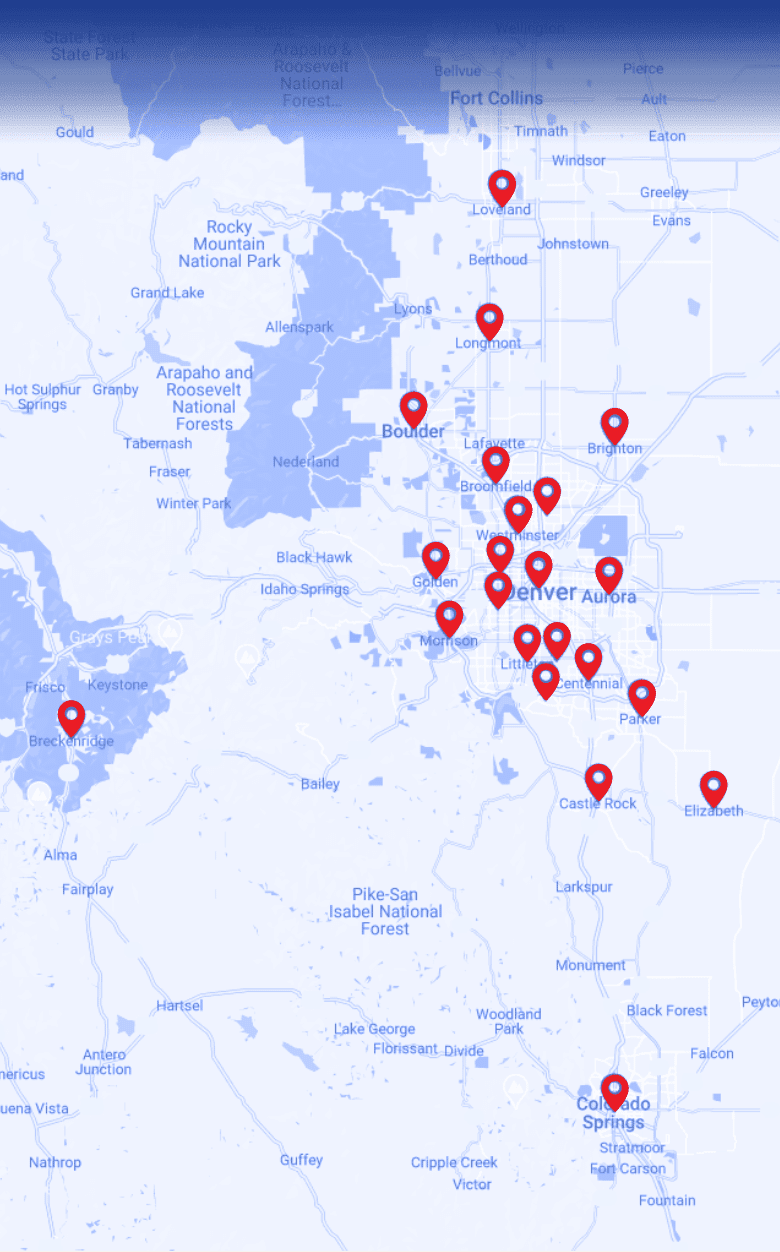
- Select Garage Doors serves Parker, Castle Rock, Greenwood Village, Lakewood, and the greater Denver metro area with same-day emergency opener service at (720) 339-2442.
Garage door openers often break down unexpectedly, creating safety risks and access problems for Parker homeowners. Select Garage Doors provides fast emergency garage door opener repair to restore functionality quickly. Here are the key steps involved in the process:
-
Inspecting the Garage Door Opener System
Technicians begin by inspecting the entire system, including the motor, remote, and sensors. They look for signs of wear, loose components, or electrical issues. This assessment helps pinpoint the exact problem for efficient repairs.
-
Diagnosing the Root Cause of the Problem
Professionals use specialized tools to diagnose the malfunction. Common issues include worn gears, misaligned tracks, or faulty circuit boards. An accurate diagnosis ensures the right repair solution is implemented. Our emergency garage door opener repair FAQ covers the questions Parker homeowners ask most often before scheduling service.
-
Repairing or Replacing Broken Components
Once the issue is identified, technicians repair or replace damaged parts, including the motor, chain, or other essential components. Using high-quality parts guarantees durability and long-term performance. If you are weighing your options, this guide on understanding the cost of a garage door repair gives a clear breakdown of what to expect.
-
Testing the Repaired Garage Door Opener
After repairs, the system undergoes thorough testing to verify functionality. Technicians check for smooth operation and address any lingering issues. This step ensures the door opens and closes seamlessly.
-
Providing Maintenance Tips for Longevity
To prevent future emergencies, technicians share maintenance tips. They recommend regular inspections, lubrication, and prompt attention to unusual noises. Following these tips helps extend the lifespan of your garage door opener and reduces the chance of another emergency call.
Critical garage door opener fixes involve quick diagnostics, efficient repairs, and comprehensive testing. Hiring professionals guarantees your garage door works safely and reliably.
Need same-day opener repair in Parker? Call (720) 339-2442 and our crew will respond fast. You can also schedule your emergency repair in Parker today online at any time. We serve Parker, Castle Rock, Greenwood Village, Lakewood, and the greater Denver metro area.
How Parker’s Climate Affects Emergency Opener Failures
Parker sits at 5,869 feet above sea level, and that altitude creates mechanical conditions that flat-land opener specs simply were not designed for. Thinner air at elevation means the motor works harder to generate the torque needed to move a heavy door. Over time, a motor running at sustained higher effort degrades faster than the same unit operating at sea level. Circuit boards face similar strain: repeated thermal cycling from Parker’s 40-60°F daily temperature swings causes solder joints to micro-crack and capacitors to weaken ahead of schedule.
Drive components feel the climate too. In semi-arid conditions, grease on chains, belts, and screw drives evaporates faster than manufacturer lubrication schedules anticipate. A belt drive that should stay lubricated for a full year in a humid climate may need attention every six months in Douglas County. When that lubrication fails, friction spikes, the motor strains against the load, and the logic board starts throwing error codes that look like electrical failures but trace back to a dried-out drive rail.
Cold snaps compound the problem. When temperatures drop 40 degrees overnight, metal contracts and plastic components stiffen. Belts shorten slightly; chains tighten on the sprocket. If a door is already operating near its load limit, that overnight contraction can push it over the edge and trigger a failure by morning. Homeowners in Parker’s Highland Park, Pradera, and Stone Canyon neighborhoods find that the first cold morning of fall is the most common trigger for emergency calls.
If you are searching for a service team that understands Front Range conditions specifically, book your opener repair with our Parker team and get a technician out fast.
What to Do While Waiting for Emergency Service
- Keep fingers and hands away from the tracks, rollers, and springs at all times. Spring tension on a torsion system can exceed 200 lbs of force. A door that shifts unexpectedly while you are nearby can cause serious injury without warning.
- Do not try to force the door open or closed manually if it is stuck mid-travel. Forcing movement against a seized motor or a broken carriage trolley bends the track and can turn a $150 repair into a $600 track replacement.
- If the door is stuck in the open position, disengage the opener motor by pulling the red emergency release cord. Then lower the door manually and lock it with the slide bolt. An open garage is a direct entry point into your home; securing it is the priority while you wait for the technician.
- Note any burning smell or visible sparks before the technician arrives. A burning smell from the motor housing typically signals a seized motor or a burned capacitor. Sparks near the wiring harness or wall button suggest an electrical fault. Share these observations when you call, as they help the technician arrive with the right replacement parts.
- If children or pets use the garage space, disable the auto-close timer in the app or wall panel. A door with a faulty sensor may complete its auto-close cycle even when the path is not clear, creating a collision hazard until the sensor alignment is professionally corrected.
| Symptom | Likely Cause | Urgency Level | DIY Safe? |
|---|---|---|---|
| Door won’t move at all | Dead motor or tripped breaker | High | Check breaker only |
| Remote works, wall button doesn’t | Wall switch wiring | Medium | No — electrical |
| Grinding noise during operation | Worn drive gear or chain | High | No |
| Door reverses before closing fully | Sensor misalignment | Medium | Check sensor eyes only |
| Opener runs but door doesn’t move | Broken carriage or trolley | High | No |
| Intermittent operation | Radio interference or failing logic board | Medium | Reset remote only |
When Repair Is Not Enough: Replacing vs. Repairing Your Opener
Most opener failures on a unit that is under 10 years old come down to a single component: a worn drive gear, a burned capacitor, a failed logic board, or misaligned sensors. In those cases, targeted repair is straightforward and cost-effective, typically $150-$350 depending on the part. A technician replaces the failed component, tests the full cycle, and the unit runs reliably for several more years.
The calculus shifts once a unit crosses the 15-year mark or when the same unit has failed more than twice in 12 months. Repeated failures on an aging unit usually signal systemic wear: the motor housing is fatigued, multiple small components are at end of life simultaneously, and the cost of continued repair approaches or exceeds the cost of a new unit. At that point, replacement is the more economical path.
There is also a safety compliance factor. Openers manufactured before 1993 predate the UL 325 standard requiring automatic reversing on contact. Units that lack a functioning auto-reverse are a legal liability and a physical hazard. If your opener does not pass the UL 325 reverse test, places a 2×4 flat on the floor under the door and close it; the door must reverse on contact it should be replaced regardless of whether it is still running. Browse the current garage door opener options available through Select Garage Doors to compare belt, chain, and direct-drive units rated for Colorado’s altitude and temperature range.
Frequently Asked Questions
How long does an emergency garage door opener repair take in Parker, CO?
Most emergency opener repairs are completed within one to two hours once a technician arrives on site. Simple component replacements like sensors, remotes, or trolley assemblies are often resolved in under an hour. Complex motor replacements or logic board failures may take slightly longer depending on parts availability, but the vast majority of Parker service calls are resolved in a single visit.
What are the most common reasons a garage door opener fails suddenly?
The most frequent causes of sudden opener failure are a tripped circuit breaker, a dead logic board, a stripped drive gear, and sensor misalignment from debris impact or physical bumping. In Parker specifically, cold-weather contraction causing the motor to exceed its torque limit is a common winter trigger. Burned capacitors from sustained high-load operation are also more prevalent at altitude than manufacturers’ national averages suggest.
Is it safe to manually operate a garage door when the opener fails?
It depends on the cause of failure. If the springs are intact and the door is balanced, pulling the red emergency release cord and lifting the door by hand is safe and is the correct procedure for a stuck door. If a spring has broken, the door becomes extremely heavy without the spring counterbalance, and manually lifting it risks injury. Never force a door that resists lifting — call for service instead.
How does high altitude in Parker affect garage door opener performance?
At 5,869 feet, air is thinner and provides less cooling for the motor, which must work harder to generate the same lifting torque as at lower elevations. This accelerates motor wear and can cause overheating shutdowns on heavy doors or poorly maintained systems. The daily temperature swings common on the Front Range also cause metal components to expand and contract repeatedly, stressing circuit board connections and drive gear teeth over time.
What should I do if my garage door opener motor smells like burning?
A burning smell from the motor housing is a signal to stop operating the opener immediately. It typically indicates a seized motor, a burned-out capacitor, or overheated wiring insulation. Continuing to run the opener risks a fire in the motor housing or permanent damage to the logic board. Disconnect power at the breaker, secure the door manually if possible, and call for emergency service before operating the unit again.
How much does emergency garage door opener repair typically cost in Denver?
In the Denver metro area, emergency opener repair typically ranges from $150 to $450 depending on the component that failed. Sensor alignment and remote reprogramming fall at the low end ($50-$150). Motor or logic board replacements run $200-$450. A service call fee of $75-$150 may apply for emergency or after-hours dispatch, which is often credited toward the total repair cost. Select Garage Doors provides upfront pricing before any work begins.