

Key Takeaways
- DIY spring repair is among the most dangerous home projects: garage door springs store hundreds of pounds of torque and send more than 20,000 people to emergency rooms in the U.S. annually.
- Parker and Douglas County homes are more commonly fitted with torsion springs, which mount above the door on a central shaft and are safer than exposed extension springs.
- Both springs should always be replaced as a set. A surviving spring that has already used half its cycle life will fail within months of its partner.
- Colorado’s daily temperature swings of 40 to 60 degrees cause repeated metal contraction and expansion, accelerating fatigue faster than national manufacturer estimates account for.
- Upgrading to 25,000-cycle springs costs more upfront but cuts the cost-per-cycle roughly in half compared to standard 10,000-cycle springs, making them the smarter long-term investment in Colorado’s climate.
- A loud bang from the garage or a visible gap in a spring coil means the spring has snapped. Stop using the door immediately and call a professional.
Faulty or broken garage door springs can present a major safety hazard and lead to costly repair expenses and insurance claims. To avoid unnecessary hassle and protect yourself, your family, and your possessions from harm, taking the necessary precautions when completing spring repairs is essential. Parker homeowners trust Select Garage Doors when spring issues arise. In this guide, we’ll discuss the most common mistakes people make during spring repairs and how to avoid them:
- DIY Approach: It is never recommended for anyone not a professional to attempt to repair their garage door springs since it requires expertise, knowledge, and special tools usually only available to certified technicians. Furthermore, attempting any repair without professional assistance can result in further damage and costly repairs.
- Not Adjusting The Counter Balance Spring: When replacing a broken spring on a garage door system, the counterbalance springs must also be adjusted correctly. If not done properly, this will cause an uneven weight distribution across the entire system, which can cause unnecessary wear and tear on other parts of the system.
- Not Replacing Springs As A Set: Replacing both springs simultaneously is essential, as this will help ensure that they last longer and do not put additional stress on any other components or the motor.
- Not Replacing Worn-Out Parts: It’s essential to replace any worn or broken parts when repairing a garage door spring system. If not, this can lead to further damage, potential safety hazards, and costly repairs down the line.
- Not Testing After Repairs: Once all necessary repairs have been made, testing the system thoroughly is essential. This will help ensure all parts work correctly and safely before the garage door is operated.
Ensuring your garage door springs are properly repaired and functioning is essential for safety and convenience. By avoiding these common mistakes, you can protect yourself and your family from potential harm. If you’d like to get ahead of future problems, reviewing maintenance tips that prevent spring repair issues is worth doing before your next seasonal inspection. Our garage door spring repair FAQ covers the questions Parker homeowners ask most often before scheduling service.
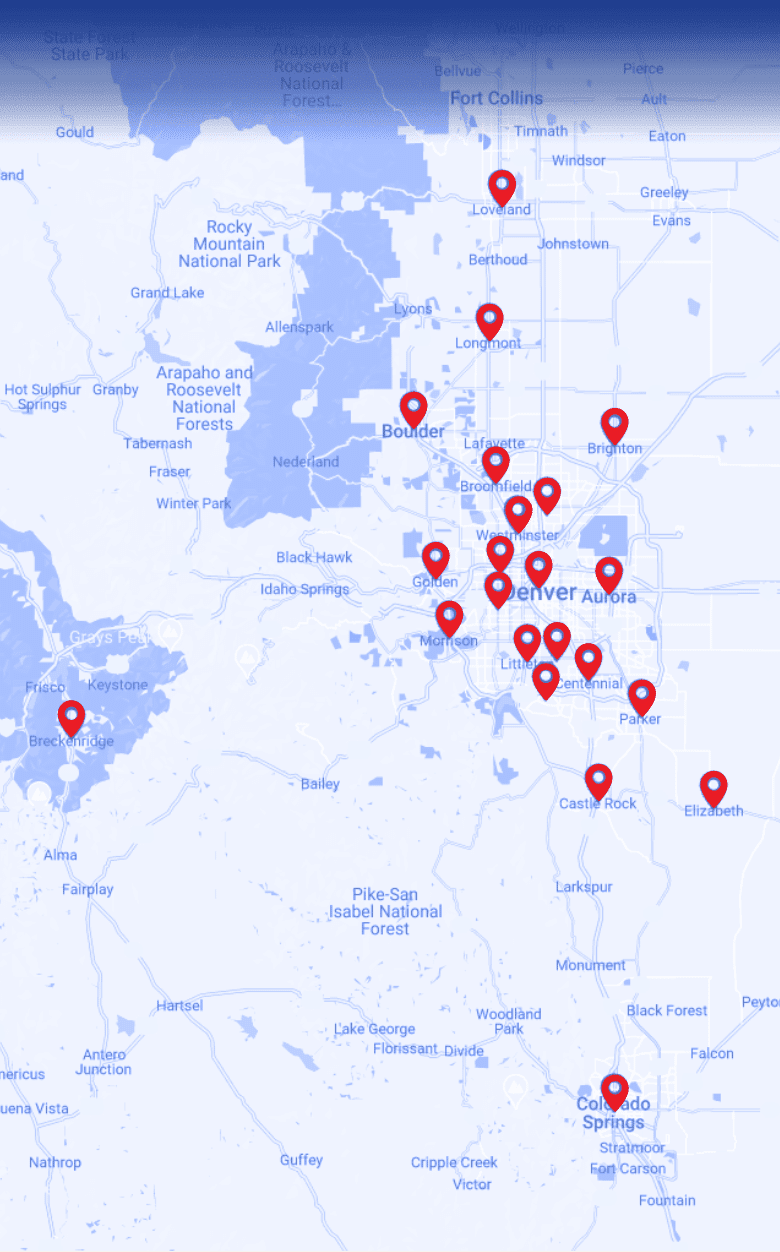
If you need expert garage door spring repair in Parker, call (720) 339-2442 to get started. You can also schedule your spring repair in Parker today online at your convenience. We serve Parker, Castle Rock, Greenwood Village, Lakewood, and the greater Denver metro area.
Torsion vs. Extension Springs: What Parker Homes Typically Have
Before any repair or replacement conversation makes sense, it helps to know which type of spring your door uses. The two systems work differently, carry different safety risks, and have different lifespans. In Parker and the broader Douglas County area, newer and mid-age homes are more commonly fitted with torsion springs, which mount horizontally above the door on a metal shaft. Older homes may still have extension springs running along the horizontal tracks on either side of the door.
| Feature | Torsion Springs | Extension Springs |
|---|---|---|
| Location | Above door on central shaft | Along horizontal side tracks |
| Cycle rating (standard) | 15,000 to 20,000 cycles | 10,000 cycles |
| Colorado climate performance | Better: less exposed to direct temp cycling on tracks | More vulnerable: exposed metal on tracks accelerates wear |
| Safety if spring breaks | Contained on shaft, controlled failure | Can snap off track, requires safety cables |
| Door movement | Smooth, even lift | Can be jerky without proper cable tension |
If you have extension springs and they are approaching their cycle limit, upgrading to torsion springs at the time of replacement is worth the additional cost. Local Denver metro professionals consistently recommend torsion for Colorado homes specifically because of how well the shaft-mounted design handles the repeated thermal stress that shortens exposed extension spring life.
How Colorado’s Climate Shortens Spring Life
Standard garage door springs are DASMA-rated for 10,000 cycles. At three or four uses per day, that translates to roughly 7 to 10 years in a moderate climate. In Colorado, that timeline shrinks. Parker’s daily temperature swings cause metal to contract and expand repeatedly, creating microscopic stress fractures that accumulate faster than in stable-climate markets. Winter nights that drop into single digits followed by afternoon highs in the 50s put particular strain on coil geometry; the metal never has a chance to stabilize.
One Clear Choice Garage Doors, a Colorado-based installer, specifically recommends upgrading to 25,000-cycle springs for Front Range homes to compensate for climate-accelerated wear. The cost difference over a standard set is modest when spread across the extended replacement interval, and it eliminates at least one service call compared to running standard springs to failure on Colorado’s timeline.
Cold temperatures also affect lubrication. Grease thickens in sub-zero conditions, increasing friction on every cycle. Spring coils operating with insufficient lubrication accumulate fatigue faster than the same hardware in a well-maintained system. Pre-winter lubrication with a silicone-based product is one of the simplest steps Parker homeowners can take to protect their springs before the hardest months of the year hit. For anything beyond lubrication, reach Select Garage Doors’ Parker service team before the issue escalates.
Warning Signs Your Spring Is Failing
Springs rarely fail without some warning. Catching the signs early saves the cost of an emergency call and prevents a broken spring from stranding a car in or out of the garage. Pre-failure indicators include grinding or squeaking on operation, a door that feels unusually heavy when lifted manually, slower-than-normal opener movement, and visible rust or elongation in the spring coils. Any of these signals is worth investigating before the spring reaches its breaking point.
When a spring actually breaks, the sign is typically unmistakable: a loud bang from the garage, followed by a door that refuses to open or slams shut faster than normal. You may also see a visible gap in the coil where the break occurred. At that point, do not attempt to operate the door further. The full weight of the door is now unsupported, and running the opener against a broken spring will strain the motor and cables and can cause secondary failures. Call a professional and leave the door in whatever position it is in until service arrives. Select Garage Doors serves Parker, Colorado and the surrounding Douglas County area with same-day availability for spring failures.
Frequently Asked Questions
What is the difference between torsion and extension garage door springs?
Torsion springs mount above the door on a central metal shaft and store energy by twisting. Extension springs run along the side tracks and store energy by stretching. Torsion springs last longer, produce smoother door movement, and are safer if they break: the shaft contains the failure rather than letting the spring fly free.
Why does Colorado’s climate shorten garage door spring life?
Parker’s daily temperature swings of 40 to 60 degrees cause metal to repeatedly contract and expand, creating micro-fractures in the coil over time. This thermal cycling accelerates spring fatigue beyond what the DASMA 10,000-cycle rating assumes, shortening realistic lifespan compared to the same spring in a stable-climate market.
Is it safe to wind or adjust garage door springs myself?
No. Winding a torsion spring requires inserting a metal bar into a winding cone and turning it against hundreds of pounds of stored torque. A bar that slips from the cone can fly across the garage with enough force to cause serious injury. More than 20,000 people are sent to U.S. emergency rooms annually from garage door-related injuries, and spring winding is a leading cause.
Should I replace both springs when only one breaks?
Yes, always replace both as a set. When one spring breaks, its partner has already completed the same number of cycles and is under the same fatigue stress. Replacing only the broken spring leaves a weakened spring carrying uneven load, and the surviving spring typically fails within a few months.
How long do garage door springs last in Parker, CO?
Standard 10,000-cycle springs last roughly 7 to 9 years in Colorado’s climate, compared to the 10-year estimate in moderate markets. Upgrading to 25,000-cycle springs extends that to 15 years or more and is specifically recommended by Colorado installers to offset the accelerated wear caused by Front Range temperature cycling.
What are the signs that my garage door spring has already broken?
The most common sign is a loud bang from the garage: the spring releases its stored torque in a single sharp snap. After that, the door will either refuse to open, open only a few inches before stopping, or fall shut faster than normal. A visible gap in the coil is visual confirmation. Stop using the door and call a professional immediately.