

The True Cost of Neglecting Commercial Garage Door Maintenance
Neglecting commercial garage door maintenance leads to exponentially higher repair costs, safety incidents, operational downtime, and premature equipment replacement. For businesses in Parker, CO and the Denver metro area, the annual cost of scheduled maintenance is a fraction of what a single emergency repair call can run. Select Garage Doors provides commercial maintenance with complete documentation for compliance and insurance purposes.
Contents
- The Real Costs When Commercial Door Maintenance Gets Deferred
- What a Realistic Commercial Maintenance Budget Looks Like in Parker
- When to Schedule Commercial Maintenance Instead of Waiting
- Schedule Commercial Maintenance Before the Next Failure
- Frequently Asked Questions
A commercial garage door is an essential part of your business, providing security, efficiency, and daily operational flow. Yet many businesses overlook regular commercial garage door maintenance in Parker, CO, assuming the door will operate smoothly without attention. In reality, failing to maintain your garage door leads to costly repairs, safety risks, and operational disruptions that far exceed the cost of scheduled service. Select Garage Doors works with Parker businesses to prevent exactly these outcomes.
For businesses in Parker, CO and across the Denver metro, a garage door is not a peripheral convenience. It is a working part of daily operations. This article breaks down the real financial and operational costs when maintenance gets deferred, so you can make a clear-eyed decision about whether scheduled service is worth the investment.
The Real Costs When Commercial Door Maintenance Gets Deferred
How Fast Do Repair Costs Grow When Small Problems Go Unaddressed?
Every mechanical system follows the same pattern: minor wear leads to accelerated wear, which leads to component failure, which leads to system failure. Garage doors are no exception. In Parker’s commercial buildings, the cost multiplier between a scheduled fix and an emergency repair is typically three to four times higher, making deferred maintenance the most expensive option available.
Left in place, it eventually damages the track.
Emergency repair calls carry additional costs that scheduled maintenance avoids entirely:
- After-hours or weekend service rates are typically 50 to 100% higher than standard rates
- Parts availability may require expedited shipping if the failure involves a less common component
- Temporary access workarounds (security guards, alternate entry points, rented equipment) add operational costs that never show up on the repair invoice
The pattern is consistent: the longer a minor issue goes unaddressed, the more expensive the eventual repair. For a comprehensive look at what proactive service covers, the key components of a commercial garage door maintenance checklist outline exactly what a qualified technician should examine on every visit.
What Safety Risks Come From Neglected Commercial Doors?
A commercial garage door that fails unexpectedly does not just inconvenience your operation. It can injure employees, contractors, or customers. Broken springs snap under tension. A door with a failed auto-reversal sensor can close on a vehicle or a person. Frayed cables can drop a door without warning. For Parker businesses, documented maintenance is the clearest way to reduce this risk.
OSHA takes workplace safety equipment seriously. A business that cannot demonstrate regular maintenance documentation for its commercial door systems may face compliance challenges following an incident. Insurance carriers pay close attention to whether maintenance records exist when evaluating claims involving equipment failures.
Beyond the regulatory and financial exposure, the human cost of a preventable injury is in a category of its own. Proper maintenance eliminates most of these risks entirely. Parker businesses operating warehouse, distribution, or service bay doors have a particular obligation to keep documentation current because Douglas County commercial inspections may review maintenance records during routine compliance checks.
How Much Does Operational Downtime Actually Cost Your Business?
When a commercial garage door goes down, operations stop or get rerouted. The cost depends on your business type, but most commercial operations in the Denver metro area lose more revenue per hour of downtime than a full year of scheduled maintenance costs. A four-to-eight-hour emergency repair window can cost more than two years of preventive service.
Warehouse and distribution: A non-functioning dock door can halt inbound or outbound shipments. Delayed shipments trigger contractual penalties with clients and create downstream problems across the supply chain. Parker’s growing industrial and logistics corridor makes this a particularly relevant concern for local operations.
Auto service and repair: A garage door failure may prevent vehicles from entering or exiting service bays, idling technicians who are being paid regardless.
Retail and service businesses: A door that will not open delays opening, prevents deliveries, or creates security concerns that cannot be left unresolved.
Calculate your business’s downtime cost by multiplying your average revenue per hour by the realistic duration of a repair scenario (often four to eight hours for an emergency call). Then compare that to the annual cost of scheduled garage door maintenance. The math is rarely close.
How Does a Neglected Door Affect Energy Costs in Parker?
Parker’s winters are genuinely cold, and commercial energy bills reflect it. A garage door that has lost its weatherstrip seal, developed gaps in the panel joints, or has damaged insulation allows significant air infiltration that shows up directly on monthly utility statements. Seals and weatherstripping are inexpensive to replace during a maintenance visit but easy to overlook until the heating bill spikes.
For temperature-controlled environments such as refrigerated storage, climate-controlled warehouses, and auto body shops that need consistent temperatures for finishes, the energy cost of a degraded door can be measurable on monthly utility bills. Denver metro businesses that operate in older commercial buildings with single-layer doors are especially vulnerable to these invisible energy losses.
Along the Front Range, rapid temperature swings between daytime highs and overnight lows put extra stress on weatherstripping and panel seals. A door that sealed properly in September may have gaps by January. Catching these issues during a scheduled visit prevents months of wasted heating costs.
When Does Neglect Lead to Premature Equipment Replacement?
A commercial garage door operator that receives regular maintenance routinely lasts 10 to 15 years. Without it, the same operator may need replacement in five to seven years. The difference is not defective equipment. It is accumulated neglect degrading components faster than normal wear should allow, cutting the useful life of a capital investment nearly in half.
Add door panel replacement, often triggered by alignment issues caused by neglected maintenance, and you are looking at a capital expenditure that proper maintenance would have delayed by years.
The long-term cost of maintenance is a fraction of the cost of early replacement. The benefits of regular commercial garage door maintenance include a detailed breakdown of what consistent service returns on investment for Parker businesses.
What Liability and Insurance Exposure Should Parker Businesses Know About?
Most commercial property insurance policies include language around regular equipment maintenance as a condition of coverage. When a claim involves equipment failure, the insurer will ask whether the equipment was maintained according to standard practice. A business without maintenance records is in a weaker position in any claims dispute, and Douglas County businesses face the same scrutiny as operations anywhere in the metro.
A business that can demonstrate documented, scheduled service has a clear paper trail that supports its claim. This is especially relevant for Parker businesses operating in shared commercial complexes where liability can extend across multiple tenants and property management entities. If a door drops and damages a vendor’s vehicle or injures a contractor, the first question your insurer asks is whether the equipment was properly maintained.
What a Realistic Commercial Maintenance Budget Looks Like in Parker
Commercial garage door maintenance is not a large line item.
| Scenario | Annual Cost | What You Get |
|---|---|---|
| 4 commercial bays, 2 visits/year | Call for a free estimate. | Full inspection, lubrication, hardware tightening, documentation |
| Single emergency repair call | Call for a free estimate. | One repair, after-hours rates, no preventive benefit |
| Premature operator replacement | Call for a free estimate. | Capital expenditure that maintenance would have delayed |
| 4-8 hours downtime (revenue loss) | Varies by business | Lost revenue, contractual penalties, idle labor |
For businesses managing multiple commercial properties or high-cycle doors across the Denver metro, a service contract with a local provider locks in priority scheduling, discounted labor rates, and documented maintenance records for compliance purposes.
When to Schedule Commercial Maintenance Instead of Waiting
Not every commercial door issue signals an emergency. But knowing when to schedule versus when to call immediately helps Parker business owners and property managers make the right decision at the right time.
Schedule a maintenance visit if: Your doors have not been inspected in six months or longer. You notice increased noise during operation, sluggish opening or closing, or visible wear on rollers, cables, or weatherstripping. You are approaching a lease renewal or insurance audit and need current documentation. Any of these situations warrant a planned visit before a small issue becomes a costly failure.
Call for repair if: A door is stuck open or closed. A spring has visibly snapped. You hear grinding, scraping, or popping sounds during operation. The door reverses unexpectedly or does not respond to the control system. These are signs of active component failure that should be addressed before the door is used again.
In either case, the cost of acting now is consistently lower than the cost of waiting. Parker businesses that build maintenance into their annual facility budgets avoid the unpredictable expense of emergency repairs and the downstream costs of downtime, liability exposure, and premature equipment replacement.
Schedule Commercial Maintenance Before the Next Failure
The most expensive time to call about your commercial garage door is after it stops working. Scheduled maintenance costs a predictable amount, prevents the cascading failures described above, and provides the documentation your insurance and compliance requirements demand.
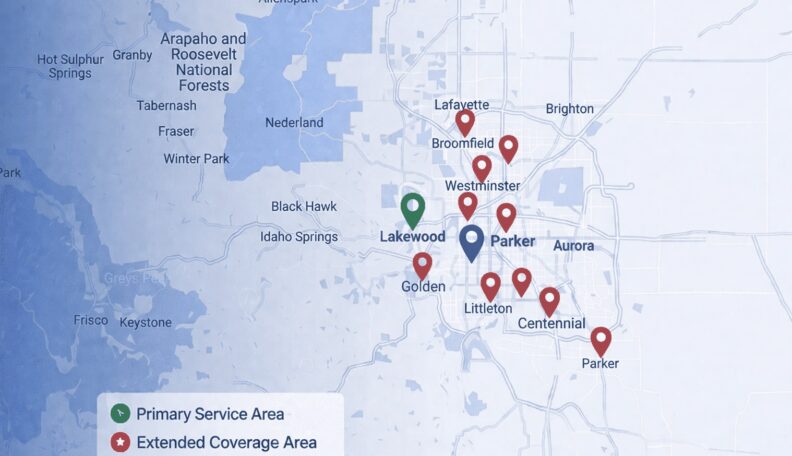
Select Garage Doors provides commercial maintenance, inspection, and repair services for businesses across Parker and the broader Denver metro area. We serve Parker, Castle Rock, Greenwood Village, Lakewood, and the greater Denver metro area. We work around your business hours to minimize disruption and provide complete documentation of every service visit.
To schedule an inspection or discuss a service plan for your facility, call 720-339-2442 or request a commercial maintenance consultation online.
Frequently Asked Questions
How often should commercial garage doors in Parker, CO be serviced?
Most commercial doors should be inspected and serviced twice a year. High-cycle doors in warehouse or distribution settings may need quarterly visits.
Does OSHA require commercial garage door maintenance?
OSHA does not mandate a specific maintenance schedule for garage doors, but it does require employers to maintain a safe workplace. If a door failure causes an injury and the business cannot show maintenance records, it faces potential citations and increased liability.
What is included in a commercial garage door maintenance visit?
A standard visit includes spring tension check, cable and roller inspection, lubrication of all moving parts, weatherstrip assessment, safety sensor testing, and hardware tightening. Everything is documented for your records.
Can I handle commercial door maintenance myself?
Basic tasks like visual inspection and surface cleaning are fine. Spring adjustment, cable work, and safety sensor calibration involve components under tension that require proper training and tools.


Looking for a deal?
Call us or to learn about our current promotions and seasonal offers.


Service Area: 50+ Cities Across Metro Denver
Select Your Nearest Location
Hours: Mon-Fri 8am-5pm
Sunday Emergency Only
Avg Response Time: 18 minutes
Hours: Mon-Fri 8am-5pm
Sunday Emergency Only
Avg Response Time: 18 minutes
Hours: Mon-Fri 8am-5pm
Sunday Emergency Only
Avg Response Time: 18 minutes
Hours: Mon-Fri 8am-5pm
Sunday Emergency Only
Avg Response Time: 18 minutes
Hours: Mon-Fri 8am-5pm
Sunday Emergency Only
Avg Response Time: 18 minutes
Hours: Mon-Fri 8am-5pm
Sunday Emergency Only
Avg Response Time: 18 minutes
Hours: Mon-Fri 8am-5pm
Sunday Emergency Only
Avg Response Time: 18 minutes
Hours: Mon-Fri 8am-5pm
Sunday Emergency Only
Avg Response Time: 18 minutes
Hours: Mon-Fri 8am-5pm
Sunday Emergency Only
Avg Response Time: 18 minutes
Hours: Mon-Fri 8am-5pm
Sunday Emergency Only
Avg Response Time: 18 minutes
Hours: Mon-Fri 8am-5pm
Sunday Emergency Only
Avg Response Time: 18 minutes
Hours: Mon-Fri 8am-5pm
Sunday Emergency Only
Avg Response Time: 18 minutes
Hours: Mon-Fri 8am-5pm
Sunday Emergency Only
Avg Response Time: 18 minutes
Hours: Mon-Fri 8am-5pm
Sunday Emergency Only
Avg Response Time: 18 minutes
Hours: Mon-Fri 8am-5pm
Sunday Emergency Only
Avg Response Time: 18 minutes
We Service: Parker, Castle Rock, Greenwood Village, Lakewood, Littleton, Centennial, Highlands Ranch 40+ More Cities