


Signs You Need Garage Door Spring Repair: What to Look Out For
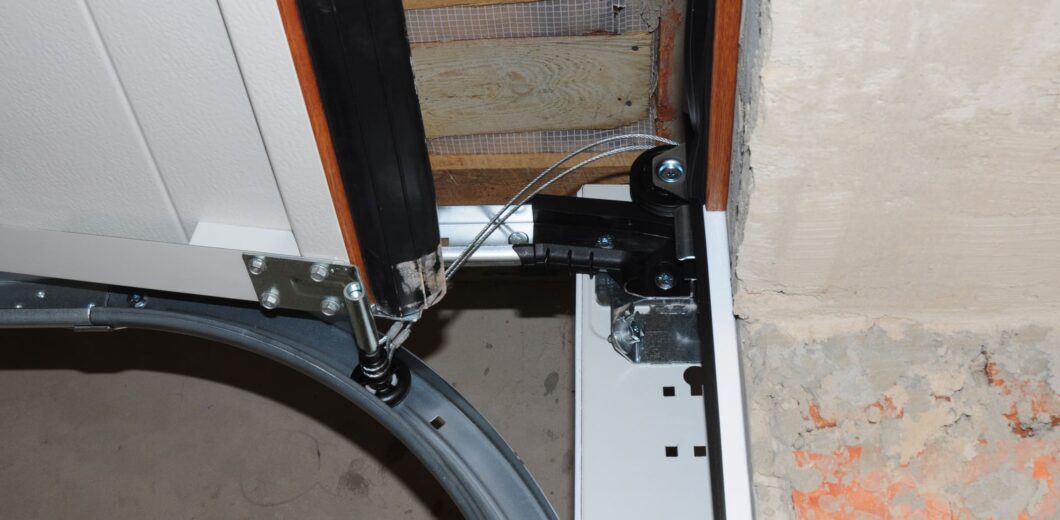
A broken garage door spring usually announces itself with a loud bang, a door that will not stay open, or visible gaps in the coil above the door. Select Garage Doors provides garage door spring repair in Parker, CO and across the Denver metro area for homeowners dealing with these warning signs.
Garage door springs carry the full weight of the door, and when one breaks, the door stops working safely. In Parker, CO, where most homes have attached garages that serve as the primary entry point, a broken spring is not something you can work around for a few days. Select Garage Doors repairs and replaces garage door springs for homeowners across Parker and the Denver metro area. Here is how to recognize the signs before a failing spring becomes a safety hazard.
Warning Signs of a Broken Garage Door Spring
What does a broken garage door spring sound like?
A breaking torsion spring produces a loud bang that sounds like a gunshot or firecracker, often heard from inside the house even with the garage door closed. This sound happens when the coiled steel snaps under tension and releases stored energy instantly. Many Parker homeowners hear this at night or early morning when the garage is quiet and temperature changes put additional stress on the metal.
If you heard a loud noise from the garage and did not find an obvious cause, look at the torsion spring mounted on the bar above the door. A broken spring will have a visible gap in the coil where the two halves separated. Do not attempt to operate the door if you see this gap. The door is no longer counterbalanced and can drop uncontrollably.
Why won’t my garage door stay open?
A door that slides closed on its own or will not stay in a partially open position has lost the counterbalance that the springs provide, which is the most common operational sign of a broken or failing spring. Garage door springs are calibrated to offset the door’s weight so the opener only needs to provide directional force, not lifting force. When a spring breaks, the full weight of the door (150 to 250 pounds for a standard residential door in Parker) falls on the opener and the tracks.
A door sliding closed under its own weight is a crush hazard for people, pets, and vehicles. Do not prop the door open with objects or try to hold it manually. The weight is more than enough to cause serious injury. Disconnect the opener and leave the door closed until a technician can replace the spring.
What does an imbalanced garage door look like?
If one side of your garage door sits higher than the other when opening or closing, it means one spring has failed while the other is still intact, creating an uneven lift that stresses the tracks, cables, and opener. This is most visible on double-car garage doors common in Parker homes, where the wider span makes the tilt more obvious.
An imbalanced door grinds against the tracks on one side, wearing the rollers unevenly and potentially bending the track. If left unaddressed, the working spring is now carrying twice its designed load, which accelerates its own failure. Replacing both springs at the same time is standard practice because they wear at the same rate and the second spring is likely near the end of its cycle life if the first one has already broken.
Why is my garage door sticking or moving slowly?
A door that hesitates, jerks, or requires more force than usual to open or close is showing signs of a spring that is losing tension before it fully breaks. Springs weaken gradually over thousands of cycles. A standard torsion spring rated for 10,000 cycles on a door used 4 times per day reaches its rated life in about 7 years. In Parker, where cold temperatures increase spring brittleness during winter months, springs can fail earlier than their rated cycle count suggests.
The opener compensates for weakening springs by working harder, which increases motor strain, noise, and heat. If you notice your opener running louder or slower than it used to, the springs may be the root cause even though the opener appears to be the problem. A spring inspection can confirm whether a garage door repair or full spring replacement is the right fix.
Can I see physical damage on a failing spring?
Rust, elongated coils, and gaps between coils are all visible signs that a spring is deteriorating and nearing failure. Rust weakens the steel and creates friction that accelerates wear. In Parker, where road salt and snowmelt moisture enter the garage through the opening, springs can develop rust faster than in drier climates. A light coating of silicone-based lubricant applied twice a year slows rust formation and extends spring life.
Elongated or stretched coils indicate the spring has lost its temper (the heat treatment that gives it elasticity). A spring with stretched sections will not rebound to its original shape and is delivering less counterbalancing force with each cycle. This is the stage before a full break.
| Warning Sign | What It Means | Urgency |
|---|---|---|
| A loud bang from the garage | Spring has already snapped | Do not operate the door. Call immediately. |
| The door slides closed on its own | Counterbalance lost, full weight on opener | Crush hazard. Leave the door closed. |
| One side higher than the other | One spring failed, the other overloaded | Replace both springs soon. |
| The door moves slowly or jerks | Spring is losing tension gradually | Schedule an inspection before the full break. |
| Visible rust or stretched coils | Steel weakening, nearing failure | Lubricate and schedule replacement. |
When to Call for Spring Repair in Parker
Garage door spring replacement is not a DIY job. Torsion springs operate under extreme tension and can release enough force to cause fatal injury if handled without the correct winding bars, clamps, and training. Extension springs are slightly less dangerous but still carry significant stored energy. Every year, emergency rooms across Colorado see injuries from homeowners who attempt spring work without proper equipment.
If you have identified any of the warning signs above, the safest step is to stop using the door and call a trained technician. Select Garage Doors carries springs for all major residential door sizes and configurations used in Parker homes and can typically complete a spring replacement in a single visit. If your springs are original to the home and the home is more than 7 years old, proactive replacement before a break avoids the inconvenience and safety risk of a sudden failure.
Get Your Garage Door Springs Fixed in Parker, CO
A broken garage door spring is not something to ignore or work around. The door is too heavy to operate safely without functioning springs, and continued use damages the opener, cables, and tracks. Select Garage Doors serves Parker and the surrounding Denver metro area with spring repair and replacement. Call 720-339-2442 to schedule a spring inspection or replacement.
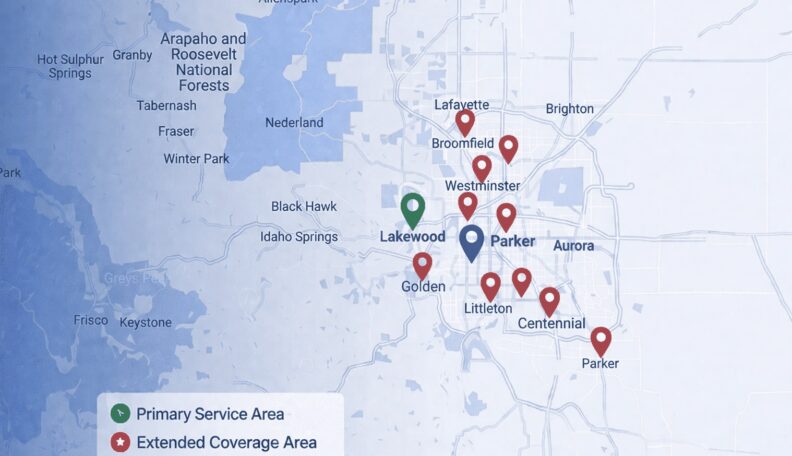
We serve Parker, Castle Rock, Greenwood Village, Lakewood, and the greater Denver metro area.
Frequently Asked Questions
How long do garage door springs last in Parker, CO?
Standard torsion springs are rated for about 10,000 cycles, which is roughly 7 years at 4 cycles per day. Cold winters in Parker increase spring brittleness and can shorten this lifespan. High-cycle springs rated for 25,000 or more cycles are available for homeowners who want longer intervals between replacements.
Should I replace both garage door springs at the same time?
Yes. Springs wear at the same rate because they share the same load and cycle count. If one has broken, the other is near the end of its life. Replacing both prevents a second failure shortly after the first repair.
Can I open my garage door manually if the spring is broken?
Technically possible, but not recommended. Without a functioning spring, you are lifting 150 to 250 pounds of dead weight. The door can drop without warning if you lose your grip. Leave it closed and call for repair.
Why did my garage door spring break in winter?
Cold steel is more brittle than warm steel. Parker’s winter temperatures, which regularly drop below 10 degrees, reduce the elasticity of spring steel. A spring near the end of its cycle life is most vulnerable to snapping during a cold morning when the metal contracts.
How much does garage door spring repair cost?
Spring repair costs vary based on the spring type (torsion vs. extension), door size, and whether one or both springs need replacement. Contact Select Garage Doors at 720-339-2442 for a quote specific to your Parker home and door configuration.
Looking for a deal?
Call us or to learn about our current promotions and seasonal offers.



Service Area: 50+ Cities Across Metro Denver
Select Your Nearest Location
Hours: Mon-Fri 8am-5pm
Sunday Emergency Only
Avg Response Time: 18 minutes
Hours: Mon-Fri 8am-5pm
Sunday Emergency Only
Avg Response Time: 18 minutes
Hours: Mon-Fri 8am-5pm
Sunday Emergency Only
Avg Response Time: 18 minutes
Hours: Mon-Fri 8am-5pm
Sunday Emergency Only
Avg Response Time: 18 minutes
Hours: Mon-Fri 8am-5pm
Sunday Emergency Only
Avg Response Time: 18 minutes
Hours: Mon-Fri 8am-5pm
Sunday Emergency Only
Avg Response Time: 18 minutes
Hours: Mon-Fri 8am-5pm
Sunday Emergency Only
Avg Response Time: 18 minutes
Hours: Mon-Fri 8am-5pm
Sunday Emergency Only
Avg Response Time: 18 minutes
Hours: Mon-Fri 8am-5pm
Sunday Emergency Only
Avg Response Time: 18 minutes
Hours: Mon-Fri 8am-5pm
Sunday Emergency Only
Avg Response Time: 18 minutes
Hours: Mon-Fri 8am-5pm
Sunday Emergency Only
Avg Response Time: 18 minutes
Hours: Mon-Fri 8am-5pm
Sunday Emergency Only
Avg Response Time: 18 minutes
Hours: Mon-Fri 8am-5pm
Sunday Emergency Only
Avg Response Time: 18 minutes
Hours: Mon-Fri 8am-5pm
Sunday Emergency Only
Avg Response Time: 18 minutes
Hours: Mon-Fri 8am-5pm
Sunday Emergency Only
Avg Response Time: 18 minutes
We Service: Parker, Castle Rock, Greenwood Village, Lakewood, Littleton, Centennial, Highlands Ranch 40+ More Cities