


Why Does Your Lakewood Garage Door Shake When It Opens?
A Lakewood garage door usually shakes when the rollers are worn, the tracks are loose, or the door has drifted out of balance. The shaking is the system telling you that something is no longer moving smoothly, and it gets worse the longer it is left.
Key Takeaways
- Shaking almost always starts with the rollers, the hinges, or the track hardware working loose.
- A door that shakes is putting extra strain on the opener, so one problem quietly becomes two.
- Cold mornings make shaking more obvious, because stiff lubricant and contracted metal add resistance.
- Tightening hardware is a reasonable homeowner task; anything touching springs or cables is not.
- Select Garage Doors is veteran-owned, licensed and insured, with a 5-year parts warranty.
A smooth garage door is quiet and steady. When it starts to judder, rattle in the tracks, or shudder as it changes direction, something in the mechanism has lost its alignment. Select Garage Doors finds that most shaking traces back to a handful of parts, and that homeowners usually notice it weeks before anything actually fails. That gap is the opportunity.
What Makes a Garage Door Shake as It Opens?
Worn rollers are the most common cause, followed by loose track bolts, worn hinges, and a door that is no longer balanced on its springs.
Rollers are small wheels that guide the door along the track. When the bearings inside them wear, the wheel wobbles instead of rolling cleanly, and that wobble travels through the whole door panel. Multiply it across eight or ten rollers and the door visibly shakes.
Track hardware is next. The brackets holding the tracks to the wall take vibration every single cycle, and bolts gradually loosen. A track that can move even slightly lets the door move with it. Anyone who would like a technician to look can find the Lakewood location on Google Maps.
Is a Shaking Garage Door Dangerous?
Shaking is rarely an immediate danger on its own, but it signals wear that can become dangerous if the cause is a spring or cable problem.
A door that shakes because of tired rollers is a maintenance job. A door that shakes because the springs are no longer sharing the load evenly is a different matter, because that imbalance puts stress on cables and brackets that are under serious tension.
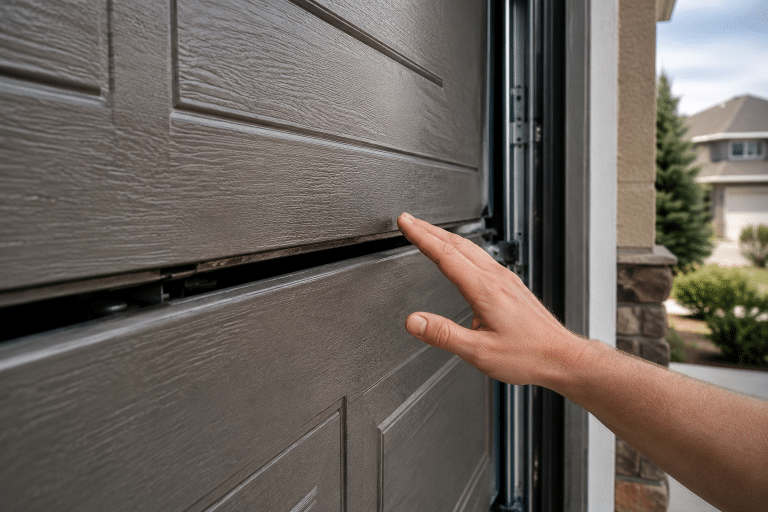
The practical rule is simple. If the shaking is mild and even, it is probably hardware. If the door also sits crooked, moves unevenly, or sounds suddenly louder, treat it as urgent. The earlier piece on why a Lakewood garage door gets noisier as temperatures drop covers the related noise side of the same problem.
Why Does the Shaking Get Worse in Cold Weather?
Cold thickens lubricant, contracts metal slightly, and stiffens rollers and hinges, so every existing bit of play in the system shows up more clearly.
Lubricant that flows easily in summer turns tacky when temperatures drop. Parts that were gliding now drag, and the opener has to overcome that drag before the door moves at all. The result is a door that starts with a jolt rather than a glide.
Homeowners in Lakewood tend to notice this on the first properly cold mornings of the season, which is exactly why autumn is a sensible time to have the hardware checked.
What Can a Homeowner Check Safely?
Check the roller condition, the tightness of visible track and bracket bolts, and whether the door is balanced. Leave springs, cables and tension adjustment to a technician.
Start by watching the door travel with the light on. Look for a roller that visibly wobbles or a track section that flexes. Then, with the door closed, check that the bolts holding the track brackets are snug. They should not turn by hand.
| What the Shaking Looks Like | Most Likely Cause | Who Should Handle It |
|---|---|---|
| Steady rattle through the whole travel | Worn rollers or loose brackets | Homeowner can tighten, pro for rollers |
| Jolt at the start of the lift | Stiff lubricant or spring wear | Professional |
| Shudder only near the top | Track alignment at the curve | Professional |
| Shaking with a crooked door | Uneven spring or cable support | Professional, stop using the door |
| Vibration felt through the ceiling | Opener mounting has loosened | Professional |
When Should a Technician Take Over?
Call a technician when the shaking continues after hardware has been tightened, when the door is crooked, or when the opener strains audibly.
A balance test tells a technician most of what they need to know. With the opener disconnected, a balanced door should hold its position partway open. One that drops or rises on its own has a spring problem, and that is the point where the work stops being a homeowner job.
A service visit typically covers rollers, hinges, track alignment, bracket tightness and balance in one pass, which is far less disruptive than waiting for a part to fail. Homeowners can schedule a consultation and have the whole system checked. The call line is staffed 24/7, with service scheduled during regular business hours.
There is also a practical reason not to wait. Shaking is movement the door was never designed to make, and that movement travels into every fixing holding the system together. Bolts that were snug work loose, hinge holes elongate slightly, and the rollers that started the problem wear faster because they are now being pushed sideways as well as rolled forward.
Catching it at the roller stage usually means replacing a set of inexpensive parts. Leaving it until the tracks have been pulled out of line, or until the opener has been straining for a season, turns the same visit into a much larger piece of work. The door rarely gets quieter on its own, so the early appointment is almost always the cheaper one.
Frequently Asked Questions
Is it safe to keep using a garage door that shakes?
Mild shaking from worn rollers is not an emergency, but it should be looked at. If the door also sits crooked or sounds much louder than usual, stop using it and call a professional.
Can worn rollers really make the whole door shake?
Yes. Each roller guides one point of the door, so when several have worn bearings the combined wobble is easily felt and seen across the whole panel.
Will lubricating the door stop the shaking?
It can reduce it if stiffness is the cause, but lubricant does not fix worn bearings or loose hardware. If shaking returns quickly after lubrication, the parts themselves need attention.
Why does the door shake more in winter than summer?
Cold thickens lubricant and stiffens moving parts, so any existing play in the rollers or tracks becomes far more noticeable once temperatures drop.
Can shaking damage the garage door opener?
Over time, yes. The opener has to work against the extra resistance on every cycle, which shortens the life of the motor and the drive components.
Which bolts can a homeowner safely tighten?
The visible bolts holding track brackets to the wall and the hinge screws between panels. Never loosen anything attached to a spring, a cable, or the bottom bracket.
How is a door balance test carried out?
A technician disconnects the opener and lifts the door by hand to roughly waist height. A balanced door stays put. One that drifts up or down needs its springs adjusted.
Does a shaking door mean it needs replacing?
Usually not. Most shaking is fixed with new rollers, tightened hardware and a balance adjustment, which costs far less than replacing an otherwise sound door.



Looking for a deal?
Call us or to learn about our current promotions and seasonal offers.



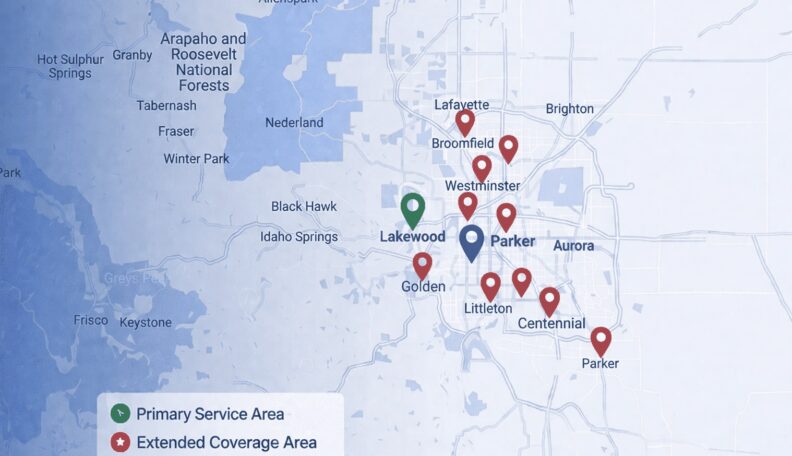
Service Area: 50+ Cities Across Metro Denver
Select Your Nearest Location
Hours: Mon-Fri 8am-5pm
Sunday Emergency Only
Avg Response Time: 18 minutes
Hours: Mon-Fri 8am-5pm
Sunday Emergency Only
Avg Response Time: 18 minutes
Hours: Mon-Fri 8am-5pm
Sunday Emergency Only
Avg Response Time: 18 minutes
Hours: Mon-Fri 8am-5pm
Sunday Emergency Only
Avg Response Time: 18 minutes
Hours: Mon-Fri 8am-5pm
Sunday Emergency Only
Avg Response Time: 18 minutes
Hours: Mon-Fri 8am-5pm
Sunday Emergency Only
Avg Response Time: 18 minutes
Hours: Mon-Fri 8am-5pm
Sunday Emergency Only
Avg Response Time: 18 minutes
Hours: Mon-Fri 8am-5pm
Sunday Emergency Only
Avg Response Time: 18 minutes
Hours: Mon-Fri 8am-5pm
Sunday Emergency Only
Avg Response Time: 18 minutes
Hours: Mon-Fri 8am-5pm
Sunday Emergency Only
Avg Response Time: 18 minutes
Hours: Mon-Fri 8am-5pm
Sunday Emergency Only
Avg Response Time: 18 minutes
Hours: Mon-Fri 8am-5pm
Sunday Emergency Only
Avg Response Time: 18 minutes
Hours: Mon-Fri 8am-5pm
Sunday Emergency Only
Avg Response Time: 18 minutes
Hours: Mon-Fri 8am-5pm
Sunday Emergency Only
Avg Response Time: 18 minutes
Hours: Mon-Fri 8am-5pm
Sunday Emergency Only
Avg Response Time: 18 minutes
We Service: Parker, Castle Rock, Greenwood Village, Lakewood, Littleton, Centennial, Highlands Ranch 40+ More Cities