

Choosing a Spring Repair Service in Parker, Colorado
Key Takeaways
- Select Garage Doors serves Parker, Colorado, homeowners with torsion and extension spring repair, and the right service provider should be licensed, insured, and able to match the correct spring type and tension rating to your specific door weight.
- In the Parker, Colorado area, standard torsion springs typically last 7 to 10 years based on a 10,000-cycle DASMA rating, but Front Range temperature swings of 40 to 60 degrees Fahrenheit in a single day accelerate metal fatigue and can shorten that lifespan.
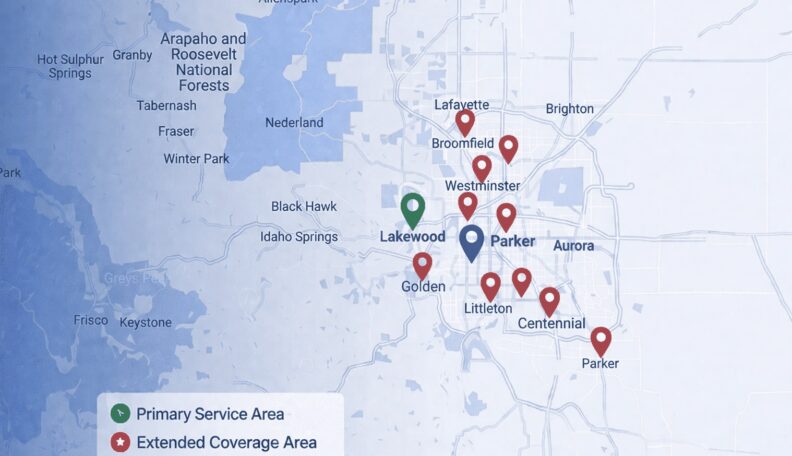
- Select Garage Doors operates four locations across the Denver metro, including its primary Parker location on South Pine Drive, and offers same-day spring repair assessments throughout Douglas County.
Your garage door is crucial to your home security and functionality. When springs malfunction, finding the right repair service promptly makes all the difference. Select Garage Doors is a trusted option for spring repair in Parker, CO, and this guide walks through what to look for in any provider you consider.
1. Assess Their Reputation
Start by researching the reputation of potential repair services. Read online reviews, ask friends and neighbors for recommendations, and check for complaints with organizations like the Better Business Bureau. A reputable company will have a history of satisfied customers. How to choose the right company for garage door spring repair services lays out a practical framework for comparing providers side by side.
2. Verify Licensing and Insurance
Ensure that the repair service has the necessary license and insurance. This not only guarantees their legitimacy but also protects you from liability for accidents or damages during the repair.
3. Experience Matters
Experience is crucial for door spring repair. Look for a service with a track record of successfully repairing springs for various types of garage doors. Longevity in the local market is a good indicator of consistent quality.
4. Request Quotes and Compare
Contact multiple service providers and request quotes for your specific issue. Compare them carefully. Do not base your decision on price alone. Consider the quality of service, warranty terms, and how clearly the technician communicates before and during the visit.
5. Inquire About Warranties
Ask about warranties for the parts and labor. A reliable repair service will stand behind their work with meaningful coverage to protect your investment.
Selecting the right garage door spring repair service is crucial for the safety and functionality of your home. By weighing reputation, licensing, experience, quotes, and warranties, you can feel confident in your decision. For different types of door issues, choosing the right garage door service for your unique needs expands on how these criteria shift depending on the job. Select Garage Doors works with homeowners across Parker, Castle Rock, Greenwood Village, Lakewood, and the greater Denver metro area.
Spring repairs done right protect both the door and everyone who uses it. Book a spring repair visit in Parker, CO, when your Parker springs need attention, and we will have a technician out to assess the situation.
What Makes Garage Door Spring Repair Uniquely Risky in Parker, Colorado?
Torsion springs on residential garage doors in Parker, Colorado, store an enormous amount of mechanical energy under tension. A standard torsion spring above a two-car garage door can hold enough stored energy to cause serious injury if it snaps during a DIY repair attempt. According to DASMA (the Door and Access Systems Manufacturers Association), standard residential torsion springs are rated for 10,000 cycles, which translates to roughly seven to ten years at typical use rates.
In Parker, Colorado, however, the Front Range climate compresses that timeline. Temperature swings of 40 to 60 degrees Fahrenheit in a single day cause metal coils to expand and contract repeatedly, accelerating stress fractures in springs that are already mid-cycle. Select Garage Doors technicians at the Parker location on South Pine Drive see a pronounced spike in spring failures every November and March, precisely when temperature swings are sharpest after an extended period in the opposite extreme.
The practical implication: a spring installed five years ago in Parker may be closer to its failure threshold than a seven-year-old spring in a milder climate would be. A licensed technician can measure remaining tension and advise whether replacement now prevents an emergency failure later.
Torsion Springs vs. Extension Springs: Which Does Your Parker Garage Door Use?
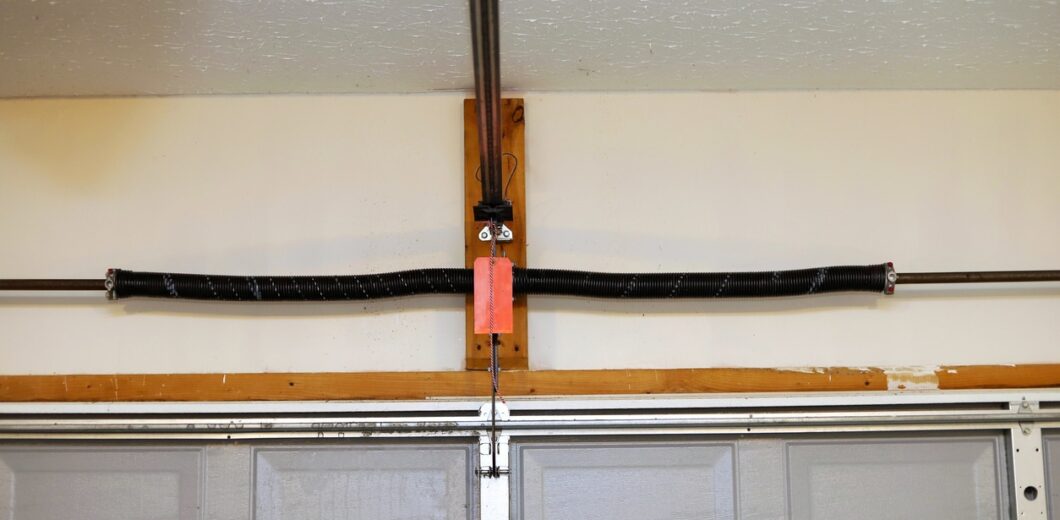
- Torsion spring system: A single spring (or pair of springs on heavier doors) mounted horizontally above the door opening on a metal shaft. Torsion springs are standard on most homes built in Parker, Colorado, after 1990, and are the safer and more durable choice. When a torsion spring breaks, the door typically stops in place rather than crashing down.
- Extension spring system: Two springs mounted on either side of the horizontal track, running parallel to the ceiling. Extension springs are common on older homes and lighter single-car doors. They require safety cables threaded through the center of each spring to contain the coil if it snaps. If your Parker garage door uses extension springs without visible safety cables, ask a technician to add them during the next service visit.
- Spring sizing matters more than most homeowners realize: Springs are sized to match the exact weight of the door panel. A technician who installs a spring with the wrong wire diameter, inside diameter, or length will leave the door unbalanced. An unbalanced door stresses the opener motor, accelerates roller and cable wear, and fails sooner than a correctly matched spring would.
- High-cycle upgrade option: For Parker homeowners who use their garage door more than three times daily or whose door faces south and absorbs direct Colorado sun, high-cycle torsion springs rated at 25,000 or 50,000 cycles are available. These cost more upfront but reduce the frequency of replacement over the door’s lifetime.
How to Verify a Spring Repair Contractor Before Scheduling in Parker
Parker, Colorado, and Douglas County do not require a specific garage door contractor license beyond a general business registration, which means the barrier to operating is low. Homeowners evaluating spring repair providers should go beyond star ratings and ask three direct questions.
First: Does the technician arrive in a marked company vehicle and carry proof of general liability insurance? A legitimate service company will provide a certificate of insurance without hesitation.
Second: Does the quote specify the spring type, wire gauge, cycle rating, and whether both springs will be replaced? A torsion spring system with one broken spring and one original spring is operating unevenly. Most experienced technicians recommend replacing both springs at the same time so they wear at the same rate.
Third: What warranty covers both parts and labor? A company confident in its spring sourcing will offer at least a one-year parts warranty and a clear labor guarantee. Select Garage Doors, rated 4.9 stars across 600 or more Google reviews, backs every spring repair with documented warranty terms.
| Vetting Criterion | What to Ask or Look For | Red Flag Signs |
|---|---|---|
| Licensing and insurance | Ask for a certificate of general liability insurance before work begins | Technician refuses to provide proof of insurance or hesitates |
| Written quote specificity | Quote should name spring type (torsion or extension), wire gauge, and cycle rating | Vague quote with no spring specification or cycle life mentioned |
| Single vs. both springs | Ask whether both springs will be replaced on a two-spring system | Technician replaces only the broken spring and dismisses the second |
| Warranty terms | Confirm parts and labor warranty in writing before payment | Warranty is verbal only or excludes labor from coverage |
| Marked vehicle and uniformed tech | Company vehicle and branded uniform are baseline professionalism signals | Technician arrives in an unmarked personal vehicle with no ID |
| Local reviews and tenure | Check Google and BBB for reviews specific to Parker and Douglas County | Few reviews, all recent, or reviews only from outside the Denver metro |
Frequently Asked Questions
How long do garage door springs last in Parker, Colorado?
Standard residential torsion springs are rated by DASMA for 10,000 cycles, which typically equals seven to ten years at normal use of two to three cycles per day. In Parker, Colorado, Front Range temperature swings of 40 to 60 degrees Fahrenheit within a single day accelerate metal fatigue, so springs at the five- to seven-year mark should be inspected by a technician even if they have not yet broken. Select Garage Doors can assess remaining tension and recommend replacement before an unexpected failure occurs.
Is it safe to operate a garage door with a broken spring?
Operating a garage door with a broken torsion spring is not safe. The springs counterbalance the weight of the door panel, which can exceed 200 pounds on a two-car door. Without a functioning spring, the opener motor carries the full load, which can damage the motor, strip the drive gear, and in a worst case, cause the door to fall uncontrolled. Parker homeowners should disconnect the opener and leave the door closed until a technician replaces the spring.
Should both garage door springs be replaced at the same time?
Replacing both springs simultaneously on a two-spring torsion system is the standard recommendation. Springs installed at the same time wear at the same rate, so when one breaks, the second is typically close to its cycle limit as well. Replacing both at once prevents a second service call within weeks and keeps the door balanced. Select Garage Doors technicians serving Parker follow this approach on two-spring systems unless the surviving spring was installed significantly later than the failed one.
What is the difference between torsion springs and extension springs?
Torsion springs are mounted horizontally above the garage door opening on a metal shaft and work by twisting under load. Extension springs run along the horizontal track on each side of the door and work by stretching. Most Parker, Colorado, homes built after 1990 use torsion spring systems, which are more durable and safer when they fail. Extension spring systems require safety cables to prevent the spring from becoming a projectile if it snaps. A technician from Select Garage Doors can confirm which system your door uses and whether safety cables are in place.
What should I look for in a garage door spring repair quote?
A complete spring repair quote should specify the spring type (torsion or extension), the wire gauge, the inside diameter, the spring length, and the cycle rating of the replacement spring. It should also state whether one or both springs are included, confirm the labor warranty coverage, and identify any additional hardware, such as end cones or cable drums, that may need replacement at the same time. Quotes that list only a flat rate with no component detail leave room for post-repair disputes.
Can Colorado’s high altitude affect garage door springs?
Parker, Colorado, sits at 5,869 feet above sea level. The altitude itself does not directly affect spring performance, but the climate conditions that accompany Front Range elevation do. Semi-arid air at elevation dries out spring coatings and grease faster than humid climates, requiring more frequent lubrication. The temperature extremes common at altitude, where Parker can swing from 65 degrees Fahrenheit in the afternoon to below 20 degrees overnight in winter, place repeated thermal stress on metal coils. Select Garage Doors recommends silicone-based lubricant applied to torsion springs at least twice per year in the Parker area rather than the once-per-year interval typical in milder climates.


Looking for a deal?
Call us or to learn about our current promotions and seasonal offers.



Service Area: 50+ Cities Across Metro Denver
Select Your Nearest Location
Hours: Mon-Fri 8am-5pm
Sunday Emergency Only
Avg Response Time: 18 minutes
Hours: Mon-Fri 8am-5pm
Sunday Emergency Only
Avg Response Time: 18 minutes
Hours: Mon-Fri 8am-5pm
Sunday Emergency Only
Avg Response Time: 18 minutes
Hours: Mon-Fri 8am-5pm
Sunday Emergency Only
Avg Response Time: 18 minutes
Hours: Mon-Fri 8am-5pm
Sunday Emergency Only
Avg Response Time: 18 minutes
Hours: Mon-Fri 8am-5pm
Sunday Emergency Only
Avg Response Time: 18 minutes
Hours: Mon-Fri 8am-5pm
Sunday Emergency Only
Avg Response Time: 18 minutes
Hours: Mon-Fri 8am-5pm
Sunday Emergency Only
Avg Response Time: 18 minutes
Hours: Mon-Fri 8am-5pm
Sunday Emergency Only
Avg Response Time: 18 minutes
Hours: Mon-Fri 8am-5pm
Sunday Emergency Only
Avg Response Time: 18 minutes
Hours: Mon-Fri 8am-5pm
Sunday Emergency Only
Avg Response Time: 18 minutes
Hours: Mon-Fri 8am-5pm
Sunday Emergency Only
Avg Response Time: 18 minutes
Hours: Mon-Fri 8am-5pm
Sunday Emergency Only
Avg Response Time: 18 minutes
Hours: Mon-Fri 8am-5pm
Sunday Emergency Only
Avg Response Time: 18 minutes
Hours: Mon-Fri 8am-5pm
Sunday Emergency Only
Avg Response Time: 18 minutes
We Service: Parker, Castle Rock, Greenwood Village, Lakewood, Littleton, Centennial, Highlands Ranch 40+ More Cities