


Essential Preventive Maintenance Practices for Garage Doors in Parker, CO
Key Takeaways
- Two hours per year of preventive maintenance is what separates a garage door that lasts twenty years from one that needs a new motor at year nine.
- Monthly visual walk-arounds catch most failure patterns one to two months before a breakdown happens, at zero cost.
- Lithium-based spray applied to hinges, roller stems, and spring coils twice a year is the highest-return maintenance task. Avoid WD-40, which dries quickly in Colorado’s semi-arid climate.
- Springs and cables are pro-only items. Torsion springs store enough energy to cause serious injury during an unbalanced adjustment and require calibrated tools.
- Select Garage Doors handles annual tune-ups across the Denver metro area out of Parker, CO.
Two hours per year of preventive maintenance is what separates a garage door that lasts twenty years from one that needs a new motor at year nine. The math holds even on relatively new doors. The components that fail first (springs, rollers, cables, opener gears) all fail faster when they run dirty, dry, or loose, and all of that is preventable with a routine that fits in two Saturday afternoons spread across the year.
At Select Garage Doors, we are a veteran-owned shop based in Parker, CO that handles annual and semi-annual tune-ups across the Denver Metro area. Select Garage Doors handles the work that needs calibrated tools and sends homeowners off with a clear list of what they can keep on top of between visits. If you are setting up a maintenance routine right now, start with Select Garage Doors for service backed by our 100% Satisfaction Guarantee.
Visual Inspection (the Monthly Walk-Around)
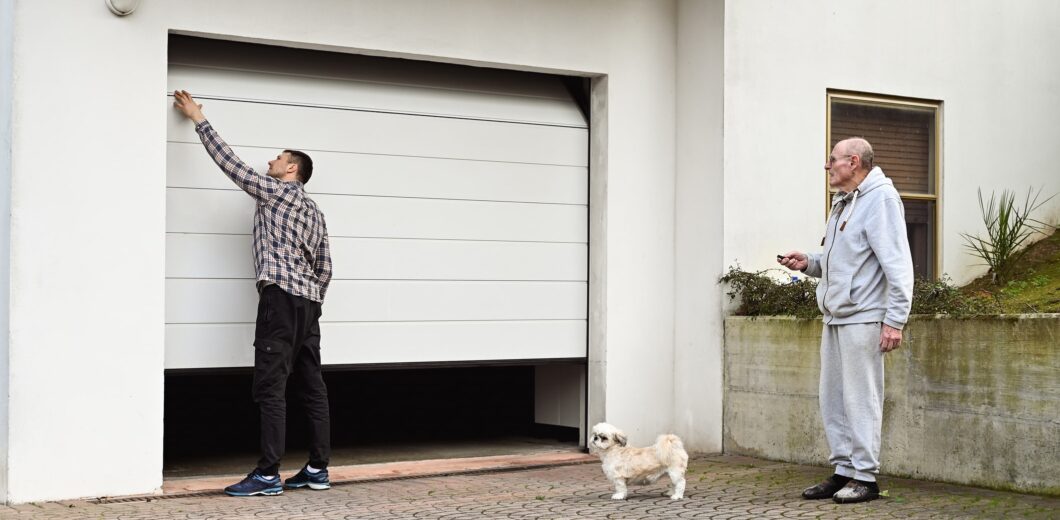
The first task on the routine is the one that costs nothing and catches the most. A monthly walk-around of the door takes ten minutes and surfaces the wear patterns that turn into emergency calls if left alone.
What to Look At During the Walk-Around
- Panel alignment (each panel should sit flush with the one above it; gaps signal a hinge or track issue)
- Cable condition along the drum (visible fraying is a stop-using-the-door indicator)
- Spring shaft and end-bearing wear (rust spots or visible spring section gaps mean a tech visit soon)
- Roller condition (worn or chipped rollers grind louder over time)
- Bottom seal integrity (cracks or torn sections let drafts and water in)
Note anything that has changed since the last walk-around. Most failure patterns show themselves a month or two before the failure actually hits.
Lubrication, the Highest-Return Maintenance Task
Lubrication is the cheapest, fastest, and highest-return maintenance task on the list. A ten-minute spray-down of moving parts twice a year prevents most of the grinding, screeching, and binding noises that drive people to call a tech.
What to lubricate and what to skip:
- Lubricate: hinge pivots, roller stems, spring coils, end bearing plates, the top edge of the rail
- Skip: the inside of the track itself (rollers should roll, not slide), the photo eye sensor lenses, and any electrical contact points
- Lubricant choice: a lithium-based spray rated for the temperature range. Avoid WD-40 and standard household oils; both dry out fast in Colorado’s semi-arid climate and attract grit
Run the door through three or four cycles after lubricating to work the spray into the bearings. The noise reduction is usually immediate.
Hardware Tightening and Track Check
Every open-close cycle vibrates the bolts holding the door together. Over months, those vibrations work bolts loose at the hinges, track brackets, and bottom panel. A semi-annual hardware tightening pass tightens everything back to spec and catches misalignment before it becomes a stuck door.
Worth tightening on each pass:
- Hinge bolts at every panel-to-panel joint
- Track mounting brackets on both vertical and horizontal sections
- Header bracket bolts above the opener
- Bottom bracket bolts at the cable drum attachment
- Roller stem retainers if loose
Use a socket or nut driver, not a power drill (over-torquing strips the threads). If a bolt feels stripped or spins freely, it needs replacement before the next visit.
Safety Feature Testing (UL 325 Compliance)
Federal regulations require every garage door opener built since 1993 to reverse on contact with an object and to respond to a photo eye blockage. Testing those features yearly catches drift before it becomes a code violation or a safety incident.
The Two Safety Tests to Run Every Year
- The 1.5-inch object test: place a 1.5-inch object on the threshold and close the door. The door must hit the object and reverse fully open. If it does not reverse, or reverses only partially, the down-force needs adjustment.
- The photo eye blockage test: start a close cycle, then interrupt the beam with your hand or a foot mid-cycle. The door must reverse fully open within a second. If it does not, the sensors need cleaning, alignment, or replacement.
A failed safety test is the most important finding any inspection produces. Pause use of the door until the test passes again.
Cables and Springs Are Pro-Only Items
Two parts of the garage door system are not on the homeowner’s maintenance list. Cables run under high tension from the spring assembly to the bottom of the door, and torsion springs store enough energy to break bones if they let go during an unbalanced adjustment. Both are tech-only territory.
What we handle on cables and springs:
- Spring tension measurement and adjustment (the balance test that confirms the door holds at half-open under hand)
- Spring section replacement when the cycle count is approaching the rated limit
- Cable inspection at the drum, where fraying is hardest to spot from below
- Drum and end bearing condition checks under load
Catching a worn cable before it snaps prevents the secondary damage to the opener motor, the panels, and any vehicle parked under the door.
The DIY vs. Pro Task Split at a Glance
The table below sorts every preventive task by who handles it, what tool is needed, how long it takes, and how often it needs doing. Use it to build your own maintenance calendar.
| Task | Who Handles | Tools Needed | Time | Frequency |
|---|---|---|---|---|
| Visual walk-around | DIY | None | 10 minutes | Monthly |
| Lubrication (hinges, rollers, springs) | DIY | Lithium-based spray | 15 minutes | Twice per year |
| Hardware tightening | DIY | Socket or nut driver | 30 minutes | Twice per year |
| Safety feature tests | DIY | 1.5-inch object | 5 minutes | Annually |
| Cable and spring inspection | Pro | Tension gauge | 20 minutes | Annually |
| Opener calibration and force test | Pro | Force gauge, board reader | 30 minutes | Annually |
| Track alignment | Pro | Level, square, torque wrench | 30 to 45 minutes | Annually |
Total annual time on the homeowner side: about two hours, plus the cost of a spray can of lithium grease.
When to Book Your Annual Tune-Up in Parker
Schedule the pro tune-up in either spring (April to May) or fall (September to October), before the climate transitions stress the door hardware. The DIY work fits between visits: monthly walk-around, semi-annual lubrication and tightening, annual safety check.
Select Garage Doors handles annual tune-ups across the Denver Metro service area out of our Parker, CO shop. Most visits take 60 to 90 minutes, including the full safety verification, hardware tightening, and force-setting tune.
Call 720-339-2442 to schedule a tune-up, request a maintenance scope, or ask about the right interval for your door’s age and cycle count.
Frequently Asked Questions
How often should I do preventive maintenance on my garage door?
A monthly visual walk-around plus semi-annual lubrication and hardware tightening covers the homeowner side. The pro tune-up should happen annually for typical residential use, or semi-annually for high-cycle homes with eight or more open-close cycles per day.
What kind of lubricant should I use on my garage door?
A lithium-based spray lubricant rated for the temperature range. Avoid WD-40 and standard household oils; both dry out fast in Colorado’s semi-arid climate and attract grit that grinds the bearings worse over time.
Can I tighten my garage door hardware myself?
Yes, with a socket or nut driver. Avoid power drills, which over-torque and strip the threads. Tighten hinges, track brackets, header bracket bolts, and bottom-bracket attachments to snug; if any bolt spins freely, it needs replacement.
What is the UL 325 auto-reverse test for garage doors?
UL 325 is the federal safety standard for residential garage door openers built since 1993. The test places a 1.5-inch object on the threshold during a close cycle; the door must reverse on contact. A door that fails the test is a safety hazard and a code violation.
Why should I not adjust garage door springs myself?
Torsion springs store enough energy to cause serious injury when they release during an unbalanced adjustment. Adjusting or replacing springs requires a tension gauge, a winding bar, and the experience to know how many quarter-turns the door needs. Both DIY accidents and incomplete adjustments are common when homeowners try this without training.
How long should a garage door last with preventive maintenance?
A well-maintained residential garage door typically lasts fifteen to thirty years before it needs full replacement. Doors that skip the preventive routine often shorten that range by five to ten years through premature spring fatigue, panel damage, and opener motor strain.
What is the cheapest single thing I can do to make my garage door last longer?
Lubricate the moving parts twice a year with a lithium-based spray.
How much does a professional garage door tune-up cost in Parker, CO?
Tune-ups that turn up a repair item include the cost of that repair as a separate line.
Looking for a deal?
Call us or to learn about our current promotions and seasonal offers.



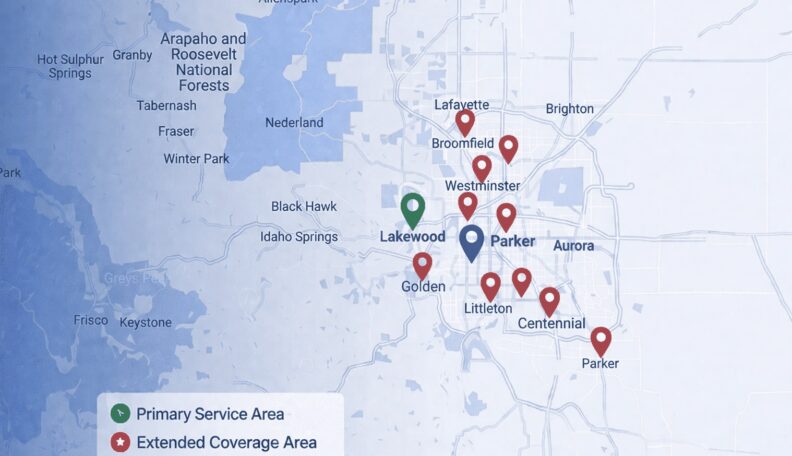
Service Area: 50+ Cities Across Metro Denver
Select Your Nearest Location
Hours: Mon-Fri 8am-5pm
Sunday Emergency Only
Avg Response Time: 18 minutes
Hours: Mon-Fri 8am-5pm
Sunday Emergency Only
Avg Response Time: 18 minutes
Hours: Mon-Fri 8am-5pm
Sunday Emergency Only
Avg Response Time: 18 minutes
Hours: Mon-Fri 8am-5pm
Sunday Emergency Only
Avg Response Time: 18 minutes
Hours: Mon-Fri 8am-5pm
Sunday Emergency Only
Avg Response Time: 18 minutes
Hours: Mon-Fri 8am-5pm
Sunday Emergency Only
Avg Response Time: 18 minutes
Hours: Mon-Fri 8am-5pm
Sunday Emergency Only
Avg Response Time: 18 minutes
Hours: Mon-Fri 8am-5pm
Sunday Emergency Only
Avg Response Time: 18 minutes
Hours: Mon-Fri 8am-5pm
Sunday Emergency Only
Avg Response Time: 18 minutes
Hours: Mon-Fri 8am-5pm
Sunday Emergency Only
Avg Response Time: 18 minutes
Hours: Mon-Fri 8am-5pm
Sunday Emergency Only
Avg Response Time: 18 minutes
Hours: Mon-Fri 8am-5pm
Sunday Emergency Only
Avg Response Time: 18 minutes
Hours: Mon-Fri 8am-5pm
Sunday Emergency Only
Avg Response Time: 18 minutes
Hours: Mon-Fri 8am-5pm
Sunday Emergency Only
Avg Response Time: 18 minutes
Hours: Mon-Fri 8am-5pm
Sunday Emergency Only
Avg Response Time: 18 minutes
We Service: Parker, Castle Rock, Greenwood Village, Lakewood, Littleton, Centennial, Highlands Ranch 40+ More Cities