

What Causes a Noisy Garage Door and How Pros Fix It in Parker, CO
Most garage door noises are diagnostic. A grinding sound usually means metal on metal where lubricant has dried up. A rattling sound usually means loose hardware somewhere on the door or rail. A high-pitched squeak usually means rollers or hinges need attention. Decoding the noise correctly is most of the work in fixing it.
At Select Garage Doors, we are a veteran-owned shop based in Parker, CO that diagnoses and repairs noisy garage doors across the Denver Metro area. Our team carries the parts and tools that most home toolkits do not, and we can usually pin down the noise on a single service visit. If your door has been making noise for a week or more, reach our team at Select Garage Doors for service backed by our 100% Satisfaction Guarantee.
What Garage Door Noises Actually Mean
A noisy garage door is almost always communicating something specific. Some noises are friction problems that a lube job fixes in fifteen minutes. Others are early warning signs of hardware fatigue that turns into a snapped spring or a stripped opener gear if ignored.
The noises fall into three rough families:
- Friction noises: squeaks, chirps, and grinding from hinges, rollers, or bearings running dry
- Hardware noises: rattles, clanks, and metallic thumps from loose bolts, brackets, or panel hinges
- Failure-warning noises: popping from a spring under load, screeching from a worn motor gear, or thudding from a track shifting under tension
Identify which family the noise belongs to and you have already done half the diagnostic work.
Sound-by-Sound Diagnostic
The table below maps the most common garage door noises to their likely causes, severity rating, and the appropriate fix. Use it as a starting point before you decide whether to grab a screwdriver or call a tech.
What Each Noise Usually Means
| Sound You Hear | Likely Cause | Severity | Typical Fix |
|---|---|---|---|
| Squeaking, chirping | Dry hinges, rollers, or bearings | Low | Lithium-based lubricant on all moving parts |
| Rattling, vibrating | Loose nuts, bolts, or brackets | Low | Tighten hardware along the track and panels |
| Grinding, metal-on-metal | Worn rollers (often plastic, no bearings) | Medium | Replace rollers with nylon plus sealed bearings |
| Popping, slapping | Cable jumping a drum groove, or a torsion spring section breaking | High | Stop using the door; call a tech immediately |
| Screeching, motor whine | Worn opener gear or stretched belt or chain | Medium-High | Service the opener; gear or belt replacement likely |
Severity matters more than volume. A quiet pop from the spring shaft is a bigger deal than a loud rattle from a panel hinge.
DIY Fixes for the Most Common Noises
Two of the three noise families respond to homeowner-level fixes. Friction noises and most hardware noises can be handled with a lithium-based spray lubricant and a basic socket wrench.
Worth attempting on a Saturday morning:
- Lubricate the hinges and rollers: apply a lithium-based spray to every hinge pivot, roller stem, spring coil, and the bearing plates on each end of the spring shaft (avoid spraying the track interior; rollers should roll, not slide)
- Tighten the track and bracket bolts: run a socket or nut driver along the vertical and horizontal tracks, the header bracket, and every hinge plate connecting the panels
- Inspect the weather seal: Call for a free estimate.
- Check the photo eye sensors: loose bolts on the sensor brackets cause intermittent reverse cycles that sound like a stutter; tighten them and confirm the alignment LEDs are solid
After any DIY fix, run the door through three or four full cycles to confirm the noise is actually gone. If it returns within a week, the underlying issue is upstream of what you fixed.
When the Noise Means Something Mechanical Is About to Fail
The third family of noises (failure-warning sounds) does not respond to lubricant or a socket wrench. A pop from the spring shaft, a screech from inside the opener housing, or a thud from a track section all signal a component that is past tuning and into replacement territory.
Signs the Noise Is a Pre-Failure Warning
- A loud bang from the garage when no one is using the door (a torsion spring section letting go under tension)
- Rapid clicking from the opener housing combined with the door not moving (motor capacitor failure or stripped drive gear)
- A grinding screech that gets louder over a week of normal use (motor gear or chain housing wear)
- A door that hesitates mid-cycle and then continues (limit switch or logic board drift, not friction)
- A bottom panel that rattles loudly only on the down cycle (cable jumping its drum groove)
Running the door past any of these signals usually compounds the repair.
What a Pro Catches That a DIY Fix Misses
The DIY fixes above cover surface friction and loose hardware. The fixes that require calibrated tools, force gauges, and tested replacement parts are where a tech visit pays off.
What We Check on a Noise-Diagnosis Visit
- Spring tension at half-open balance (a test the DIY toolkit cannot replicate)
- Roller condition under load, not just at rest
- Cable wear at the drum, where a visual inspection often misses fraying
- Limit switch positions and force-setting calibration
- Opener gear and capacitor condition with a board reader
Our veteran-owned team carries the gauges and replacement parts that turn a noise diagnosis into a single-visit fix in most cases.
How to Stop the Noise and Keep It From Coming Back
Start with the diagnostic table above and the DIY checklist if the noise is in the friction or hardware family. If the table points to a failure-warning sound, stop using the door and put a tech visit on the calendar before the noise turns into a stuck or broken door.
Our team handles noise diagnosis and full garage door repair across the Denver Metro service area out of our Parker, CO shop.
Call (720) 339-2442 to schedule a diagnostic visit, describe the noise on the phone, or request a written estimate after the diagnosis.
Frequently Asked Questions
What is the most common cause of a noisy garage door?
Dry rollers and hinges are the most common cause across all garage doors. Most squeaks, chirps, and light grinding noises go away after a lithium-based spray lubricant is applied to every moving pivot, bearing, and roller stem.
How often should I lubricate my garage door to prevent noise?
Twice per year is the standard cadence for most residential doors. Homes in Parker, CO with the Front Range’s wide temperature swings or heavy daily cycle counts often benefit from a quarterly lube application.
What kind of lubricant should I use on my garage door?
A lithium-based spray lubricant rated for the temperature range. Avoid WD-40 and standard household oils; both dry out fast in Colorado’s semi-arid climate and attract dirt that grinds the bearings worse over time.
Why does my garage door pop or bang when I open it?
A loud pop from the spring shaft usually means a torsion spring section has broken or is about to. Stop using the door and call a tech; running the opener against a broken spring stresses the motor and can strip the drive gear.
Can rattling from a garage door damage the door over time?
Yes. Rattling usually points to loose hardware, and loose hardware works wider with each open-close cycle. A bracket bolt that rattles today is a misaligned track in two weeks and a bent panel in two months.
Should I replace my garage door if it has been noisy for years?
Not necessarily. Most chronic noise issues are fixable through hardware tightening, lubrication, roller replacement, or spring rebalancing. Replacement is usually the right call only when the panels are damaged, the door is single-layer in a four-season climate, or the cost to repair exceeds about half the cost of a new door.
How much does it cost to fix a noisy garage door in Parker, CO?
Call for a free estimate.
Can I keep using my garage door if it is making noise?
Friction and hardware noises are usually safe to drive past for a short period while you schedule a fix. Failure-warning noises (loud pops, rapid clicking from the opener, or grinding that gets louder over a week) are not safe to drive past; stop using the door until a tech assesses it.
Looking for a deal?
Call us or to learn about our current promotions and seasonal offers.



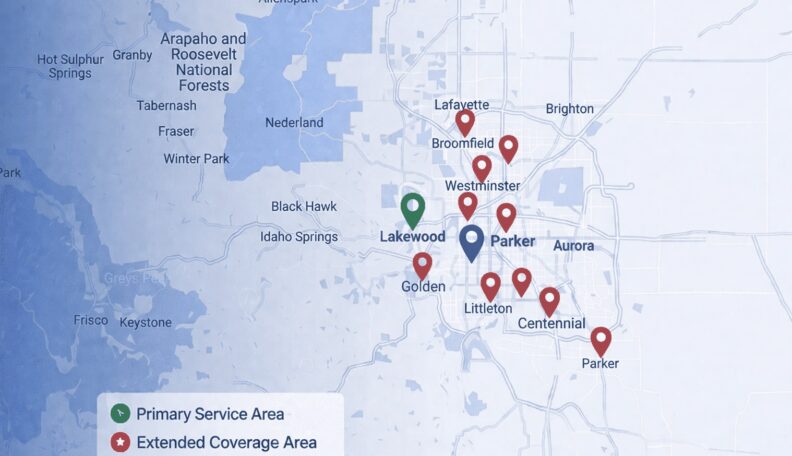
Service Area: 50+ Cities Across Metro Denver
Select Your Nearest Location
Hours: Mon-Fri 8am-5pm
Sunday Emergency Only
Avg Response Time: 18 minutes
Hours: Mon-Fri 8am-5pm
Sunday Emergency Only
Avg Response Time: 18 minutes
Hours: Mon-Fri 8am-5pm
Sunday Emergency Only
Avg Response Time: 18 minutes
Hours: Mon-Fri 8am-5pm
Sunday Emergency Only
Avg Response Time: 18 minutes
Hours: Mon-Fri 8am-5pm
Sunday Emergency Only
Avg Response Time: 18 minutes
Hours: Mon-Fri 8am-5pm
Sunday Emergency Only
Avg Response Time: 18 minutes
Hours: Mon-Fri 8am-5pm
Sunday Emergency Only
Avg Response Time: 18 minutes
Hours: Mon-Fri 8am-5pm
Sunday Emergency Only
Avg Response Time: 18 minutes
Hours: Mon-Fri 8am-5pm
Sunday Emergency Only
Avg Response Time: 18 minutes
Hours: Mon-Fri 8am-5pm
Sunday Emergency Only
Avg Response Time: 18 minutes
Hours: Mon-Fri 8am-5pm
Sunday Emergency Only
Avg Response Time: 18 minutes
Hours: Mon-Fri 8am-5pm
Sunday Emergency Only
Avg Response Time: 18 minutes
Hours: Mon-Fri 8am-5pm
Sunday Emergency Only
Avg Response Time: 18 minutes
Hours: Mon-Fri 8am-5pm
Sunday Emergency Only
Avg Response Time: 18 minutes
Hours: Mon-Fri 8am-5pm
Sunday Emergency Only
Avg Response Time: 18 minutes
We Service: Parker, Castle Rock, Greenwood Village, Lakewood, Littleton, Centennial, Highlands Ranch 40+ More Cities