


Top Garage Door Materials for Parker, CO Homes
Choosing the right garage door material in Parker, CO means weighing durability, insulation, and resistance to hail, UV exposure, and wide temperature swings. Select Garage Doors helps Parker homeowners compare steel, wood, aluminum, vinyl, and composite options so you can pick the material that fits your home, your budget, and Colorado’s demanding climate.
Table of Contents
- Garage Door Materials for Parker, CO Homes
- Material Comparison Table
- When to Call a Garage Door Technician in Parker
- Pick the Right Material for Your Parker Home
- FAQ
Your garage door is one of the largest surfaces on your home, and in Parker, CO, it takes a beating from every direction. Summer hail, intense UV at elevation, subzero winter nights, and 60-degree temperature swings in a single day all test whatever material you choose. Picking the wrong one means premature fading, warping, dents, or energy loss. Picking the right one means a door that looks good, performs well, and holds up for years without constant attention. Select Garage Doors has helped homeowners across the Denver metro area make that choice with confidence.
This guide breaks down five common garage door materials and explains exactly how each one handles the specific conditions Parker homeowners face. No generic advice. Every recommendation below accounts for Colorado’s altitude, weather patterns, and the types of homes found in Parker’s neighborhoods.
Garage Door Materials for Parker, CO Homes
Is Steel the Best All-Around Material for Colorado Garage Doors?
Steel is the most popular garage door material in Parker for good reason. It handles temperature extremes, resists warping, comes in a wide range of styles and colors, and pairs well with polyurethane or polystyrene insulation to manage Colorado’s cold winters and hot summer afternoons. For most Parker homeowners, steel offers the best balance of cost, durability, and low maintenance.
Modern steel garage doors are available in single-layer, double-layer, and triple-layer construction. A single-layer steel door is the most affordable option but provides almost no insulation and dents more easily. Double-layer doors add a layer of polystyrene insulation behind the steel skin, improving energy efficiency and rigidity. Triple-layer doors sandwich polyurethane foam between two steel panels, delivering the highest R-value and the most resistance to impact.
For Parker homes with attached garages, a triple-layer steel door makes the most practical sense. Attached garages share a wall with your living space, and an uninsulated or poorly insulated door lets cold air seep into your home all winter. That drives up heating costs and makes rooms adjacent to the garage noticeably uncomfortable. A triple-layer door with an R-value of 12 or higher creates a meaningful thermal barrier.
Hail is the biggest concern with steel in this part of Colorado. Thinner 27-gauge steel dents more readily than thicker 24-gauge or 25-gauge panels. If your Parker neighborhood has experienced hail damage in recent years, choosing a heavier gauge steel door is a worthwhile investment. The dents are cosmetic rather than structural, but they are difficult to repair without panel replacement.
Does a Wood Garage Door Hold Up in Parker’s Climate?
Wood garage doors offer natural insulation and a distinctive appearance that no other material can match, but Parker’s dry climate, UV intensity at 5,800 feet of elevation, and seasonal moisture shifts make wood the highest-maintenance option. Homeowners who choose wood should plan for regular staining or painting every two to three years to prevent cracking, fading, and moisture damage.
Wood is the traditional choice for a reason. A well-built cedar, redwood, or hemlock garage door has a warmth and character that steel, vinyl, and aluminum simply cannot replicate. Wood is also a natural insulator, meaning even a solid wood door without added foam provides better thermal performance than an uninsulated steel or aluminum panel.
The challenge in Parker is that Colorado’s climate is unusually hard on wood. The Front Range receives around 300 days of sunshine per year, and UV exposure at elevation breaks down finishes faster than it does at sea level. Winters bring freeze-thaw cycles that work moisture into any crack or imperfection in the finish. Summer thunderstorms follow days of dry heat, and that constant expansion and contraction can cause warping or splitting over time.
If you have your heart set on wood, overlay construction offers a compromise. A wood overlay door uses a steel or composite frame with real wood panels attached to the exterior face. You get the look of wood with better dimensional stability and lower maintenance demands. Many Parker homeowners in HOA communities with strict architectural guidelines choose this route because it satisfies design requirements without the full upkeep burden of solid wood.
Are Aluminum Garage Doors a Good Fit for Parker Homes?
Aluminum doors are lightweight, rust-resistant, and available in modern full-view designs that work well on contemporary homes. However, aluminum is the softest common garage door material, making it the most vulnerable to hail damage. Parker homeowners who choose aluminum should weigh the aesthetic benefits against the real risk of denting during Colorado’s spring and summer storm seasons.
Aluminum’s biggest advantage is its weight. A full-size aluminum garage door can weigh 30 to 50 percent less than an equivalent steel door. That puts less strain on the opener, springs, and tracks, which can mean fewer mechanical issues over the life of the door. It also makes aluminum a practical choice for oversized or custom-width openings where a heavier material would require upgraded hardware.
Full-view aluminum doors with glass or acrylic panels have become popular in newer Parker developments with modern architecture. These doors flood the garage with natural light and create a clean, contemporary look. The glass panels are typically tempered or impact-rated, which adds some resilience, but the aluminum frame itself remains susceptible to denting.
Insulation is another consideration. Most aluminum doors have lower R-values than comparable steel or composite options. If your garage is attached to your home or you use it as a workshop, an aluminum door may not provide enough thermal separation without additional weatherstripping or a supplemental heating source. For detached garages used primarily for vehicle storage, aluminum’s lower insulation is less of a concern.
What Makes Vinyl a Low-Maintenance Option in Colorado?
Vinyl garage doors resist dents, never need painting, and hold up well against moisture. They are a strong low-maintenance choice for Parker homeowners who want a door that requires minimal upkeep year after year. The trade-off is a more limited range of styles and colors compared to steel, and some vinyl doors can become brittle in extreme cold if the formulation is not UV-stabilized.
Vinyl doors are made from PVC, often with a steel frame for structural support and polyurethane foam insulation in the core. That combination gives them solid insulation values, usually comparable to a double-layer or triple-layer steel door. The vinyl skin is colored all the way through, so scratches and minor scuffs do not reveal a different color underneath. That is a genuine advantage for families with active kids or for homes where bikes, tools, or sports equipment regularly come close to the door.
Moisture resistance is where vinyl truly separates itself. Unlike steel, vinyl does not rust. Unlike wood, it does not absorb water, swell, or rot. Parker does not get heavy sustained rain, but spring storms can be intense, and snowmelt pools against the base of garage doors every winter. A vinyl door handles that repeated moisture exposure without deteriorating.
The main concern with vinyl in Parker is UV degradation and cold-weather brittleness. At elevation, UV radiation breaks down polymers faster. Lower-quality vinyl formulations can fade, chalk, or become rigid in winter cold, increasing the risk of cracking on impact. Ask about UV stabilizers and cold-weather ratings before purchasing. A quality vinyl door rated for northern climates will perform well in Parker, but bargain-grade vinyl may not last.
Is Composite or Fiberglass Worth Considering for a Parker Garage Door?
Composite and fiberglass garage doors bridge the gap between the look of wood and the durability of synthetic materials. They resist rot, insects, and moisture while offering realistic wood-grain textures. For Parker homeowners who want a wood appearance without the upkeep, composite is often the smartest long-term investment, though it comes at a higher upfront cost than steel or vinyl.
Composite doors are typically made from recycled wood fibers bonded with resin and formed into panels that mimic the grain and texture of real wood. They can be painted or stained, and many manufacturers offer factory-finished options in a range of colors. Unlike solid wood, composite does not absorb moisture, so it resists warping, cracking, and swelling through Parker’s freeze-thaw cycles.
Fiberglass is a related but slightly different material. Fiberglass panels are lighter than composite and resist denting better than aluminum, but they can crack under heavy impact. In hail-prone areas along the Front Range, fiberglass is more resilient than aluminum but less forgiving than steel or composite. Fiberglass also transmits light in translucent configurations, which some homeowners use for natural garage lighting without full glass panels.
The cost of composite and fiberglass doors is higher than steel or vinyl, sometimes significantly so for premium wood-look finishes. For Parker homeowners who value curb appeal, plan to stay in their home long-term, and want to avoid the maintenance cycle of real wood, composite delivers genuine return on investment. It holds its appearance longer, requires less refinishing, and stands up to Colorado’s UV and temperature extremes better than natural wood.
How Does Colorado’s Climate Affect Your Garage Door Material Choice?
Parker sits at roughly 5,800 feet of elevation on Colorado’s Front Range, where hailstorms, intense UV, wide daily temperature swings, and dry air combine to stress every building material on your home. The material you choose for your garage door needs to handle all four of those factors, not just one or two, because they act together over time to accelerate wear.
Hail is the most dramatic threat. The Front Range is one of the most hail-active corridors in the United States. Storms that produce golf-ball-sized hail are not rare events in the Denver metro area. Steel in 24-gauge or thicker resists hail better than aluminum or thin-gauge steel. Vinyl flexes on impact rather than denting, giving it a natural advantage. Wood absorbs impact reasonably well but can splinter under severe strikes. Composite falls somewhere between wood and steel in hail resilience.
UV exposure at elevation degrades finishes and materials faster than homeowners expect. Paint on steel doors fades more quickly at 5,800 feet than at sea level. Wood finishes break down in two to three years rather than five. Vinyl without UV stabilizers chalks and discolors. When comparing doors, ask about the warranty on the finish, not just the structure. A door with a 20-year structural warranty but only a 2-year finish warranty may look worn within a few years.
Temperature swings add another layer of stress. Parker regularly sees 30 to 40 degree differences between daytime highs and overnight lows, especially in spring and fall. That constant expansion and contraction loosens hardware, stresses panel joints, and tests the flexibility of seals and weatherstripping. Rigid materials like fiberglass and low-quality vinyl are more prone to cracking under these conditions. Steel and composite handle thermal cycling with less degradation. Whatever material you choose, checking and tightening hardware twice a year helps offset the cumulative effect of Colorado’s temperature swings.
Garage Door Material Comparison for Parker, CO
| Material | Durability | Insulation (R-Value Range) | Maintenance | Hail Resistance | Typical Price Range |
|---|---|---|---|---|---|
| Steel (24-25 gauge) | High | R-6 to R-18 (triple-layer) | Low | Good to Very Good | Call for a free estimate. |
| Wood | Moderate | R-5 to R-10 (natural) | High | Moderate | Call for a free estimate. |
| Aluminum | Moderate | R-4 to R-8 | Low | Poor | Call for a free estimate. |
| Vinyl | High | R-6 to R-12 | Very Low | Good (flexes on impact) | Call for a free estimate. |
| Composite / Fiberglass | High | R-6 to R-14 | Low to Moderate | Moderate to Good | Call for a free estimate. |
Price ranges reflect standard two-car garage doors (16×7) including basic installation. Custom sizes, premium finishes, and window inserts increase cost. Contact Select Garage Doors at 720-339-2442 for a quote specific to your Parker home.
When to Call a Garage Door Technician in Parker
Choosing a garage door material is a decision that affects your home’s energy efficiency, curb appeal, and maintenance load for 15 to 30 years. While this guide gives you the information to narrow your options, a few situations call for hands-on guidance from someone who installs and services these doors in Parker every week.
If your current door was damaged by hail and you are deciding between repair and full garage door installation, a site evaluation helps determine whether the damage is cosmetic or structural. Dented panels on an otherwise sound door can sometimes be replaced individually, but widespread damage often makes replacement the better value.
If you are dealing with a door that has already deteriorated from weather exposure, such as a wood door with cracking panels or a steel door with rust at the base, garage door repair in Parker can address the immediate issue while you plan for a material upgrade.
HOA requirements in many Parker communities dictate acceptable door styles, colors, and sometimes materials. Before purchasing, verify your HOA’s architectural guidelines. Select Garage Doors can help you find a door that meets those requirements while still performing well in Colorado’s climate.
Annual garage door maintenance also extends the life of any material. Lubricating moving parts, inspecting weatherstripping, tightening hardware, and touching up finish damage before it spreads are small steps that prevent expensive problems down the road.
Pick the Right Material for Your Parker Home
The right garage door material depends on your priorities. If low maintenance and hail resistance top the list, steel or vinyl will serve you well. If curb appeal and a natural look matter most, composite gives you wood’s character without wood’s upkeep. If you want a modern full-view design, aluminum delivers the look, but plan for occasional dent repair after storm season.
Select Garage Doors works with homeowners across Parker and the Denver metro area to match the right material to the right home. We serve Parker, Castle Rock, Greenwood Village, Lakewood, and the greater Denver metro area.
Call 720-339-2442 to discuss which material fits your home, your budget, and your neighborhood’s requirements.
Frequently Asked Questions
What is the most durable garage door material for Parker, CO?
Heavy-gauge steel (24 or 25 gauge) with triple-layer insulation offers the best combination of durability, hail resistance, and energy efficiency for Parker’s climate.
Do wood garage doors hold up in Colorado’s dry climate?
Wood can work in Colorado but requires staining or painting every two to three years. UV exposure at elevation and freeze-thaw cycles accelerate finish breakdown faster than in lower-altitude locations.
Which garage door material resists hail the best?
Thick-gauge steel and vinyl handle hail impacts best. Steel absorbs hits without cracking, and vinyl flexes rather than denting. Aluminum is the most hail-vulnerable option.
Is an insulated garage door worth it in Parker?
Yes. Parker’s winter lows regularly drop below zero, and attached garages share a wall with your living space. An insulated door with an R-value of 12 or higher reduces energy loss and keeps adjacent rooms more comfortable.
How much does a new garage door cost in the Denver metro area?
Call for a free estimate.
Can I get a garage door that looks like wood but does not need the maintenance?
Composite doors and steel doors with wood-grain finishes both replicate the look of real wood. Composite is more realistic up close and can be stained, while wood-grain steel is lower maintenance overall.


Looking for a deal?
Call us or to learn about our current promotions and seasonal offers.



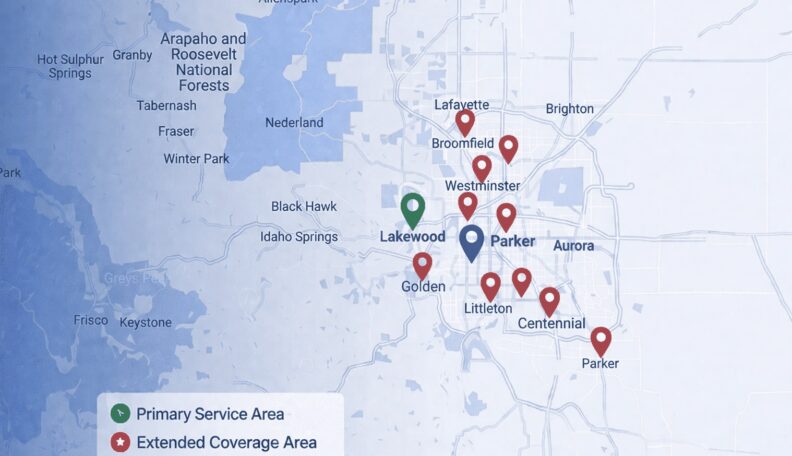
Service Area: 50+ Cities Across Metro Denver
Select Your Nearest Location
Hours: Mon-Fri 8am-5pm
Sunday Emergency Only
Avg Response Time: 18 minutes
Hours: Mon-Fri 8am-5pm
Sunday Emergency Only
Avg Response Time: 18 minutes
Hours: Mon-Fri 8am-5pm
Sunday Emergency Only
Avg Response Time: 18 minutes
Hours: Mon-Fri 8am-5pm
Sunday Emergency Only
Avg Response Time: 18 minutes
Hours: Mon-Fri 8am-5pm
Sunday Emergency Only
Avg Response Time: 18 minutes
Hours: Mon-Fri 8am-5pm
Sunday Emergency Only
Avg Response Time: 18 minutes
Hours: Mon-Fri 8am-5pm
Sunday Emergency Only
Avg Response Time: 18 minutes
Hours: Mon-Fri 8am-5pm
Sunday Emergency Only
Avg Response Time: 18 minutes
Hours: Mon-Fri 8am-5pm
Sunday Emergency Only
Avg Response Time: 18 minutes
Hours: Mon-Fri 8am-5pm
Sunday Emergency Only
Avg Response Time: 18 minutes
Hours: Mon-Fri 8am-5pm
Sunday Emergency Only
Avg Response Time: 18 minutes
Hours: Mon-Fri 8am-5pm
Sunday Emergency Only
Avg Response Time: 18 minutes
Hours: Mon-Fri 8am-5pm
Sunday Emergency Only
Avg Response Time: 18 minutes
Hours: Mon-Fri 8am-5pm
Sunday Emergency Only
Avg Response Time: 18 minutes
Hours: Mon-Fri 8am-5pm
Sunday Emergency Only
Avg Response Time: 18 minutes
We Service: Parker, Castle Rock, Greenwood Village, Lakewood, Littleton, Centennial, Highlands Ranch 40+ More Cities