

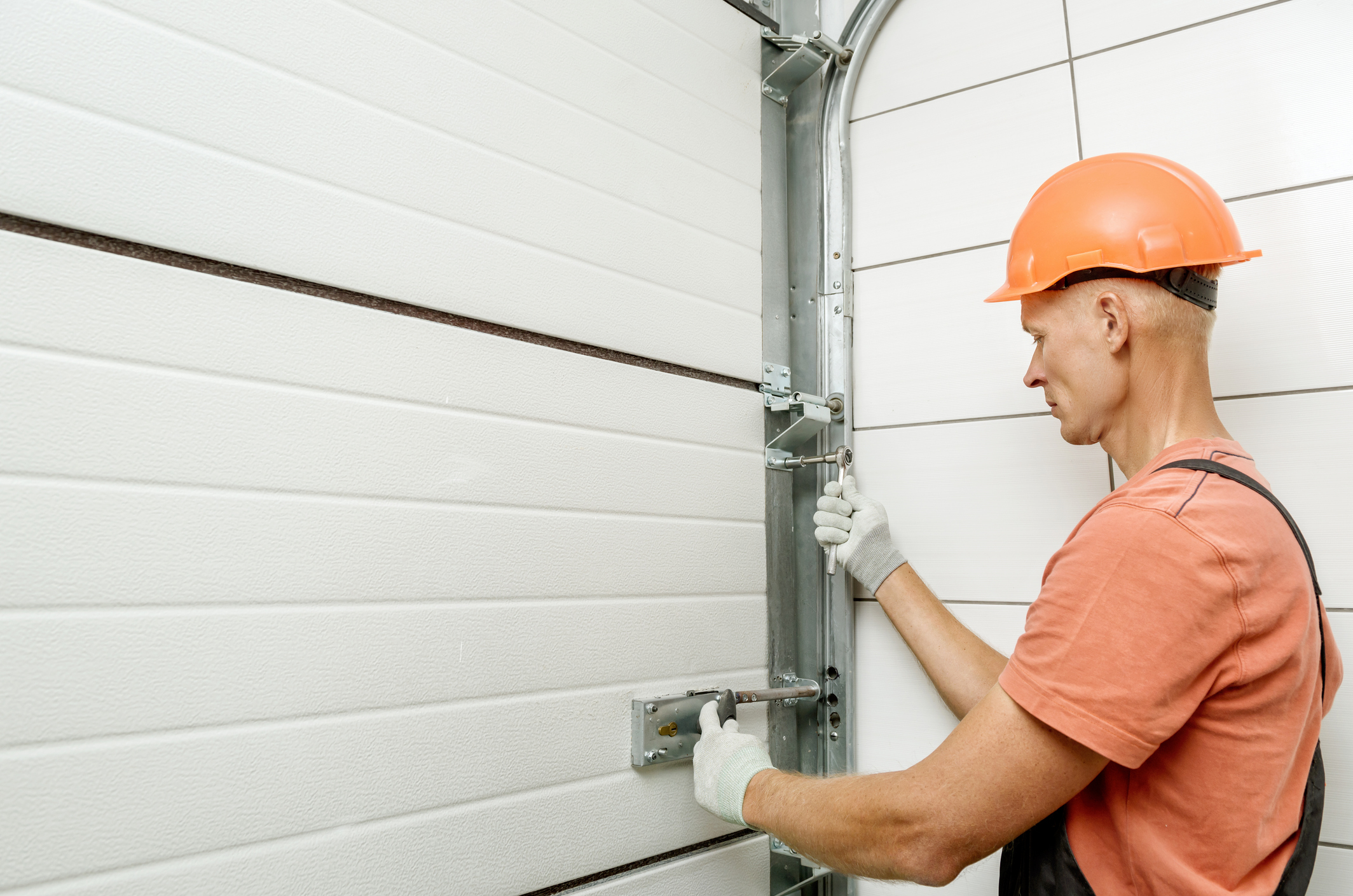
- Select Garage Doors handles garage door weatherproofing and insulation for Parker, Colorado homeowners, covering material selection, installation, and maintenance to protect homes from the Front Range’s demanding climate year-round.
- Parker sits at 5,869 feet above sea level, where temperature swings of 40 to 60 degrees Fahrenheit within a single day stress door seals and frames, and hail season from April through September can compromise weatherstripping and bottom seals in a single storm.
- Attached garages in Parker benefit from R-12 to R-18 insulation per ENERGY STAR guidelines for IECC Climate Zone 5. Polyurethane foam fill outperforms polystyrene backer boards in Colorado’s freeze-thaw cycle because it does not compress or crack over time the way polystyrene can.
- Bottom seals and perimeter weatherstripping in Parker’s semi-arid conditions typically need replacement every 3 to 5 years rather than the 5 to 7-year national average, because low humidity dries out rubber and vinyl faster than in more humid climates.
Select Garage Doors handles weatherproofing and insulation for Parker, CO homeowners as part of installation service. These are crucial aspects of garage door setup, offering benefits such as energy efficiency, temperature regulation, and protection against the elements. Below is a look at the techniques used during garage door installation in Parker and the advantages they bring:
In This Article
- Understanding Weatherproofing
- Insulation for Energy Efficiency
- Techniques for Weatherproofing and Insulation
- Benefits of Weatherproofing and Insulation
- Choosing the Right Materials
- How Parker’s Climate Determines the Right Insulation R-Value
- Insulation Type Comparison for Parker, Colorado Conditions
- How Colorado Hail Season and Semi-Arid Conditions Affect Weatherproofing
- Weatherproofing Maintenance Intervals for Parker Homeowners
- Frequently Asked Questions
1. Understanding Weatherproofing:
Weatherproofing involves sealing gaps, cracks, and openings in your garage door and surrounding areas to prevent moisture, drafts, and outdoor elements from entering the space.
2. Insulation for Energy Efficiency:
Insulation plays a key role in maintaining consistent indoor temperatures and reducing energy costs. Proper insulation prevents heat loss in winter and keeps your garage cooler in summer.
3. Techniques for Weatherproofing and Insulation:
During garage door setup, trained installers use techniques such as installing weatherstripping, sealing joints, adding insulation panels or layers, and ensuring a tight fit between the door and frame.
4. Benefits of Weatherproofing and Insulation:
Weatherproofing and insulation offer numerous benefits, including improved energy efficiency, reduced HVAC costs, enhanced comfort, protection of stored items, and prevention of damage from moisture and temperature fluctuations.
5. Choosing the Right Materials:
When selecting materials for a garage door installation, choose weatherproofing and insulation options that suit your climate, garage usage, and budget. Options include weatherstripping, foam insulation, reflective barriers, and garage door seals. For help comparing installation service providers, choosing the right garage door opener installation service covers what to evaluate before hiring.
Weatherproofing and insulation are essential to any garage door installation. By properly sealing gaps and adding insulation, you improve energy efficiency, maintain comfortable indoor temperatures, protect stored items, and reduce utility costs. Before scheduling service, what to look for when hiring garage door opener installation services covers the credentials and questions to ask.
A properly insulated and weatherproofed garage door installation in Parker, CO starts with the right service provider. schedule door installation in Parker, Colorado or call (720) 339-2442 to schedule an installation assessment. Available throughout Parker and nearby communities, including Castle Rock, Greenwood Village, Lakewood, and the wider Denver metro.
How Parker’s Climate Determines the Right Insulation R-Value
Parker, Colorado falls within IECC Climate Zone 5, which means attached garages connected to living spaces should meet insulation levels closer to those used in the home’s exterior walls rather than relying on a basic polystyrene backer. ENERGY STAR guidelines for Climate Zone 5 recommend R-12 to R-18 for garage doors on conditioned or attached garages, a range that rules out the basic single-layer panels found on most builder-grade doors installed before 2018.
Two insulation types dominate the Colorado market: polyurethane foam fill and polystyrene backer boards. Polyurethane is injected directly between door panel skins and expands to fill the cavity completely, creating a continuous thermal and structural barrier. Polystyrene is cut to fit and placed inside the panel frame but leaves small air gaps at edges and corners. In Parker’s freeze-thaw cycle, where overnight temperatures regularly drop 30 to 40 degrees below afternoon highs, polyurethane holds its shape and R-value year after year. Polystyrene can compress, shift, or crack along cut edges after repeated freeze cycles, reducing effective R-value over time without any visible change to the door’s exterior.
For detached garages or garages used only for vehicle storage without direct access to the home, R-6 to R-10 is often sufficient and keeps cost reasonable. The key decision point is whether your garage shares a wall with a bedroom, kitchen, or any living space that carries a heating or cooling load. Shared-wall situations in Parker benefit most from the higher polyurethane range because every degree of temperature transfer from garage to living space adds to HVAC runtime, and Xcel Energy customers in Parker already face high heating-degree-day loads from October through April.
Insulation Type Comparison for Parker, Colorado Conditions
| Type | R-Value | Best For | Durability in CO Climate |
|---|---|---|---|
| Polyurethane foam fill | R-12 to R-18 | Attached garages with shared walls, conditioned spaces, Climate Zone 5 | Excellent: resists freeze-thaw compression, maintains R-value long-term |
| Polystyrene backer board | R-6 to R-10 | Detached garages, vehicle-only storage, lower-budget installs | Fair: can compress or crack at cut edges after repeated freeze cycles |
| Reflective barrier | R-3 to R-8 | Hot-summer applications, garages facing south or west in Parker | Good for radiant heat reduction; limited cold-weather performance |
| Retrofit insulation kit | R-4 to R-8 | Adding insulation to an existing uninsulated door without full replacement | Moderate: adds weight to door (rebalance springs after install); gaps at edges reduce effective R-value |
How Colorado Hail Season and Semi-Arid Conditions Affect Weatherproofing
Colorado’s hail season runs from April through September, and the Colorado Climate Center reports the Front Range averages 9 to 10 hail days per year. A single hailstorm can damage the bottom seal, knock perimeter weatherstripping out of its channel, and dent lower-gauge panel skins in ways that create new air gaps at frame corners. Parker homeowners whose doors face east or south are exposed to the storm approach direction most common on the Front Range and should plan a post-hail inspection as a standard part of summer maintenance.
Parker’s semi-arid conditions accelerate weatherstripping degradation independently of hail events. Standard rubber and vinyl bottom seals are rated for 5 to 7 years in humid climates where moisture keeps the material supple. In Parker, the combination of low humidity, UV exposure at 5,869 feet, and temperature extremes dries out seals faster. Bottom seal failure in 3 to 5 years is a realistic interval for Parker homes given these semi-arid conditions, with perimeter gaskets needing replacement on a similar timeline when doors face south or west with direct afternoon sun exposure.
Thermal expansion at the door frame corners is a related issue specific to the Front Range. The aluminum stop molding that holds weatherstripping in place expands and contracts with temperature, and the fasteners that secure it can loosen over several winters of cycling. A loose stop molding lets the weatherstripping pull away from the door face at the bottom corners, which are the most common entry point for drafts, insects, and moisture during snowmelt events when water pools against the garage door threshold.
Weatherproofing Maintenance Intervals for Parker Homeowners
A spring inspection in April and a fall inspection in October cover the two highest-risk periods for Parker garage door weatherproofing. April catches any damage from the winter freeze-thaw cycle and prepares the door for hail season. October identifies seal degradation before the first hard freeze and gives time for replacement before temperatures lock the door against an iced threshold.
During each inspection, check the bottom seal for hardening or cracking, run a flashlight along the door perimeter at night to identify light gaps, and press the stop molding at the lower corners to confirm the fasteners are still tight. For why regular maintenance from a garage door company is essential in this climate, the front range conditions covered there apply directly to the weatherproofing inspection cadence for Parker homeowners.
Insulation upgrades to an existing door typically do not require ARC review, but rules vary by subdivision. Confirm with your HOA before any exterior panel or color change that might come with a door replacement.
Select Garage Doors operates out of the Parker location on South Pine Drive and handles weatherproofing inspections, seal replacements, and insulation upgrades across the Parker area. Reach the Parker office at (720) 339-2442 to schedule a weatherproofing assessment before hail season or ahead of the first freeze.
Frequently Asked Questions
What R-value should a garage door have in Parker, Colorado?
Parker, Colorado falls in IECC Climate Zone 5, and ENERGY STAR guidelines recommend R-12 to R-18 for garage doors on attached garages connected to living spaces in that zone. Detached garages used only for vehicle storage can use R-6 to R-10 without significant energy impact. Polyurethane foam fill is the preferred material for hitting the upper end of that range because it maintains its R-value through Parker’s freeze-thaw cycle better than polystyrene backer boards, which can compress over time at cut edges.
How often should I replace weatherstripping on a garage door in Colorado?
Parker homeowners should plan for bottom seal and perimeter weatherstripping replacement every 3 to 5 years rather than the 5 to 7-year national average, because Parker’s semi-arid conditions at 5,869 feet dry out rubber and vinyl faster than in humid climates. UV exposure at Front Range elevation and the 40 to 60 degree Fahrenheit daily temperature swings accelerate material degradation further. Post-hail inspections from April through September can catch seal damage earlier and extend the useful life of weatherstripping between replacement cycles.
Does garage door insulation actually reduce heating costs in Parker?
Yes, particularly for attached garages that share a wall with a heated living space. An uninsulated door on an attached garage in Parker creates a significant thermal bridge during the October through April heating season, when Parker regularly logs overnight lows below 20 degrees Fahrenheit. Upgrading from an uninsulated door to a polyurethane-insulated door with R-16 or higher reduces heat transfer through the door panel and the shared wall, which lowers HVAC runtime. The payback period depends on the garage’s size, the number of shared walls, and current energy costs, but attached-garage upgrades in Climate Zone 5 typically recover installation cost within a few heating seasons.
What insulation type is best for Parker’s temperature swings?
Polyurethane foam fill is the better choice for Parker’s 40 to 60 degree Fahrenheit daily temperature swings and the freeze-thaw cycle that runs through most of the winter. Polyurethane is injected as a liquid and expands to fill the door cavity completely, leaving no edge gaps where air can infiltrate. It bonds to the door panel skins and does not shift or compress with temperature changes. Polystyrene backer boards are a cost-effective option for lower-traffic applications but are better suited to detached garages in Parker where the freeze-thaw stress on panel cavities is less of a concern.
Can I add insulation to my existing garage door in Parker without replacing it?
Yes, retrofit insulation kits are available for most standard sectional doors and can raise an uninsulated door from R-0 to roughly R-4 to R-8 depending on panel depth and the kit used. The tradeoff is that retrofit insulation adds weight to the door, which requires rebalancing the torsion springs to prevent premature opener motor wear. Select Garage Doors can assess whether your current springs and opener are rated for the added load before a retrofit kit is installed. For doors in poor condition or with panels that are already dented or compromised, a full replacement with a factory-insulated door is often a better investment than retrofitting a door that will need replacement within a few years anyway.
How does hail season affect garage door weatherproofing in Parker?
Colorado’s hail season from April through September, with 9 to 10 hail days per year on the Front Range according to the Colorado Climate Center, creates specific weatherproofing risks for Parker garage doors. Bottom seals can be knocked out of position by hailstone impact and debris movement. Perimeter gaskets can be displaced from their channels when hail rebounds off driveways and against the door base. Dented panels create new frame-corner gaps that standard weatherstripping cannot bridge without a seal replacement. A post-hail inspection after any significant storm, particularly those that leave visible dents on lower panel sections, catches these issues before the next rain or freeze drives moisture through the compromised seal.