

Choosing a garage door service in Parker, CO depends on what you actually need. A broken torsion spring at 7 a.m. before work is a different problem than a planned new-door installation, and the right service for one may be the wrong choice for the other. The key factors to match against your situation are response time, scope of services offered, licensing and insurance, transparent pricing, and warranty coverage. Get clear on the situation first, then evaluate providers against it.
Most Parker homeowners only start shopping for a garage door service after a problem already exists, which is the worst time to make a careful decision. The phone book route (“first company that picks up wins”) leads to overpriced repairs, upselling pressure, and warranty paperwork you can’t read on your phone in the driveway. The better approach is to figure out which service category your problem falls into, then match a provider to that category before you call.
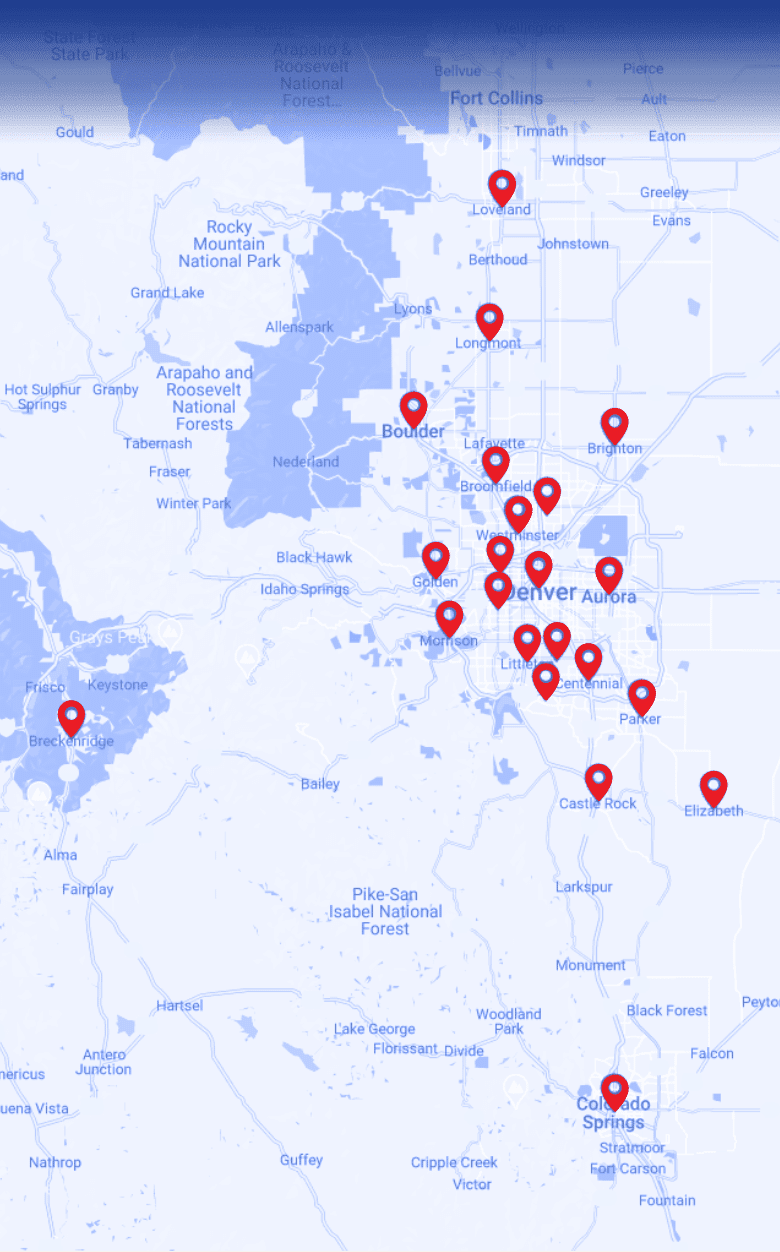
At Select Garage Doors, we’ve spent two decades doing residential and commercial garage door work across Parker, Castle Rock, Greenwood Village, and Lakewood, and we’ve seen what happens when homeowners pick the wrong service the first time. If you’d rather skip the framework and get a tech scheduled, contact us today and we’ll schedule right away.
1. What Type of Garage Door Service Do You Actually Need?
Garage door services break down into five categories: emergency repair (broken spring, door stuck open, vehicle trapped), scheduled repair (slow opener, noisy operation, worn rollers), preventive maintenance (annual tune-up, lubrication, balance check), new installation (replacing the door or opener), and commercial service (loading docks, roll-up doors, high-cycle springs). Matching the right provider to the right category matters more than picking the cheapest quote.
Emergency vs scheduled repair
Emergency calls (broken spring, door stuck open exposing the home, vehicle trapped) require a company with same-day capacity and a stocked truck for common parts. Scheduled repairs (intermittent opener, slight imbalance, minor track issue) can wait a day or two and benefit from a regular-rate appointment. Paying emergency rates for a non-emergency wastes money; waiting on a real emergency creates security and safety risks.
Repair vs replacement
Some issues are obvious replacements (panels crushed by a vehicle, door rusted through, opener older than 15 years). Others sit on the line. A reputable Parker tech will tell you when a $300 repair makes more sense than a $1,500 replacement, and vice versa. A company that always recommends replacement on the first visit is selling, not diagnosing.
Residential vs commercial
A standard residential sectional door is a different animal from a commercial roll-up at a Parker auto shop or a high-lift jackshaft setup at a Castle Rock warehouse. Some companies handle both; many specialize in one. If your situation is commercial, confirm the company has commercial-rated parts on the truck and techs trained on jackshaft openers and high-cycle springs.
2. How Do You Verify a Garage Door Company’s Credentials?
The credentials worth checking before hiring a Parker garage door company are state and local licensing, general liability insurance, workers’ compensation insurance, manufacturer authorizations (LiftMaster, Genie, Clopay), industry accreditations (BBB rating, IDA membership), and verified review counts on Google and BBB. Any reputable provider will share this paperwork without hesitation.
Licensing and insurance
Colorado does not have a single statewide license for garage door techs, but reputable companies carry general liability insurance ($1M minimum is standard) and workers’ comp on every employee on your property. Ask for certificates of insurance before any work starts. A company that hesitates or quotes “we’ll send it later” is a red flag.
Manufacturer authorizations
Authorized dealer status (LiftMaster, Genie, Clopay, Amarr) means the company has been vetted and trained directly by the manufacturer and can honor full factory warranties on installation. Manufacturer-trained techs also have direct access to OEM parts that big-box retailers don’t carry.
Reviews and accreditations
Google reviews and BBB ratings are the two most reliable signals. Look for companies with 4.7+ stars across 50+ reviews, with patterns of praise for transparency, timely arrival, and clean repairs. Read at least one or two negative reviews to see how the company responds. A defensive or evasive response is a stronger signal than the original complaint.
3. What Should a Garage Door Estimate Include?
A proper written estimate from a Parker garage door service should list the specific parts being replaced (with model numbers when applicable), labor cost separately, any service or trip fees, the warranty terms on parts and labor, the expected completion time, and a clear total. Verbal estimates and “we’ll figure it out when we get there” pricing are how homeowners get overcharged.
What “transparent pricing” really means
A transparent estimate is itemized, in writing, and given before any work begins. It distinguishes between parts cost, labor cost, and any service call or trip fee. It states whether the price includes both springs (when only one broke) or just the broken one. Vague estimates like “$400-700 depending on what we find” mean the company has not actually diagnosed the problem.
Red flags during the estimate
Watch for high-pressure sales tactics, unusually low quotes that pad with hidden fees later, companies that demand 50%+ payment upfront before any work starts, and “fluff” line items like generic “diagnostic charges” without an explanation of what was diagnosed. Reputable companies in the Parker and Lone Tree area give a flat or detailed quote without theatrics.
The right time to get multiple quotes
For repairs under $300, getting three quotes wastes more in time than you’ll save. For replacements, opener upgrades, or any job over $1,000, get at least two quotes from companies you’ve already credential-checked. Comparing quotes from a vetted shortlist is useful; comparing quotes from random Yelp finds is not.
4. How Important Is Local Experience in Parker, CO?
Local experience matters a lot in the Front Range climate. Parker garage doors deal with freeze-thaw cycles, hail, high-altitude UV, and dust that grinds rollers and bearings faster than springs in milder climates. A company that has worked Parker homes for years knows which products survive Colorado conditions and which fail early. National chains often miss this.
Climate-specific recommendations
Parker, Castle Rock, and the broader Front Range need 24-gauge or heavier steel for hail resistance, high-cycle torsion springs for households running 6+ cycles a day, and weather seal materials rated for sub-zero winters and 90°F summers. A local tech recommends these proactively. A national chain often defaults to whatever their warehouse stocks.
Service area familiarity
Companies that actually work the Parker, Franktown, Elizabeth, Lone Tree, and Castle Rock corridors know the older neighborhood housing stock (split-levels and ranches with extension springs), the Pinery and Stonegate subdivisions (newer custom homes with insulated steel doors), and the typical opener brands installed during each decade of subdivision growth. That context shapes faster, more accurate diagnoses.
Warranty support after the sale
A locally-owned Parker company has to live with its warranty obligations because future business depends on it. National operators that subcontract to local techs often pass the buck when something fails six months later. Ask specifically how warranty service calls work before you sign anything.
5. What Warranty Should a Garage Door Service Provide?
A reputable Parker garage door company should offer at least a 1-year warranty on labor and a manufacturer warranty on parts (which varies from 1 year on most accessories to lifetime on certain springs and motors). The terms should be in writing on the invoice. Verbal warranty claims are unenforceable and often disputed when something fails.
Manufacturer warranty vs installer warranty
These are two separate things. Manufacturer warranty covers defects in the part itself (LiftMaster motors, Genie boards, Clopay panels) and runs anywhere from 1 to 15 years to lifetime depending on the component. Installer warranty covers labor and workmanship and typically runs 90 days to 5 years. A clean job needs both warranties intact.
Common warranty exclusions
Most warranties exclude damage from improper use, weather events outside specification (a hailstone the size of a softball isn’t covered on a 26-gauge panel), unauthorized modifications, and installation by someone other than an authorized dealer. Read the exclusions before you sign. Don’t rely on what the salesperson said.
What voids the warranty
DIY adjustments after the install (especially spring tension), painting steel doors with non-approved paint, modifying the opener wiring, and skipping required annual maintenance can all void coverage. The warranty paperwork lists exactly what’s required to keep coverage active. Keep that document where you can find it.
6. What Questions Should You Ask Before Hiring?
The questions that separate professional Parker garage door services from upsell shops are: How long have you been in business under this name? Are you licensed and insured, and can I see the certificates? What manufacturer authorizations do you carry? How is the estimate broken down? What’s your warranty on parts and on labor separately? How quickly can you get a tech here, and at what rate?
The ownership and tenure question
“How long have you been doing this in Parker?” filters out fly-by-night operators that switch business names every couple years to escape complaints. Ten plus years under the same name with the same ownership is a strong signal. Newly rebranded operations are not necessarily bad, but they require more credential-checking.
The “what if it fails next month” question
Ask directly: if a part you install fails three months from now, what’s the process? A clear answer (we come back at no charge under our X-month labor warranty, parts go through manufacturer return) is good. A vague “we’ll work it out” or pushback on the question is bad.
The transparent-tech question
“Will the tech who comes to my house be your employee or a subcontractor?” Subcontracted labor is fine when it’s disclosed; it’s a problem when the dispatcher treats it like a trick question. Companies that send their own W-2 employees usually have better quality control and faster warranty response.
Making the Right Call on Garage Door Service
Choosing the right garage door service is mostly about diagnosing your situation accurately before you call, then matching the provider to it. Emergency repairs need different vendors than scheduled installations. Residential calls run differently than commercial. The companies that survive in the Parker market for a decade or more do so by being transparent about pricing, warranties, and credentials, and by not pressuring homeowners into work they don’t need.
At Select Garage Doors, we know we won’t be the right fit for every situation, but if we sound like one worth a closer look, here’s where to dig deeper. We post our current promotions on residential repair and installation work on the specials page. Call us today at (720) 339-2442 and we’ll get a tech scheduled.
Here are two related reads if you want to keep narrowing down: How to Choose the Right Garage Door Spring Repair Service focuses on what separates a spring-repair specialist from a generalist, and A Guide to Choosing the Right Garage Door Opener Installation Service covers the questions worth asking specifically about opener installs.
Frequently Asked Questions
How fast should a garage door repair company respond?
For emergencies (broken spring, door stuck open, vehicle trapped), a reputable Parker-area company should arrive within 2-4 hours of the call when same-day service is possible. For scheduled repairs, a 24-48 hour window is standard. Companies promising “30-minute response” universally are usually overbooking; ones quoting “next week or two” for an emergency are likely too small to handle the volume.
Should I choose the cheapest garage door service?
Not without checking what’s included. The cheapest quote often skips warranty coverage, uses lower-grade parts, or has a service-call fee buried in fine print. The mid-range quote from a credentialed company with a clear warranty is usually the best value. Spring repairs in particular are a category where the cheapest provider often costs more long-term because of premature part failure.
What if a garage door company shows up and the price is higher than quoted?
This is one of the most common Parker homeowner complaints. A reputable company gives a written estimate before any work starts and sticks to it, with documented exceptions only for issues genuinely discovered on-site (a second broken spring, hidden track damage). If the price changes mid-job without a documented reason, stop the work and request the original written quote in writing before continuing.
Do I need a licensed technician for a simple garage door repair?
Colorado does not require a state-level license for residential garage door technicians, but you should still verify the company carries general liability insurance and workers’ comp. Manufacturer authorizations (LiftMaster, Genie, Clopay) function similarly to a license: they confirm the techs have been vetted and trained. Avoid companies that operate without insurance regardless of the repair size.
How do I know if a garage door company is local?
Check the address on their website against Google Maps; legitimate Parker, Castle Rock, or Lakewood-area companies have a verifiable physical office, not just a virtual mailbox. Read the BBB profile for incorporation date and city. Ask the dispatcher where their truck is dispatched from. National chains often advertise local but actually subcontract to whoever’s nearby.
Can I trust a brand-new garage door company?
A new company isn’t automatically bad, but it requires more verification. Check whether the owner has prior experience under another name (many new shops are veterans of older companies). Confirm insurance and manufacturer authorizations. Get more references than you would from an established company. The credentials matter more when there’s no track record.
What’s the difference between a chain franchise and a local family-owned garage door company?
Chain franchises offer brand consistency and standardized pricing but often sub out actual labor, which means the tech showing up may not be a chain employee. Local family-owned companies typically have W-2 techs, longer warranties on labor, and better long-term accountability since their reputation depends on local word-of-mouth. Both can do good work; the key is verifying credentials regardless.
Should I get garage door services through my home warranty?
Home warranty coverage on garage doors is hit-or-miss. Most plans cover opener mechanical failures but exclude springs, panels, and tracks. The warranty company also chooses the contractor, which means you don’t get to vet them. For minor opener issues, a home warranty claim can save money. For springs or installations, calling a vetted local company directly usually delivers better service and clearer warranty terms.
How often should I have my garage door serviced?
A standard residential garage door benefits from an annual tune-up to catch worn parts before they fail and to extend spring life. Tune-ups typically run $75-150 in the Parker area and include lubrication, hardware tightening, balance test, and a full system inspection. Households with high cycle counts (6+ daily) or commercial doors should schedule semi-annual service.