

Garage door springs counterbalance the weight of the door (usually 130-350 pounds for residential), so the opener motor only needs to manage motion, not lift dead weight. A standard residential torsion spring is rated for about 10,000 cycles, which works out to 7-10 years for most Parker, CO homes. When a spring snaps, the door becomes too heavy to lift safely, the opener strains or burns out, and the only safe move is to stop using the door and call a qualified technician.
Colorado’s freeze-thaw cycles are hard on garage door springs. Steel contracts in winter, expands in summer, and metal fatigue catches up. Most Parker homeowners only think about the springs after they hear a loud bang at 6 a.m. and find themselves locked out of their own garage. The questions that follow are always the same.
The team at Select Garage Doors has been answering those questions for two decades, and the same handful come up every time. We handle garage door spring repair in Parker, CO, and this article walks through the answers we give on the phone before we even get to your driveway.
If you’d rather skip ahead and get a tech scheduled, contact us and we’ll get someone out the same day when possible.
How Do Garage Door Springs Actually Work:
Garage door springs counterbalance the door’s weight so the opener handles motion, not the full load. A torsion spring stores energy by twisting on a shaft above the door; an extension spring stores it by stretching along the horizontal tracks. Without functioning springs, a 200-pound residential door is dead weight no consumer-grade opener can lift safely.
Torsion springs do the work in most modern Parker homes:
Torsion springs sit on a metal shaft above the door opening. When the door closes, the spring winds tighter and stores energy. When the door opens, that energy unwinds gradually, lifting the door with steady force. Torsion is standard on doors built in the last 25 years because it lasts longer than extension.
Extension springs are still common on older doors:
Extension springs run parallel to the horizontal tracks on each side of the door. Older Parker homes (especially split-levels and ranches built before the late 1990s) often still have them. They cost less upfront but wear faster and snap more violently when they fail, which is why building codes now require safety cables threaded through each spring.
The opener doesn’t actually lift the door:
A common misconception: the opener motor lifts the door. It doesn’t. The springs do almost all the lifting; the motor just moves the balanced load up and down the tracks. Continuing to use the door after a spring break is the fastest way to turn a $300 spring repair into a $700 spring-and-opener job.
How Long Do Garage Door Springs Last:
Standard residential torsion springs are rated for about 10,000 cycles, which translates to 7-10 years of normal use. Extension springs typically run shorter at 5,000-10,000 cycles. High-cycle torsion springs are rated for 20,000-30,000 cycles and can last 20 years or more, which makes them worth the upgrade for households that open the garage door more than four or five times a day.
A cycle is one full open-and-close:
Every up-and-down counts as one cycle. A typical Parker family with two cars hits 4-6 cycles a day, putting a standard 10,000-cycle spring at roughly 7 years. Households where kids use the garage as the main entrance burn through cycles faster.
Cold weather accelerates spring fatigue:
Steel becomes more brittle at low temperatures. A spring that’s already cycled tens of thousands of times is most likely to fail on the coldest morning of the year, which in Parker means somewhere between November and March. The “loud bang at 5 a.m.” that wakes up half the neighborhood almost always happens during a cold snap.
High-cycle springs cost more upfront and pay back over time:
A high-cycle torsion spring upgrade typically adds $50-100 over a standard spring at installation. For a household running 6+ cycles a day, the high-cycle spring’s lifespan saves a service call within 5-7 years. For lighter-use households, the math is closer to neutral.
How Much Does Spring Repair Cost in Parker, CO:
Torsion spring replacement in Parker typically runs $200-400 installed for one spring, with parts at $60-150 each. Extension spring replacement runs $150-250 installed with parts at $30-70. Most reputable installers replace both springs at the same time even when only one has broken, which roughly doubles parts cost but adds little to labor.
Why both springs get replaced even when one breaks:
If one spring has been working long enough to fail, the other is usually within months of the same. Replacing only the broken spring leaves the door unbalanced (the new spring lifts harder than the worn one), and you’ll be paying for a second service call within the year.
What changes the price:
Door weight is the biggest variable, and it varies a lot across Parker. A 7-foot single-car door uses smaller, lower-tension springs than a 16-foot double-car or an 8-foot insulated door (the kind common on attached garages from the Pinery, Stonegate, and Idyllwilde subdivisions). High-lift conversions, oversized doors, and commercial-rated springs all cost more. Wire gauge matters too: heavier-gauge springs last longer but cost more upfront.
After-hours and emergency rates:
Same-day or after-hours spring service typically carries a $50-150 premium over scheduled rates. For a Parker homeowner with a vehicle trapped or a door stuck open exposing the home before a Castle Rock or Lone Tree commute, the premium is worth it. If both vehicles are out and the door is stuck closed in a secure position, scheduling normal-rate service makes sense.
Can I Replace a Garage Door Spring Myself:
Garage door spring replacement is one of the few home repairs that’s genuinely dangerous. A wound torsion spring stores 200+ pounds of force, and an improper unwinding can launch a winding bar, break fingers, or cause head injuries. Manufacturer warning labels, industry associations, and federal CPSC guidance all recommend professional installation; the labor portion typically runs $75-150.
What can go wrong with DIY:
The two failure modes that put DIYers in the ER are losing control of a wound spring (the bar slips out of the cone and the spring whips around the shaft) and miscounting the winding turns (the spring is set with too much or too little tension and the door fails on the first cycle). Most spring injuries happen during DIY adjustment.
What a pro does that a video doesn’t show:
A proper installation includes verifying the spring is sized correctly for the door’s weight, winding to the exact cycle count specified for that door height, and balance testing at the halfway point. None of those steps are obvious from a video, and skipping any voids both the manufacturer warranty and any installer warranty on the work.
When DIY is reasonable:
Replacing the safety cable on an extension spring system, lubricating springs with a non-petroleum lubricant, and visually inspecting for rust and gap formation are all reasonable homeowner tasks. The line is at anything that requires releasing or adjusting tension. Once a spring is wound, only a tech with the right tools should touch it.
What Are the Signs My Spring Is About to Break:
The most reliable warning signs Parker homeowners should watch for: the door feeling heavier when you pull the emergency release, visible gaps in the spring’s coils, popping or grinding sounds during operation, the door opening crooked or stopping partway up, and the opener straining harder than it used to. Any one of these means scheduling service before the spring fails completely.
The half-up balance test:
Disconnect the opener with the emergency release cord and lift the door manually to about waist height. A door with healthy springs holds its position. If it falls, the springs have lost tension and are near failure. If it rises on its own, they’re over-tensioned. The test runs in under two minutes and is the single best DIY-safe check for spring health.
Visible coil gaps mean it’s already broken:
A torsion spring with a visible gap in the middle of the coil (not a normal small space, but a clear break) has already snapped, and the two halves are sitting next to each other on the shaft. The door may still operate if the opener can muscle through, but this is when the motor burns out. Stop using the door immediately and call.
Crooked or stopping partway up:
If the door rises evenly to a certain point and then stops or hangs crooked, one spring on a two-spring system has likely lost tension or broken. The remaining good spring can lift the door partway but can’t carry the full load alone. This pattern puts the most stress on cables, drums, and the opener.
Should I Replace Both Springs at the Same Time:
Yes, in almost every case. When a residential door uses two torsion springs, both have been working the same number of cycles under the same conditions, so the unbroken one is statistically within months of the broken one. Replacing both costs more in parts but saves the labor and trip charge of a second call within the year, and it keeps the door balanced.
Same age, same fatigue:
A two-spring system installed in 2017 has aged identically on both sides. The fact that one snapped first usually means it had a slightly thinner spot in the wire, not that the other is meaningfully newer. Service records show the partner spring usually fails within 6-12 months of the first.
Balance matters more than people realize:
A new spring on one side and an 8-year-old spring on the other creates an imbalanced door. The new spring lifts harder, the old one drags, the door rises crooked, and every cycle puts uneven stress on the cables, drums, and tracks. Within a year you’re paying for cable replacement on top of the second spring.
Single-spring doors are different:
Smaller single-car doors sometimes use a single torsion spring, common in older detached garages around Parker and Franktown. There’s no second spring to replace in those cases. The “always replace both” rule applies specifically to two-spring systems, the standard configuration for double-car and most modern single-car doors across the area.
Get the Springs Repaired Right the First Time:
A broken garage door spring is one of the few home repairs where the right move is almost always to call rather than improvise. The springs are dangerous, and the cost gap between a clean professional repair and a botched DIY rescue is usually the cost of the door itself.
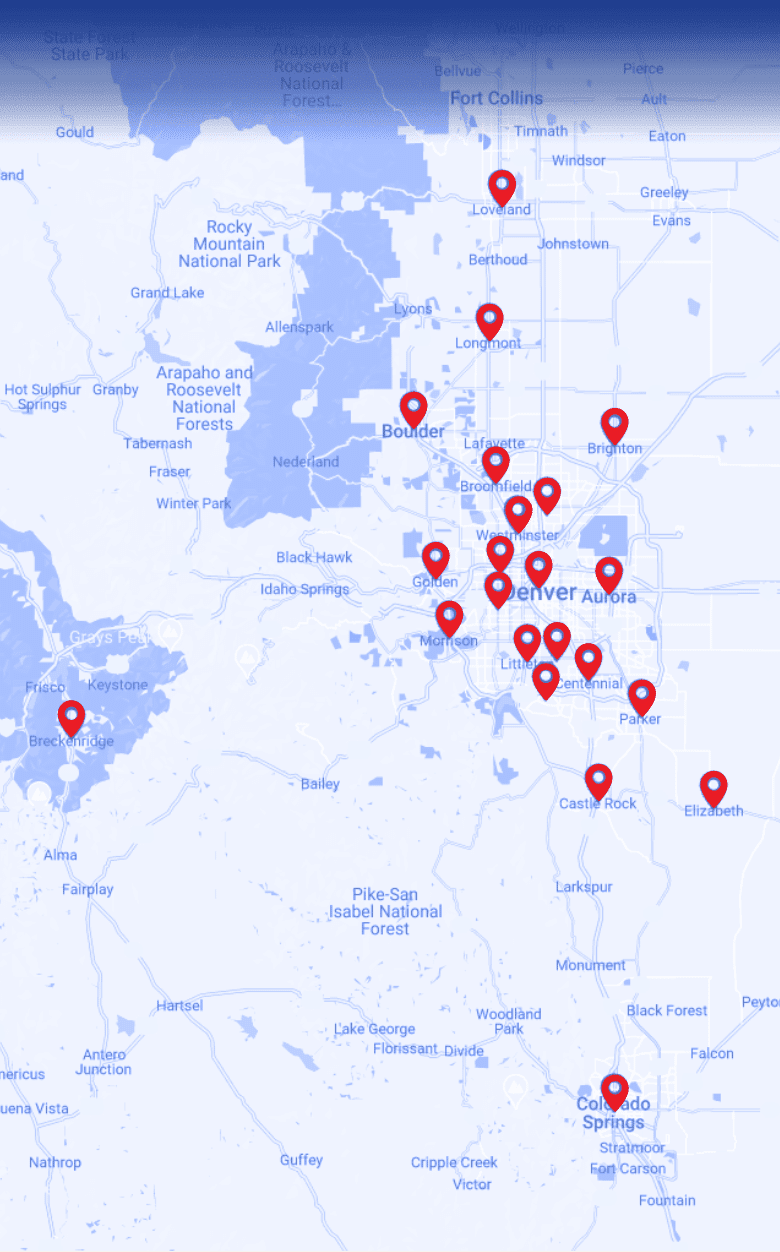
At Select Garage Doors, we install, repair, and balance garage door springs across Parker, Castle Rock, Greenwood Village, and Lakewood. Reach out for a written estimate before any work starts, check our specials page for current spring repair offers, and the Parker garage door services parent page lists everything else we handle on the same call.
For more on getting spring repair right the first time, Garage Door Spring Repair: Common Mistakes You Should Avoid covers the DIY traps homeowners fall into, and Garage Door Repair: Common Questions to Ask the Experts walks through the vetting questions to ask any installer before the job starts.
Frequently Asked Questions
How long does a spring replacement take?
A professional torsion spring replacement on a standard two-spring residential door takes 1-2 hours from arrival to completed balance test. Same-day service is typically possible in Parker if you call before mid-afternoon; later calls usually get scheduled for the following morning. The repair includes pulling the broken spring, fitting the correctly sized replacement, winding to the manufacturer’s specified cycle count, and balance-testing at the halfway point.
Is one broken spring an emergency?
Yes, in the sense that you should stop using the door immediately. Continuing to operate the opener with one or both springs broken risks burning out the motor’s gears, snapping a cable under uneven load, or having the door fall partway when the second spring fails mid-cycle. For most Parker households relying on the garage as the main entrance, it’s a fix-it-today situation rather than fix-it-when-convenient.
What if my door uses extension springs instead of torsion?
Most Parker homes built in the last 25 years use torsion, but older homes around Franktown, Elizabeth, and the original Parker subdivisions (and some single-car detached garages) still have extension springs running along the horizontal tracks. Extension spring replacement is generally lower-cost ($150-250 installed), but the springs wear faster and the system needs safety cables to be code-compliant. Many Parker homeowners convert from extension to torsion when the original springs fail; the conversion typically runs $285-375 depending on door width.
Will my homeowner’s insurance cover spring repair?
Generally no. Standard homeowner’s policies cover sudden, accidental damage from external causes (a tree falling on the door, a vehicle backing into it) but exclude wear-and-tear failures, and a spring at the end of its 10,000-cycle life is wear-and-tear by definition. Some home warranty plans cover garage door systems as a separate add-on; check your specific policy before assuming coverage.
Can a broken spring damage the opener?
Yes, and this is one of the most expensive mistakes Parker homeowners make. The opener is designed to move a balanced door; it doesn’t have the torque to lift the full weight of an unbalanced one. Forcing it can strip gears, burn out the motor, or trip the safety overload until the logic board fails. A $300 spring repair turns into a $600+ spring-plus-opener job.
Why does my door open partway and then stop?
The most common cause is one broken spring on a two-spring system. The remaining good spring can lift the door partway but doesn’t have the strength to carry the full weight alone. The opener’s safety overload trips when it senses the increased load, and the door stops mid-travel. Other causes include a broken cable, a misaligned track, or a failing opener, all reasons to have the system inspected rather than guessed at.
How do I know what size spring my door needs?
Spring sizing depends on the door’s weight, height, and track configuration. A technician measures the existing spring’s wire gauge, inside diameter, length, and wind direction (left-wound versus right-wound), then cross-references against the door’s weight to confirm the spring is correctly matched. An undersized spring fails early; an oversized spring strains the opener. This is why most installers don’t quote sight-unseen.
Can I temporarily fix a broken spring to get my car out?
The safest move is to leave the door alone and call a tech. If you absolutely need to get a vehicle out before the tech arrives, two adults can manually lift a residential door enough to clear a vehicle, but never use the opener with broken springs and never wedge the door open with anything other than the proper locking mechanism. Improvised supports under a partially raised door have caused fatal injuries when the door drops.
What’s the difference between a tune-up and a spring replacement?
A tune-up is preventive maintenance (lubrication, hardware tightening, balance testing, inspection) typically running $75-150. It can extend spring life by reducing friction and catch wear early but doesn’t replace the springs themselves. Spring replacement is reactive: swapping a broken or end-of-life spring with a new one, including winding and balance-test work, typically $200-400 per spring installed. Tune-ups are scheduled annually; spring replacement happens once every 7-10 years.