

How Does Colorado’s Unique Climate Affect Garage Door Behavior in Parker?
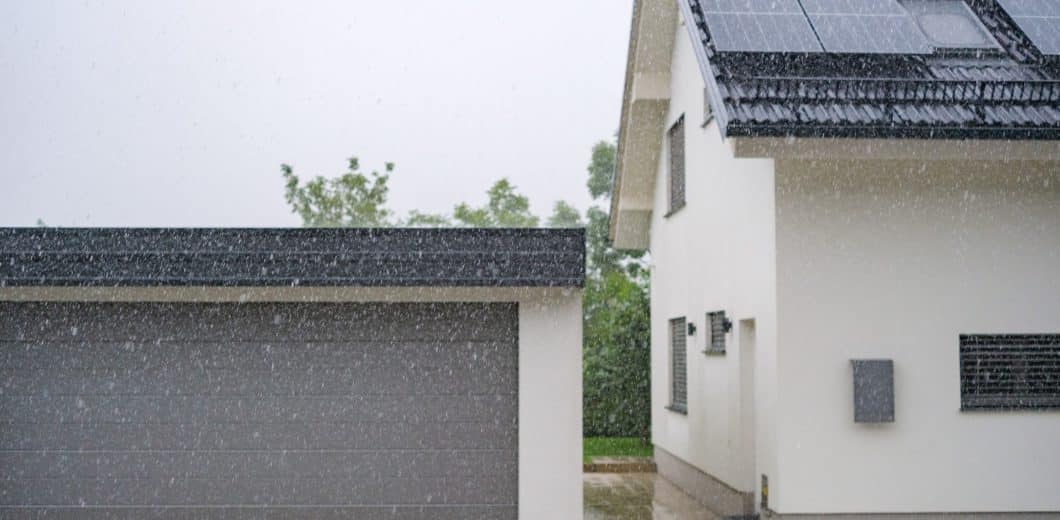
Colorado’s high altitude, intense UV, dry air, rapid temperature swings, and freeze-thaw cycles create conditions that alter how every garage door component performs. Springs fatigue faster, lubricants evaporate sooner, weatherstripping cracks earlier, and opener motors work harder than in most other states. Understanding these effects helps Parker homeowners maintain their doors on a schedule that matches local conditions.
Key Takeaways
- Colorado’s Front Range receives 300 days of sunshine per year, intensifying UV damage
- Temperature swings of 30 to 50 degrees in a single day stress springs and hardware daily
- Dry air below 20 percent humidity causes lubricants to evaporate in 8 to 10 weeks
- Freeze-thaw cycles crack weatherstripping and cause ice bonding at the door-to-floor seal
- National maintenance guidelines underestimate what Colorado garage doors require
A garage door installed in Parker, Colorado, faces conditions that the same door installed in Virginia or Georgia would never encounter. The altitude, the UV, the dryness, and the daily temperature swings combine into a climate profile that accelerates wear on every component. Homeowners who follow national maintenance schedules find their doors failing years before their rated lifespan. Select Garage Doors services garage doors across the Parker area with maintenance programs calibrated to Colorado’s conditions.
How Does Colorado’s Dry Air Affect Garage Door Components?
Colorado’s low humidity, often below 20 percent in summer, dries out lubricants, cracks rubber seals, and removes the protective moisture film that slows corrosion in humid climates. Every moving component requires more frequent maintenance than manufacturers recommend.
Lubricant is the most affected. Standard garage door lubricants are formulated for environments with 40 to 60 percent relative humidity, where the surrounding moisture helps the lubricant film persist. In Colorado’s dry air, that film evaporates and leaves metal surfaces unprotected. Dry springs screech, dry rollers grind, and dry hinges wear through their bushings faster.
Rubber weatherstripping suffers the same dehydration. The compounds that keep rubber flexible need some ambient moisture. Without it, the rubber hardens, cracks, and separates from the door or frame. In coastal climates, weatherstripping lasts five to seven years. In Colorado, two to three years is more realistic.
Select Garage Doors recommends twice-yearly maintenance for Parker homeowners, with additional DIY lubrication every 8 to 10 weeks during the summer months.
What Happens to Garage Doors During Colorado’s Freeze-Thaw Cycles?
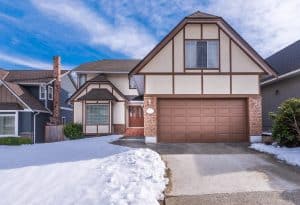 Freeze-thaw cycles cause ice bonding between the door and the floor seal, water infiltration into panel joints, and repeated expansion and contraction of metal hardware. These cycles are more damaging than sustained cold because the constant temperature transitions prevent components from reaching equilibrium.
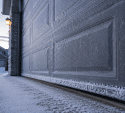
Ice bonding is the most visible freeze-thaw problem. Snowmelt seeps under the door-to-floor seal, then freezes overnight. By morning, the bottom of the door is frozen to the garage floor. Attempting to open the door with the opener tears the weatherstripping, and in severe cases, bends the bottom panel section.
Water infiltration into panel joints is a subtler problem. Water enters hairline cracks in panel paint or section joint seals, freezes, and expands. Over multiple cycles, this freeze-expand pattern widens the cracks and eventually causes paint delamination and steel surface corrosion.
Preparing the garage door for Colorado winter requires specific steps that go beyond standard cold-weather advice. For a complete guide, read about winter garage door preparation in Parker.
How Does Colorado’s UV Intensity Affect Garage Doors in Parker?
At Parker’s 5,869-foot elevation, UV radiation is approximately 25 percent more intense than at sea level. This UV breaks down organic materials faster, including paint, rubber, plastic, and lubricant compounds.
The UV effect on garage doors is cumulative. A south-facing door receives the most direct exposure and shows damage first. Paint chalking, color fading, and surface roughening appear within three to five years on south-facing doors in Parker, compared to seven to ten years at sea level.
Plastic components degrade faster under Colorado UV as well. Sensor housings, remote control cases, and plastic roller wheels become brittle and crack. The timeline for plastic degradation is roughly half of what it would be at sea level. Parker, CO, homeowners should inspect plastic components annually and replace any that show whitening, cracking, or brittleness.
UV also accelerates lubricant breakdown on exposed surfaces. Spring coils, track surfaces, and hinge pins that receive direct sunlight lose their lubricant film faster than sheltered components. The top section of the door, which faces the sun when the door is open, dries out faster than the lower sections.
What Maintenance Schedule Do Colorado Garage Doors Actually Need?
Colorado garage doors need professional maintenance twice per year (May and October), DIY lubrication every 8 to 10 weeks, and annual weatherstripping inspection.
Colorado-adjusted maintenance calendar:
- May: Professional tune-up before summer heat and UV exposure
- June through September: DIY lubrication every 8 to 10 weeks
- October: Professional tune-up before winter freeze-thaw cycles
- November: Apply silicone protectant to weatherstripping before the first freeze
- January through February: Monitor for ice bonding at the floor seal
- Year-round: Listen for new noises and address changes promptly
This schedule accounts for Colorado’s two harshest seasons: summer UV and heat stress and winter freeze-thaw damage. Each professional tune-up addresses the specific challenges of the upcoming season rather than following a generic checklist.
Frequently Asked Questions
Does Colorado Weather Void Garage Door Warranties?
Most warranties cover manufacturing defects but exclude damage from environmental conditions. Climate-related wear, such as UV fading, seal cracking, and spring fatigue from thermal cycling, is typically classified as normal wear and not covered.
What Is the Best Garage Door Material for Colorado’s Climate?
Insulated steel with a baked-on polyester finish offers the best combination of UV resistance, thermal performance, and durability for Colorado conditions. Wood doors require more maintenance due to UV and moisture exposure.
How Does Colorado’s Altitude Affect Garage Door Opener Performance?
Thinner air at altitude reduces motor cooling efficiency. Opener motors in Parker work harder and run hotter than the same motors at sea level. DC motors with thermal protection circuits handle altitude conditions better than older AC motors.
Should I Buy a Higher-Rated Spring System for My Parker Garage Door?
Yes. A spring system rated for 15,000 to 20,000 cycles compensates for the 15 to 25 percent lifespan reduction caused by Colorado thermal cycling. The incremental cost of higher-rated springs is small compared to the cost of premature replacement.
Can I Use the Same Lubricant in Colorado That I Used in Another State?
Not necessarily. Petroleum-based lubricants that worked in humid climates evaporate too quickly in Colorado. Switch to silicone-based products rated for temperatures above 200 degrees Fahrenheit and low-humidity environments.
How Does Snow Affect Garage Doors in Parker?
Snow accumulation against the door-to-floor seal causes ice bonding when temperatures drop. Clear snow from the base of the door before it freezes. Heavy snow loads on flat or low-slope garage roofs can also press down on horizontal tracks.
Is There a Colorado-Specific Building Code for Garage Doors?
Colorado follows the International Residential Code with local amendments. Some municipalities in the Front Range require wind-rated doors in exposed areas. Parker building codes align with Douglas County requirements.
How Often Do Parker Homeowners Replace Garage Doors Compared to the National Average?
Parker homeowners typically replace garage doors every 20 to 25 years with proper maintenance, compared to the national average of 25 to 30 years. Without climate-appropriate maintenance, replacement may be needed at 15 to 18 years.
Looking for a deal?
Call us or to learn about our current promotions and seasonal offers.


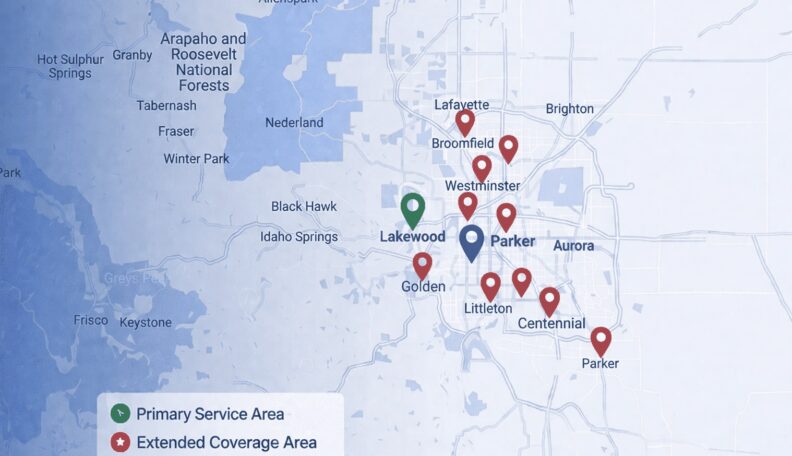
Service Area: 50+ Cities Across Metro Denver
Select Your Nearest Location
Hours: Mon-Fri 8am-5pm
Sunday Emergency Only
Avg Response Time: 18 minutes
Hours: Mon-Fri 8am-5pm
Sunday Emergency Only
Avg Response Time: 18 minutes
Hours: Mon-Fri 8am-5pm
Sunday Emergency Only
Avg Response Time: 18 minutes
Hours: Mon-Fri 8am-5pm
Sunday Emergency Only
Avg Response Time: 18 minutes
Hours: Mon-Fri 8am-5pm
Sunday Emergency Only
Avg Response Time: 18 minutes
Hours: Mon-Fri 8am-5pm
Sunday Emergency Only
Avg Response Time: 18 minutes
Hours: Mon-Fri 8am-5pm
Sunday Emergency Only
Avg Response Time: 18 minutes
Hours: Mon-Fri 8am-5pm
Sunday Emergency Only
Avg Response Time: 18 minutes
Hours: Mon-Fri 8am-5pm
Sunday Emergency Only
Avg Response Time: 18 minutes
Hours: Mon-Fri 8am-5pm
Sunday Emergency Only
Avg Response Time: 18 minutes
Hours: Mon-Fri 8am-5pm
Sunday Emergency Only
Avg Response Time: 18 minutes
Hours: Mon-Fri 8am-5pm
Sunday Emergency Only
Avg Response Time: 18 minutes
Hours: Mon-Fri 8am-5pm
Sunday Emergency Only
Avg Response Time: 18 minutes
Hours: Mon-Fri 8am-5pm
Sunday Emergency Only
Avg Response Time: 18 minutes
Hours: Mon-Fri 8am-5pm
Sunday Emergency Only
Avg Response Time: 18 minutes
We Service: Parker, Castle Rock, Greenwood Village, Lakewood, Littleton, Centennial, Highlands Ranch 40+ More Cities